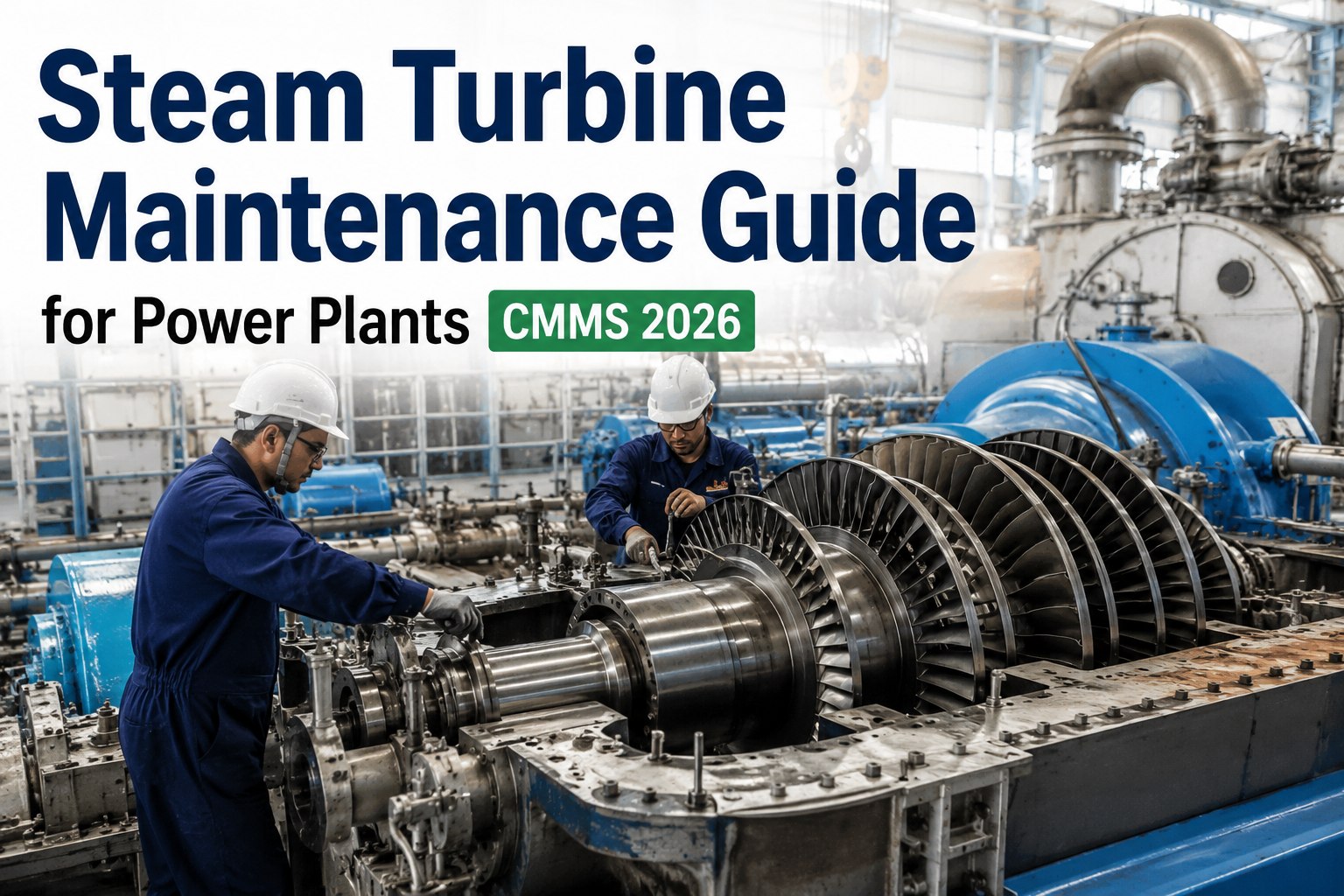
A steam turbine will happily spin toward destruction the moment its control loop loses command. The EHC (electro-hydraulic control) system is what stands between a clean synchronization and a forced outage — and it lives or dies on the fire-resistant fluid, servo valves and actuators that position the steam valves on demand. This guide walks the inspection and testing that keeps governor control reliable, and shows how OxMaint AI power plant maintenance software holds it on schedule. Book a demo to see it on your unit.
STEAM TURBINE · GOVERNOR & EHC CONTROL · INSPECTION & TESTING
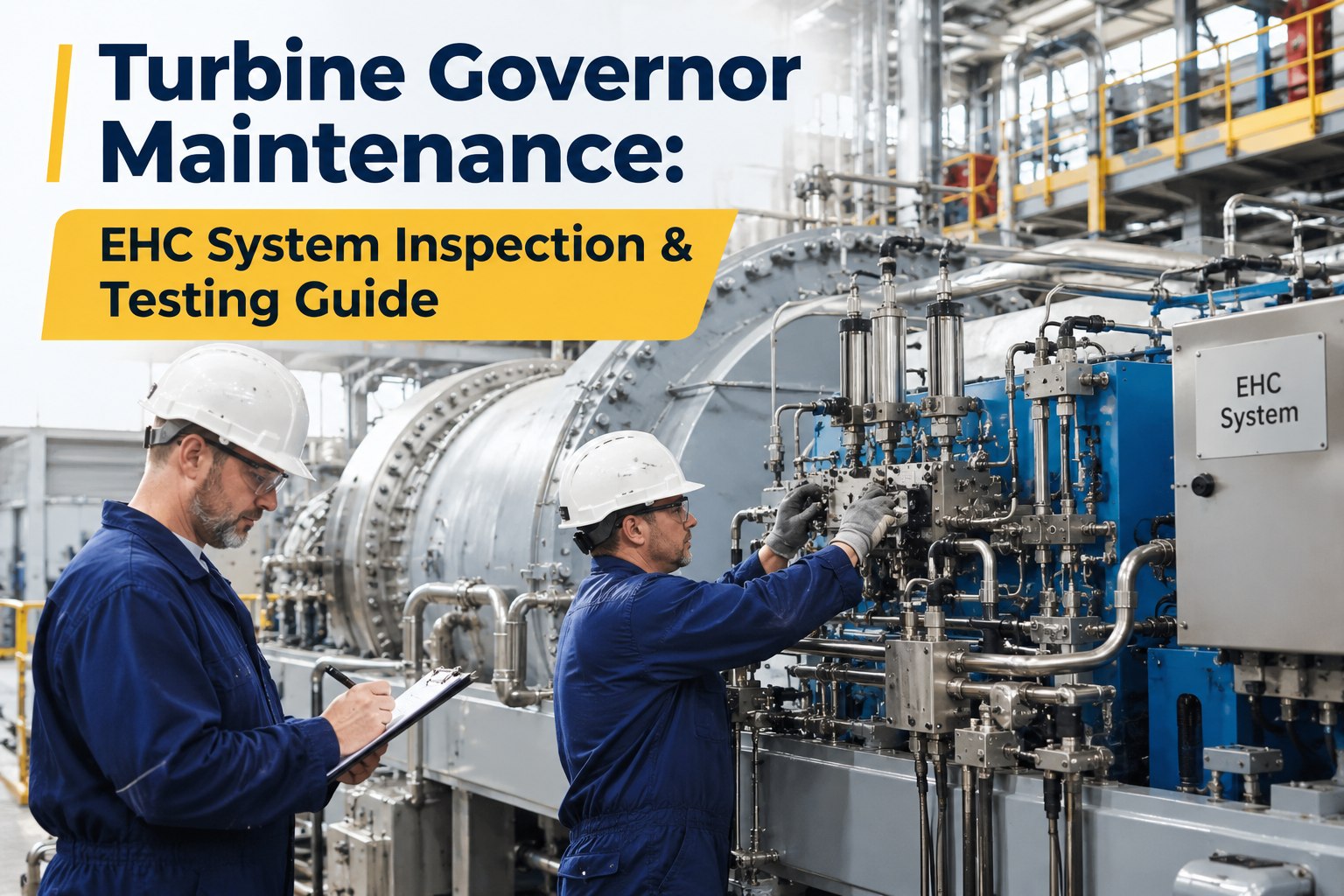
Turbine Governor Maintenance: EHC System Inspection & Testing
The governor turns an electrical speed-and-load signal into precise steam flow — through servo valves, actuators and control valves driven by hydraulic fluid. When any link drifts, you get hunting, load swings, or a failed trip. OxMaint AI runs the whole loop as scheduled PM and records every test for the audit.
Governor Signal4–20 mA / digital command
›
Servo ValveMeters control oil
›
ActuatorStrokes the valve
›
Steam ValveSets steam flow
← Speed & load feedback closes the loop
Why the EHC System Is the Turbine's Nerve Center
The EHC system controls steam admission, so a malfunction can stall or trip the unit and cascade through every synchronized process in the plant. Because the turbine sits in a high-temperature, high-pressure zone, the hydraulic circuit runs on a fire-resistant phosphate-ester fluid — not ordinary oil. That fluid is the system's lifeblood: keep it clean, dry and low in acid, and the servo valves live; let it degrade, and control goes with it.
FLUID CONDITION TARGETS
The Fire-Resistant Fluid Is Where Control Lives or Dies
Phosphate-ester (FRF) condition is the single best predictor of EHC reliability. Trend these against your OEM limits — the figures below are common industry reference points, not a substitute for your fluid supplier's spec.
Total Acid Number
< 0.15
mg KOH/g — acid build-up
Viscosity @ 40°C
41–45
cSt — film strength
Cleanliness ISO 4406
15/12
particle contamination
Cleanliness NAS 1638
Class 5
servo-valve protection
Moisture
Low
drives hydrolysis
Resistivity
High
falls as acids form
Log every result against the unit in OxMaint AI so a slow TAN climb or a resistivity dip is a trend you act on at the next route — not a surprise at the next trip.
The Four Ways EHC Fluid Goes Bad
Catch the mechanism and you catch the failure early. These four degradation modes account for most servo-valve and actuator trouble on phosphate-ester systems.
Hydrolysis
The most common mode — heat plus moisture from steam leaks breaks the fluid down, raising acid and darkening it. Control moisture and you control most of the rest.
Acid Formation
Rising TAN corrodes components, thins the film and cuts resistivity. Ion-exchange or selective media conditioning pulls acids back down before damage sets in.
Varnish & Deposits
Thermal breakdown leaves varnish that sticks servo spools and narrows clearances. It shows up as sluggish, hunting valve response long before a hard fault.
Particle & Spool Wear
Fine particles and electrokinetic wear erode servo-valve spool edges, degrading the precise metering the governor depends on. Cleanliness targets exist to prevent exactly this.
Fine filtration, moisture removal and acid conditioning keep the fluid inside its limits — and each of those becomes a tracked PM task. Start free and route fluid conditioning against every turbine.
The Inspection & Testing Cadence
Governor reliability is a rhythm, not a once-a-year event. This cadence ladder maps the EHC tasks to the intervals that keep control tight — OxMaint AI holds each tier as a meter-or-time route so nothing slides to the next outage.
Daily
Check control-oil level, temperature and system pressure; scan for leaks and abnormal governor behavior or hunting.
Weekly
Inspect servo and actuator areas for weeping, verify filter differential pressure, confirm accumulator pre-charge is in band.
Monthly
Pull an FRF sample for TAN, viscosity, moisture and particle count; exercise trip valves where the design allows on-line stroking.
Quarterly
Test tripping devices and partial valve movement; review governor loop response and command-versus-feedback error trends.
Annual
Conduct the overspeed trip test and full protection-system proof per OEM and insurer requirements; recalibrate servo loops.
Outage (3–5 yr)
Strip, inspect and overhaul governor and control valves, actuators and servo valves on the OEM-recommended interval.
GOVERNOR VALVE & ACTUATOR TESTING
What a Good Test Actually Proves
Testing is about catching drift while the loop still looks stable. Run static servo checks with the unit on turning gear at zero steam admission, and confirm trip oil pressure and the emergency trip circuit are armed before forcing any output.
1
Hysteresis & linearity — plot valve movement against control-oil pressure; rounded spool edges or a nick show as widening hysteresis.
2
Stroke & response time — record how fast and how fully each valve strokes; trend it outage to outage, not just pass/fail.
3
Command vs feedback — a sustained offset between the governor command and actual position flags servo deviation or binding.
4
Seat & closure — verify the valve seats and closes fully; a valve that will not close is a safety finding, not a note.
There are no fixed regulatory intervals for non-nuclear steam-turbine valves in the US — OEMs typically recommend inspection and repair every three to five years, so your trending is what fills the gap between overhauls.
THE LAST LINE OF DEFENCE
Overspeed Protection Is Not Optional
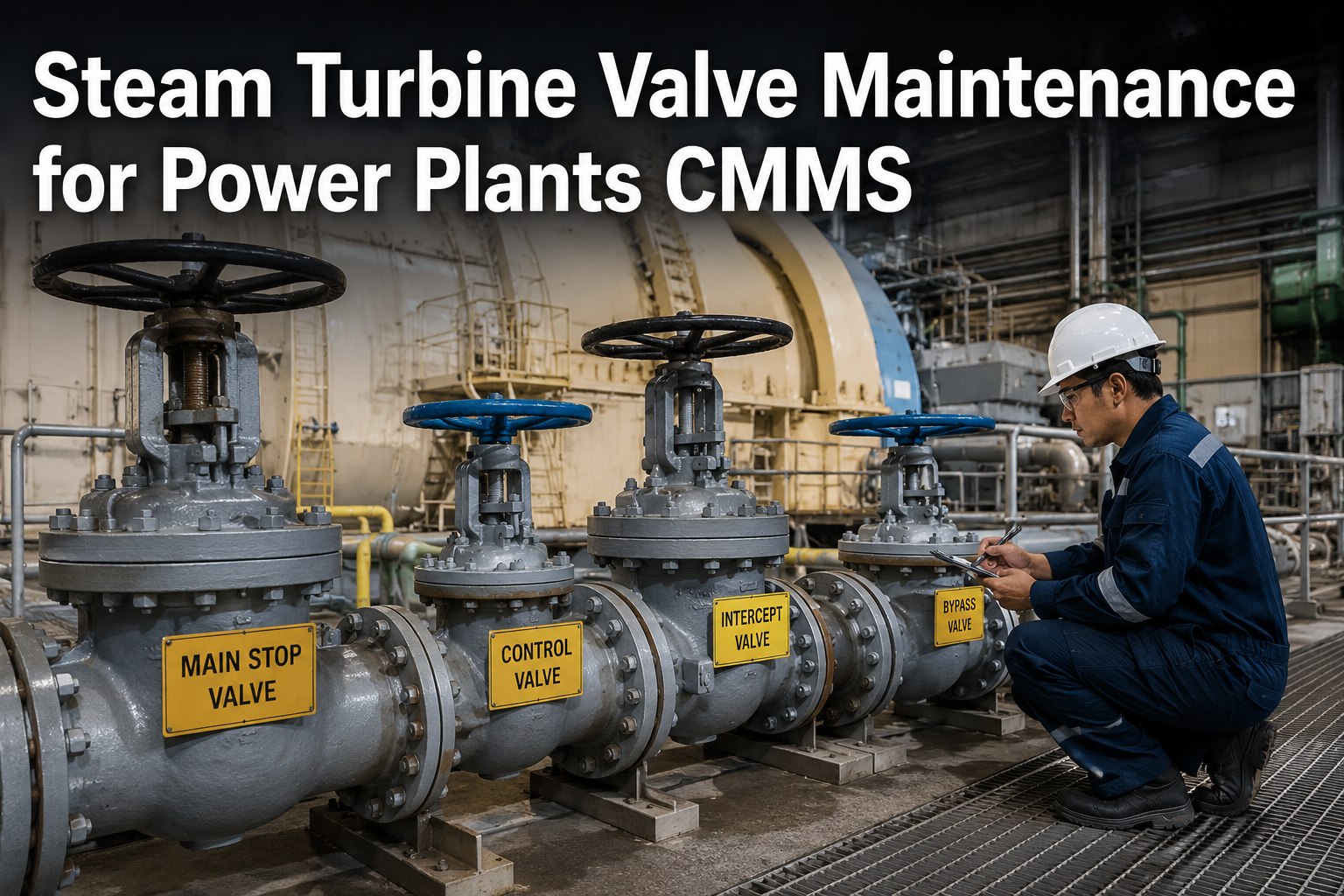
Overspeed is the most destructive event a steam turbine can suffer — residual steam trapped in the valves, steam chest and casing after a trip can race the rotor past its limit. The trip-and-throttle valve must slam shut on demand, every time.
!
Exercise trip valves on interval so a stem never seizes between tests; manual exercisers confirm movement without a shutdown.
!
Run the overspeed trip test annually, proving the unit trips near its set point (commonly around 110% of rated speed).
!
Keep control oil clean — deposits and contamination are a leading reason a trip valve fails to close when it must.
!
Record every trip test and exercise; insurers and auditors expect oil analysis and a documented overspeed-test history.
Warning Signs Your Program Should Catch
Governor instability rarely announces itself — it builds quietly inside a loop that still looks stable. Operators raise these from the floor in OxMaint AI and each becomes a ranked work order.
!
Governor Hunting
Small, repeating load or speed oscillations — often varnish, air entrainment, or PID drift in the loop.
!
Valve Sticking
Non-linear or sluggish lift as deposits build on servo spools and valve stems.
!
Actuator Drift
A growing gap between command and feedback, the early signature of servo deviation.
!
Rising TAN
Acid climbing toward the limit — corrosion, lost lubricity and falling resistivity ahead.
!
Moisture Ingress
Steam-side leaks feeding hydrolysis, the root of most phosphate-ester breakdown.
!
Slow Valve Closure
Stroke times creeping up — a trip-protection concern that trending catches first.
A Governor Only Protects You If Every Test Is on the Record.
Fluid limits, valve strokes, trip tests, overhaul intervals — miss one and the loop drifts until it hunts or fails to trip. OxMaint AI maintenance management software runs every EHC task on meter-and-time triggers and keeps the proof your OEM and insurer ask for.
How OxMaint AI Runs Turbine Governor PM
OxMaint AI is the AI-powered power plant maintenance software that carries the EHC system from a sample result or an operator squawk to a closed, recorded work order — with fluid limits, valve tests and overhaul intervals built into the workflow. Book a demo and see an EHC route run end to end.
Fluid-Analysis Tracking
Log TAN, viscosity, moisture and particle counts against each unit, with limits that flag a trend before it threatens the servo valves.
Meter & Time PM Routes
Daily checks, monthly sampling, annual overspeed tests — each fires on hours or the calendar, so nothing waits for memory.
Valve & Actuator Logs
Record stroke times, hysteresis and command-versus-feedback error so degradation is a trend line, not a surprise at overhaul.
Trip-Test Records
Capture every overspeed test and valve exercise with date and result — the evidence an insurer or auditor asks for first.
Squawk to Work Order
Operators raise hunting or a sluggish valve from the floor with a photo; it becomes a ranked work order routed to the right tech.
Audit-Ready History
Every task, part and sign-off kept per asset, so a reliability review or compliance audit is a filter away, not a binder hunt.
EXPERT REVIEW
Written for power plant maintenance, reliability and controls teams running steam turbines with electro-hydraulic governor control. The parameters and intervals here are common industry reference points drawn from standard EHC practice — your authoritative limits and schedules come from the turbine OEM, your fluid supplier's specification, and your plant's protection-system and insurer requirements, which govern overspeed testing and valve overhaul. Treat all live testing as safety-critical work performed under your own procedures, on turning gear at zero steam admission, with trip protection armed. OxMaint AI structures and records the PM and work order workflow; it does not replace your OEM manuals, your protection-system engineering, or your controls team's judgement.
Frequently Asked Questions
What does a turbine EHC system actually do?
The electro-hydraulic control system converts the governor's electrical speed-and-load command into precise steam flow by driving servo valves and actuators that position the turbine's control valves. It is both safety-critical and stability-important: it holds speed during synchronization and load during operation, and it works with the protection system to shut steam off on a trip. A fault here can stop the unit and ripple through the whole plant.
Start free and put every EHC check on a route in OxMaint AI.
Why do EHC systems use fire-resistant phosphate-ester fluid?
Because the hydraulic circuit sits in a high-temperature, high-pressure steam environment where a leak of ordinary oil could ignite. Fire-resistant phosphate-ester fluid is chosen for that safety margin, but it is hygroscopic and prone to hydrolysis, so it demands tighter condition monitoring than mineral oil — acid number, moisture, cleanliness and resistivity all matter. Keeping it in spec is the core of EHC reliability.
Book a demo and see how OxMaint AI trends fluid condition per unit.
How often should turbine governor valves be tested?
There are no fixed regulatory intervals for non-nuclear steam-turbine valves in the US, so OEM guidance leads — typically inspection and overhaul every three to five years, with on-line exercising and tripping-device tests far more often. The real discipline is trending stroke time, hysteresis and command-versus-feedback error between overhauls, so drift is caught early. Pair scheduled tests with continuous attention to the loop.
Start free and trend valve tests per turbine in OxMaint AI.
What is the biggest risk if the governor system is neglected?
Overspeed — the most destructive event a steam turbine can experience. If a trip or trip-and-throttle valve fails to close, residual steam energy in the valves, steam chest and casing can race the rotor past its limit toward catastrophic failure. That is why trip valves are exercised regularly, an overspeed test is run annually, and control oil is kept clean.
Book a demo and keep overspeed-test records audit-ready in OxMaint AI.
Can maintenance software improve turbine control reliability?
Yes. OxMaint AI holds the fluid limits, sampling schedule, valve tests and overhaul intervals as live PM routes, and keeps every result tied to the specific turbine. That turns scattered oil reports and test sheets into trend lines a reliability team can act on, and into the documented history an insurer or auditor expects. The judgement on limits and testing stays with your OEM and controls team.
Start free and build an audit-ready EHC history for every turbine.
Keep the Loop Tight and the Trip Ready.
Put FRF sampling, valve tests, overspeed proofs and overhaul intervals on meter-and-time triggers in OxMaint AI power plant maintenance software — raised from the floor, ranked, scheduled before failure, and recorded for the audit. One platform that keeps governor control reliable and the protection ready.