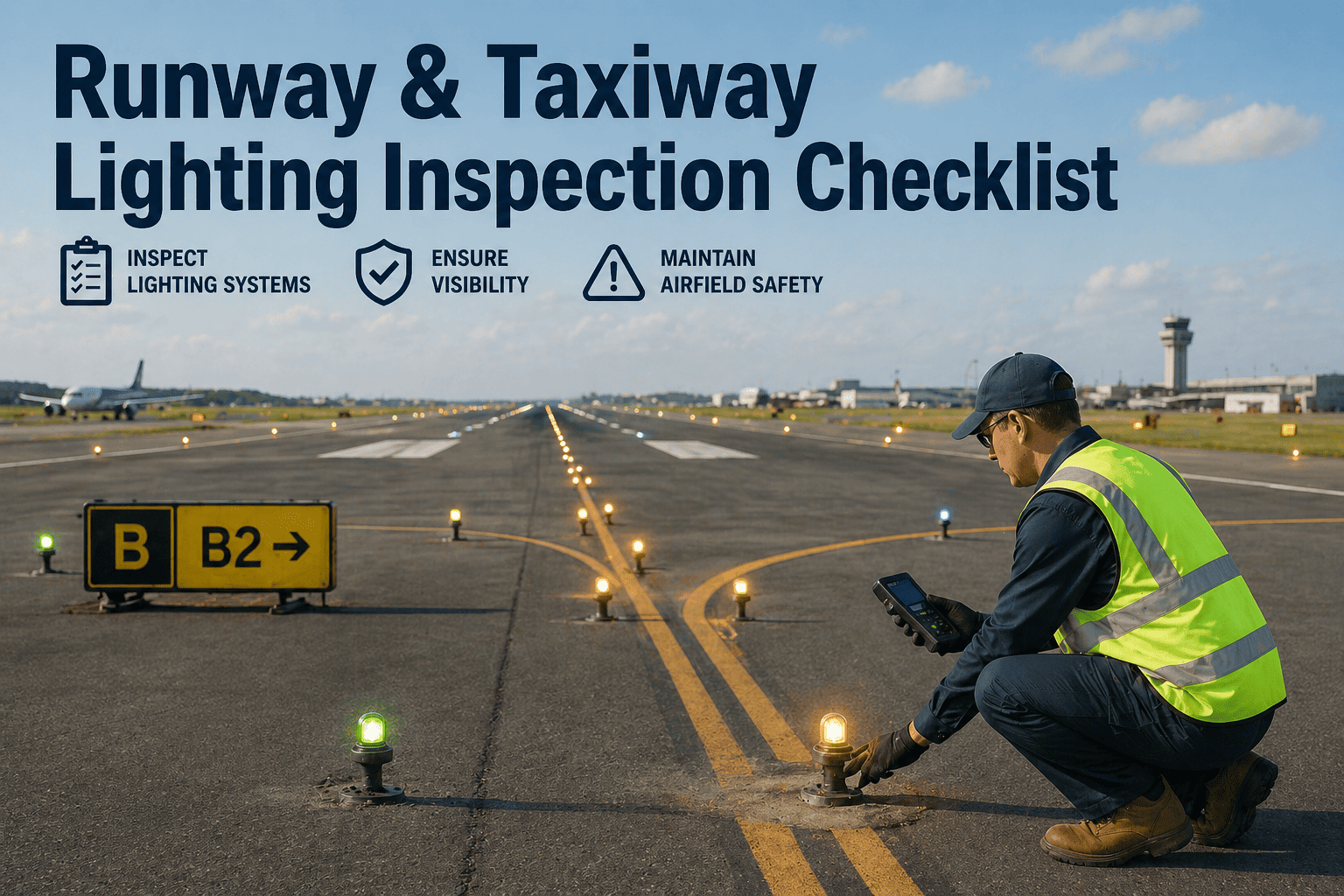
Airfield electrical systems operate under conditions that expose every circuit, fixture, and control panel to weather extremes, vibration, aircraft wake turbulence, and continuous load cycling that no standard commercial installation faces. A single undetected fault in runway edge lighting, taxiway centerline circuits, or approach lighting can ground night operations, delay inbound traffic, and create collision risk for aircraft transitioning from visual to instrument guidance. Oxmaint's Sign up free platform gives airfield maintenance teams structured mobile inspection workflows to verify circuit continuity, fixture brightness compliance, and safety control readiness before every night operations window — so every light is confirmed operational, not just assumed on. Whether you manage a regional airport, international hub, or military airfield, unverified electrical systems create airside safety exposure and regulatory audit risk across every runway, taxiway, and apron circuit in your operation. Book a demo to see how Oxmaint helps airfield operations and maintenance teams standardize pre-operations electrical verification and close out inspection records with full audit trails. Use this checklist before night operations begin to confirm airside electrical readiness across all active circuits and fixture groups.
Verify Airfield Electrical Readiness with Oxmaint
Capture circuit status, fixture brightness readings, and safety control verification — built for airfield maintenance teams managing electrical systems across runways, taxiways, and apron circuits.
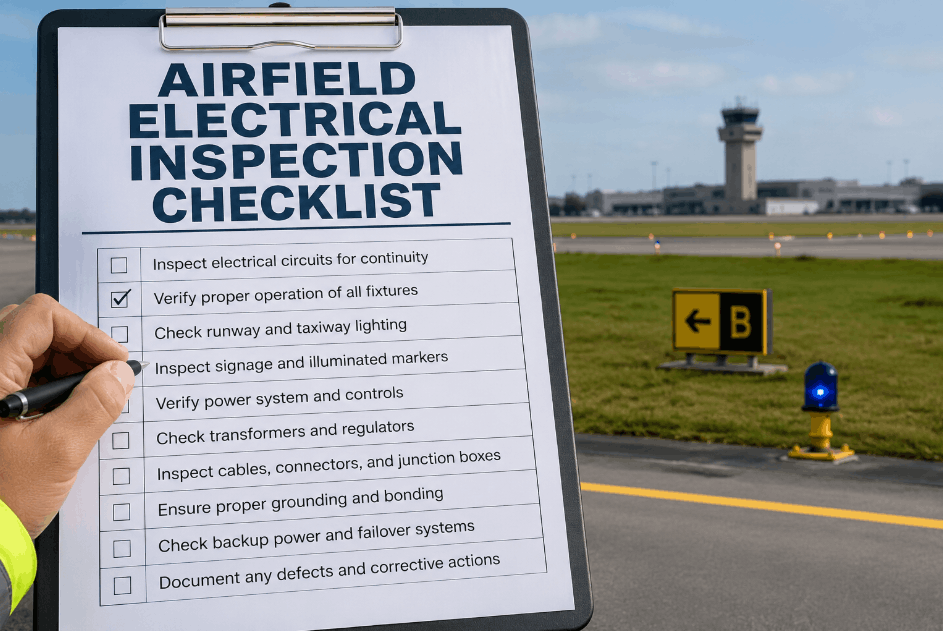
1. Circuit Continuity Verification
Circuit integrity must be confirmed before operations begin. An open series circuit can extinguish an entire lighting segment without triggering a visual alarm at the control panel.
2. Fixture and Lamp Condition Inspection
Fixture failures that pass automated monitoring still create localized guidance gaps that pilots identify only at low altitude. Physical inspection routes catch what remote monitoring misses.
3. Safety Controls and Switching Verification
Lighting control systems must respond correctly to tower commands and emergency switching demands. A control failure during operations cannot be safely diagnosed without prior verification of the switching logic chain.
4. Pavement Marking and Surface Condition Review
Electrical inspection routes provide the optimal opportunity to identify pavement and marking defects that degrade night operations guidance independent of the lighting system.
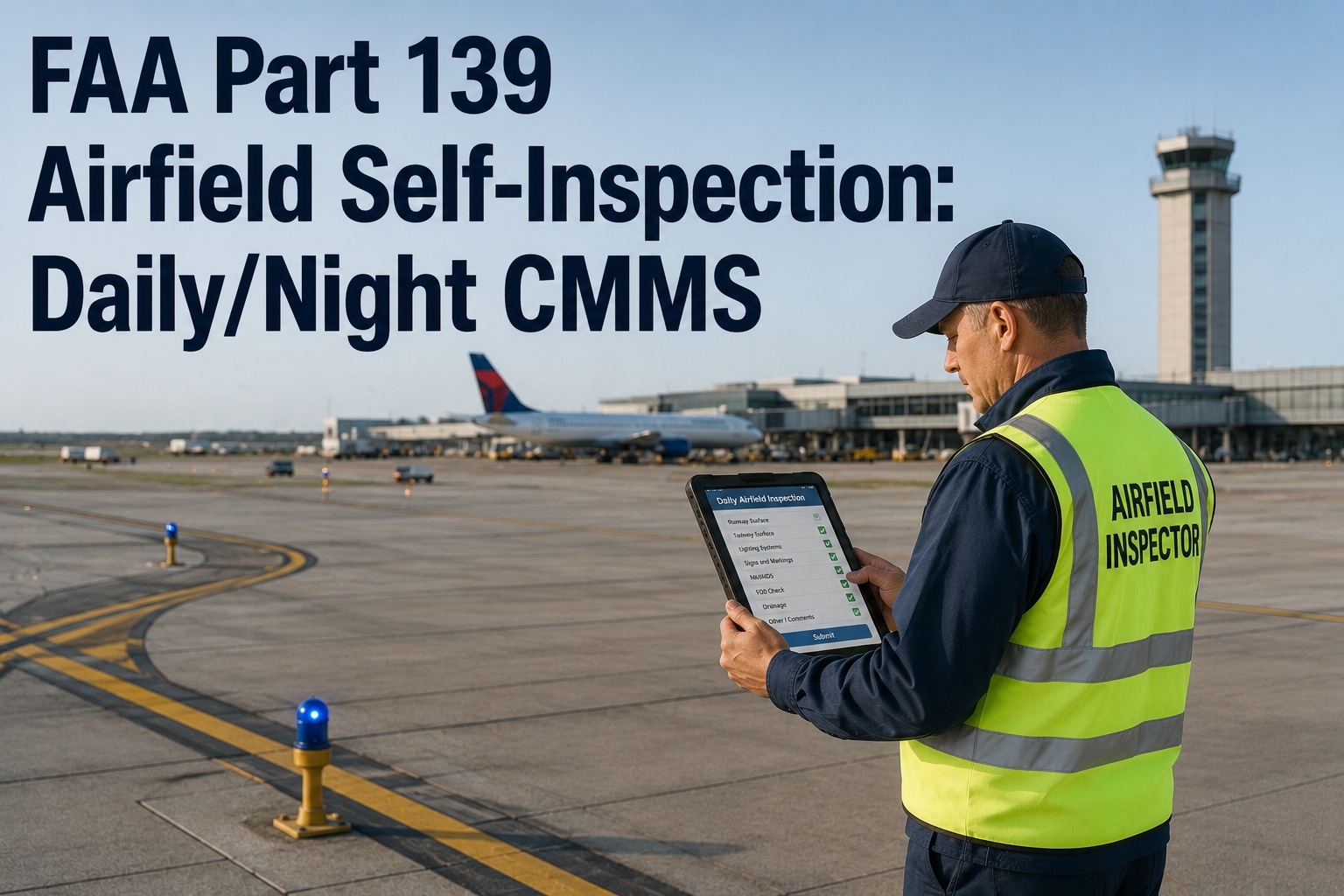
5. Data Tracking and Work Order Closure
Inspection data that is not captured in a structured system before operations begin cannot support regulatory audits, delay analysis, or asset reliability engineering decisions after the fact.
Build a Verified Airfield Electrical Inspection Program
Oxmaint gives airfield maintenance teams structured mobile inspection workflows, mandatory field capture, and audit-ready records to confirm airside electrical readiness before every night operations window.
Frequently Asked Questions — Airfield Electrical Inspection
1. How frequently should airfield electrical pre-operations inspections be completed?
Pre-operations electrical inspections should be completed before every night operations window and after any weather event, ground vehicle incident, or runway inspection that could have disturbed lighting fixtures or cable routes. Regulatory requirements vary by authority, but daily inspection before dusk operations is standard practice at commercial airports.
2. What circuit readings confirm airfield lighting is operating within compliance limits?
Compare constant current regulator output against the published design current for each circuit at each brightness step. Deviations greater than 5% from design current typically indicate a fixture failure, cable fault, or regulator fault requiring investigation before operations. Document baseline readings at commissioning for accurate comparison.
3. How does Oxmaint support airfield electrical inspection compliance?
Oxmaint provides mobile inspection forms with mandatory field capture for circuit readings, fixture status, and control test results — ensuring technicians record findings at the asset location before operations begin. Managers receive real-time visibility into inspection completion status and open defects across all airside systems.
4. What are the most common airfield lighting failures found during pre-operations checks?
Series circuit open faults from isolation transformer failures, in-pavement fixture lens fouling that degrades brightness below compliance thresholds, stop bar switching control failures, and approach lighting fixture misalignment from blast or wildlife damage are the most commonly identified defects during structured pre-operations inspection routes.
5. Can airfield electrical inspection records support regulatory audit and delay reporting?
Yes. Timestamped, inspector-signed inspection records with circuit readings and defect documentation in Oxmaint provide the service evidence required for regulatory authority audits, delay attribution analysis, and insurance reviews requiring maintenance history on critical airside safety systems.
Ready to Standardize Airfield Electrical Verification?
Oxmaint gives your airfield maintenance team the structured workflows, mobile capture tools, and audit-ready records to confirm electrical readiness before every night operations period — every circuit, every fixture, every inspection.