Airport maintenance scheduling is not just a calendar exercise — it is a precision coordination problem. Every maintenance task has to fit around aircraft movements, passenger flows, gate assignments, noise curfews, and regulatory inspection windows. Get the scheduling wrong and you either delay maintenance until assets fail, or you disrupt operations trying to catch up. The airports that get this right are the ones that stopped treating scheduling as a manual process and started treating it as a structured system. See how Oxmaint's scheduling tools are purpose-built for airport maintenance complexity.
Checklist · Airport Maintenance · Preventive Maintenance · Scheduling
Airport Maintenance Scheduling Checklist
A structured, actionable checklist for coordinating airport preventive maintenance across airside and landside systems — without disrupting flight operations, passenger experience, or regulatory compliance windows.
92%
PM compliance rate achievable with structured scheduling vs 63% average without it (ACI)
40%
Fewer emergency repairs for airports with formal maintenance scheduling programmes
$180K
Average annual saving from eliminating scheduling conflicts in mid-size airport maintenance (AAAE)
6 wks
Rolling planning horizon recommended for complex airport maintenance scheduling
What Makes Airport Maintenance Scheduling Different?
Airport maintenance scheduling operates under constraints that most facilities do not face. Airside maintenance must be coordinated with Air Traffic Control for runway or taxiway access. Baggage system maintenance must avoid flight arrival windows. Jet bridge maintenance requires gate-specific slots that do not conflict with aircraft turns. Terminal HVAC work may require shutdown approvals from the airport authority and passenger experience management. Each task carries its own access window, crew certification requirement, and regulatory documentation obligation.
The result is that ad-hoc or spreadsheet-based scheduling consistently fails in airport environments — not because the schedulers are incompetent, but because the interdependencies are too complex to manage manually. A single scheduling conflict between a conveyor maintenance window and an early-morning arrival bank can push that PM task into overdue status, where it accumulates risk until the next available window weeks later.
Structured airport maintenance scheduling uses a combination of asset criticality ranking, operational constraint calendars, crew capability matrices, and rolling forecast windows to eliminate conflicts before they occur. Start a free trial to see how Oxmaint handles complex airport scheduling automatically, or book a demo to walk through your specific scheduling challenges.
Every overdue PM in an airport environment is a timer counting down to an unplanned failure — and unplanned failures in airports cost 4.8× more than planned repairs.
The Core Framework: 8 Scheduling Categories Every Airport Needs
01
Airside Access Scheduling
Runway, taxiway, and apron maintenance requires NOTAMs, ATC coordination, and FOD inspection protocols. Must be scheduled in low-traffic windows with approved access plans lodged in advance.
02
Baggage System Windows
Conveyor, sorter, and carousel maintenance must avoid arrival and departure peak banks. Schedule in aircraft-turn gaps or night-curfew windows with backup system testing before reinstatement.
03
Jet Bridge and Gate Equipment
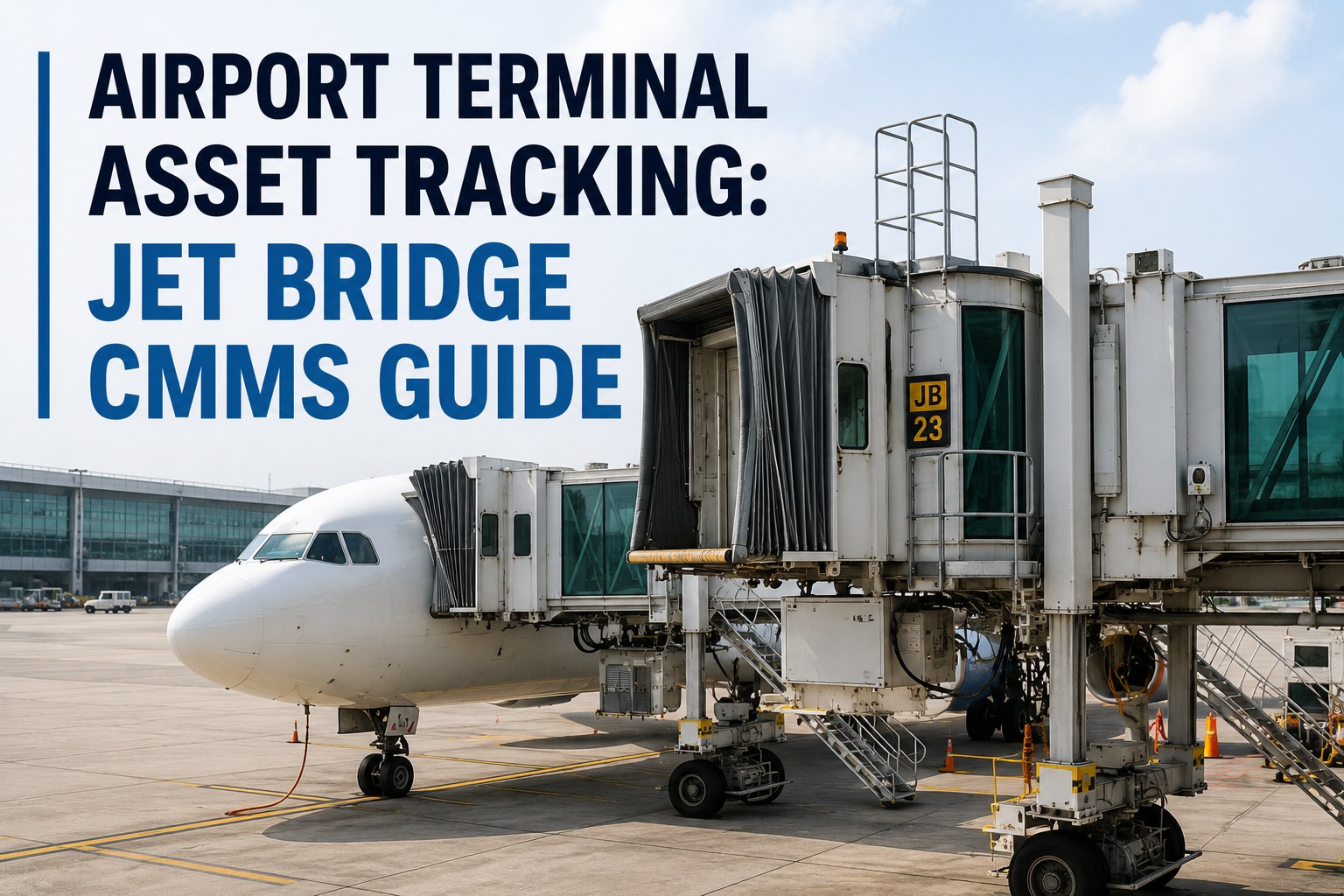
Gate-specific maintenance must coordinate with airline schedule holders. Use gate utilisation calendars to identify low-frequency slots — typically mid-morning for domestic gates and daytime for international gates.
04
Terminal HVAC and Mechanical
Major HVAC maintenance requiring system shutdown needs approval from terminal management and passenger experience teams. Plan major work in shoulder seasons (spring, autumn) away from summer peak demand.
05
Electrical and Power Systems
HV and LV switchgear maintenance requires isolation permits, backup generator activation sequencing, and safety officer sign-off. Schedule during lowest passenger density periods with ATC backup power confirmation.
06
Ground Support Equipment Fleet
GSE maintenance must maintain minimum operational unit counts per aircraft type. Use rotating maintenance cycles to avoid simultaneous servicing of identical unit types — e.g. never service all GPU units in the same week.
07
Regulatory Inspection Deadlines
ICAO Annex 14, national aviation authority, and building safety inspection deadlines must be built into the scheduling system as hard constraints — never overridden by operational convenience.
08
Specialist Contractor Scheduling
OEM service visits, specialist contractor engagements (elevator, fire suppression, AGL), and calibration services require advance booking of 4–12 weeks. Track in the same CMMS calendar to prevent conflicts with concurrent airport events.
6 Scheduling Pain Points That Drain Airport Maintenance Budgets
⚠
PM Tasks Deferred Into Overdue Status
When scheduling conflicts push PM tasks past their due date, they accumulate in an overdue backlog. Each week of deferral increases failure probability. Airports with more than 15% overdue PM backlogs consistently see rising reactive work order volumes 60–90 days later.
⚠
Crew Certification Mismatches
Scheduling work orders without checking technician certifications results in tasks arriving on site that cannot be legally performed by the assigned crew. Airside access cards, HV electrical certification, and AGL training requirements create frequent mismatches in manual scheduling systems.
⚠
Parts Not Available at Task Time
A PM window opens, the crew arrives, and the required spare part has not been ordered. In aviation environments, lead times for OEM parts can be 4–12 weeks. Without parts-linked scheduling, work orders get started and abandoned — consuming crew time without completing the asset repair.
⚠
Scheduling Visibility Siloed by Department
When airside maintenance, terminal operations, and facilities management each use separate scheduling tools, conflicts are discovered on the day rather than weeks in advance. A terminal HVAC shutdown scheduled on the same day as an airline maintenance visit to the same gate is a common and avoidable collision.
⚠
No Rolling Forward Planning Horizon
Scheduling only the current week means that resource conflicts, parts procurement gaps, and regulatory deadline clashes are discovered when there is no time to resolve them. Six-week rolling horizons are the minimum for complex airport operations.
⚠
Emergency Work Consuming Scheduled Crew Time
When reactive emergency repairs pull scheduled PM crews away from planned tasks, the PM backlog grows. Without a separate emergency response capacity buffer, reactive work cannibalises the preventive maintenance programme — accelerating the reactive maintenance spiral.
How Oxmaint Solves Airport Scheduling Complexity
Rolling PM Schedule with Conflict Detection
Oxmaint generates a 6-week rolling PM schedule from asset maintenance plans, flags resource conflicts before they occur, and alerts coordinators when regulatory deadlines are approaching without a scheduled task in the system.
Technician Certification Matching
Work orders are matched to technicians based on certification profiles — airside access, HV electrical, AGL training, confined space. Tasks cannot be assigned to uncertified crew, eliminating the compliance risk of manual scheduling.
Parts and Procurement Integration
When a PM task is scheduled, Oxmaint checks required parts availability and triggers procurement requests for items below stock threshold — ensuring parts arrive before the maintenance window, not after.
Operational Calendar Integration
Airport operational calendars — flight schedules, major events, airshow dates, peak seasons — are loaded into Oxmaint as constraint layers. The scheduling engine avoids proposing maintenance windows that conflict with high-demand operational periods.
Mobile Work Order Dispatch
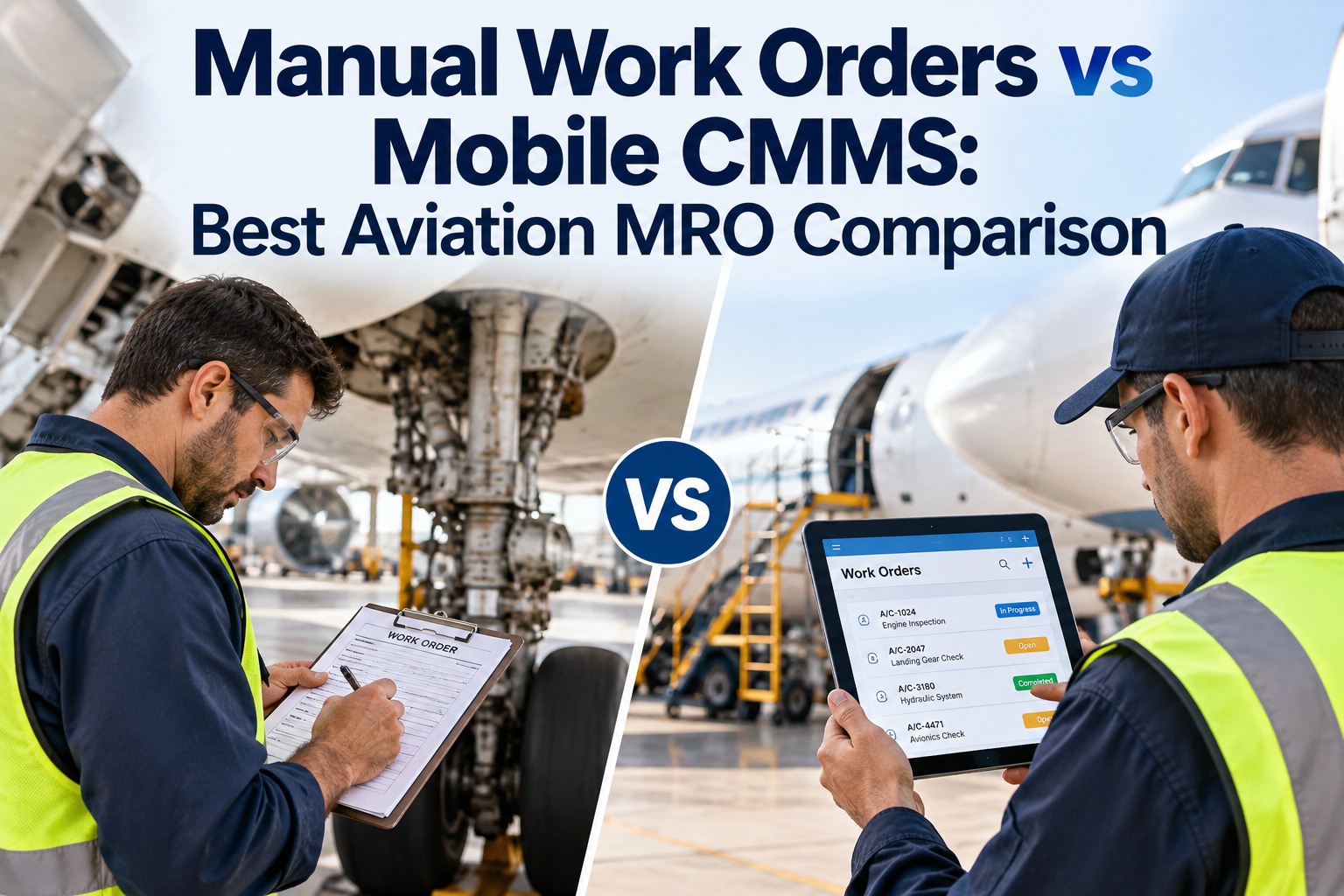
Technicians receive work order assignments on mobile devices with task checklists, asset history, required parts, safety instructions, and sign-off forms — eliminating paper job cards and reducing rework from incomplete information.
PM Compliance Tracking in Real Time
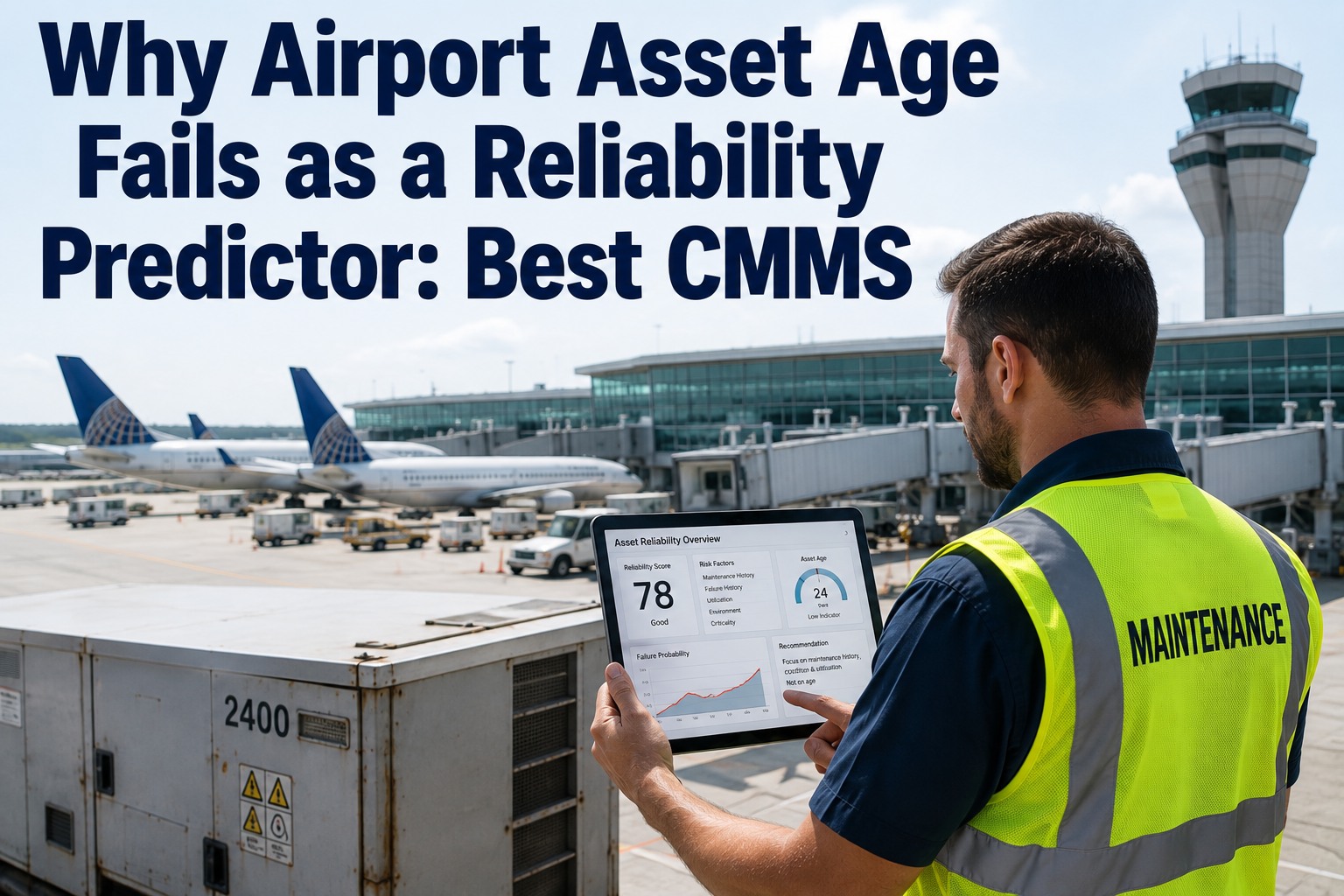
As tasks are completed or rescheduled, PM compliance rates update automatically. Coordinators see exactly which assets are on track, which are approaching overdue, and which need immediate attention — no end-of-month spreadsheet reconciliation.
Reactive Scheduling vs Structured Scheduling — The Difference in Practice
| Scheduling Activity |
Reactive / Manual Scheduling |
Oxmaint Structured Scheduling |
| PM task generation |
Manually entered from OEM manuals and spreadsheets; frequently missed |
Auto-generated from asset maintenance plans; never missed |
| Operational conflict detection |
Discovered day-of; task deferred or conflicts with operations |
Flagged 6 weeks ahead; alternative window automatically proposed |
| Crew assignment |
Manager assigns from memory; certification mismatches common |
System matches certification requirements to available qualified crew |
| Parts readiness |
Checked day-of; task abandoned if parts unavailable |
Parts requirement checked at scheduling; procurement triggered automatically |
| Regulatory deadline tracking |
Tracked in separate spreadsheet; often discovered after expiry |
Built into scheduling as hard constraints; alert 30 and 14 days before deadline |
| PM compliance reporting |
End-of-month manual assembly; 3–4 days to produce |
Live dashboard; compliance % updated as tasks complete |
Scheduling Programme Results — What Structured Systems Deliver
92%
PM Compliance Rate
Average Oxmaint airport customer PM compliance vs 63% industry average for manual scheduling
−42%
Reactive Work Orders
Reduction in unplanned corrective work within 12 months of implementing structured PM scheduling
Zero
Missed Regulatory Deadlines
Airports using Oxmaint scheduling with hard regulatory deadline constraints report zero missed inspection deadlines
28%
Maintenance Cost Reduction
Total maintenance cost reduction achieved over 24 months by shifting from reactive to structured PM scheduling
Airport maintenance teams that implement structured scheduling see 40–45% fewer emergency repairs and 92% PM compliance within the first year — start a free trial to see your scheduling calendar built automatically from your asset register, or book a demo to walk through your specific operational constraints.
Frequently Asked Questions
How do you schedule airside maintenance without disrupting flight operations?
Airside maintenance scheduling requires three inputs: the airport's operational schedule (runway utilisation by hour), the maintenance task's access and exclusion requirements, and the regulatory access procedures required by the airport authority and ATC. With these three loaded into a CMMS, the system can propose maintenance windows in the correct operational gaps — typically pre-dawn, late evening, or identified low-utilisation periods. For major works requiring significant runway or taxiway closures, coordination is initiated 6–8 weeks in advance through the Airport Operations Centre (AOC), with NOTAMs lodged at least 14 days prior.
What is a realistic PM compliance target for airport maintenance operations?
World-class airport maintenance operations target 92–95% PM compliance (tasks completed on time vs total scheduled tasks). This accounts for legitimate deferral due to access restrictions, weather events, or emergency priority conflicts. A compliance rate below 85% consistently predicts rising reactive work and asset degradation within 60–90 days. Below 75%, the maintenance programme is effectively reactive-dominant regardless of what the PM schedule says on paper. The most reliable path to 92%+ compliance is combining automated PM generation with a 6-week rolling schedule that allows proactive rescheduling before tasks go overdue.
How do you coordinate jet bridge maintenance across multiple airline users of the same gate?
Jet bridge maintenance coordination with multiple airline gate users requires a standard process: identify the maintenance window need (typically weekly or monthly PM), check the gate allocation calendar for the lowest-frequency slot, notify the primary gate airline 72 hours in advance, and confirm the bridge is serviceable and reinstated before their next scheduled use. In Oxmaint, the gate's PM schedule is linked to the operational calendar — the system proposes slots that do not conflict with confirmed airline utilisation and flags the notification requirement at scheduling time. For annual or major jet bridge inspections, 4–6 weeks advance coordination with the airline is standard practice.
How should emergency reactive maintenance be managed alongside a scheduled PM programme?
The most effective approach is ring-fencing a portion of maintenance crew capacity as an emergency response resource — typically 15–20% of total maintenance labour hours — rather than pulling PM crews to cover reactive work. When emergency work exceeds this buffer, PM deferral decisions are made consciously with explicit rescheduling rather than tasks simply falling off the calendar. Oxmaint supports this by automatically flagging when a PM task is deferred due to emergency priority, proposing the earliest available rescheduling window, and tracking the cumulative overdue backlog so management can see when reactive pressure is eroding the PM programme before it becomes a reliability problem.
OXMAINT AIRPORT MAINTENANCE SCHEDULING
Get Your Custom Maintenance Schedule — Built in Days
Oxmaint generates your airport's rolling PM schedule automatically from your asset register, operational calendar, and crew certifications — eliminating the manual coordination that leaves maintenance tasks deferred and assets degrading.
✔ Auto-generated PM calendar from your asset maintenance plans
✔ Operational conflict detection 6 weeks ahead
✔ Technician certification matching and parts readiness checks
Used by operations teams managing 10,000+ assets · No heavy implementation required · Live in days, not months