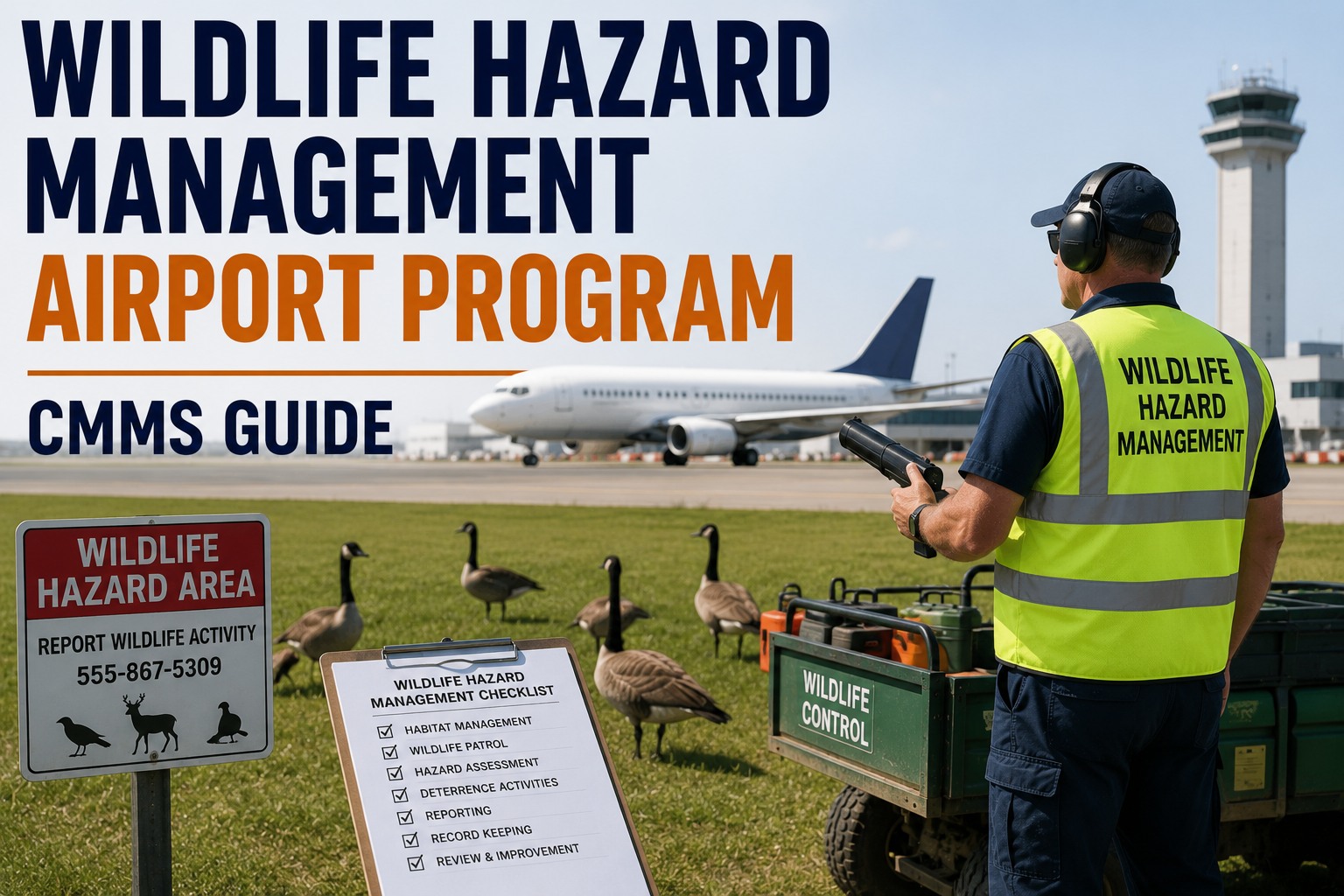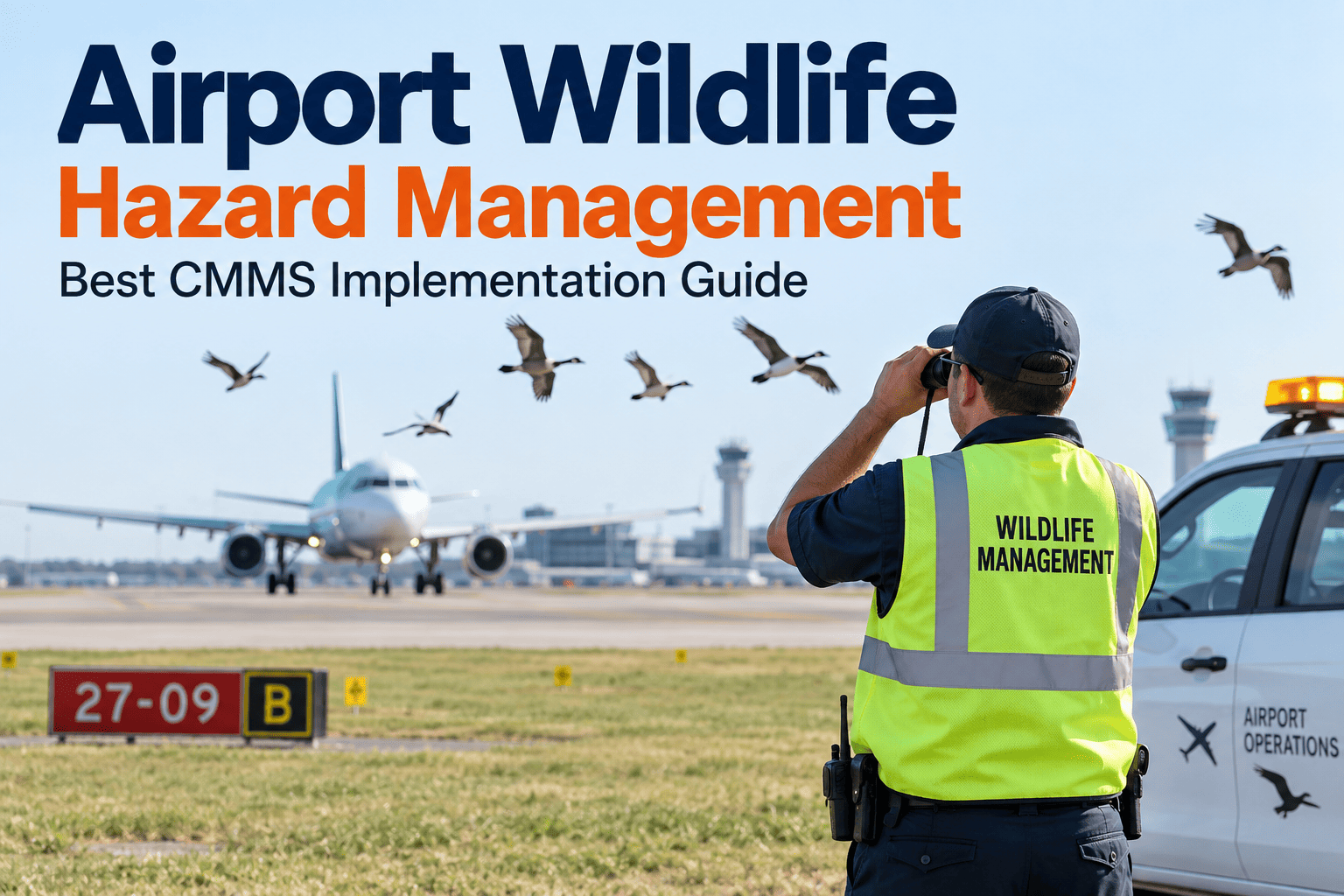
A wildlife strike happens in two seconds. The reporting chain that follows takes weeks, involves a mandatory federal form, a species identification (often via feather remains sent to a lab), a damage assessment, and an entry in a permanent database that shapes future risk analysis. Between strikes, a certificated airport runs patrol logs, dispersal events, habitat surveys, and an annual wildlife hazard assessment that feeds a plan the FAA reviews. All of it is records-heavy. This guide walks the discipline of implementing a Wildlife Hazard Management Plan (WHMP) in a CMMS, using OXMAINT AI, the AI-powered CMMS for airport operations teams.
Patrols. Dispersals. Strikes. Habitat. All On One Records System.
OXMAINT AI, the AI-powered CMMS/maintenance management software, holds the full WHMP records chain on one platform — patrol logs by movement area, dispersal events by species and method, strike reports linked to FAA Form 5200-7 filings, habitat survey attachments, and every observation retained for the annual wildlife hazard assessment.
The 5 Records That Make a WHMP Defensible
A WHMP without records is a paper document. Every certificated airport carries a written plan; the airports that pass inspection are the ones that can produce the records the plan requires. OXMAINT AI holds all five as connected records. Sign up free and build your WHMP records in OXMAINT AI.
The 3 Airport Zones — Where Records Must Cover
Wildlife management doesn't stop at the runway edge. The plan covers three zones with progressively different reporting cadences and dispersal authorities. OXMAINT AI holds each zone as an inspection zone with its own patrol schedule and observation register. Book a demo to see zone-based patrol scheduling.
The Strike-to-Filing Chain — From Impact to 5200-7
A wildlife strike triggers a records chain that ends with a federal filing. Every step must be captured, every timestamp defensible. OXMAINT AI walks the chain on one WO, with the 5200-7 status held on the strike record. Start free and set up the strike workflow.
Dispersal Methods — Choosing The Right Tool For The Species
Different species respond to different dispersal methods. A method that clears gulls does nothing for deer; the one that scatters starlings habituates coyotes. OXMAINT AI holds method-species effectiveness on the dispersal record so the pattern shows in trend view. Book a demo to see the dispersal method library.
| Method | Category | Best For | Considerations |
|---|---|---|---|
| Pyrotechnics (screamers, bangers) | Auditory | Flocking birds — starlings, blackbirds, gulls | Habituation risk with overuse · fire hazard in dry conditions · authorised users only |
| Propane Cannon | Auditory | Persistent bird populations at fixed locations | Fixed asset · rotate patterns to prevent habituation · noise consideration off-airport |
| Vehicle Harassment | Physical | Deer, coyote, waterfowl on ground | Requires trained patrol · needs backup dispersal method · slow to clear large flocks |
| Trained Raptor / Falconry | Physical | Persistent bird presence — pigeons, starlings, gulls | High effectiveness · specialist handler · weather-dependent · contract cost |
| Distress Call Broadcast | Auditory | Species-specific — gulls, crows, starlings | Species-matched call required · effectiveness drops with repetition · pair with visual reinforcement |
| Lasers (green, low-power) | Visual | Nocturnal or low-light — waterfowl on ponds, corvids at roost | Dawn/dusk effectiveness peak · airspace considerations · handheld only in movement area |
| Habitat Modification | Passive | Long-term reduction — vegetation, water features, food sources | Highest long-term effectiveness · requires infrastructure · surveyed at habitat register level |
| Lethal Take (permitted) | Reinforcement | Reinforcement of non-lethal methods where authorised | USDA WS depredation permit required · species-specific · records to US Fish & Wildlife |
Every Patrol. Every Dispersal. Every Strike. Every Record Defensible.
OXMAINT AI holds the full WHMP records chain on one platform — patrol logs, dispersal events, strike reports and habitat surveys — so the annual assessment writes itself from the operations year, and the FAA finds what it asks for.
The Habitat Survey — What Attracts Wildlife In The First Place
Wildlife shows up because something on airport property is feeding, watering, sheltering or nesting it. The habitat survey identifies what — and the WHMP prescribes what to change. OXMAINT AI holds each habitat feature as a register asset with its own survey cadence and modification history. Start free and load your habitat register.
Wildlife Hazard KPIs — What Gets Reviewed Annually
The annual Wildlife Hazard Assessment rolls up a year of records into five KPIs. Trends across years — not single-year numbers — tell the FAA whether the plan is working. OXMAINT AI produces the roll-up automatically. Book a demo to see the annual KPI roll-up.
What OXMAINT AI Gives an Airport Wildlife Coordinator
Purpose-built for airport wildlife programmes — one platform behind the patrol log, dispersal event register, strike-to-5200-7 chain, habitat survey, and annual assessment. Start free and load your WHMP records into OXMAINT AI.
When the FAA inspector asked us to demonstrate our dispersal effectiveness trending, we could pull twelve months of events by species and method with time-to-clear on each. Two years earlier we would have handed over a filing cabinet and hoped. The record continuity was what changed the inspection experience — not the technology, but the fact that patrol logs, dispersal events and strike reports were finally connected to the plan they served.
Frequently Asked Questions
Patrols. Dispersals. Strikes. Habitat. One Records System. One Defensible Plan.
Move your Wildlife Hazard Management Plan records onto OXMAINT AI — zone-based patrols, mobile dispersal capture, strike-to-5200-7 chain, habitat feature register and annual KPI roll-up on one platform, evidenced for every FAA inspection.