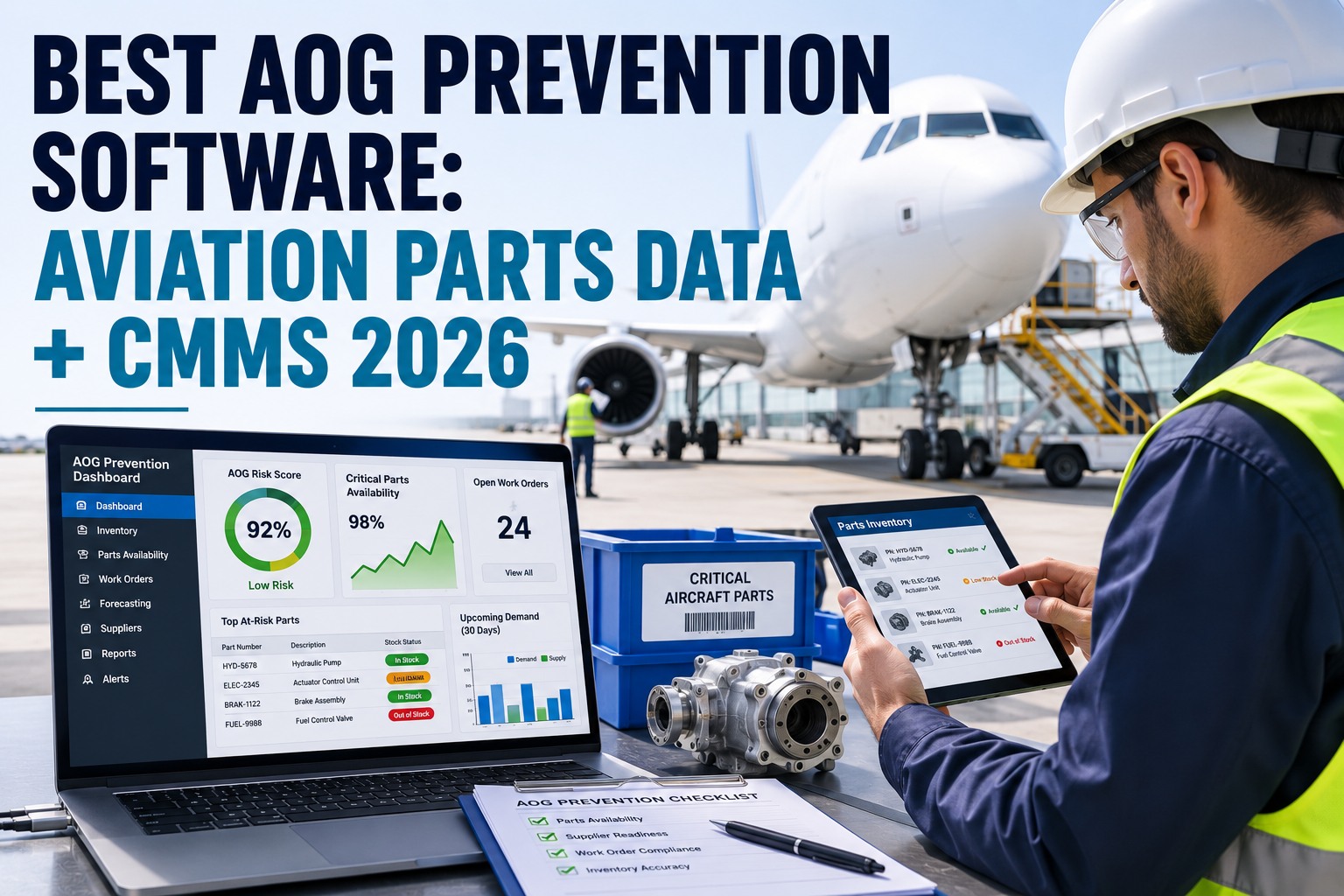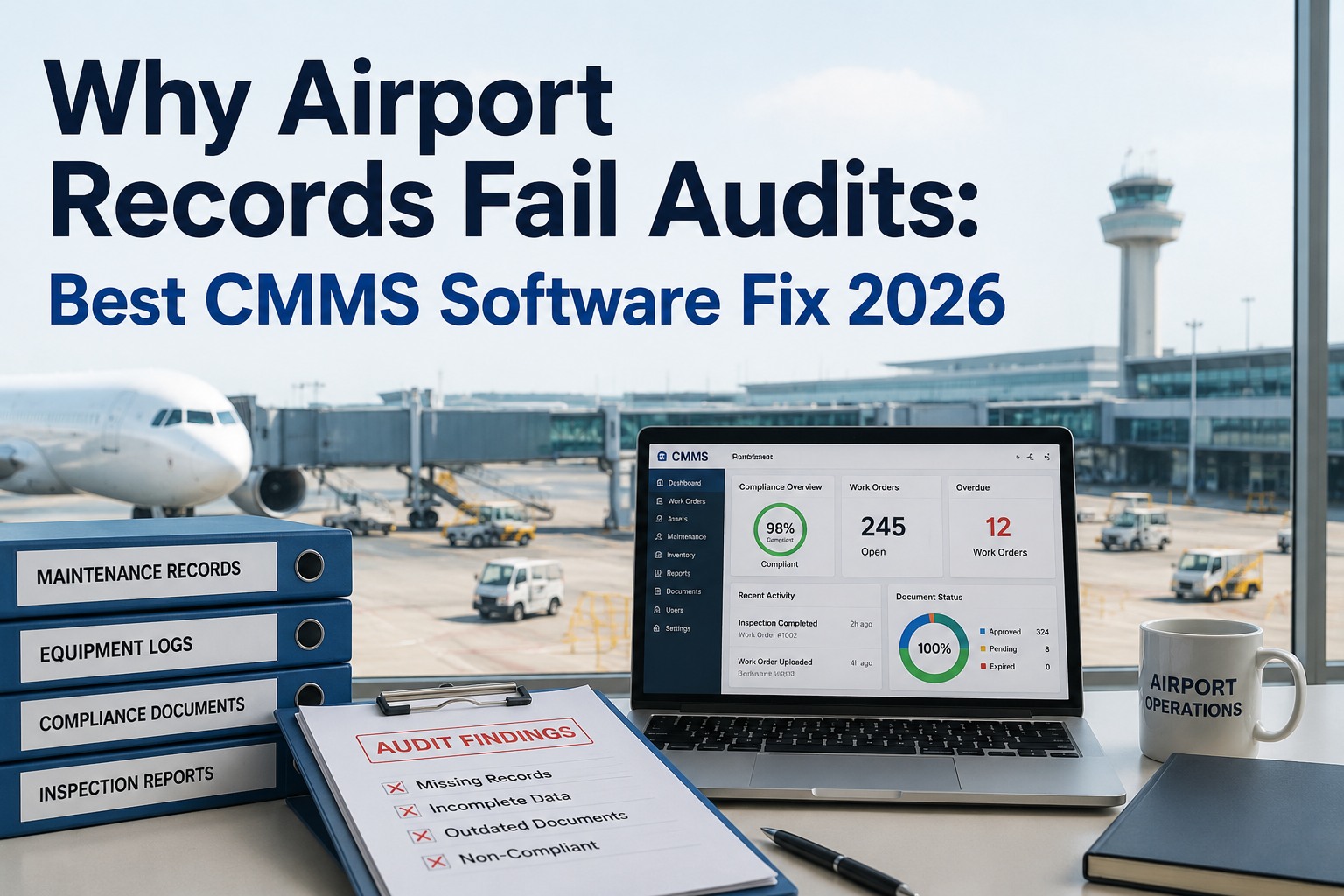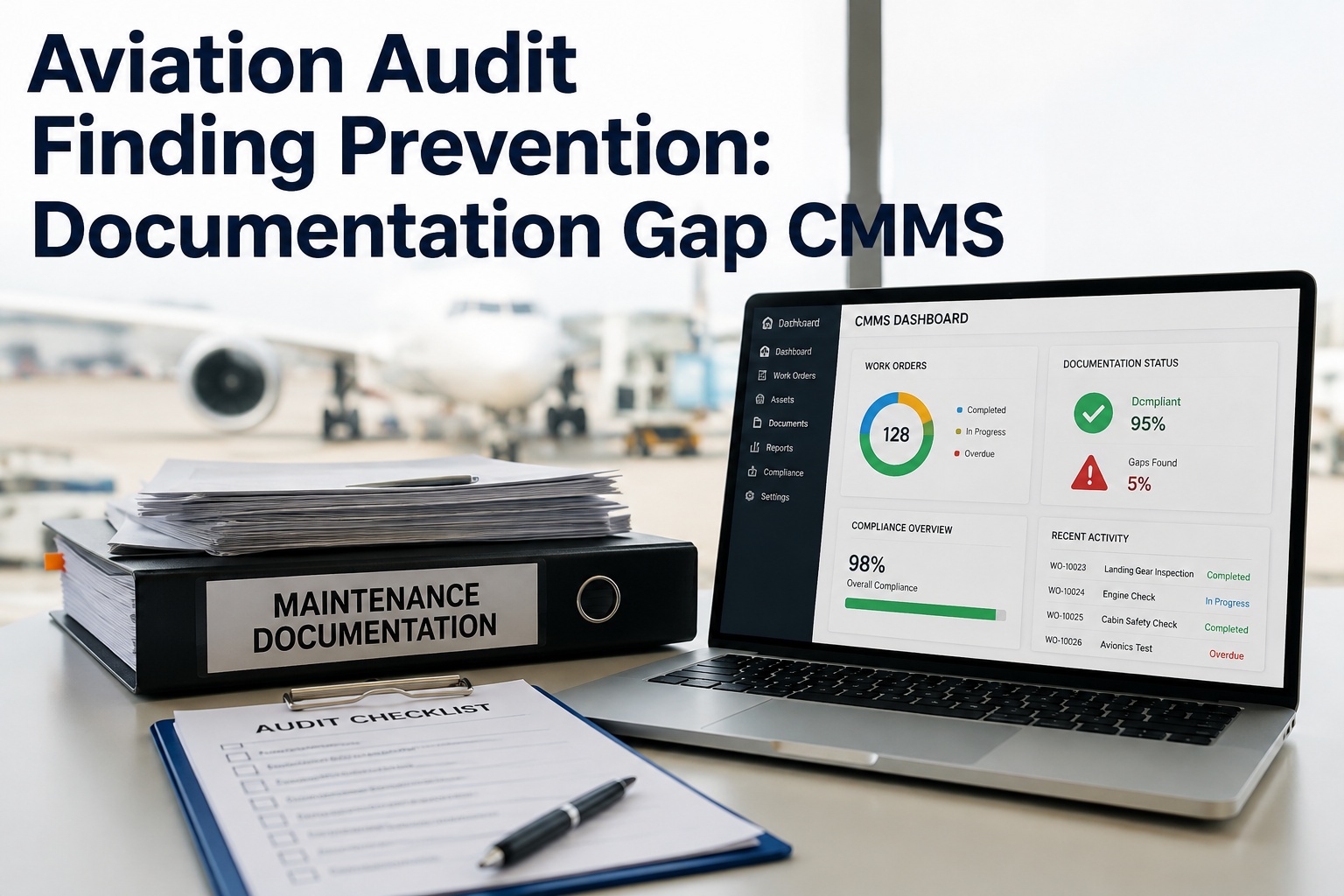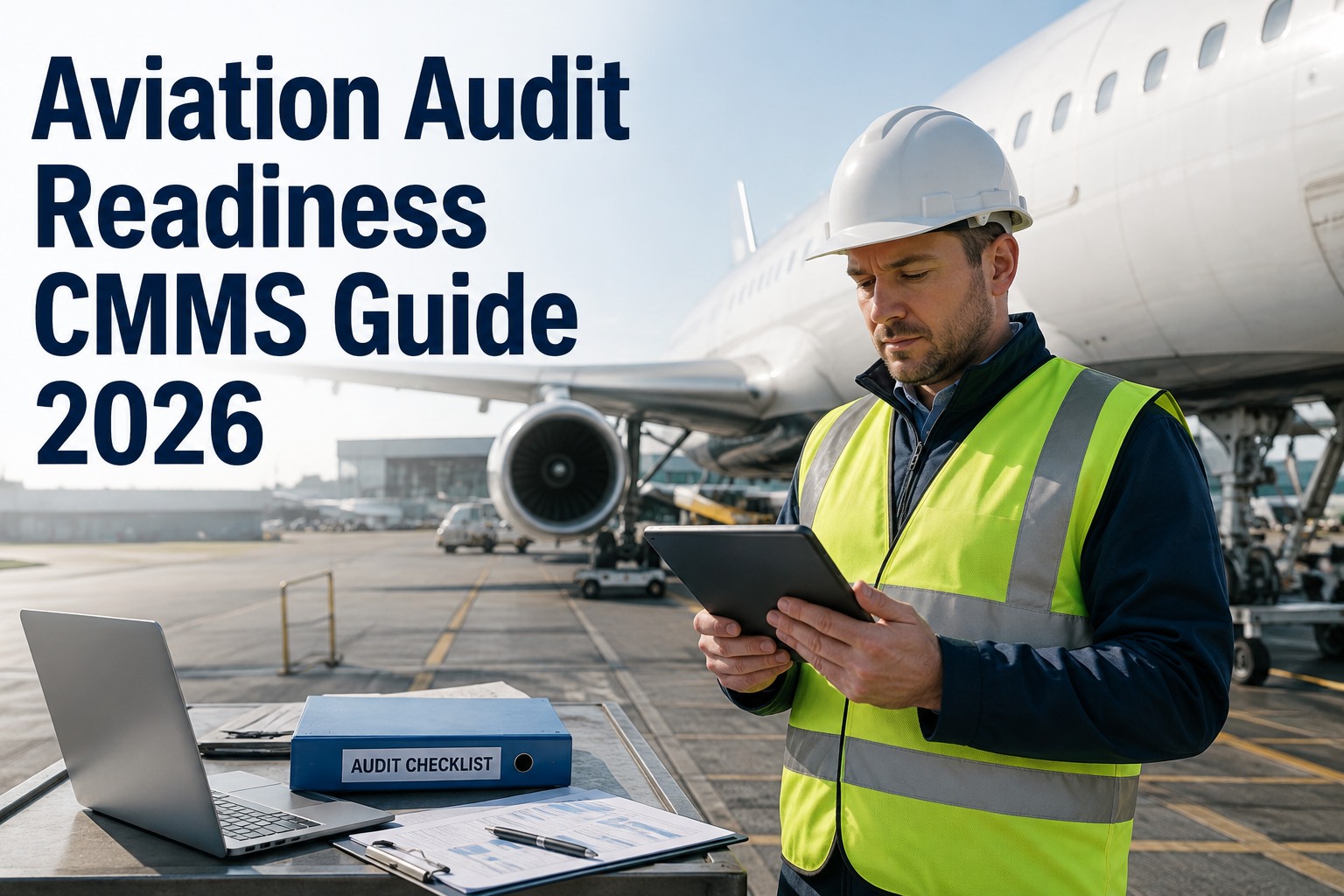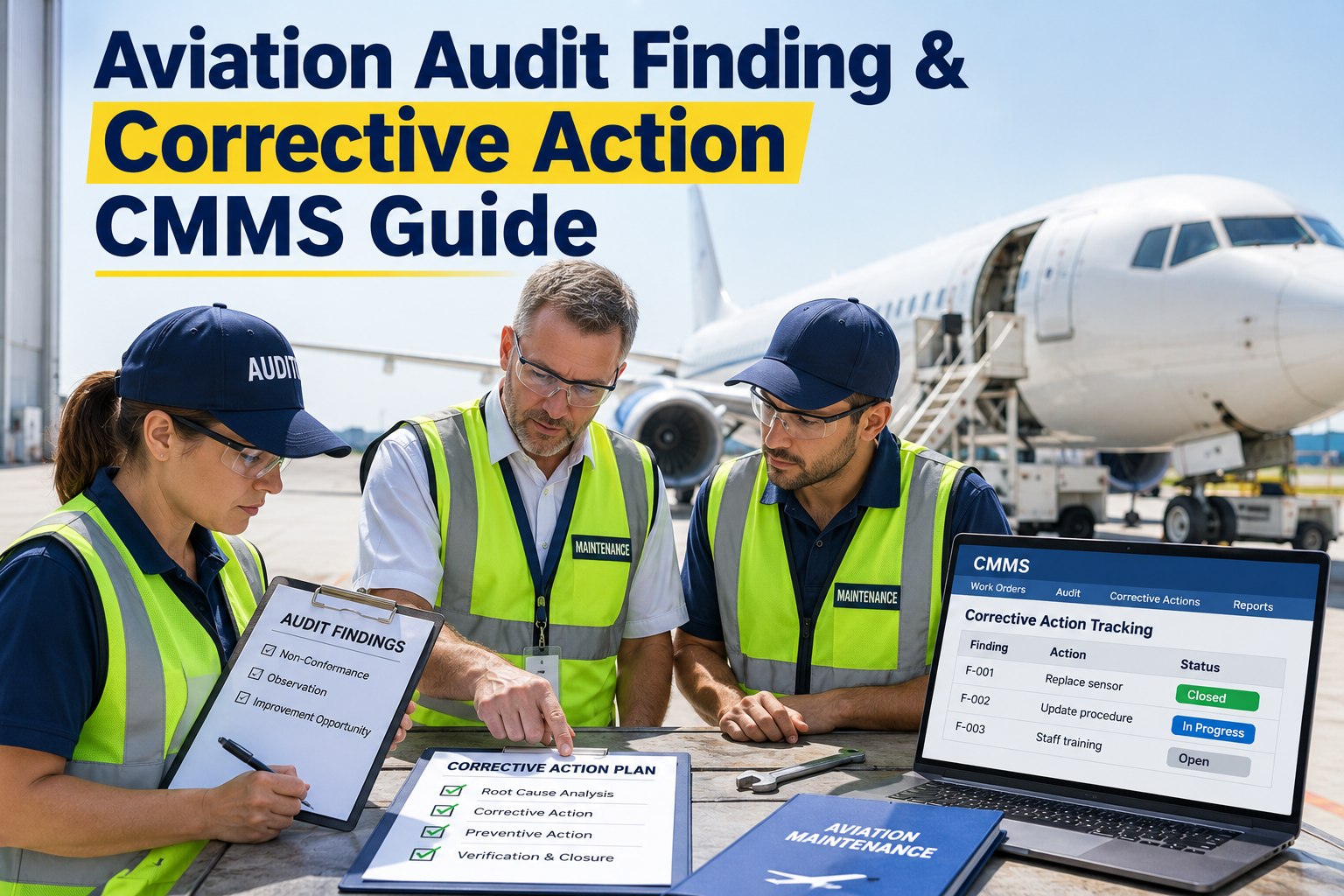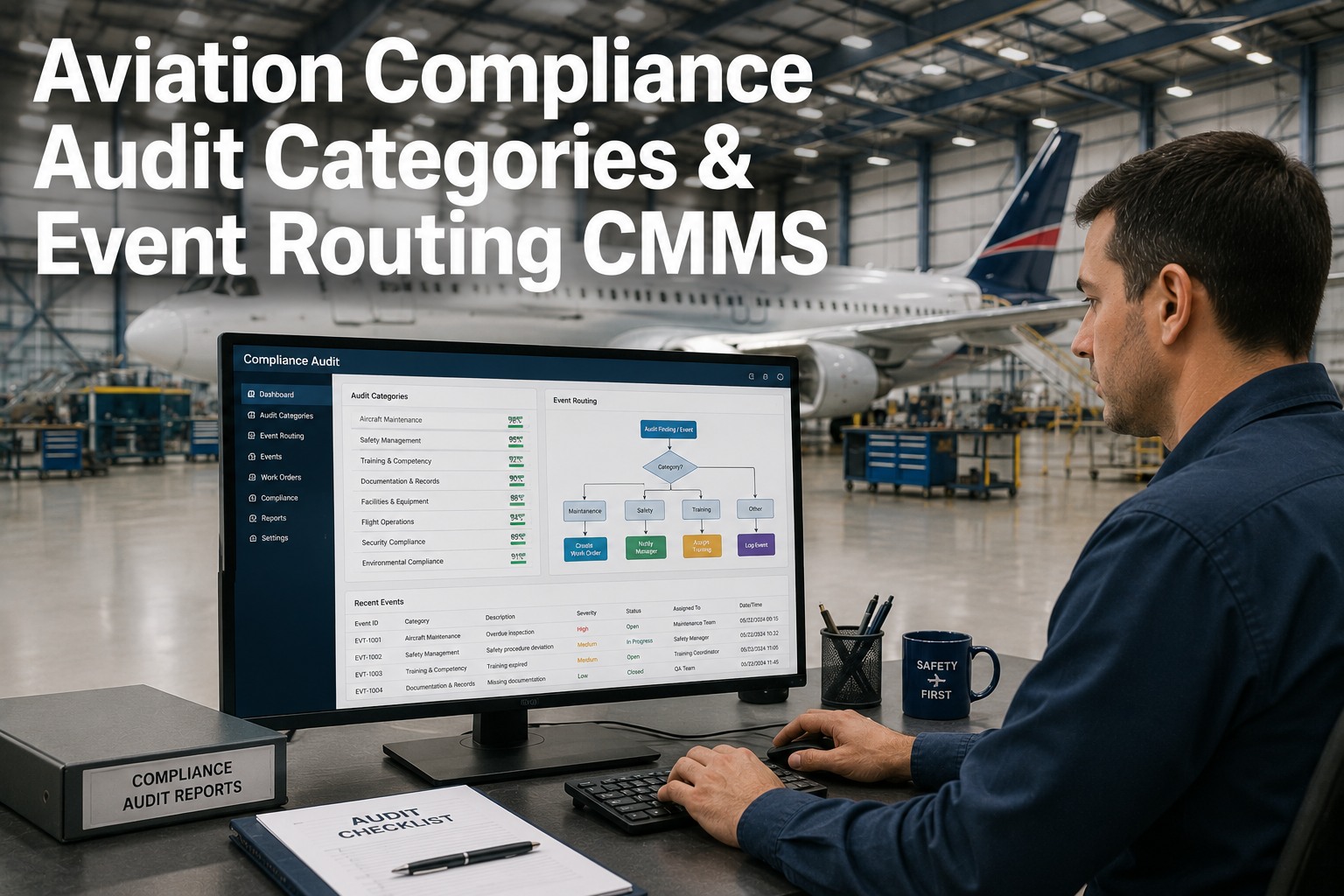
Aviation compliance audit categories and event routing in a CMMS determine whether a critical Airworthiness Directive finding reaches the right engineer in 4 minutes or 4 days. This guide covers P1, P2, and P3 compliance event classification — from emergency AD findings and unapproved part discoveries to scheduled quality audits — and shows how priority-based CMMS event routing ensures every compliance signal escalates to the correct decision-maker without delay. Whether you manage a 40-aircraft regional fleet or a 200+ asset MRO operation, structuring your audit categories correctly can cut compliance response times by 50–70% and eliminate the paper trail that sinks regulatory audits. Ready to modernize your maintenance compliance workflow? Start Free Trial and see how AI-powered routing transforms audit readiness.
COMPLIANCE EVENT ROUTING GUIDE 2026
Is Your Compliance Routing Fast Enough for P1 Events?
A single misrouted Airworthiness Directive finding can ground an aircraft for 72 hours and trigger a $250K revenue loss. Priority-based CMMS event routing ensures P1 emergencies, P2 planned actions, and P3 scheduled audits each follow the correct escalation path — reaching the right decision-maker in minutes, not days.
AUDIT CATEGORY TAXONOMY
Aviation Audit Categories Every CMMS Must Route Differently
Aviation compliance events are not interchangeable. An unapproved parts discovery, a safety report, and a routine quality audit each demand a distinct workflow, SLA, and escalation chain. Below are the four primary audit categories that a robust CMMS event routing engine must distinguish and handle independently.
Airworthiness Directive Findings
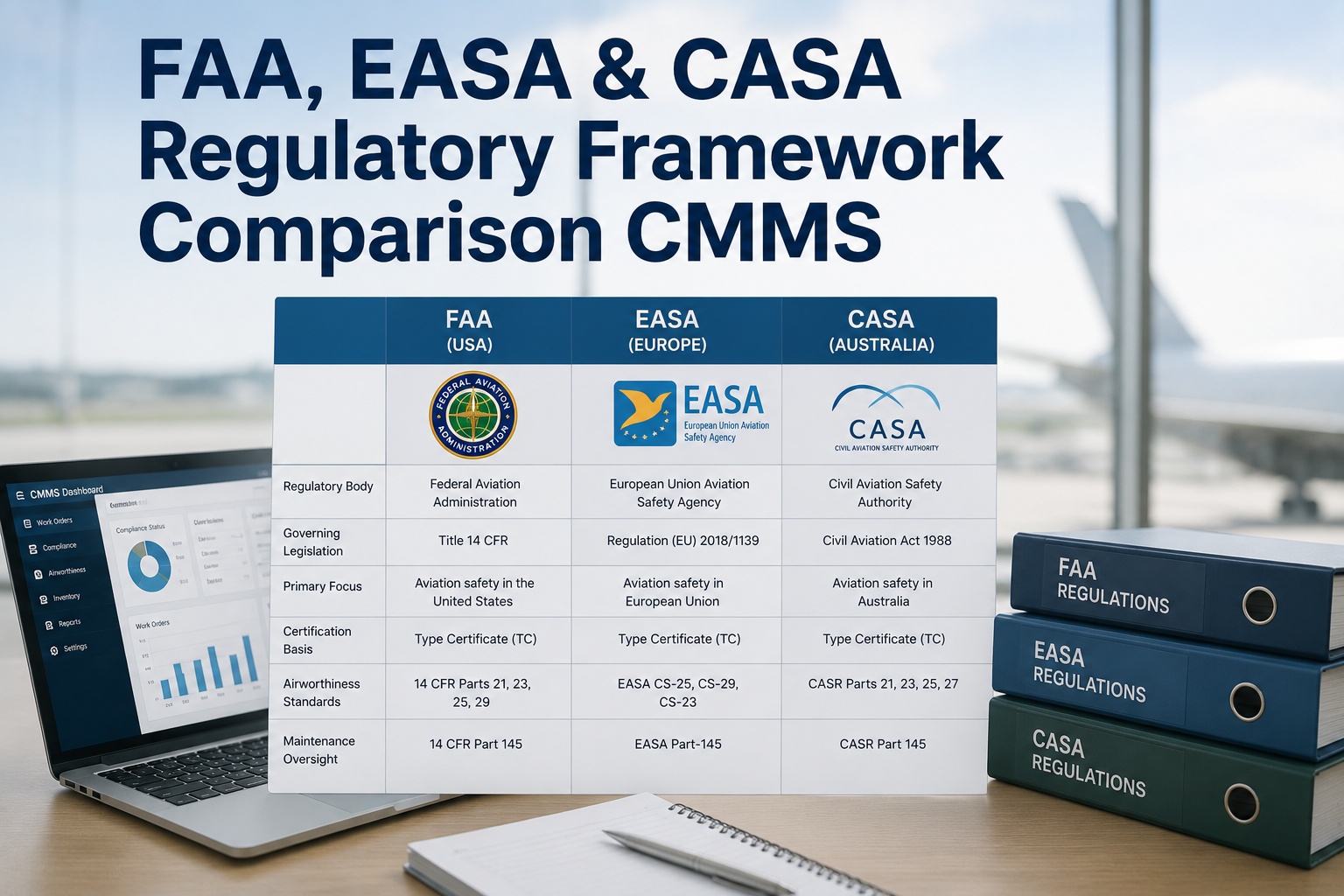
Mandatory inspections or corrective actions issued by the FAA, EASA, or CAA. AD findings carry the highest regulatory weight — a missed AD deadline can result in certificate suspension. CMMS routing must notify the Director of Maintenance, Chief Inspector, and assigned A&P mechanic simultaneously, with automatic work-order generation and parts reservation.
Suspected Unapproved Parts (SUP)
Discovery of parts lacking proper Form 8130-3 or EASA Form 1 traceability triggers a quarantine workflow. The CMMS must isolate the part in inventory, flag any installed assemblies, route to the Quality Assurance manager, and generate a Malfunction/Defect Report within the regulatory window.
Aviation Safety Reports (ASR)
Voluntary or mandatory safety reports submitted under ASAP or SMS programs require cross-functional visibility. The CMMS routes these to the Safety Officer and Compliance Manager, logs them in the safety risk register, and links to any related maintenance events for trend analysis and root-cause investigation.
Quality Escape & Non-Conformance
When a released asset fails to meet inspection standards post-maintenance, a quality escape event is triggered. The CMMS routes a corrective action request to the shift supervisor and QA team, links the originating work order, and tracks CAPA closure with documented evidence for the next audit cycle.
P1 P2 P3 COMPLIANCE PRIORITY MODEL
How P1, P2 & P3 Compliance Events Escalate in a CMMS
Priority-based event routing is the backbone of audit-ready aviation maintenance. The P1/P2/P3 model classifies every compliance event by urgency and impact, then applies pre-built escalation logic — so a P1 emergency never waits in the same queue as a P3 scheduled review. Here is how each tier routes through an AI-powered CMMS.
Aircraft-on-ground (AOG) events, immediate AD compliance, suspected unapproved parts on active aircraft. CMMS triggers instant SMS + email alerts to the DOM, Chief Inspector, and on-shift mechanics. Auto-creates a high-priority work order, reserves parts, and starts a countdown timer. If no acknowledgment within 15 minutes, the system escalates to the VP of Maintenance.
Recurring ADs, service bulletins with compliance windows, and safety report investigations. The CMMS assigns the event to the appropriate maintenance lead, schedules it against the flight schedule, and sends reminders at T-minus 14, 7, and 2 days. Escalation to the Compliance Manager triggers if the task is not started by T-minus 3 days.
Internal quality audits, SMS program reviews, inventory reconciliation, and documentation audits. The CMMS auto-generates these on a recurring calendar (monthly, quarterly, or annual), assigns them to the QA team, and compiles a digital evidence packet — completed checklists, signed work orders, parts traceability — ready for the next FAA or EASA audit.
ESCALATION LOGIC & CROSS-FUNCTIONAL VISIBILITY
CMMS Priority Escalation: Who Gets Notified and When
The difference between a clean audit and a finding often comes down to whether the right person saw the right signal at the right time. A CMMS with configurable escalation logic ensures no compliance event stalls. Below is a worked escalation matrix for a mid-size operation — a 60-aircraft fleet with 12 maintenance staff.
| Priority | Trigger Event | First Responder | Escalation L1 (if no ack) | Escalation L2 | Auto-Actions |
|---|---|---|---|---|---|
| P1 | AD finding on active aircraft | Shift Mechanic + DOM | Chief Inspector — 15 min | VP Maintenance — 30 min | Work order, parts hold, AOG flag |
| P1 | Unapproved part discovered | QC Inspector + QA Manager | DOM — 30 min | Compliance Director — 1 hr | Quarantine, Form 8130-3 check, MDR draft |
| P2 | Service bulletin due in 14 days | Maintenance Lead | DOM — 3 days before due | Compliance Manager — 1 day before | Scheduled WO, parts reservation, crew assign |
| P2 | Safety report filed (ASAP) | Safety Officer | Compliance Manager — 24 hr | Director of Safety — 48 hr | Risk register entry, trend link, investigation WO |
| P3 | Quarterly internal audit | QA Team Lead | QA Manager — 5 days before close | Compliance Director — 2 days before close | Evidence packet compile, checklist generation |
| P3 | Quality escape / non-conformance | Shift Supervisor + QA | DOM — 48 hr | VP Quality — 72 hr | CAPA request, root-cause link, corrective WO |
Worked example: A 60-aircraft regional carrier using spreadsheet-based tracking averaged 6.2 days to close a P2 service bulletin and missed two AD deadlines in a 12-month period, resulting in a $180K FAA civil penalty. After implementing priority-based CMMS event routing, average P2 closure dropped to 2.1 days, P1 acknowledgment fell to 11 minutes, and the carrier passed its next Part 145 audit with zero findings.
HOW OXMAINT HELPS
How OxMaint Solves Aviation Compliance Event Routing
OxMaint is an AI-powered CMMS and EAM platform built to turn chaotic compliance event management into a structured, auditable, and fast-moving workflow. From P1 AOG emergencies to P3 quarterly reviews, OxMaint maps every audit category to the right people, parts, and documentation — automatically. Here is what changes when you switch.
AI-Driven Priority Routing
OxMaint reads incoming event details — AD number, part serial, aircraft tail — and auto-classifies the event as P1, P2, or P3 based on your configurable rules engine. It then routes to the exact responders in your escalation matrix, cutting manual triage time by up to 80% and ensuring no P1 signal waits in a general inbox.
Auto-Generated Audit Evidence
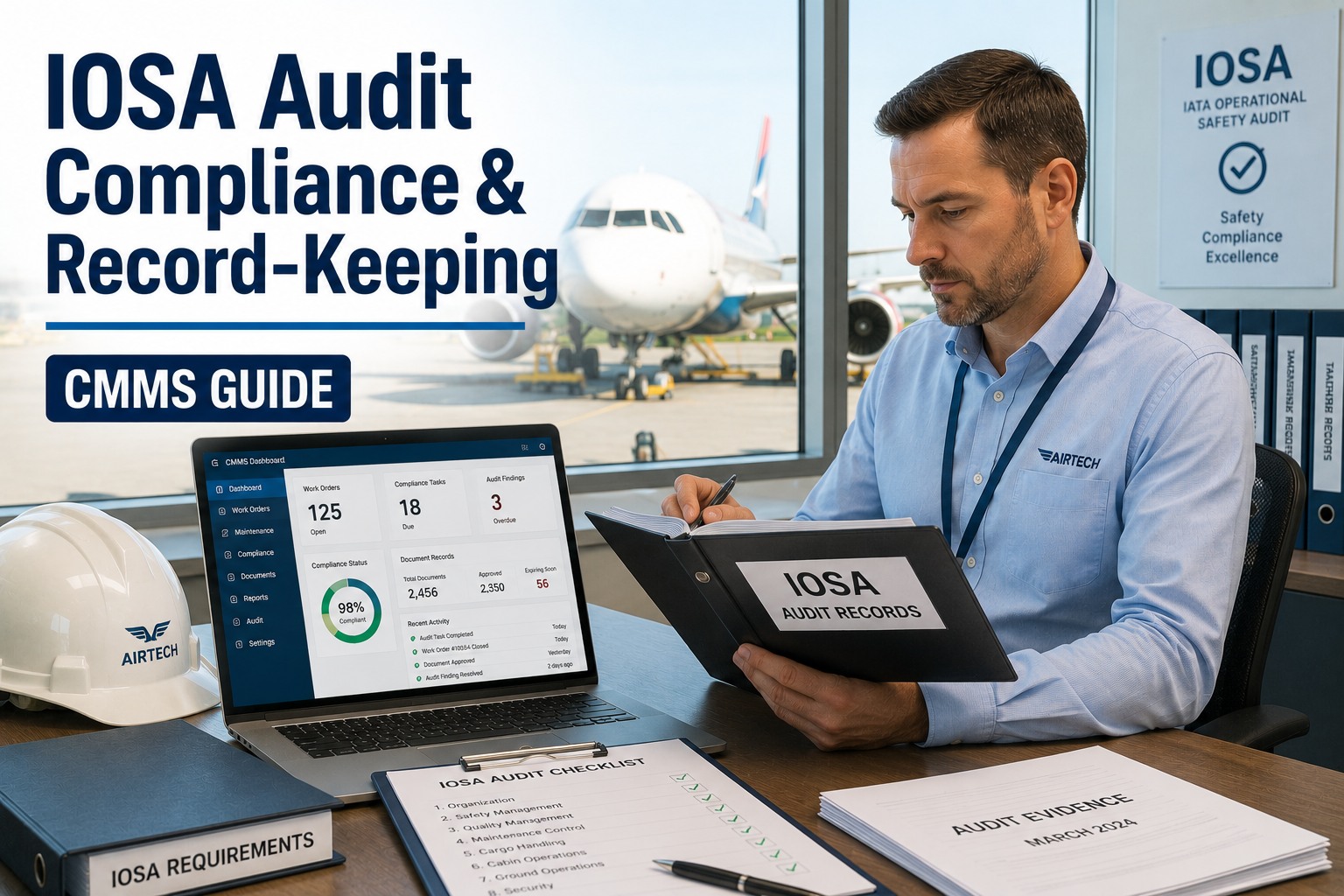
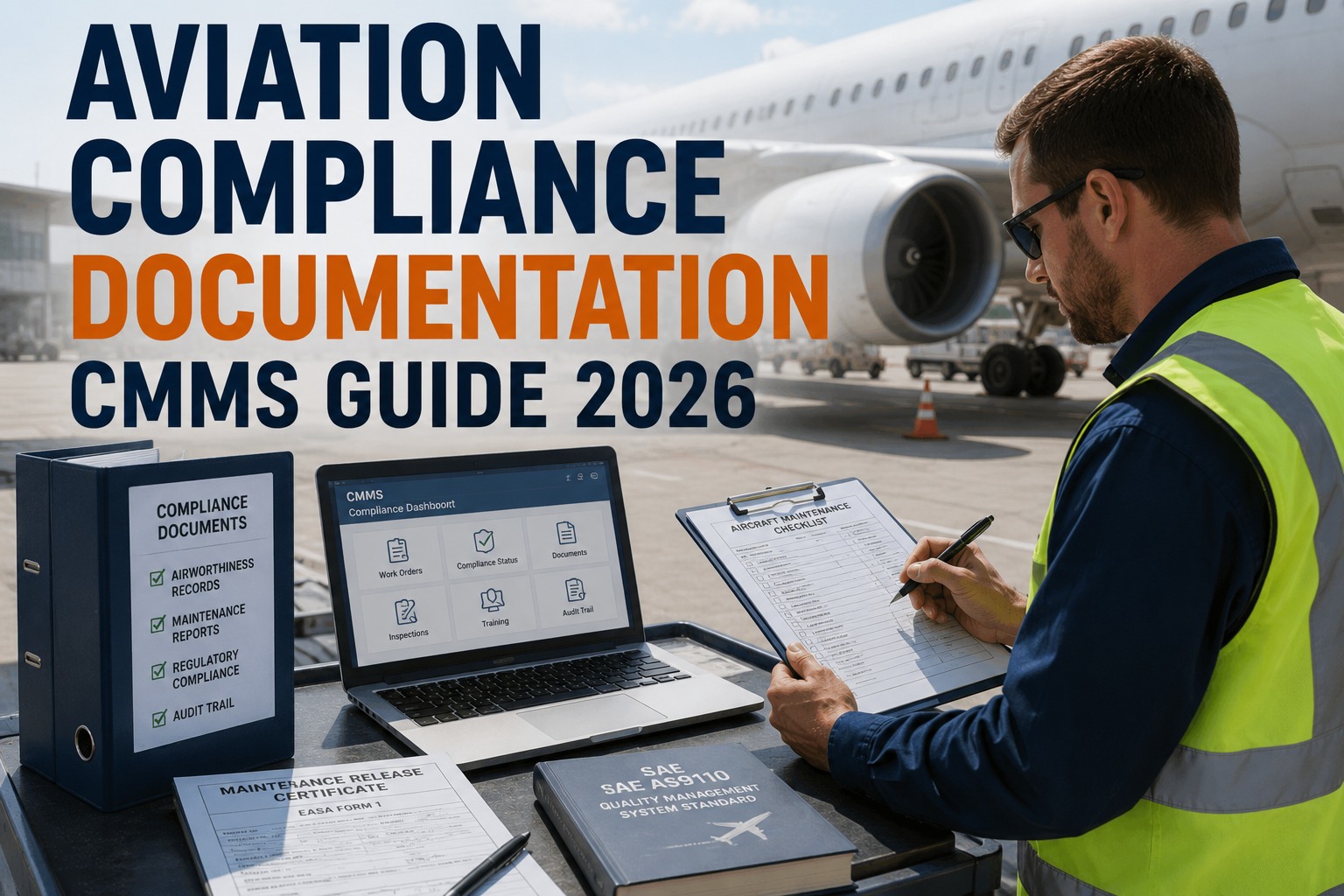
Every work order, parts transaction, inspector signature, and corrective action is captured in a tamper-evident digital trail. When an FAA or EASA auditor requests evidence for a specific AD or service bulletin, OxMaint compiles the complete packet — form, photos, sign-offs, parts traceability — in one click.
Integrated Parts & Inventory Control
When an unapproved part is flagged, OxMaint instantly quarantines the part in inventory, cross-references it against all installed assets, and reserves compliant replacements — all within the same event workflow. No more searching spreadsheets for where a suspect part ended up.
Predictive Compliance Analytics
OxMaint's analytics engine tracks your compliance event trends — recurring quality escapes on a specific aircraft type, overdue P2 tasks by maintenance base, AD closure rates by technician — and flags risk before it becomes a finding. Dashboards update in real time, giving leadership a live view of audit readiness.
SEE IT ON YOUR ASSETS
Book a 30-Minute Demo of OxMaint Compliance Routing
See how P1/P2/P3 event routing, auto-generated audit evidence, and predictive compliance analytics work on a live system configured for your fleet. Bring your toughest audit scenario — we will route it in real time.
FAQ
Aviation Compliance Audit Categories & CMMS Event Routing FAQ
What are the main aviation compliance audit categories in a CMMS?
The four primary aviation compliance audit categories are Airworthiness Directive (AD) findings, suspected unapproved parts (SUP), aviation safety reports (ASR), and quality escapes or non-conformances. Each category follows a distinct CMMS workflow with its own SLA, escalation chain, and documentation requirements, ensuring the correct responders and regulatory evidence steps are triggered automatically.
How does P1, P2, P3 priority routing work in aviation maintenance?
P1 events are emergency, safety-critical, or grounding situations requiring acknowledgment within 15 minutes and immediate work-order creation. P2 events are planned actions with a compliance window — such as recurring ADs or service bulletins — requiring acknowledgment within 24 hours and scheduling before the deadline. P3 events are routine scheduled audits and reviews with a 48-hour acknowledgment target. A CMMS applies escalation logic at each tier, notifying the next-level manager if the first responder does not acknowledge in time. Book a Demo to see live P1/P2/P3 routing on a sample fleet.
Why should aviation maintenance teams use CMMS event routing instead of spreadsheets?
Spreadsheets lack automated escalation, real-time notification, and tamper-evident audit trails. Teams using manual tracking average 4–6 days to close a P2 compliance event and frequently miss P1 acknowledgment windows. A CMMS like OxMaint reduces average response time by up to 72%, auto-generates audit evidence packets, and provides cross-functional visibility so that maintenance, quality, and safety teams all see the same live data.
Can a CMMS help pass FAA Part 145 and EASA audits?
Yes. A CMMS with structured audit categories and event routing ensures every compliance event — AD findings, unapproved parts, safety reports, quality escapes — is documented with a complete evidence trail including work orders, inspector sign-offs, parts traceability, and corrective actions. OxMaint compiles these records into a downloadable audit packet, reducing audit preparation time from 40+ hours to under 2 hours and significantly lowering the risk of findings.
How long does it take to implement OxMaint for aviation compliance routing?
Most aviation maintenance teams are live on OxMaint within 2–4 weeks. The platform comes with pre-built P1/P2/P3 routing templates, aviation-specific audit category workflows, and configurable escalation matrices. You can import existing asset registers, parts inventory, and open compliance events from spreadsheets or legacy systems during onboarding. Start Free Trial to explore the routing engine, or book a demo for a guided setup walkthrough.
START YOUR COMPLIANCE TRANSFORMATION
Every Compliance Signal. Right Decision-Maker. On Time.
Join the aviation maintenance teams using OxMaint to cut P1 response times by 70%, pass audits with zero findings, and eliminate spreadsheet-driven compliance chaos for good.
Free 14-day trial · No credit card