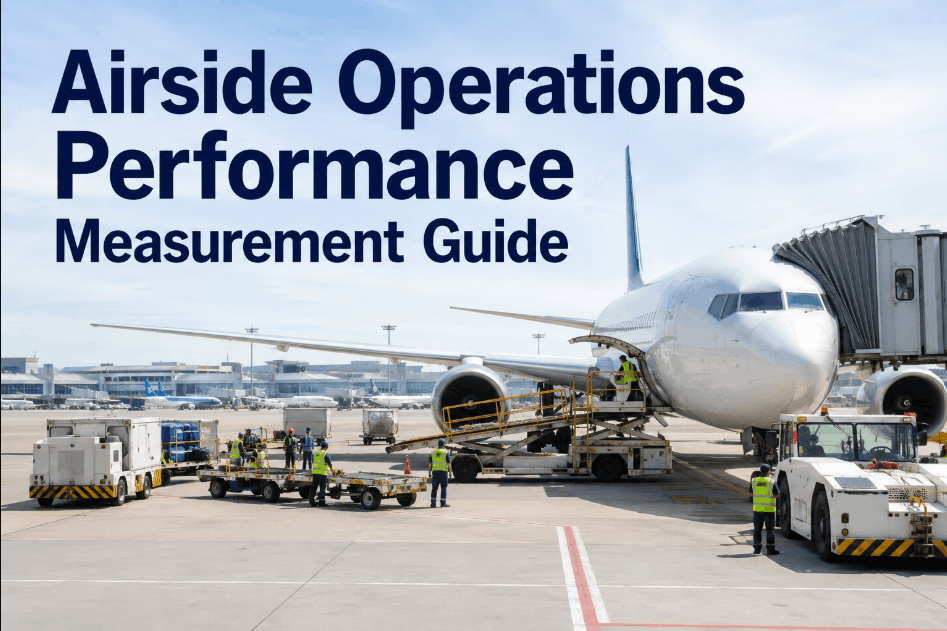
Airside operations performance measurement separates airports that run on schedule from those that absorb delays shift after shift. Response time, service flow, and movement coordination across active ramp and apron areas generate measurable data every hour — but most operations teams still lack a unified performance scorecard that connects field activity to operational outcomes. Sign Up Free to start tracking airside performance metrics with digital work orders and real-time coordination tools. Oxmaint AI helps airport operations and maintenance teams build structured performance measurement programs that capture response timing, turnaround compliance, service sequencing, and field efficiency data across every active airside zone — shift after shift, without manual reporting gaps.
Build Your Airside Operations Scorecard — Starting Today
Oxmaint AI captures response time, movement coordination, and service flow data across active airside areas — giving operations managers the performance visibility they need to close gaps before delays compound. Book a Demo to see structured airside performance measurement applied to your airport operations.
Why Airside Performance Measurement Breaks Down Without a Structured System
Gap #1
No Real-Time Response Visibility
Service response times across ramp, fueling, and ground support are measured after delays occur rather than tracked in real time — making trend identification and intervention impossible until performance has already degraded.
Gap #2
Fragmented Coordination Records
Movement coordination data across active airside zones lives in radio logs, paper forms, and verbal reports — preventing any cross-shift or cross-zone pattern analysis that would identify systemic efficiency gaps.
Gap #3
Turnaround Timing Blind Spots
Turnaround service sequences lack structured timing capture at each stage — ground crews track start and finish but not the individual service milestones that identify where turnaround time is actually being lost.
Gap #4
No Scorecard Across Zones
Airside performance is reviewed zone by zone without a unified operational scorecard — creating inconsistent measurement standards between apron areas and no shared baseline for performance comparison.
Gap #5
Escalation Without Data
Operational managers escalate service flow issues based on supervisor reports rather than captured field data — slowing response decisions and reducing confidence in corrective actions taken during active operations.
Gap #6
No Asset Condition Link
Ground support equipment condition data is disconnected from operational performance metrics — making it impossible to correlate GSE availability gaps with service timing failures or turnaround delays.
How Oxmaint AI Structures Airside Operations Performance Measurement
01
Zone and Asset Register
Define airside operational zones, service check points, and GSE assets in Oxmaint — with performance thresholds and response time targets assigned per zone and service type.
→
02
Shift Work Order Dispatch
Oxmaint generates shift-based operational work orders and delivers them to field crews via mobile — with structured timing capture fields, service sequencing steps, and escalation prompts built in.
→
03
Field Performance Capture
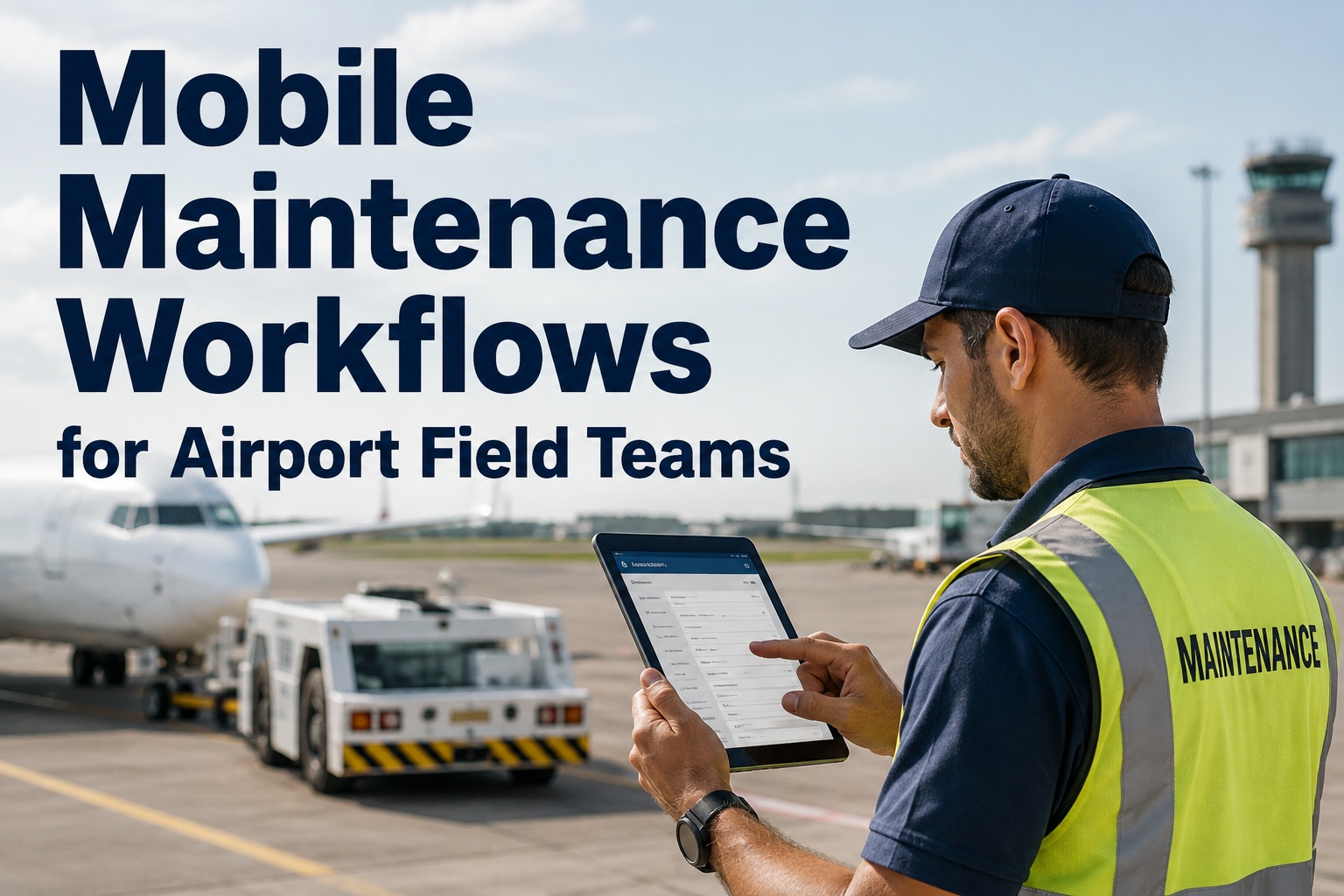
Crews record response times, service milestones, and coordination events in real time from the Oxmaint mobile app — with automatic timestamp logging and photo evidence for condition findings. Sign Up Free to start capturing field data digitally.
→
04
Performance Dashboard Reporting
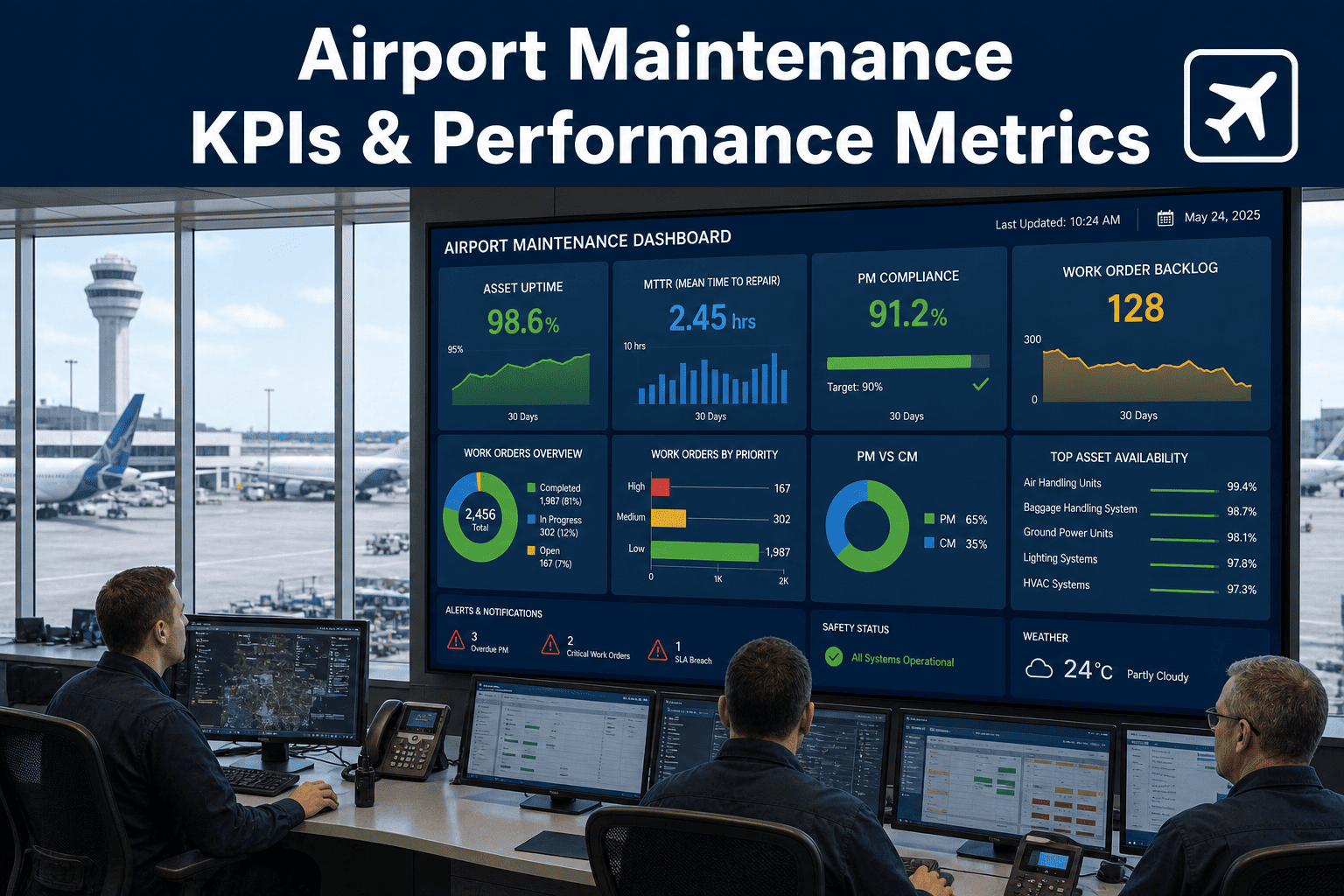
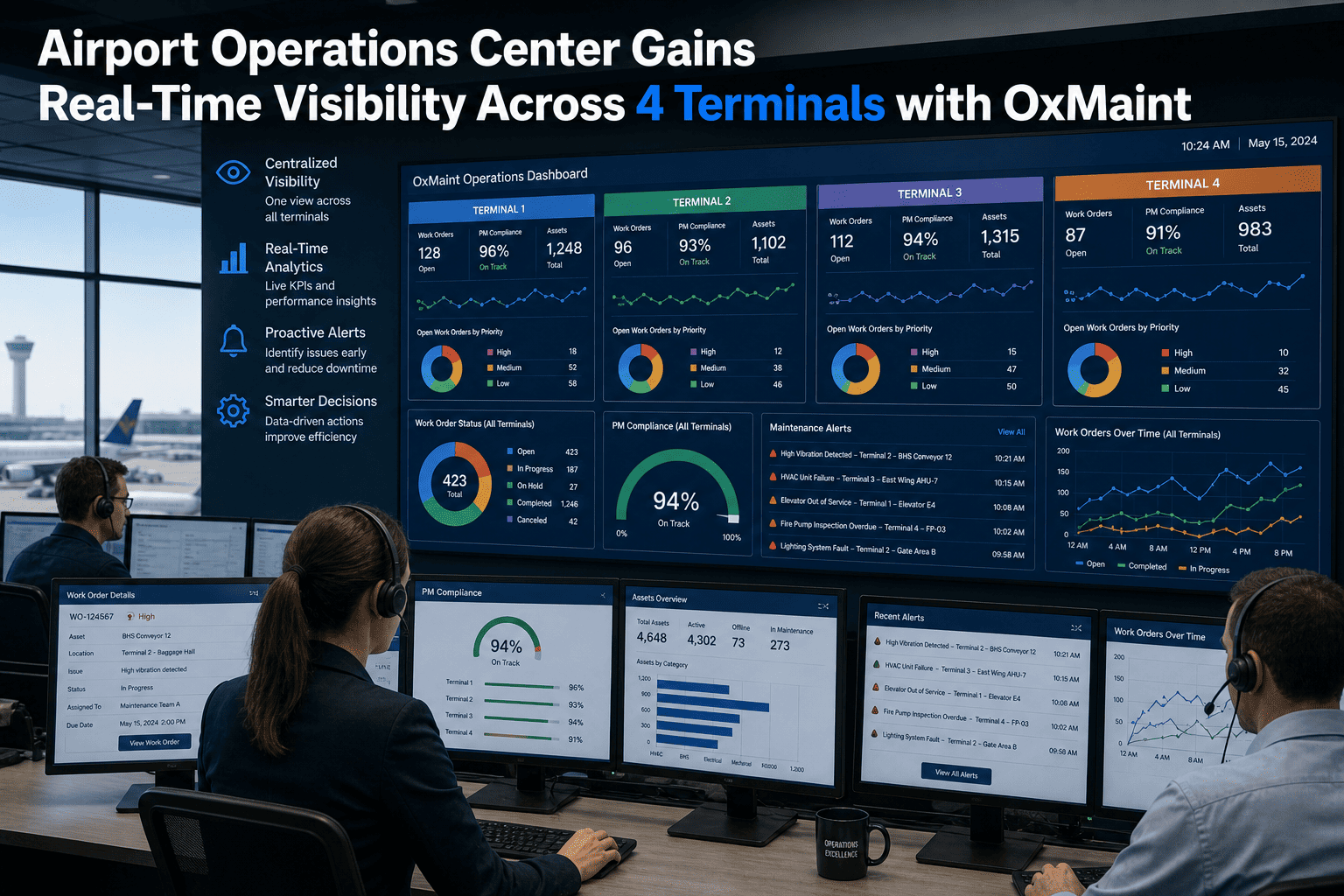
Oxmaint aggregates airside performance data across zones and shifts — generating KPI dashboards that identify response time trends, service flow bottlenecks, and coordination patterns that require management attention.
What Oxmaint Captures Per Airside Operations Shift
Response Time Data
Service response timestamps captured per work order
Zone-level response time tracked against performance targets
Delayed responses flagged automatically for supervisor review
Service Flow Records
Turnaround service sequence milestones captured per stand
Service overlap and sequencing gaps identified per shift
Crew digital signoff on each service completion stage
Coordination Tracking
Movement coordination events logged per airside zone
Conflict and congestion incidents captured with timestamps
Escalation status tracked from field event to resolution
Operational Outcome
Performance records exportable for compliance and audit review
Recurring coordination patterns identified before delays compound
Cross-shift airside KPI trends built automatically from shift data
58%
Of airside service delays traced to response timing gaps not visible in manual coordination records
2.3×
Faster turnaround deviation identification when service milestones are captured digitally per stand
48hrs
Typical Oxmaint deployment time from setup to first structured airside performance work orders active in field
30days
Average time to first cross-shift airside performance pattern identification after Oxmaint tracking is deployed
6 KPIs to Measure Airside Operations Performance Effectively
These KPIs help airport operations and ground handling teams confirm that airside service flow, response timing, and movement coordination are meeting performance targets across every active zone. Book a Demo to see how Oxmaint calculates all six automatically across your airside operation.
KPI 01
Service Response Time
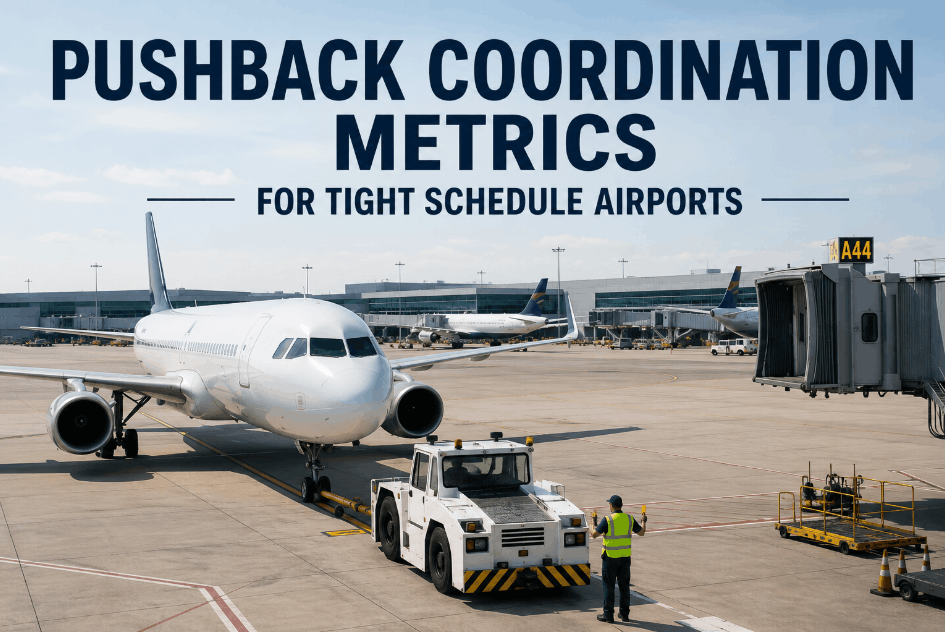
Average time from service request to crew arrival at the stand, measured per zone and service type. Response time gaps by zone identify resource positioning problems that compound into turnaround delays across active operations.
Response Timing
KPI 02
Turnaround Milestone Compliance
Percentage of turnaround service sequences completed on schedule at each milestone stage. Low milestone compliance pinpoints which service stages consistently fall behind target rather than attributing delay to the full turnaround cycle.
Turnaround Metrics
KPI 03
Movement Coordination Incident Rate
Number of coordination conflicts, congestion events, or movement deviations per shift across active airside zones. Increasing incident rates flag coordination breakdown patterns before they generate safety or delay consequences.
Movement Control
KPI 04
GSE Availability Rate
Percentage of shifts where ground support equipment is available and serviceable at the start of each operational period. GSE availability gaps directly extend service response times and degrade turnaround performance across dependent stands.
Field Efficiency
KPI 05
Escalation Response Rate
Percentage of operational issues escalated and actioned within the target response window from initial field report. Low escalation response rates identify coordination breakdowns between field crews and operational control that delay corrective action.
Coordination Tracking
KPI 06
Operational Record Completeness Rate
Percentage of shift work orders with all required service timing fields, crew signoff, and timestamps completed at closure. Incomplete records prevent cross-shift trend analysis and make performance reviews dependent on unreliable verbal reports.
Performance Review
Oxmaint AI vs Standard CMMS for Airside Operations Performance Measurement
Standard CMMS — Limited Airside Performance Visibility
Work orders tracked but no structured service timing capture or turnaround milestone sequencing built into field workflows
Coordination events recorded as free text notes with no structured field criteria or cross-shift aggregation
No cross-zone performance comparison — airside KPIs remain disconnected across apron areas and shift teams
Escalation relies on supervisor verbal reports rather than automatic flagging from field timing data
GSE condition and availability data disconnected from operational performance metrics and service timing records
No airside performance trend reporting — shift data closes in work orders without pattern analysis or dashboard output
Oxmaint AI — Airside Performance Tracked in Real Time
Structured service timing fields and turnaround milestones dispatched to field crews via mobile — Sign Up Free
Coordination event capture enforced at each work order stage before shift closure is permitted
Automatic escalation triggered by response time breaches and movement coordination incidents in the field
Cross-shift performance aggregation identifies recurring service flow and coordination patterns across zones
GSE condition records linked to operational work orders for availability-to-performance correlation reporting
Airside KPI dashboards generated automatically from cumulative shift data — Book a Demo
Industries and Airport Operations Teams Using Oxmaint
Ground Handling
Turnaround Performance Tracking for Ground Handling Teams
Ground handling operators use Oxmaint to capture turnaround service milestones, response timing, and crew coordination data digitally — building the performance record that identifies service flow gaps before they generate delay patterns across active stands. Sign Up Free for your ground handling operation.
Airport Operations
Airside Zone Performance Dashboards for Airport Control
Airport operations teams use Oxmaint to aggregate movement coordination, response timing, and zone compliance data across all active airside areas — giving operations control the real-time performance visibility needed to manage field efficiency across every shift. Book a Demo for your airport operations team.
Ramp Management
Ramp Coordination Metrics for Active Apron Areas
Ramp management teams use Oxmaint to track coordination events, service sequencing, and GSE availability across active apron zones — capturing the field data that identifies ramp congestion patterns and response time gaps before they accumulate into operational disruption.
Maintenance Control
GSE and Airside Asset Performance Measurement
Airside maintenance control teams use Oxmaint to connect GSE condition records with operational performance data — identifying which equipment availability failures are generating service timing degradation and turnaround delays across active operational periods.
Your Airside Teams Generate Performance Data Every Shift. Start Capturing It.
Oxmaint AI helps airport operations teams measure response time, service flow, and movement coordination across active airside areas — building the performance scorecard that surfaces operational gaps before they compound into delays and compliance risks.
Frequently Asked Questions
What are the most important KPIs for measuring airside operations performance?
The highest-value airside KPIs are service response time, turnaround milestone compliance, movement coordination incident rate, GSE availability rate, escalation response rate, and operational record completeness. Together they give operations managers a full picture of field efficiency, service flow, and coordination quality across active airside zones.
How does Oxmaint support real-time airside performance tracking?
Oxmaint dispatches structured work orders to field crews via mobile with built-in timing capture, service milestone fields, and escalation prompts. Performance data is aggregated in real time across zones and shifts — eliminating the manual reporting gaps that make airside performance measurement unreliable.
Can Oxmaint connect GSE condition data to airside service performance metrics?
Yes. Oxmaint links GSE inspection and condition records to operational work orders — allowing maintenance and operations teams to correlate equipment availability gaps with service timing degradation and identify which asset failures are generating measurable turnaround impact.
How quickly can Oxmaint be deployed for an airside performance measurement program?
Most airport operations teams have Oxmaint dispatching structured airside work orders within 48 hours of setup. Zone registers, service check points, and performance thresholds can be configured from existing operational documents, and field crews begin capturing digital performance data immediately via mobile app.
Does Oxmaint support cross-shift airside performance reporting for operations managers?
Yes. Oxmaint aggregates response timing, coordination events, and service milestone data across all shifts and zones — generating cross-shift performance dashboards that identify recurring patterns, coverage gaps, and service flow bottlenecks that remain invisible in single-shift manual reviews.
Measure What Happens on the Ramp. Manage What Drives Delays.
Oxmaint AI tracks airside response time, turnaround compliance, and movement coordination across every active zone — giving your operations and maintenance teams the performance data required to identify gaps, justify interventions, and build a measurable improvement record.