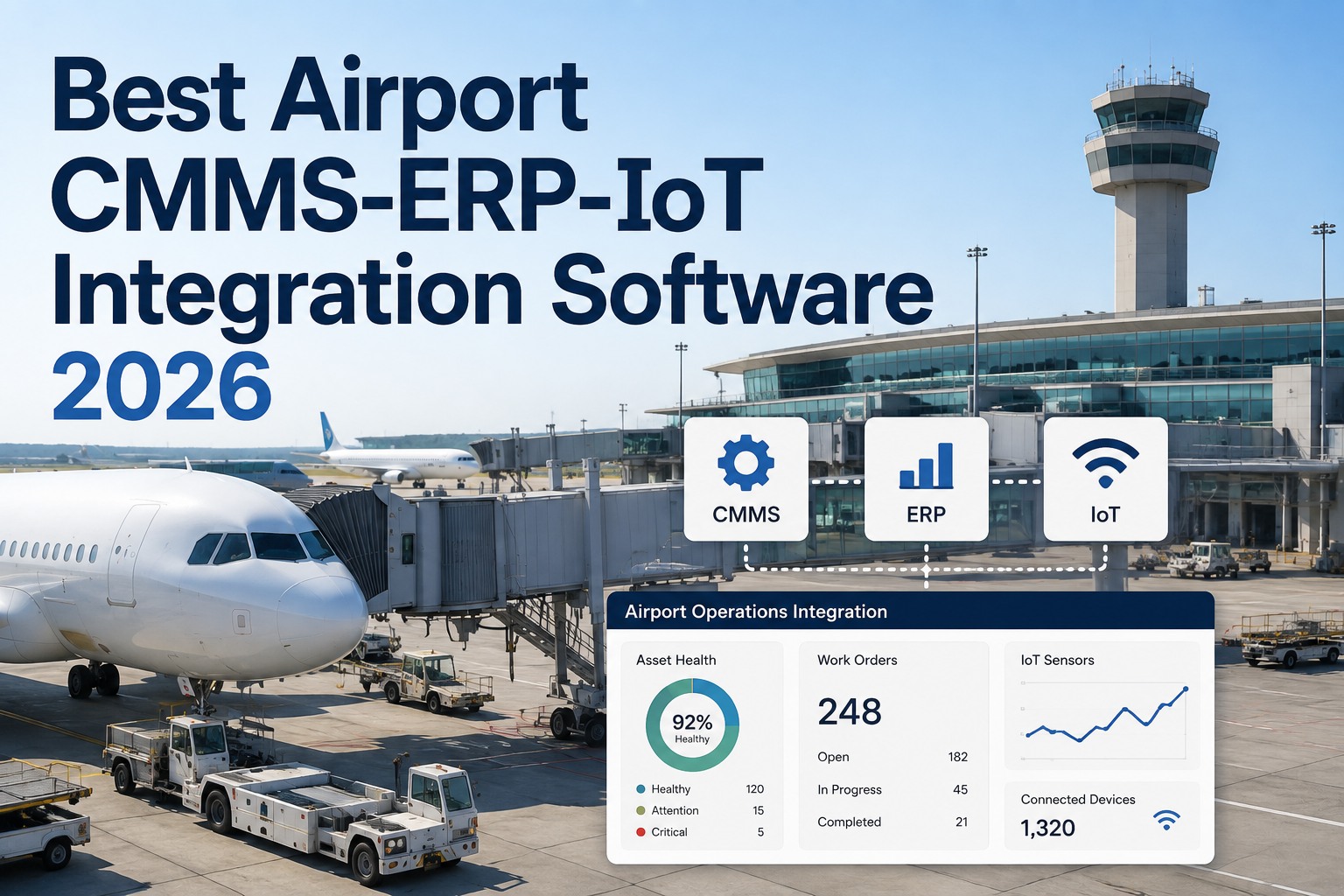
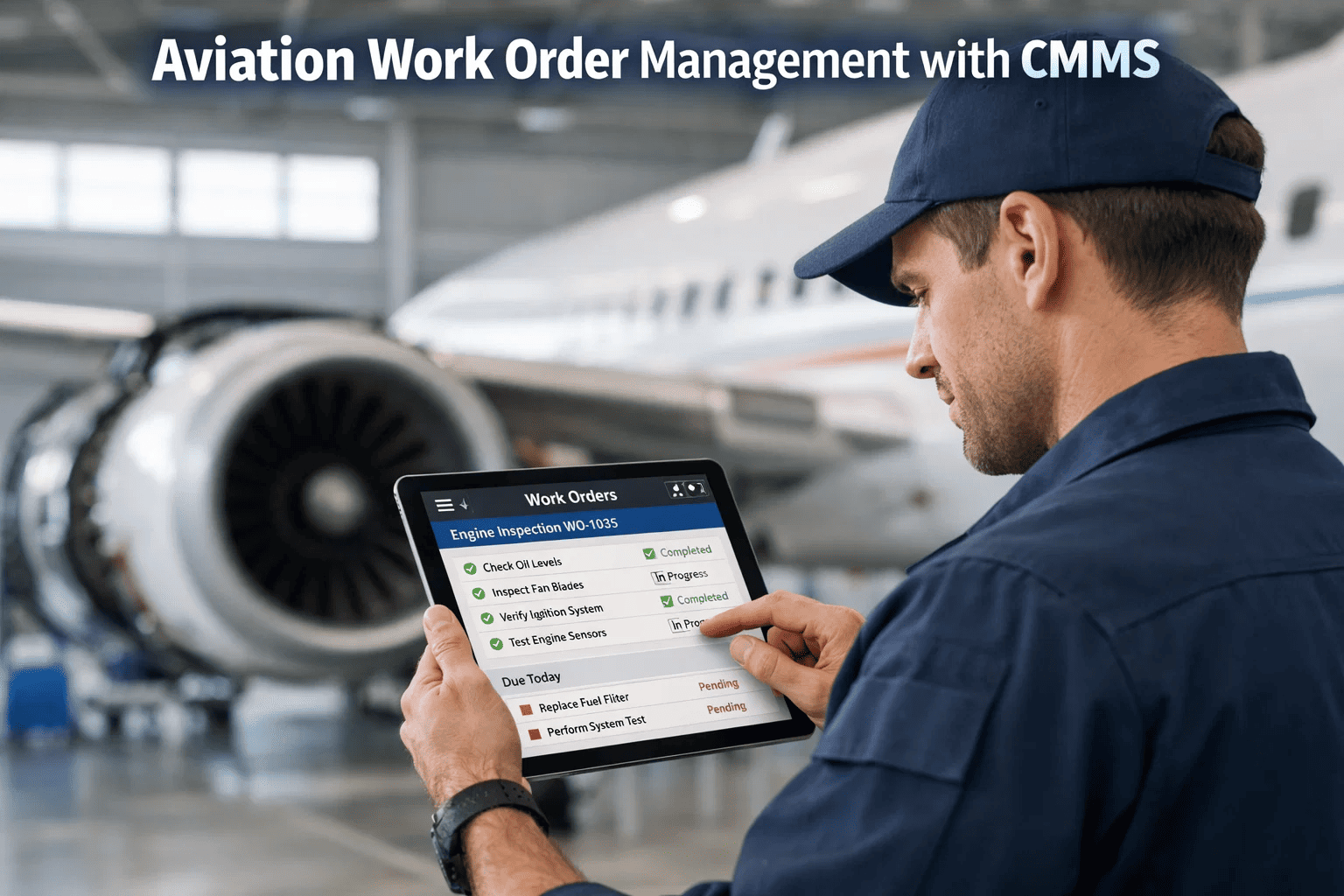
Your maintenance team closes a work order in the CMMS. Your finance team reconciles the cost in the ERP three days later. Your procurement team reorders parts from a spreadsheet nobody trusts. Sound familiar? When your airport's maintenance and financial systems operate as disconnected islands, you don't just lose efficiency—you lose millions in hidden costs, delayed decisions, and compliance gaps. Integrating your CMMS with your ERP creates a single source of truth that connects every work order to every dollar, giving you real-time visibility into the true cost of keeping your airport running. Schedule a demo to see how OXmaint bridges the gap between maintenance and finance.
The $7.8 Billion Problem Airports Are Racing to Solve
The global airport asset lifecycle management market was valued at $7.8 billion in 2024 and is projected to reach $17.3 billion by 2033—growing at 9.2% annually. This explosive growth signals a clear industry shift: airports worldwide are recognizing that managing assets in disconnected systems is no longer sustainable. The airports investing in unified CMMS-ERP integration today are the ones that will lead in cost efficiency, compliance readiness, and operational performance tomorrow.
$7.8B
Airport Asset Management Market (2024)
→
9.2%
Annual Growth Rate Through 2033
→
$17.3B
Projected Market Value by 2033
Growth Market Reports & Industry Research, 2024
What Happens When CMMS and ERP Don't Talk
At most airports, the maintenance team operates on one set of data, the finance department on another, and procurement works from a third. This fragmentation creates a chain reaction of inefficiencies that compound across every department, every shift, and every budget cycle. Here's what that disconnect actually looks like on the ground.
CMMS
Technician closes work order, logs parts used
×
No sync
ERP
Inventory count unchanged, costs not posted
×
No sync
Finance
Budget report shows stale data, forecasts drift
Ghost Inventory
Parts That Exist Only on Paper
The CMMS shows two spare V-belts in stock. The technician walks to the storeroom—shelf is empty. The ERP allocated those parts to a different job, but the update never reached the CMMS. A 45-minute fix becomes a 4-hour emergency with rush shipping charges.
Blind Budgeting
Finance Can't See True Asset Costs
The CFO sees a single line for "MRO Spend" with no breakdown by asset, system, or building. There's no way to distinguish a routine $2,000 PM from a $2,000 emergency repair on equipment that should have been replaced two years ago.
Double Entry
Manual Reconciliation Waste
Maintenance logs labor hours in the CMMS. Finance re-enters the same data into the ERP for cost allocation. Procurement tracks parts consumption in a separate spreadsheet. Three teams, three versions of the truth, zero alignment.
Audit Exposure
Compliance Gaps Between Systems
When regulators ask for complete maintenance cost history on a critical asset, your team spends days stitching together data from multiple systems. Incomplete records mean compliance risk, and compliance risk at an airport means operational risk.
Still reconciling maintenance and finance data manually? OXmaint's integrated CMMS eliminates data silos and gives every department a single source of truth—automatically.
Start Free
What CMMS-ERP Integration Actually Looks Like
True integration means that when something happens in your maintenance system, the financial impact flows automatically to your ERP—and vice versa. No re-keying, no reconciliation, no delay. Here's the data flow that transforms airport maintenance from a cost center into a strategic asset management operation.
Unified Data Flow: CMMS ↔ ERP
OXmaint CMMS Generates
Work orders with labor, parts, and time
Asset condition and performance data
Preventive maintenance schedules
Inventory consumption records
Compliance and safety documentation
ERP Receives & Processes
Cost postings to correct GL accounts
Asset depreciation and valuation updates
Budget actuals vs. forecasts
Purchase requisitions and PO approvals
Audit-ready financial records
5 Pillars of Airport CMMS-ERP Integration
Effective integration isn't about connecting two systems with a simple data pipe. It's about creating structured, bidirectional workflows that serve the specific needs of airport operations. These five pillars form the foundation of a unified asset lifecycle management strategy.
01
Automated Cost Posting
Every completed work order automatically posts labor, material, and contractor costs to the correct general ledger account and cost center in your ERP. No manual entry, no delayed reconciliation. Finance sees real maintenance spend in real time.
02
Synchronized Inventory
When a technician uses a part and logs it in the CMMS, the ERP inventory count updates instantly. When stock hits the reorder threshold, a purchase requisition is generated automatically. No ghost inventory, no emergency procurement runs.
03
Asset Lifecycle Tracking
The CMMS tracks maintenance history, condition data, and failure patterns. The ERP tracks acquisition cost, depreciation, and book value. Integrated, they reveal the total cost of ownership for every asset—enabling data-driven replace-vs-repair decisions.
04
Procurement Workflow
Maintenance-triggered purchase requests flow directly into the ERP's procurement module for approval, vendor selection, and PO generation. No phone calls, no paper forms, no "I thought someone ordered that" surprises.
05
Unified Compliance Records
Maintenance execution records, financial cost allocations, and procurement documentation all link to the same asset ID. When an auditor asks about a specific piece of equipment, you pull one record that tells the complete story.
See the Integration in Action
Book a personalized demo and we'll walk you through how OXmaint connects your maintenance operations to your financial systems—using your airport's actual workflow.
Before & After: The Integration Impact
The gap between airports running disconnected systems and those with unified CMMS-ERP integration shows up in every metric that matters—from maintenance speed to financial accuracy to audit readiness. Here's how the numbers shift when the data starts flowing.
Cost Visibility
Finance sees MRO spend 7-14 days after month-end close
Real-time cost posting as work orders are completed
Parts Accuracy
Inventory discrepancies found during physical counts
Inventory syncs instantly when parts are consumed or received
Procurement Speed
Manual PO requests take 2-5 days to process
Auto-generated requisitions when stock hits reorder point
Audit Readiness
Weeks of manual data compilation from multiple systems
Complete asset history pulled in minutes from unified records
Budget Accuracy
Forecasts based on incomplete historical data
Forecasts powered by complete lifecycle cost data per asset
Airport-Specific Integration Scenarios
Airport infrastructure presents unique integration challenges that generic solutions can't address. From multi-terminal baggage systems to jet bridge hydraulics, each asset type creates specific data flows between maintenance and finance that must be handled correctly.
01
Baggage Handling System Overhaul
Disconnected
Maintenance replaces conveyor motors across Terminal B. Costs are logged in the CMMS but never reach the ERP. Finance allocates the expense to the wrong cost center. Year-end budget review reveals $340K in untracked maintenance spend.
Integrated
Each motor replacement generates a work order that auto-posts labor and parts costs to the correct terminal, building, and asset cost center in the ERP. Finance sees spend in real time. No surprises at year-end.
02
HVAC Chiller Replacement Decision
Disconnected
A 15-year-old chiller is repaired repeatedly. CMMS shows maintenance frequency increasing. ERP shows the asset is fully depreciated. But nobody connects these data points because the systems don't talk. The chiller runs until catastrophic failure mid-summer.
Integrated
Unified lifecycle dashboard shows rising repair costs alongside depreciation status and remaining useful life estimate. Asset management team triggers capital replacement request 18 months before projected failure, with full cost justification data attached.
03
Multi-Vendor Electrical Upgrade
Disconnected
Three contractors submit invoices for switchgear work. Maintenance tracks their hours in the CMMS. Finance receives invoices in the ERP. Nobody can verify that billed hours match actual work without manual cross-referencing across both systems.
Integrated
Contractor work orders in the CMMS link directly to purchase orders in the ERP. Invoice amounts are validated against logged work hours automatically. Discrepancies are flagged before payment. Every dollar is traceable to a specific asset and task.
Implementation Roadmap
Successful CMMS-ERP integration follows a phased approach that starts with quick wins and builds toward full operational-financial alignment. OXmaint's implementation framework is designed for airports that need to move fast without disrupting daily operations.
Weeks 1-2
Discovery & Mapping
Audit existing data flows between CMMS, ERP, and any spreadsheet workarounds
Map asset IDs, cost centers, GL accounts, and inventory item codes across both systems
Identify the highest-impact integration point for your pilot (usually work order cost posting)
Weeks 3-4
Pilot Integration
Configure API connections between OXmaint and your ERP for the pilot workflow
Run parallel testing—verify that costs, inventory, and asset data sync correctly
Train pilot team (maintenance leads + finance contacts) on the integrated workflow
Weeks 5-8
Full Rollout & Optimization
Extend integration across all asset classes, terminals, and cost centers
Activate automated procurement triggers, depreciation sync, and lifecycle dashboards
Establish ongoing data quality monitoring and integration health checks
The Business Case: Integration by the Numbers
Every hour your teams spend manually reconciling data between disconnected systems is an hour not spent on proactive maintenance, strategic planning, or operational improvement. The financial impact of integration compounds quickly.
15-18%
Of total airport operating expenses go to maintenance—visibility into this spend is critical
25%
Reduction in maintenance costs achievable through predictive strategies enabled by integrated data
42%
Decrease in unplanned workloads within 12 months of implementing integrated CMMS workflows
10-20%
Improvement in equipment uptime when moving from reactive to data-driven maintenance
Frequently Asked Questions
What does CMMS-ERP integration actually connect?
Integration creates a bidirectional data flow between your maintenance management system and your enterprise resource planning platform. Specifically, it connects work orders to financial cost postings, parts consumption to inventory management, maintenance schedules to procurement workflows, and asset condition data to depreciation and lifecycle tracking. When a technician completes a job in the CMMS, the financial impact appears in the ERP automatically—and when purchasing updates a PO in the ERP, the CMMS reflects the updated parts availability.
Book a demo to see the integration live.
Which ERP systems does OXmaint integrate with?
OXmaint is built with open API architecture designed for enterprise connectivity. The platform integrates with major ERP systems including SAP, Oracle, Microsoft Dynamics 365, and other cloud-based and on-premise financial platforms. For airports using legacy or custom ERP configurations, OXmaint's integration team works directly with your IT department to build custom API connectors or middleware bridges that map your specific data structures and workflows.
How long does integration take without disrupting airport operations?
Most airports complete their integration in 4-8 weeks using a phased approach. The first two weeks focus on data mapping and configuration. Weeks three and four run a pilot integration on the highest-impact workflow—usually work order cost posting. The remaining weeks extend the integration across all asset classes and departments. The entire process runs parallel to your existing systems, so there's zero disruption to daily operations.
Schedule a consultation to scope your timeline.
What ROI can we expect from CMMS-ERP integration?
The return comes from multiple sources: elimination of manual data entry and reconciliation (typically 15-20 hours per week for mid-size airports), reduction in emergency procurement costs through synchronized inventory, improved budget accuracy through real-time cost visibility, and faster audit preparation. Industry data shows airports can achieve 25% reductions in maintenance costs and 42% decreases in unplanned workloads within the first year of integrated operations.
Start your free trial to begin measuring impact.
Can integration support multi-terminal and multi-site airport campuses?
Absolutely. OXmaint's architecture is built for complex, multi-site operations. Each terminal, building, and facility can have its own asset hierarchy, cost center mapping, and workflow rules while feeding into a unified enterprise view. This means Terminal A's maintenance team sees their data, Terminal B sees theirs, and the airport director sees everything—all synced to the same ERP financial structure.
Bridge the Gap Between Maintenance and Finance
Stop reconciling spreadsheets. Start making data-driven decisions. OXmaint's integrated CMMS connects every work order to every dollar—giving your airport complete asset lifecycle visibility from a single platform.