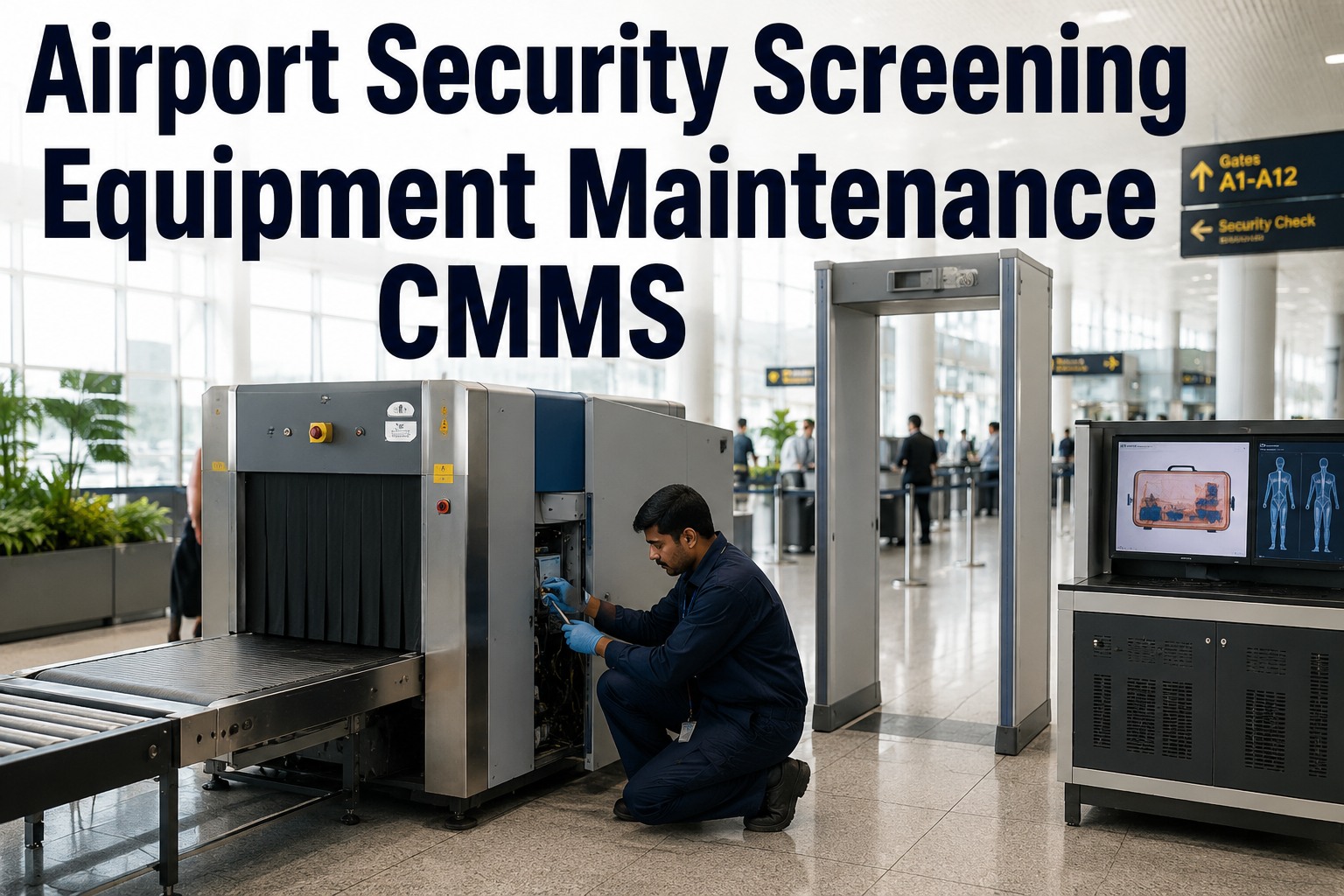
Airport security infrastructure operates under a paradox most passengers never see: every biometric gate, CT scanner, X-ray machine, and access control panel protecting the terminal operates on calibration cycles measured in hours, not months. A facial recognition system running 0.3 seconds slower than specification creates a 47-passenger backup at the security checkpoint in under 12 minutes. An X-ray detector array drifting 2% outside its energy resolution threshold fails to distinguish organic explosives from dense food items, triggering false positives that compound into hour-long delays. When TSA conducts unannounced Covert Testing exercises and a screening lane's equipment fails to detect prohibited items, the question investigators ask is not whether your security technology is advanced — it is whether your maintenance records prove the equipment was operating within calibration tolerances at the time of the test. Most airport security managers cannot produce that documentation in real time. The operational cost of this documentation gap averages $2.1M annually per major hub in unscheduled equipment downtime, failed compliance audits, and passenger throughput losses during peak travel periods. If tracking security equipment maintenance across spreadsheets and vendor portals sounds familiar, start a free 30-day trial or book a demo to see how Oxmaint integrates security infrastructure PM schedules, calibration tracking, and vendor accountability into a single airport-wide platform.
Oxmaint gives airport security operations teams a unified platform to schedule preventive maintenance on all screening equipment, track TSA and regulatory calibration requirements by asset, manage multi-vendor service contracts, and generate audit-ready compliance documentation — eliminating spreadsheets and manual tracking across dozens of security systems.
What Is Airport Biometric and Security Equipment Maintenance?
Airport security equipment maintenance is the precision-calibrated process of inspecting, calibrating, and documenting every screening device, biometric system, and access control panel across the terminal — from baggage CT scanners and walkthrough metal detectors to facial recognition gates and credential authentication systems. It encompasses daily calibration verification on explosive detection equipment, quarterly performance testing on X-ray systems, monthly firmware updates on biometric terminals, and continuous uptime monitoring across all security checkpoint technology.
For airport security directors and operations managers, effective equipment maintenance means proving — with timestamped calibration logs and vendor-signed service records — that every device processing passengers and baggage operates within TSA certification thresholds, manufacturer specifications, and regulatory detection standards at all times. To build structured visibility into your security infrastructure, start a free trial with Oxmaint and map your first checkpoint equipment in under an hour, or book a demo to review your current security maintenance workflows with our aviation security team.
The Compliance Landscape: TSA, DHS, and International Security Standards
Airport security equipment maintenance operates under overlapping federal, international, and industry-specific compliance frameworks. A single missed calibration cycle can trigger TSA enforcement action, passenger screening failures, and equipment decertification. Understanding how these regulatory requirements intersect is essential for maintaining operational certification and avoiding costly compliance violations.
Managing compliance across daily, weekly, monthly, quarterly, and annual cycles simultaneously requires a system that auto-schedules every inspection against the asset it covers and alerts teams before deadlines. Want to see how Oxmaint consolidates multi-framework security compliance into a single dashboard? Start a free trial or book a demo to map your current checkpoint compliance landscape with our team.
Six Critical Failure Points in Security Equipment Management
These operational pain points determine whether a security checkpoint runs smoothly through peak hours or collapses into passenger delays, failed TSA audits, and emergency equipment shutdowns. Each failure mode compounds into higher costs when addressed reactively rather than prevented through structured maintenance.
Reactive Security Equipment Management vs. CMMS-Integrated Approach
The operational difference between managing security infrastructure on spreadsheets and vendor portals versus a unified CMMS platform is not incremental improvement. It is the difference between reacting to equipment failures during peak hours and preventing them with structured preventive maintenance schedules.
| Maintenance Area | Reactive / Spreadsheet-Based | Structured CMMS (Oxmaint) |
|---|---|---|
| CT Scanner Calibration | Logged on paper forms after each shift — records frequently incomplete or lost before TSA audit | Auto-scheduled with mobile app verification, timestamped digital signatures, instant audit export |
| Biometric System Updates | Firmware updates applied reactively when performance degrades or vendor notifies of critical patch | Update schedules tracked per terminal with version control, rollback procedures, pre-deployment testing protocols |
| X-Ray Detector Maintenance | Discovered during quarterly testing — lanes closed for emergency repairs during peak travel periods | Preventive detector array testing with trend analysis alerts before failure thresholds reached |
| Vendor Service Coordination | PM appointments tracked in separate calendars per vendor — missed appointments discovered post-deadline | All vendors scheduled in unified platform with SLA tracking, automated reminders, work completion verification |
| Compliance Documentation | Scattered across email, vendor portals, and file cabinets — 4-8 hours to compile for audit | Single-source repository linked to each asset — complete audit package exported in under 5 minutes |
| Equipment History Tracking | Service history exists in vendor systems only — no unified view of asset condition or failure patterns | Complete maintenance history per asset with failure analysis, parts consumed, cost tracking, replacement forecasting |
How Oxmaint Powers Structured Security Equipment Maintenance
Oxmaint is purpose-built for the complexity of airport security infrastructure — where hundreds of high-value assets, overlapping compliance requirements, and multiple specialized vendors intersect under constant regulatory oversight. Rather than managing equipment maintenance in disconnected systems and spreadsheets, Oxmaint links every security device to its calibration requirements, PM schedules, vendor service records, and compliance documentation in a single platform. Ready to eliminate security equipment documentation gaps? Start your free trial today or book a demo with our airport security infrastructure specialists.
What Structured Security Equipment Maintenance Delivers
These outcomes reflect the operational and financial impact of transitioning airport security infrastructure from reactive, spreadsheet-based management to CMMS-integrated preventive maintenance programmes. Use these benchmarks to build your business case, or start a free trial with Oxmaint to generate your own performance data, or book a demo for a tailored ROI analysis.
Oxmaint gives airport security teams a complete equipment maintenance platform — asset registries, calibration scheduling, vendor management, compliance tracking, and audit-ready documentation — all connected to every device across your terminals. No implementation fees. No long onboarding. Operational from day one. See how it works across your checkpoints — start a free trial or book a demo with our aviation security team today.