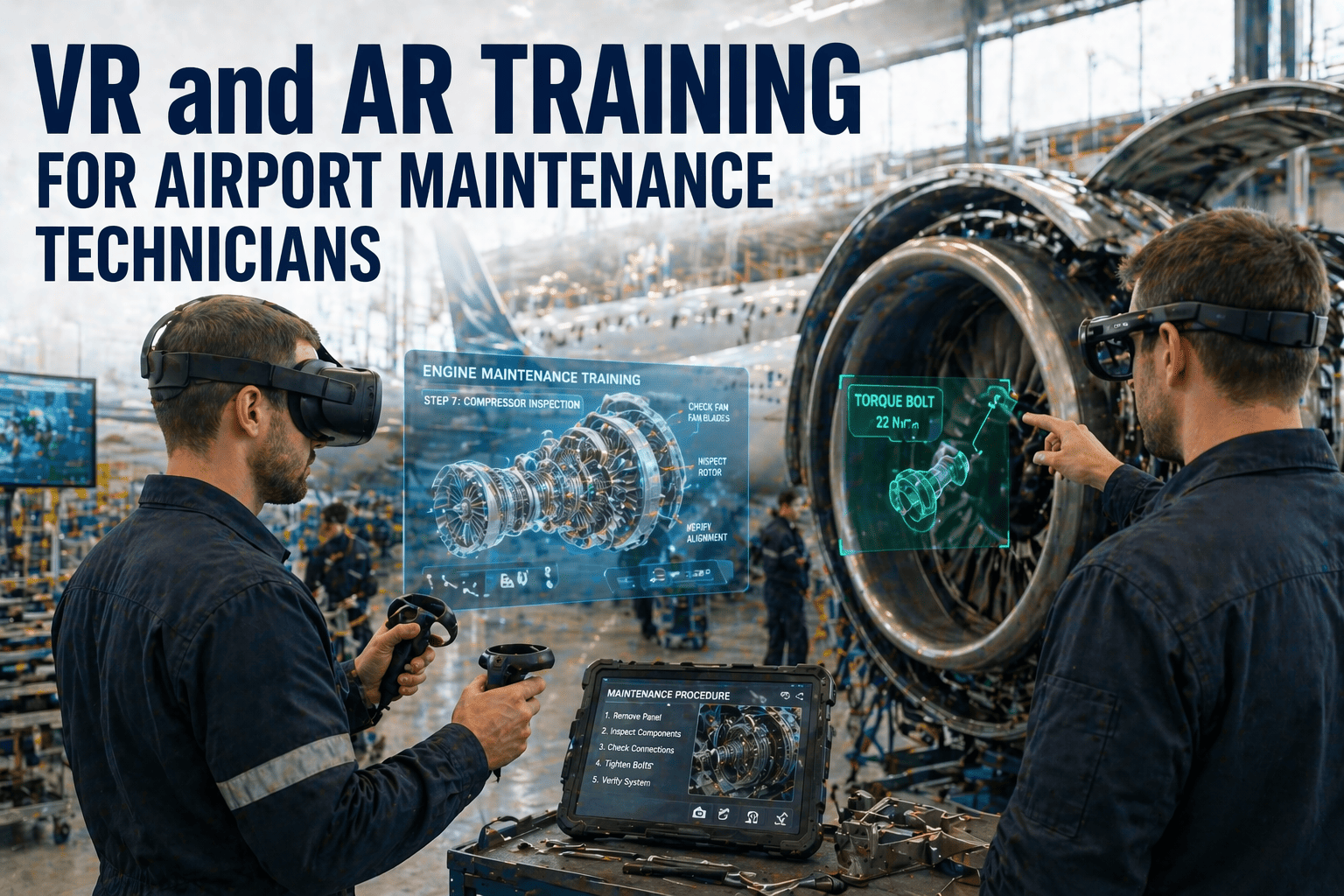
Traditional classroom-based airport maintenance training costs an average of $2,400 per technician per course, requires pulling staff from operations for 3-5 days, and delivers knowledge retention rates of only 20% after 30 days. Virtual Reality (VR) and Augmented Reality (AR) training is transforming aviation maintenance by delivering immersive, hands-on practice environments where technicians can rehearse complex procedures — high-voltage switchgear maintenance, confined space rescue, baggage handling system troubleshooting — without operational disruption or safety risk. Airports deploying VR/AR training programs report 76% improvement in knowledge retention, 40% faster skill acquisition, and 32% reduction in safety incidents during maintenance activities. AR-equipped smart glasses are now enabling real-time remote expert guidance, allowing a specialist 1,000 miles away to overlay step-by-step visual instructions directly onto a field technician's view. Explore how OxMaint integrates with immersive training workflows — book a demo to see training-to-work-order integration, or start a free trial and connect your maintenance training records to real equipment today.
VR & AR Training for Airport Maintenance Technicians
Simulate complex repairs, improve safety training retention by 76%, and enable real-time remote expert guidance — all without disrupting live airport operations.
VR vs. AR: Two Technologies, Different Applications
VR and AR serve distinct roles in airport maintenance training. VR creates fully immersive simulated environments for practice and assessment. AR overlays digital information onto the real world for live maintenance guidance. Both connect to OxMaint's CMMS through training records and competency tracking. Explore training integration — start a free trial and book a demo to see how it works.
Train Smarter, Retain More, Work Safer. Connect Immersive Training to Real Maintenance Operations.
OxMaint links VR/AR training records to technician competency profiles and work order assignments — ensuring every technician is qualified for the tasks they are dispatched to perform.
Airport Maintenance Training Use Cases
Traditional vs. Immersive Airport Maintenance Training
ROI of VR/AR Maintenance Training
Frequently Asked Questions
How does OxMaint integrate with VR/AR training platforms?
OxMaint connects to VR/AR training platforms via API integration, importing training completion records, competency scores, and certification expiry dates into each technician's profile. When a work order is created for high-voltage switchgear maintenance, OxMaint verifies that the assigned technician has completed the required VR safety training and holds current certification. If training is expired or incomplete, the system flags the assignment and suggests qualified alternatives. Start a free trial to configure training-to-work-order verification.
What equipment is needed to deploy VR training at an airport?
Modern VR training deployments require standalone VR headsets (Meta Quest 3, HTC VIVE Focus), a dedicated training space of approximately 3x3 metres, and cloud-based VR content management platform. AR deployments use smart glasses (RealWear Navigator, Microsoft HoloLens 2) that technicians wear in the field. Initial hardware investment ranges from $15,000-$40,000 for a 4-headset training station — offsetting quickly against travel and lost-productivity costs of traditional training. Book a demo to discuss training technology integration.
Can AR smart glasses work in airport maintenance environments?
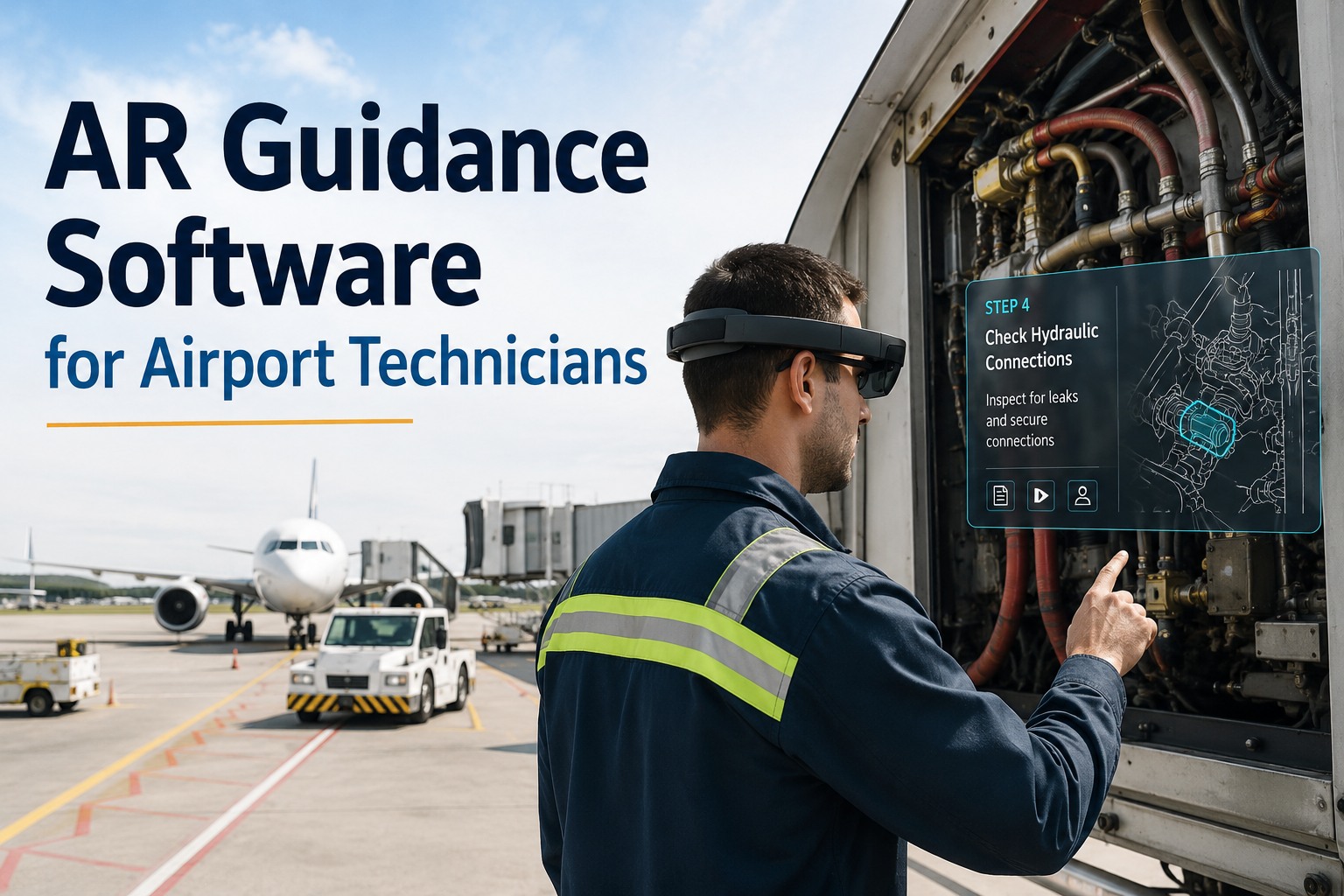
Yes. Industrial-grade AR smart glasses like RealWear Navigator are designed for harsh environments — they are certified for noise, dust, and temperature extremes. Technicians use voice commands to navigate instructions hands-free while performing maintenance on BHS equipment, HVAC systems, or electrical infrastructure. The devices work in both indoor terminal environments and outdoor airfield conditions. Start a free trial to explore AR-integrated maintenance workflows.
How does remote expert guidance work with AR?
The field technician wearing AR glasses initiates a call to the remote expert. The expert sees exactly what the technician sees through the glasses' camera. The expert can draw arrows, circles, and annotations that appear in the technician's field of view — pointing to specific bolts, connectors, or components that need attention. This capability reduces the need for specialist travel and enables 24/7 expert support regardless of location. Book a demo to see remote expert guidance in action.
Stop Pulling Technicians Off the Floor for Training That They Forget in 30 Days. Start Building Skills That Stick.
VR simulation training, AR-guided field repairs, competency-linked work order assignment, and training record management — connected to your maintenance operations in one platform.


.png)


