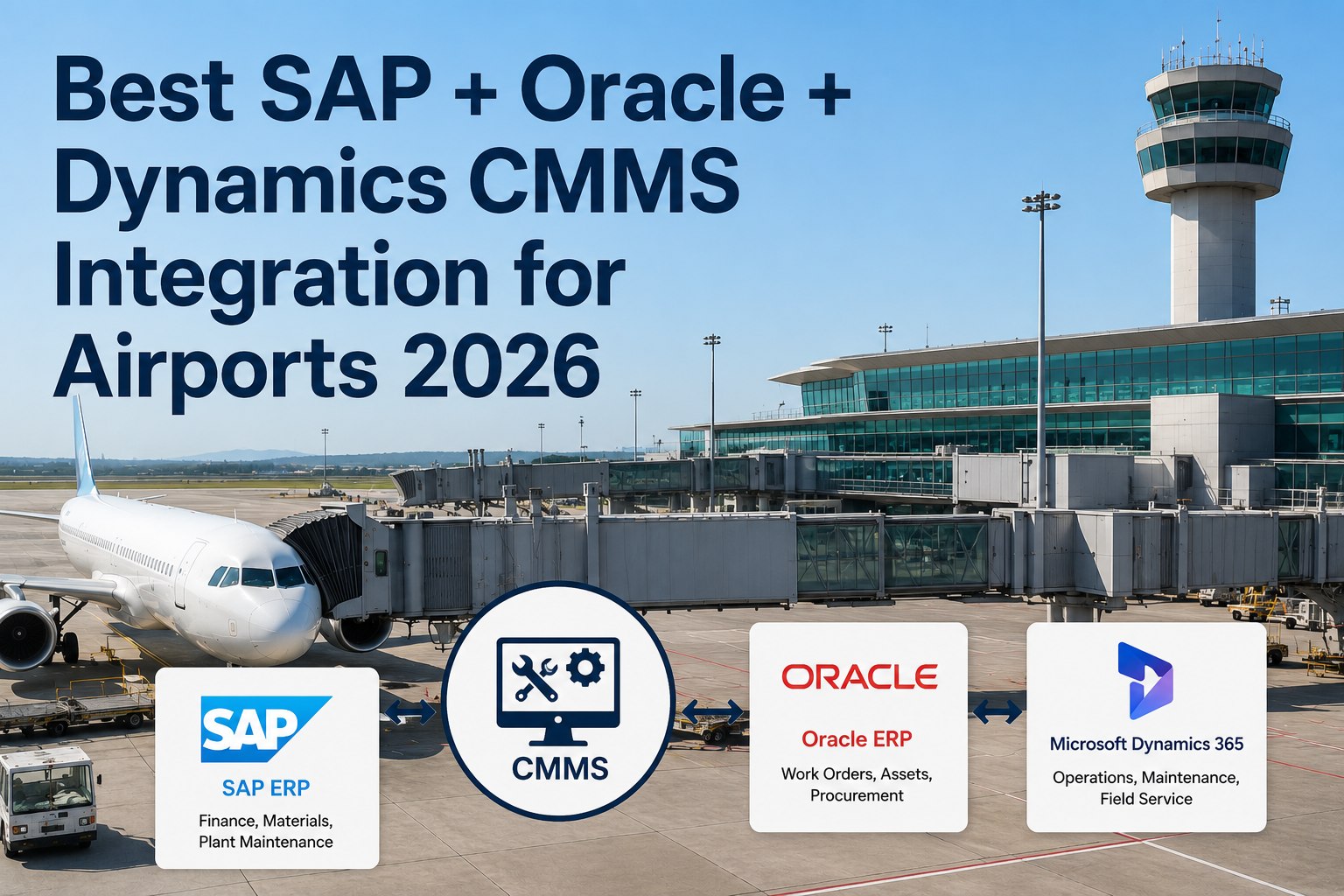
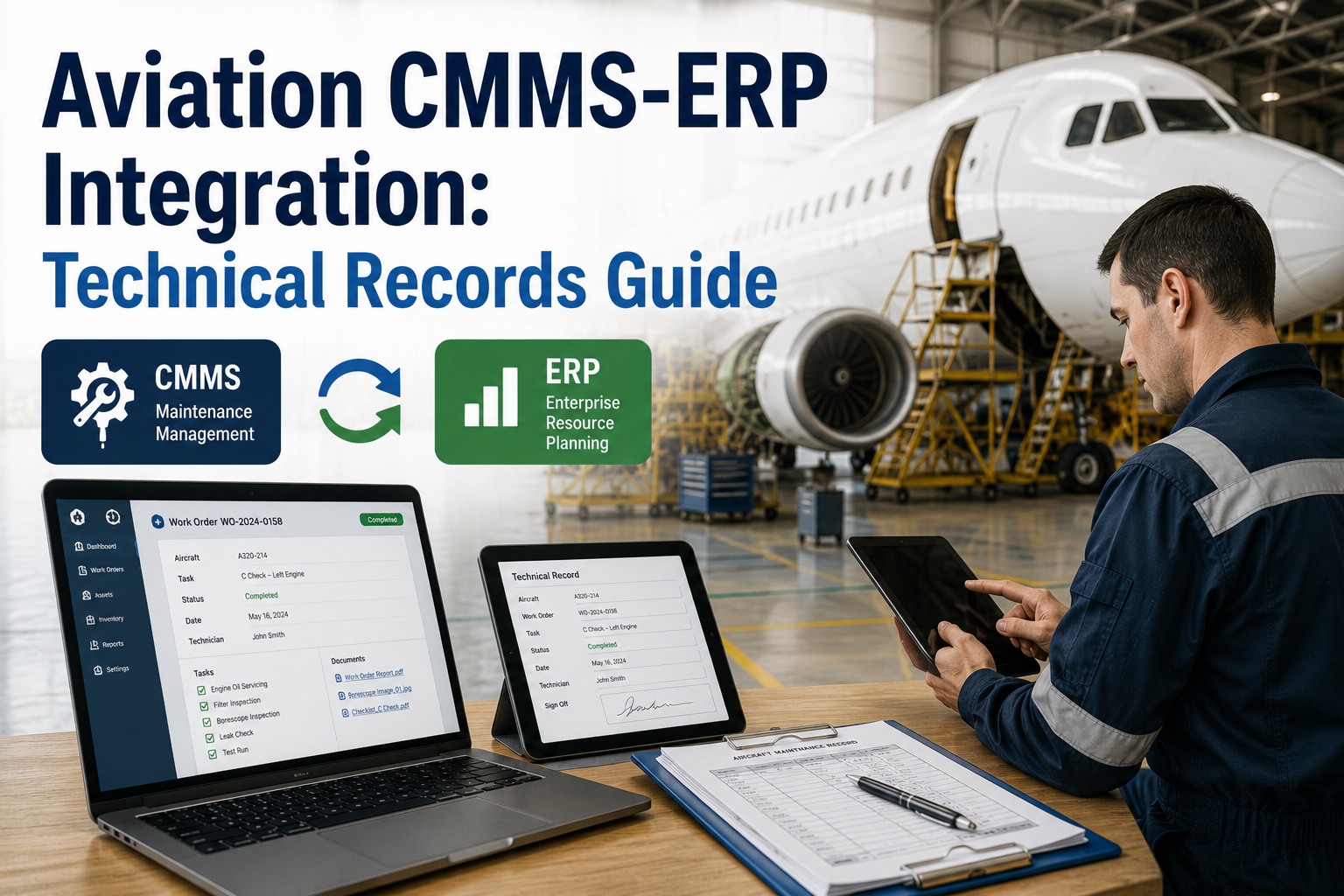
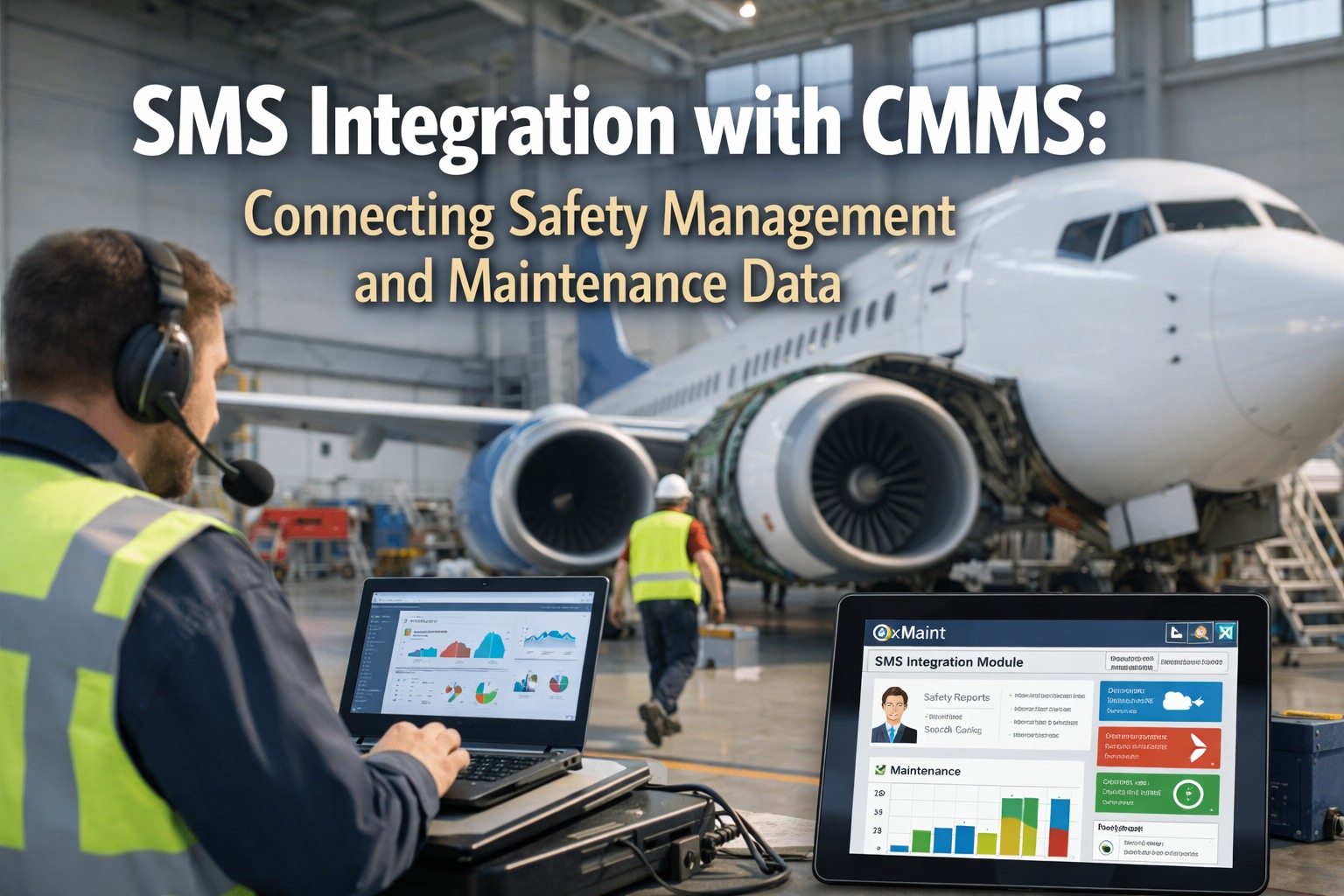
Aviation IT leaders know the pain: a technician closes a work order in the MRO system, but the part cost never makes it to SAP. A procurement team raises a purchase order in Oracle, but the CMMS still shows stock as zero. This disconnect between ERP and MRO operations doesn't just slow teams down — it creates compliance gaps, inflated inventory carrying costs, and audit trails that fall apart under regulator scrutiny. OxMaint's open REST and MQTT API layer closes that gap, creating a unified aviation data thread where work orders, parts movements, cost postings, and approvals flow automatically between OxMaint and your ERP of record. Whether your stack is SAP S/4HANA, Oracle EBS, Ramco Aviation, AMOS, Trax, or a combination, bi-directional integration eliminates the re-keying that costs MRO teams an average of 11% of productive labor hours every month. The result is a single digital thread — from OEM component data through line maintenance execution to financial close — with no spreadsheet bridges in between. Sign Up Free and connect your first ERP endpoint in a guided sandbox session.
MRO ERP Integration · Aviation Systems 2026
MRO ERP Integration Software for Aviation
Connect SAP, Oracle, Ramco, AMOS and Trax to OxMaint via REST APIs. Real-time parts, costs, and work orders — no double-keying, no data lag, no audit gaps.
11%
of MRO labor hours lost monthly to manual re-keying between disconnected ERP and maintenance systems
$8.7B
annual industry cost from software data limitations — per Aviation Week 2025 MRO Survey
23%
year-over-year rise in AOG events linked to poor data visibility between MRO and ERP platforms
6–8wk
typical OxMaint ERP integration go-live timeline for a defined fleet scope with standard API connectors
What Is MRO ERP Integration and Why Aviation IT Owns It
MRO ERP integration is the real-time, bi-directional synchronization of work order data, inventory transactions, cost postings, purchase orders, and approval workflows between an aviation maintenance management platform and the enterprise ERP system that owns financial and supply chain records. For aviation Head of IT and ERP owners, this is not an optional enhancement — it is the foundational data infrastructure that determines whether the airline or MRO's financial close is accurate, whether parts availability is trusted, and whether the CAMO can produce a regulator-ready audit trail on demand. Book a Demo to see how OxMaint's API layer maps directly to your SAP, Oracle, or Ramco data model without custom middleware build-out.
The Six Integration Failure Points Costing MRO Teams the Most
Work Order Cost Leakage
Labor and parts costs logged in the MRO system never post to the ERP job cost account. Finance closes the month with incomplete actuals and reconciliation takes weeks.
Inventory Phantom Stock
Parts issued in the CMMS show as available in the ERP. Procurement raises duplicate POs. Excess stock accumulates while other locations run short.
PO Approval Bottlenecks
Purchase orders raised in the ERP require manual replication into the MRO system for technician reference. Approvals loop through email instead of flowing through a connected workflow.
OEM Data Lag
Component life data from OEM portals is manually re-entered into the ERP asset register. Life-limited part records drift out of sync between systems within weeks.
Fragmented Audit Trails
The ERP holds the financial record; the MRO holds the maintenance record. Neither system can produce a complete compliance and cost history for a single tail number.
Batch Sync Failures
Overnight batch jobs between ERP and CMMS fail silently. Teams discover the data gap days later when a part is not where both systems said it would be.
The data gap between ERP and MRO is rarely discovered during normal operations — it surfaces during an AOG, a regulator audit, or a financial close that won't reconcile.
ERP and MRO Systems OxMaint Integrates With
SAP S/4HANA & ECC
Work orders, PM notifications, goods movements, cost center postings, and asset master data — bi-directional via REST API with SAP's standard IDoc and OData endpoints.
Oracle EBS & Fusion
Parts requisitions, inventory transactions, maintenance work orders, and approval workflows integrated with Oracle's REST and SOAP service layers.
Ramco Aviation
Maintenance task cards, material requests, and component tracking synced with Ramco's aviation module via its published API layer — no custom middleware required.
AMOS
Airworthiness records, component removals, and work package status synchronized with AMOS using its open API, keeping both systems current without manual bridging.
Trax
Line and base maintenance work orders, parts transactions, and defect records exchanged with Trax via REST, eliminating the paper-to-system re-entry that creates compliance gaps.
OEM Portals
Component life data, service bulletin status, and technical records ingested from OEM data portals into OxMaint and reflected in the ERP asset register in real time.
Manual re-keying between ERP and MRO is a compliance risk and a cost center.
Sign Up Free and map your current integration gaps in a guided session — or
Book a Demo and we will walk your stack end to end.
How OxMaint's API Integration Layer Works
OxMaint exposes a documented REST API and supports MQTT for real-time event streaming — purpose-built for aviation data models. Every object in OxMaint — work orders, parts requests, cost postings, component records, approvals, and inspection findings — is available as an API endpoint that your ERP system can read from or write to. Integration is configured through a visual mapping layer that aligns OxMaint's data schema to your ERP's field definitions, so an SAP plant maintenance order maps cleanly to an OxMaint work order without bespoke code. Book a Demo and we will assess your current ERP endpoints and show a live data flow in under 30 minutes.
REST API with Full Aviation Data Model
Every OxMaint object — work orders, parts, costs, ARCs, LLPs — is available via authenticated REST endpoints with full CRUD support and webhook event triggers.
MQTT Real-Time Event Streaming
High-frequency events — parts issues, status changes, approval completions — are streamed via MQTT so the ERP receives updates in seconds, not overnight.
Visual Field Mapping Layer
Map OxMaint data fields to ERP equivalents through a configuration UI — no custom code required for standard SAP, Oracle, Ramco, AMOS, and Trax schemas.
Bi-Directional Sync with Conflict Resolution
Define the system of record per data domain. OxMaint handles conflicts intelligently — maintenance data authoritative in OxMaint, financial data authoritative in the ERP.
Integration Health Monitoring
Live dashboard showing sync status, failed transactions, retry queues, and latency per integration endpoint — so IT teams catch failures before they affect operations.
Audit-Grade Transaction Logging
Every API transaction is logged with timestamp, payload, source system, and outcome — producing the integration audit trail that regulators and internal audit teams require.
Paper Integration vs. OxMaint API Integration — Side by Side
| Integration Function |
Manual / Batch Approach |
OxMaint API Integration |
| Work order cost posting |
Manual re-entry or overnight batch — actuals lag by 12–24 hours |
Real-time REST post to ERP cost center on work order close |
| Parts issue and inventory |
Dual entry in CMMS and ERP — phantom stock common within days |
Single issue in OxMaint triggers ERP goods movement via API |
| PO creation and approval |
Raised in ERP, printed and handed to maintenance — no feedback loop |
PO status visible in OxMaint work order; approval events synced bi-directionally |
| LLP and asset register |
OEM data re-keyed into ERP asset master manually |
OEM portal data ingested into OxMaint and pushed to ERP asset record |
| Integration failure detection |
Discovered when data is missing — often days later |
Real-time health dashboard with retry logic and IT alerts on failure |
| Audit trail |
ERP holds financial record; MRO holds maintenance record — neither is complete |
Unified transaction log across both systems with timestamp and source |
| Go-live timeline |
Custom middleware builds — 12–18 months, high cost and risk |
Standard API connectors — 6–8 weeks for a defined fleet scope |
FL Technics reduced maintenance planning cycle time by 40% after unifying MRO and ERP data — the majority of the gain came from eliminating manual data reconciliation between systems.
What IT and ERP Owners Gain After Integration Goes Live
Real-Time
cost actuals in the ERP the moment a work order closes — financial close without manual reconciliation
Zero
phantom inventory discrepancies between CMMS and ERP stock records after live bi-directional sync
6–8wk
go-live on standard ERP connectors — compared to 12–18 months for custom middleware builds
100%
integration transaction audit trail — every API call logged with source, payload, and outcome for compliance review
Integration complexity is the reason most aviation IT teams defer ERP-MRO unification. OxMaint's standard connectors remove that barrier.
Book a Demo and we will scope your integration in one session.
Stop Managing Two Systems of Record
Connect your ERP and MRO with OxMaint's open API layer. Real-time work orders, parts, costs and approvals — no middleware, no re-keying, no data lag.
Frequently Asked Questions
Does OxMaint support SAP S/4HANA and SAP ECC for MRO integration?
Yes. OxMaint integrates with both SAP S/4HANA and ECC using standard OData and REST endpoints — covering work orders, PM notifications, goods movements, and cost postings without custom ABAP development.
How long does MRO ERP integration take with OxMaint?
Most deployments go live in 6–8 weeks for a defined scope using standard connectors for SAP, Oracle, Ramco, AMOS, or Trax — compared to 12–18 months for custom middleware builds.
Is the integration bi-directional or one-way?
Bi-directional. OxMaint supports read and write across all integrated systems, with configurable system-of-record rules per data domain to handle conflicts cleanly.
Can OxMaint integrate with OEM data portals for component life data?
Yes. OxMaint ingests component life data, service bulletin status, and technical records from OEM portals and reflects them in the ERP asset register in real time — eliminating manual re-entry.
What happens when an API sync fails?
OxMaint's integration health dashboard flags failures immediately with retry logic and IT alerts — so teams catch data gaps in minutes, not days after the fact.
Does OxMaint produce an audit trail of all ERP integration transactions?
Yes. Every API transaction is logged with timestamp, source system, payload, and outcome — meeting the audit evidence requirements for both internal review and regulator inspection.
Ready to Unify Your Aviation ERP and MRO Data?
OxMaint connects SAP, Oracle, Ramco, AMOS, Trax, and OEM portals through open REST and MQTT APIs. One data thread. No double-keying. Audit-ready by default.