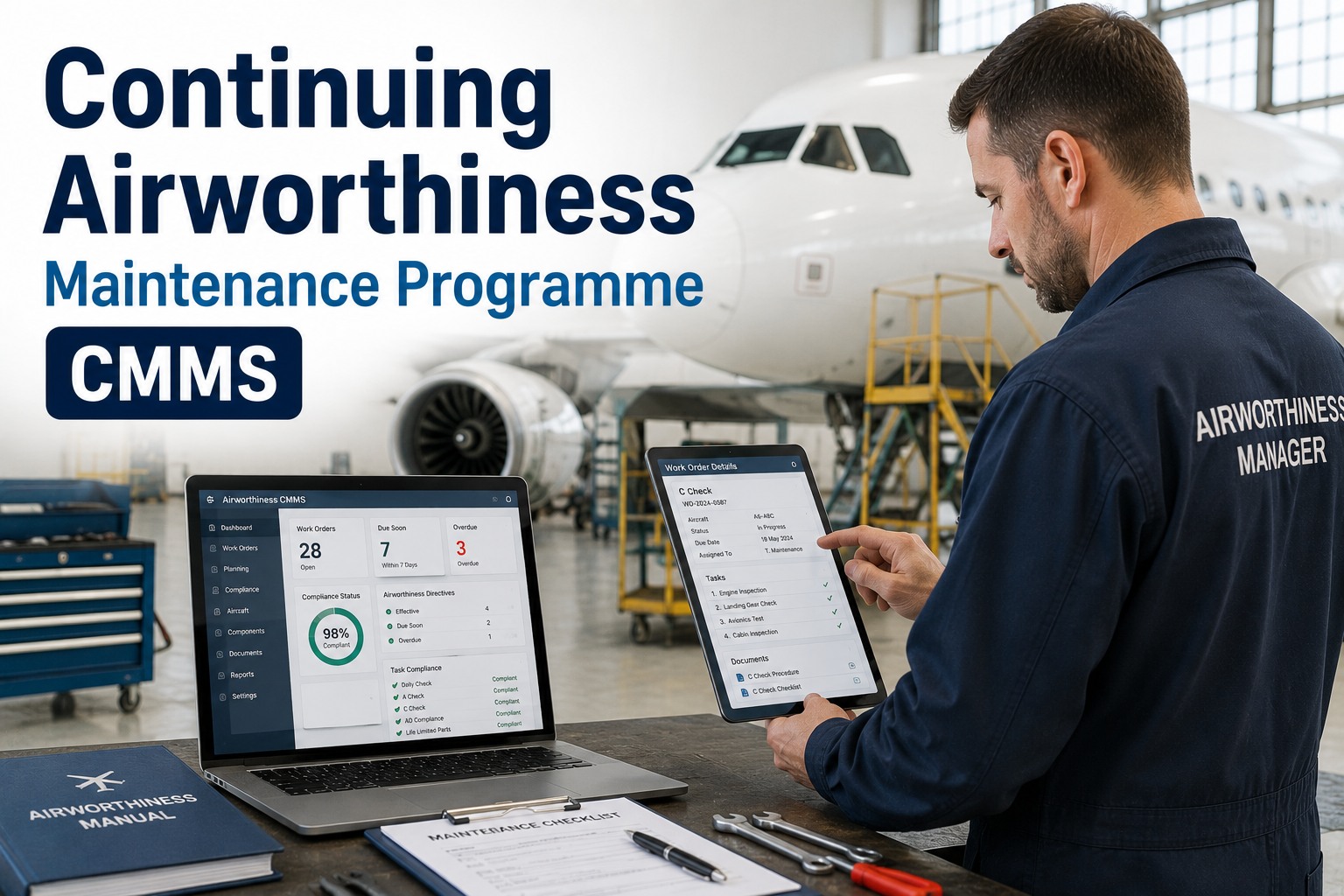
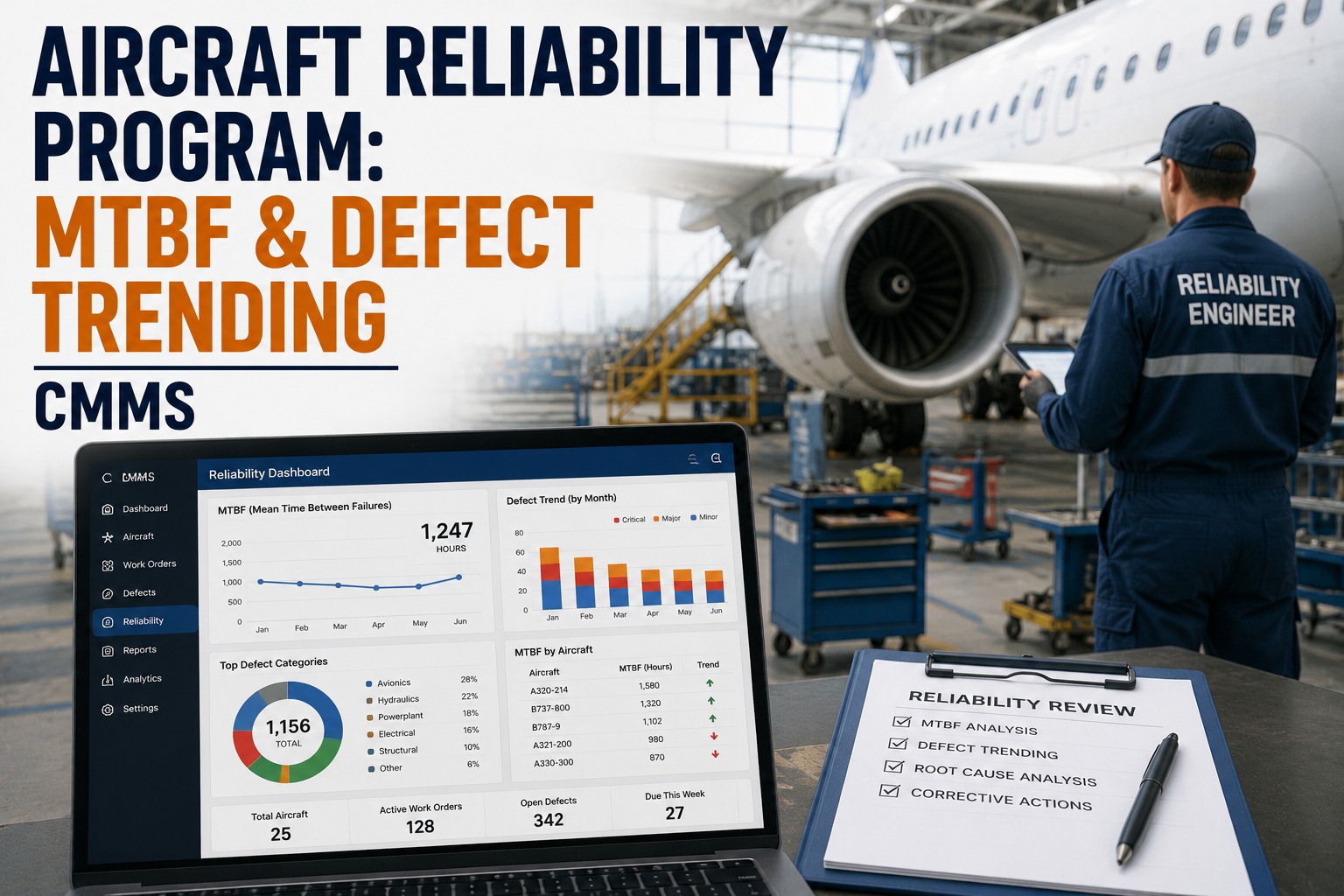
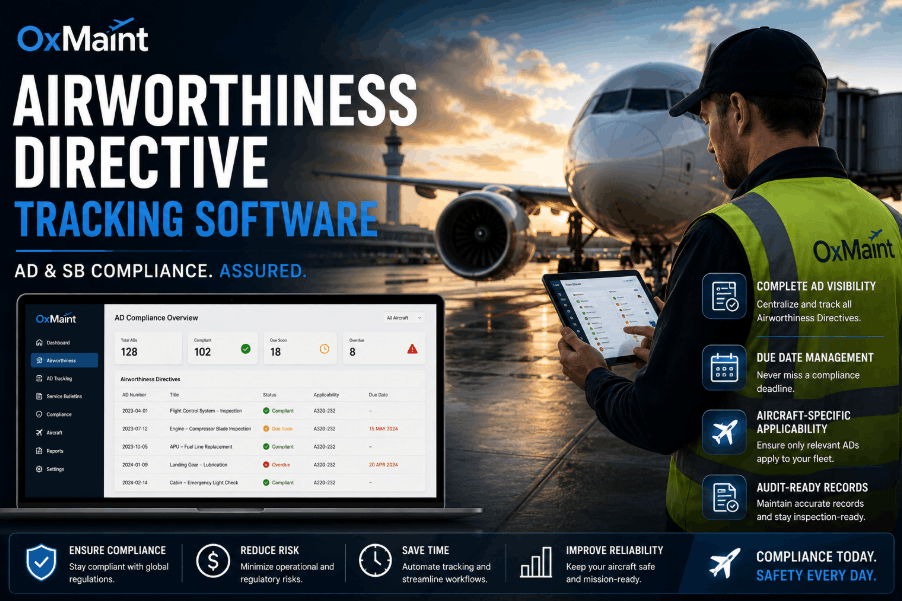
Continuing airworthiness is no longer a back-office function. Under EASA Part-M, Part-CAMO, and the equivalent FAR Part 91/121/135 frameworks, the CAMO is legally accountable for the airworthiness of every aircraft on its register — from AMP revision control and reliability program management to airworthiness review certificate issuance and maintenance program effectiveness reporting to the regulator. The global aircraft maintenance solutions market is growing from $82.5 billion in 2024 to $145.8 billion by 2033 at a 6.7% CAGR, and a meaningful share of that growth is being driven by operators replacing legacy paper-and-spreadsheet CAMO workflows with cloud-native airworthiness management platforms. The cost of getting this wrong is severe — Aviation Week's 2025 MRO survey put the annual industry cost of software-driven data limitations at $8.7 billion, and AOG events caused by poor data visibility were up 23% year over year. Start a free trial and load a sample AMP and reliability program into the OxMaint CAMO module, or book a demo and we will map your continuing airworthiness workflow end to end.
$145.8B
global aircraft maintenance solutions market by 2033, up from $82.5B in 2024 at 6.7% CAGR — driven by CAMO digitization
$8.7B
annual industry cost from software and data limitations, per Aviation Week's 2025 MRO industry survey
$2.8M
global average MRO cost per aircraft per year — CAMO decisions on AMP and reliability drive most of it
23%
year-over-year increase in AOG events from poor data visibility — a direct CAMO and airworthiness data problem
What Is an Aviation Maintenance Management System?
An aviation maintenance management system is the operational and regulatory system of record for continuing airworthiness. For a CAMO operating under EASA Part-M and Part-CAMO — or an air operator's equivalent obligations under FAR Part 91, 121, or 135 — it is the platform that holds the approved Aircraft Maintenance Program, the maintenance program revisions, the reliability program data, the airworthiness review records, and every airworthiness decision made against every aircraft on the register.
A modern aviation maintenance management system goes beyond document storage. It enforces the AMP through scheduled maintenance forecasting, captures findings and reliability data from every check, drives the reliability program through statistical analysis and threshold monitoring, and produces the evidence packages required for ARC issuance and regulator audits. Start a free trial and configure a Part-CAMO compliant workflow against your existing register in a single afternoon.
Core CAMO Functions Inside an Aviation Maintenance Management System
01
Aircraft Maintenance Program (AMP)
Hold the approved AMP per aircraft type — MRBR tasks, MPD tasks, operator-specific tasks, intervals by flight hours, cycles, and calendar — with full revision control and approval workflow.
02
AMP Revision Management
Track every AMP revision through engineering review, CAMO approval, regulator submission where applicable, and operational rollout — with effective dates per aircraft.
03
Reliability Program
Run the operator reliability program with automated data collection from defect reports, removal records, and shop findings — triggered alerts when alert levels are exceeded.
04
Airworthiness Review (ARC)
Conduct airworthiness reviews with structured digital checklists. Compile the complete ARC evidence pack — AD status, SB status, modifications, repairs, and life-limited parts — automatically.
05
AD and SB Compliance
Receive, evaluate, and track every Airworthiness Directive and Service Bulletin applicable to the fleet. Document applicability decisions, compliance method, and effective-by dates per aircraft.
06
Audit and Regulator Reporting
Generate ARC packs, AMP effectiveness reports, reliability submissions, and regulator audit responses on demand — the same data the CAMO uses operationally, in regulator-ready format.
Most CAMO teams discover their data gap only during the next audit — and by then, the regulator is the one asking the questions.
Where CAMO Operations Fail on Legacy Systems
AMP Revisions Slip Through
An AMP revision is approved but never propagates to all tail numbers consistently. Aircraft fly against the old task list and the gap is discovered weeks later during a review.
Reliability Program Lags
Defect and removal data lives in a separate maintenance system. The reliability engineer rebuilds reports manually each month — alert thresholds are crossed before they are even calculated.
ARC Pack Takes Two Weeks
Compiling an airworthiness review evidence pack means pulling AD status from one spreadsheet, SB status from another, and modification records from a third — every aircraft, every year.
Audit Surprises
A regulator audit identifies airworthiness records that cannot be produced inside the required time. The CAMO post-holder spends weeks closing findings that would have been a single query in a modern system.
A single CAMO finding can ground an aircraft until evidence is produced — at $10K–$20K per hour of AOG.
Start a free trial and run a mock audit against your current data.
How OxMaint Runs Continuing Airworthiness
OxMaint is built for the way a real CAMO works — the Nominated Person for Continuing Airworthiness needs to see every aircraft's status in one view, the airworthiness engineers need to update the AMP and propagate it cleanly, the reliability engineer needs live data, and the regulator needs evidence on demand. Every module connects to the same airworthiness record: Operator > Aircraft Type > Tail Number > ATA System > Component, with the AMP and reliability program sitting above it all. Book a demo and we will walk through how a Part-CAMO review would run on your fleet.
Digital AMP with Version Control
Hold the approved AMP per aircraft type with full revision history, effective dates, and per-tail applicability. Every revision tracked from engineering proposal to operational rollout.
Automated AD and SB Tracking
Ingest AD and SB notifications, evaluate applicability against your fleet, document compliance method, and track compliance status per aircraft — no missed effective dates.
Live Reliability Program
Defect and removal data flow from line and base maintenance into the reliability program automatically. Alert level breaches trigger reliability engineering review the same day.
Airworthiness Review Workflow
Conduct digital airworthiness reviews with structured checklists. The ARC evidence pack — AD, SB, mods, repairs, LLPs — is compiled automatically from live records.
CAMO Audit Mode
Single-click generation of audit response packs — AMP effectiveness, reliability submissions, ARC evidence, and corrective action history. The same data CAMO operates on every day.
Regulator-Ready Reporting
EASA Part-M and Part-CAMO templates, FAA equivalent reports, and operator-specific submissions generated on demand from the same airworthiness record set.
Paper-and-Spreadsheet CAMO vs. Cloud Aviation Maintenance Management System
| CAMO Function | Paper and Spreadsheet CAMO | OxMaint Cloud Platform |
|---|
| AMP revision control | Document on file server, version confusion across tails | Digital AMP with per-tail effective-date control and full revision history |
| AD and SB tracking | Master spreadsheet, manual applicability evaluation per tail | Auto-ingested AD/SB feed, applicability evaluated and tracked per aircraft |
| Reliability data collection | Monthly manual data pull, reports built in Excel | Live reliability data flowing from maintenance records in real time |
| Alert level monitoring | Detected only when monthly report runs — typically late | Real-time threshold monitoring with same-day alert notifications |
| ARC evidence pack | Two weeks of manual compilation per aircraft | Auto-compiled from live records in minutes |
| Regulator audit response | Multi-week project to assemble evidence | Single query against the live record set, exported regulator-ready |
| Findings and corrective actions | Spreadsheet log, manual close-out tracking | Tracked workflow with owner, due date, and evidence attachment |
| Multi-aircraft visibility | One spreadsheet per tail or per fleet type | Single airworthiness dashboard across the entire operator register |
FL Technics replaced legacy systems with a modern maintenance platform in 14 months and achieved a 40% reduction in maintenance planning cycle time — most of the gain came from cleaner CAMO data.
ROI Continuing Airworthiness Teams See After Modernizing
90%
reduction in time to compile an ARC evidence pack — from two weeks of manual work to same-day auto-compilation
100%
AD and SB compliance visibility per tail — no aircraft flying against an out-of-date task list, no missed effective dates
40%
reduction in maintenance planning cycle time when CAMO data and operational maintenance run on the same platform
Zero
audit findings traced to data gaps when airworthiness records are unified, timestamped, and regulator-ready by default
CAMO digitization typically pays for itself in the first audit cycle — through avoided findings, faster ARC compilation, and reliability program decisions made on live data.
Book a demo and we will quantify the saving against your current CAMO headcount.
Frequently Asked Questions
Does OxMaint support EASA Part-M and Part-CAMO requirements?
Yes. OxMaint supports the full Part-M and Part-CAMO scope including AMP management with revision control, AD and SB tracking with applicability decisions, reliability program with alert level monitoring, airworthiness review workflow with ARC evidence pack generation, and audit response. The same record set serves operators under FAR Part 91, 121, and 135, with regulator-specific report templates configurable per certificate holder.
How does OxMaint handle Aircraft Maintenance Program revisions and per-tail effective dates?
Each AMP is held digitally with full version control. Revisions are tracked from engineering proposal through CAMO approval, regulator submission where applicable, and operational rollout. Effective dates are configurable per tail number, so a fleet undergoing a phased revision rollout — common when modifications or AD compliance varies between aircraft — has the correct task list applied to each individual aircraft at all times.
Can OxMaint run a full reliability program with alert level monitoring?
Yes. The reliability program ingests defect reports, component removals, and shop findings from operational maintenance in real time. Statistical analysis runs continuously against configured alert levels per ATA system and component. When an alert level is breached, the reliability engineer is notified the same day — replacing the typical monthly manual data pull and Excel rebuild with live, action-ready data.
How quickly can a CAMO deploy OxMaint?
Most CAMOs go live in 6–12 weeks for a defined fleet scope. Deployment covers operator register setup, AMP import per aircraft type, AD and SB backlog reconciliation, reliability program configuration, ARC workflow setup, and integration with line and base maintenance systems. Phased rollouts are common — for example, AMP and AD/SB tracking live in phase one, then reliability program and full audit-response capability in phase two.
Built for CAMO post-holders, airworthiness engineers and reliability teams
Make Continuing Airworthiness Audit-Ready Every Day
Stop compiling ARC packs by hand. Stop discovering reliability alerts a month late. Stop fearing the next regulator audit. OxMaint runs CAMO duties, AMP management, reliability program, and airworthiness reviews on one EASA Part-M and Part-CAMO platform — with the same data ready for the regulator the moment they ask.