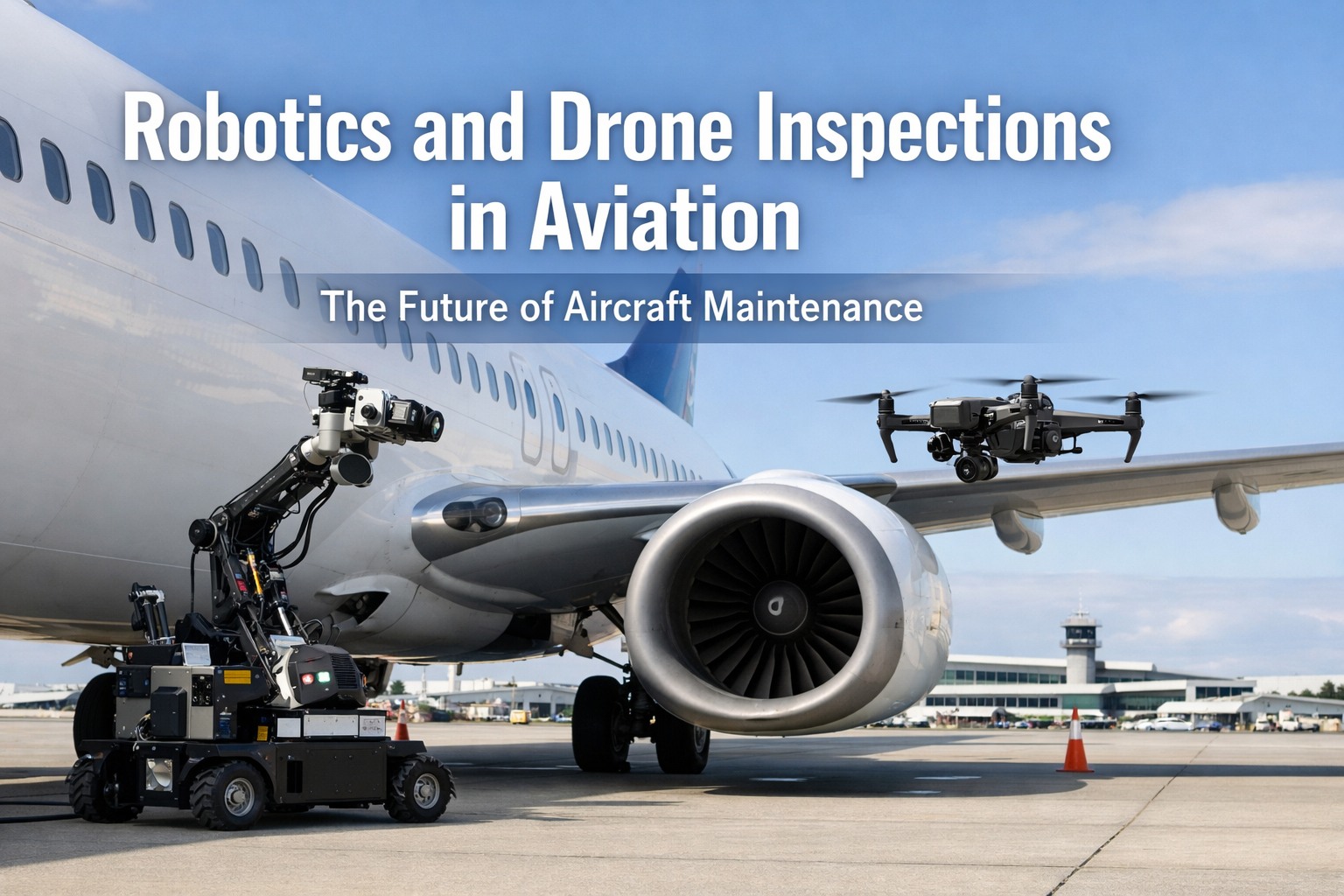
In 2023, Delta Air Lines TechOps became the first major U.S. commercial carrier to receive FAA Part 145 approval for autonomous drone-based aircraft inspection — cutting per-aircraft inspection time from over six hours to under fifteen minutes, eliminating inspector height-exposure risk entirely, and building a replicable regulatory framework that is now reshaping how MRO operations across the industry approach surface inspection programs. This case study documents how they did it, the technology stack and five-phase regulatory path behind the approval, and how OXmaint's Drone Integration Platform connects drone inspection data to automated maintenance workflows for operations ready to follow the same path.
Case Study|Aviation MRO / Drone Integration|Published 2026
OXmaint Drone Integration Platform
How Delta TechOps Pioneered FAA-Approved Drone Inspections — and What It Means for Your MRO Operation
A structured case study on achieving FAA Part 145 approval for autonomous aircraft inspection, the technology stack behind it, and the maintenance workflow transformation that followed.
Organisation
Delta Air Lines TechOps
Industry
Commercial Aviation MRO
Fleet Size
1,200+ Aircraft
Approval Achieved
FAA Part 145 OpSpecs
Program Duration
18 Months to Approval
See how OXmaint connects drone inspection data to automated maintenance workflows — built for operations like yours.
90%
Reduction in inspection time
From 6+ hours to under 15 minutes per aircraft
98%+
AI detection accuracy
Validated across 1,000+ live inspection cycles
60%
Labor cost reduction
Per inspection event vs. traditional method
3x
Inspection frequency increase
Per aircraft per quarter post-implementation
01 — Background
About Delta TechOps
Delta Air Lines TechOps is one of the largest airline maintenance, repair, and overhaul operations in the world — servicing over 1,200 Delta aircraft plus third-party fleets across multiple hub facilities. With thousands of certified technicians, multi-shift operations, and strict FAA oversight, TechOps represents exactly the environment where inspection inefficiency compounds into significant cost and safety exposure. Explore how OXmaint's Drone Integration Platform is helping operations like TechOps close the gap between inspection data and maintenance action — or book a demo with our aviation specialists today.
Headquarters
Atlanta, Georgia, USA
MRO Facilities
Atlanta, Minneapolis, Salt Lake City, New York JFK
Regulatory Framework
FAA Part 145 Repair Station Certificate
Third-Party MRO Clients
40+ airline and cargo operator contracts
02 — The Challenge
What Was Broken Before Drones
Wide-body aircraft inspection at TechOps — covering fuselage exteriors, engine nacelles, control surfaces, and landing gear bays — required physical access scaffolding, boom lifts, specialised lighting rigs, and sequential inspection by certified technicians across defined aircraft zones. Each full external inspection consumed 6 or more hours of setup, active inspection, and teardown time. Aircraft were out of revenue service for that entire window. The process was also fundamentally human-dependent: detection quality varied with inspector fatigue, lighting conditions, and individual experience. There was no structured digital baseline — each inspection was an isolated event, not a data point in a progression. If your team recognises this pattern in your own operation, start a free trial of OXmaint to see what structured drone-to-CMMS workflows look like in practice — or book a 30-minute demo with our team.
6+ Hours Per Inspection
Scaffolding setup, lift certification, lighting configuration, and multi-zone sequential inspection consumed an average of 6 to 8 hours per wide-body aircraft — pulling planes from revenue operations for the full window.
800+ Height Injuries Annually
The U.S. aviation maintenance sector reports over 800 workplace injuries per year tied to height-related inspection activities. Inspectors working on aircraft surfaces at elevation face consistent fall and slip risk with every cycle.
Fatigue-Variable Detection Accuracy
Research shows inspector detection accuracy drops measurably after 4 continuous hours of visual inspection. With long-form aircraft inspections, the sections inspected last in a shift carry higher missed-defect risk than those inspected first.
No Defect Progression Baseline
Manual inspection records produced isolated snapshots. Without georeferenced, comparable data across inspection cycles, TechOps had no reliable mechanism to track how specific surface defects were developing over time — making predictive decisions impossible.
The challenge was not that inspectors were doing a poor job — they were exceptional. The challenge was that the process architecture around them was built for a different era of aviation maintenance.
— Aviation MRO Operations Perspective, 2025
03 — The Solution
How Delta Built the Drone Inspection Program
Delta TechOps did not simply procure drones and deploy them. They built a structured program from hazard analysis to FAA approval — a process that took approximately 18 months and produced a replicable regulatory framework now serving as the de facto model for Part 145 drone inspection programs industry-wide. The five-phase path below is how they earned approval — and how your operation can structure a similar journey with OXmaint handling the data integration and compliance documentation layer. Start a free trial to explore how OXmaint maps to your regulatory requirements, or book a demo with our MRO integration specialists.
Internal Safety and Hazard Assessment
Duration: 3 months
A full hazard analysis of drone operations inside active hangar environments — covering electromagnetic interference with aircraft avionics, drone mechanical failure modes, collision risk modelling, and personnel safety protocols during active drone flights. This document became the primary exhibit in the FAA submission package.
Output: Hazard Analysis Report + Safety Case Document
Technology Validation and Detection Benchmarking
Duration: 4 months
Controlled side-by-side comparison testing across 300+ engineered defect scenarios — drone AI classification results measured against certified inspector findings on identical aircraft surfaces. Detection accuracy, false-positive rate, and minimum detectable defect size were all quantified before any regulatory submission was filed.
Output: Detection Accuracy Report — 98.2% benchmark established
FAA Operations Specifications Submission
Duration: 3 months
Formal OpSpecs amendment submitted to Delta's FAA Certificate Management Office — defining which specific inspection tasks drone systems were authorised to perform, which aircraft types were covered, what data formats constituted acceptable inspection records, and how certified human inspectors retained final airworthiness sign-off authority within the process.
Output: FAA OpSpecs Amendment — under review
Limited Operational Approval and Data Accumulation
Duration: 5 months
Initial FAA approval scoped to two aircraft types and three specific inspection task categories. TechOps operated within this restricted scope while systematically accumulating operational data — logging every inspection cycle, finding, and technician disposition outcome — to build the performance evidence base for expanded approval.
Output: 1,000+ documented inspection cycles — full CMMS record
Full Program Certification — Expanded Approval
Duration: 3 months
With 1,000+ inspection cycles documented and detection accuracy consistently exceeding 98%, TechOps filed for expanded operational approval. Full certification was granted covering wide-body aircraft hull inspection as a standard, recurring maintenance task — removing the need for per-flight waiver applications.
Output: FAA Part 145 Full Approval — drone inspection as standard task
04 — Technology Stack
The Multi-Sensor Architecture Behind the Program
Delta's inspection platform is not a single sensor — it is a layered detection system combining three complementary imaging technologies processed by an AI classification engine. Each layer detects a different class of defect, and together they produce a complete, multi-dimensional picture of aircraft surface condition that no single sensor could deliver alone.
L1
High-Resolution RGB — 4K Visual Inspection
4K cameras operating at sub-centimeter pixel resolution capture surface imagery across the full aircraft exterior. AI computer vision models — trained specifically on Delta's own defect history — classify surface anomalies, dents, paint degradation, and structural deviations in real time during flight. Minimum detectable object size: 5mm at standard inspection altitude.
Surface dentsPaint anomaliesStructural cracksRubber deposits
L2
Thermal Infrared — Subsurface Anomaly Detection
Thermal cameras detect temperature differential patterns beneath aircraft skin panels — revealing moisture ingress, composite delamination, and bonding failures that are completely invisible to RGB imaging. Critical for wide-body composite fuselage inspection and essential for nighttime or low-visibility inspection cycles where RGB accuracy degrades.
Moisture ingressDelaminationBond failuresNight operations
L3
Structured-Light 3D — Surface Geometry Mapping
Structured-light scanning creates millimeter-accurate 3D surface models of fuselage panels, engine nacelles, and control surfaces — enabling precise depth measurement of dents and contour deviations measured directly against manufacturer structural tolerance specifications. No contact with the aircraft is required at any point in the scan cycle.
Dent depthContour deviationTolerance mapping3D baseline
AI
AI Classification and CMMS Auto-Routing
All sensor feeds converge into the AI classification engine — scoring each detected anomaly by defect type, severity, location, and urgency. Critical findings trigger immediate CMMS work order creation, routed to the responsible technician with aircraft tail number, inspection zone, defect imagery, and recommended corrective action pre-populated. No manual data entry required.
Severity scoringAuto work ordersTechnician routingAudit records
05 — Results
Measured Outcomes After Full Program Deployment
The following results reflect documented operational outcomes across Delta TechOps' drone inspection program following full FAA Part 145 approval and deployment at scale. These are not projections — they are measured against the pre-program baseline established during the validation phase. If you want outcomes like these for your operation, start a free OXmaint trial today — or book a demo and we will walk through your specific use case.
90%
Inspection Time Reduction
From an average of 6 to 8 hours per wide-body aircraft to under 15 minutes per full exterior scan. Aircraft returned to revenue service faster with no reduction in inspection coverage depth.
98.2%
Sustained Detection Accuracy
Maintained across all 1,000+ documented inspection cycles — consistent across shifts, lighting conditions, aircraft types, and inspector team rotations. No fatigue-related accuracy degradation.
60%
Labor Cost Per Inspection
Direct labor cost per inspection event reduced by 60% — driven by elimination of scaffolding setup, multi-inspector sequential inspection, and manual record entry time.
3x
Inspection Frequency Increase
Inspections per aircraft per quarter tripled without additional headcount — because faster cycle times enabled scheduling frequency that the prior method made economically impractical.
Zero
Height-Related Incidents
Inspector height-exposure incidents during the drone inspection cycle dropped to zero — as the program eliminated the need for inspectors to access aircraft surfaces at elevation for visual survey tasks.
100%
Digital Record Coverage
Every inspection, finding, work order, and resolution digitally archived with full georeferenced imagery, timestamps, and technician disposition records — audit-ready for FAA, EASA, and ICAO Annex 6 compliance.
06 — Before vs. After
Operational Transformation at a Glance
07 — OXmaint's Role
How OXmaint Powers the Data and Workflow Layer
Delta's drone hardware captures the data. OXmaint is the platform that turns that data into maintenance action — connecting inspection findings to work orders, asset records, compliance documentation, and predictive analytics without adding manual steps to the technician's workflow. For MRO operations building their own drone inspection program, OXmaint removes the most complex integration challenge: getting drone data reliably into your maintenance management system in a structured, audit-ready format. Start a free trial to explore the integration — or book a demo with our aviation team.
1
Drone Completes Autonomous Scan
RGB, thermal, and 3D structured-light data captured across full aircraft exterior in a single autonomous flight — no inspector on the aircraft surface.
2
AI Classifies and Scores Findings
Computer vision models classify each detected anomaly by defect type, severity, location coordinates, and recommended disposition — in seconds, not hours.
3
OXmaint Archives to Asset Record
Findings are automatically pinned to the aircraft asset record in OXmaint — georeferenced, timestamped, with full imagery — building the inspection history baseline.
4
Work Orders Auto-Created and Routed
Severity-scored findings above threshold auto-generate prioritised work orders, routed to the responsible technician with all defect data pre-populated — zero manual entry.
5
Post-Repair Verification and Close-Out
A follow-up drone scan confirms defect resolution. OXmaint closes the work order loop with post-repair imagery — creating a complete, FAA-audit-ready maintenance record.
08 — Key Takeaways
What MRO Leaders Should Take From This Case Study
01
Regulatory path is the bottleneck — not technology
The drone hardware and AI software to run inspection programs at Delta's standard exists today. What takes time is the FAA approval process. Start your hazard analysis and OpSpecs engagement before procurement — not after.
02
Data infrastructure is as critical as drone hardware
Drone inspection data without a structured CMMS integration creates a new data silo — not a solution. The value of the program is realised only when findings flow into automated maintenance workflows with full audit trails.
03
Start with validation testing before regulatory filing
Delta's 300+ controlled defect comparison tests produced the statistical confidence that made the FAA submission credible. Filing without performance data is a much harder path to approval for any Part 145 program.
04
Human oversight is a feature, not a constraint
Delta retained human inspector sign-off authority in the approved process — and this was the right design choice. It made FAA approval achievable, created accountability clarity, and positioned technicians for higher-value engineering judgment tasks.
09 — FAQ
Frequently Asked Questions
Does FAA Part 145 require specific approval for drone-assisted inspection tasks?
Yes. Under Part 145, any inspection method used to support an airworthiness determination must be performed under approved maintenance procedures. Drone-assisted inspection tasks must be explicitly covered in the repair station's Operations Specifications — including aircraft types, inspection zones, acceptable data formats, and the role of human inspector oversight. Delta TechOps navigated this process over 18 months before achieving full operational approval.
Can drones fully replace certified aircraft inspectors under current regulations?
No — and Delta's program does not claim this. Under current FAA and ICAO frameworks, certified human inspectors retain final airworthiness sign-off authority. Drones function as a precision force multiplier: they detect, classify, document, and route findings at speeds and consistency levels that exceed manual methods — freeing inspectors to focus on engineering disposition and judgment rather than physical surface scanning.
What is the typical implementation timeline for a Part 145 drone inspection program?
Delta's path from program initiation to full operational approval took approximately 18 months across five structured phases: internal hazard assessment, technology validation testing, FAA OpSpecs submission, limited operational approval with data accumulation, and expanded certification. The timeline varies by repair station size, aircraft type complexity, and FAA Certificate Management Office review pace — but 12 to 24 months is the realistic planning window for most operations.
How does OXmaint integrate with existing drone platforms and CMMS systems?
OXmaint ingests drone inspection data through standard APIs and open data protocols — making the platform hardware-agnostic. Georeferenced imagery, thermal data outputs, and AI defect classifications are ingested regardless of drone manufacturer. On the CMMS side, OXmaint's work order engine auto-creates and routes maintenance tasks from inspection findings, with full image evidence and severity scoring attached — eliminating manual re-entry between systems. Most operations are live within 2 to 4 weeks of onboarding.
OXmaint Drone Integration Platform
Ready to Build Your Drone Inspection Program on a Foundation That Works?
OXmaint connects drone inspection data to automated work orders, asset records, defect trending, and audit-ready compliance documentation — the same integration architecture that supports high-volume MRO programs across aviation, industrial, and commercial operations. No heavy implementation. No long onboarding. Up and running in weeks.