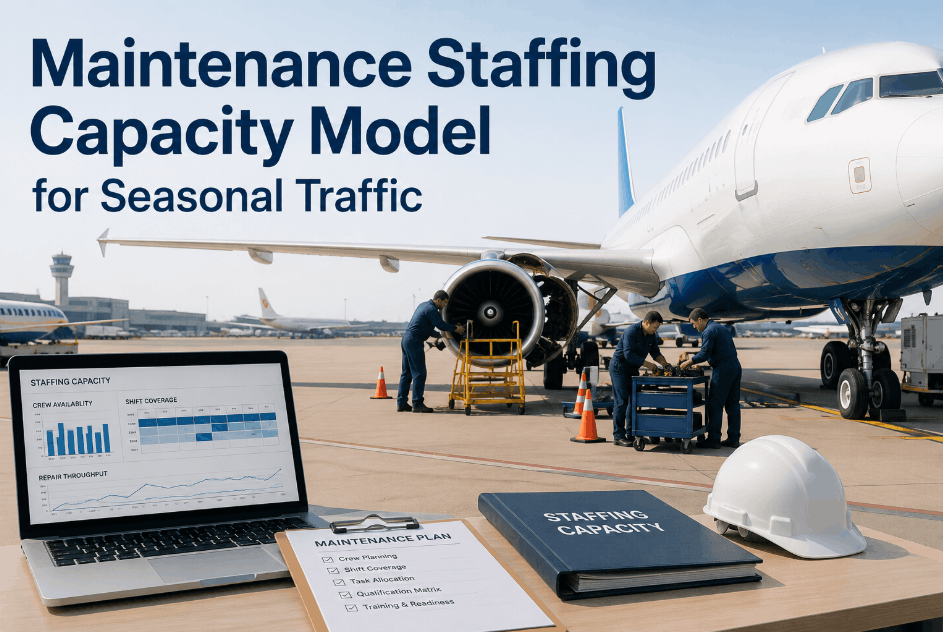
Ground handling workforce capacity planning breaks down when schedulers build rosters from last year's headcount rather than this season's demand. Flight schedule changes, seasonal traffic spikes, and task-mix shifts create overtime pressure and service gaps that static staffing models cannot absorb. Sign Up Free to see how OxMaint helps ground handling planners match labor to demand by shift, task type, and season — before the pressure hits the tarmac.
Match Ground Handling Labor to Demand Before Overtime Builds
OxMaint connects workforce scheduling, task planning, and operational data so ground handling teams can forecast capacity gaps and adjust rosters before peak demand hits.
Why Ground Handling Workforce Capacity Planning Needs a Structured Model
Ground handling operations run on tight turnaround windows where a staffing shortfall in a single shift can delay multiple aircraft. Planners working from fixed headcount targets miss the variation in task mix across baggage handling, aircraft servicing, fueling, and passenger boarding — each with different labor intensity and timing requirements. Teams that Book a Demo with OxMaint see how a task-aware workforce model, built on real shift data and seasonal demand curves, gives planners the visibility to deploy the right crew coverage without building chronic overtime into every peak period.
Break labor demand down by shift rather than daily totals so planners see exactly where coverage gaps and surplus hours sit across the operating day.
Build demand curves from historical flight volume and task records so seasonal staffing decisions are backed by data, not the previous year's gut estimate.
Account for the labor intensity difference between task types — a narrow-body turnaround and a widebody service call carry very different crew requirements.
Identify shifts where planned coverage consistently falls short before overtime becomes a cost line, not a scheduling footnote.
Map certified crew availability against task demand by skill type so specialist shortfalls get flagged before the shift, not discovered during it.
See how work is distributed across teams by task and shift so planners can rebalance loading before productivity drops or service standards slip.
Ground Handling Workforce Capacity Planning: Step-by-Step Model
Start with actual flight schedule data and historical task volumes to establish how labor demand distributes across shifts, days, and seasons. A baseline built from real operational records is more reliable than planning assumptions carried forward from previous contracts. Teams that Sign Up Free can import task and schedule history into OxMaint to start building a demand baseline without a manual data-assembly exercise.
Assign standard labor hours per task type — baggage loading, aircraft towing, cabin cleaning, fueling coordination — so the model converts demand volume into required crew hours rather than headcount approximations.
Apply seasonal demand multipliers to the baseline by week or month so the model surfaces the specific periods where current staffing plans will fall short. Teams that Book a Demo can see how OxMaint's scheduling tools support seasonal roster planning against a live demand model rather than a static spreadsheet.
Compare required crew hours against planned roster coverage shift by shift, flagging gaps where the model predicts overtime or service standard risk before the schedule is published.
Use the gap analysis to adjust shift assignments, cross-train crew for high-demand task types, and build contingency coverage for peak periods — then validate actual versus planned labor hours each week to refine the model over time.
Ground Handling Workforce Capacity Model Reference Table
| Planning Dimension | Input Data | Model Output | Planning Action | Review Frequency |
|---|---|---|---|---|
| Shift Demand | Flight schedule, task volume | Required crew hours per shift | Roster adjustment | Weekly |
| Task Mix | Task type, labor standards | Crew hours by task category | Skill allocation | Per flight cycle |
| Seasonal Demand | Historical traffic, calendar | Seasonal headcount targets | Seasonal hiring plan | Quarterly |
| Overtime Pressure | Planned vs. actual hours | Chronic shortage shifts | Roster restructure | Monthly |
How OxMaint Supports Ground Handling Workforce Capacity Planning
OxMaint connects work order scheduling, crew assignment, and task history in one platform, giving ground handling managers the operational data a capacity model requires. Task completion records, labor hours logged against each assignment, and shift-level scheduling all live in the same system — so planners are comparing required and available hours from a single source of truth rather than reconciling exports from separate tools. Airports and handling contractors can Sign Up Free to begin building their workforce demand baseline from actual task and scheduling records.
Implementing a Ground Handling Workforce Capacity Model: Steps
Pull Historical Task Data
Extract task volumes, labor hours, and shift records from existing work order or scheduling systems to establish a reliable demand baseline.
Define Labor Standards per Task
Set standard crew hours for each ground handling task type so demand volume converts directly into required labor hours without estimation.
Model Seasonal Demand Curves
Apply seasonal multipliers to the baseline to identify peak periods and build staffing targets for each quarter in advance of the season.
Run Shift-Level Gap Analysis
Compare required crew hours to planned roster coverage by shift, flagging deficit shifts before the schedule is finalized and overtime is locked in.
Adjust Rosters and Cross-Train
Use gap findings to rebalance shift assignments, identify cross-training opportunities, and plan contingency coverage for peak periods.
Track Actuals and Refine
Compare planned to actual hours each week to improve model accuracy over time. Book a Demo to see how OxMaint supports continuous workforce model refinement from live task data.
Forecast Ground Handling Labor Demand Before Overtime Becomes the Plan
OxMaint gives ground handling teams the task data, shift scheduling, and labor tracking tools to build a capacity model that matches crew to demand by shift and season.
Frequently Asked Questions
What is ground handling workforce capacity planning?
It is the process of forecasting how many crew hours are needed by shift, task type, and season so staffing decisions match operational demand rather than historical headcount targets.
Why does task mix matter in workforce planning?
Different ground handling tasks carry different labor intensity and timing requirements. A model that treats all tasks as equivalent understates demand during high-complexity periods and overstates it during lighter ones.
How does OxMaint support ground handling workforce planning?
OxMaint captures task-level labor hours, supports shift scheduling, and provides work order history so planners can build and validate workforce demand models from real operational data.
How far ahead should ground handling capacity be planned?
Seasonal planning should run at least a quarter ahead. Shift-level adjustments are typically finalized one to two weeks before the operating period based on confirmed flight schedules.
Can a capacity model reduce ground handling overtime costs?
Yes. Identifying chronic coverage gaps before the schedule is published lets planners rebalance rosters and cross-train crew rather than relying on overtime as the default response to peak demand.
Build the Workforce Model Your Ground Handling Operation Needs
OxMaint connects task scheduling, labor tracking, and shift visibility so ground handling planners can match crew to demand across every shift and season.