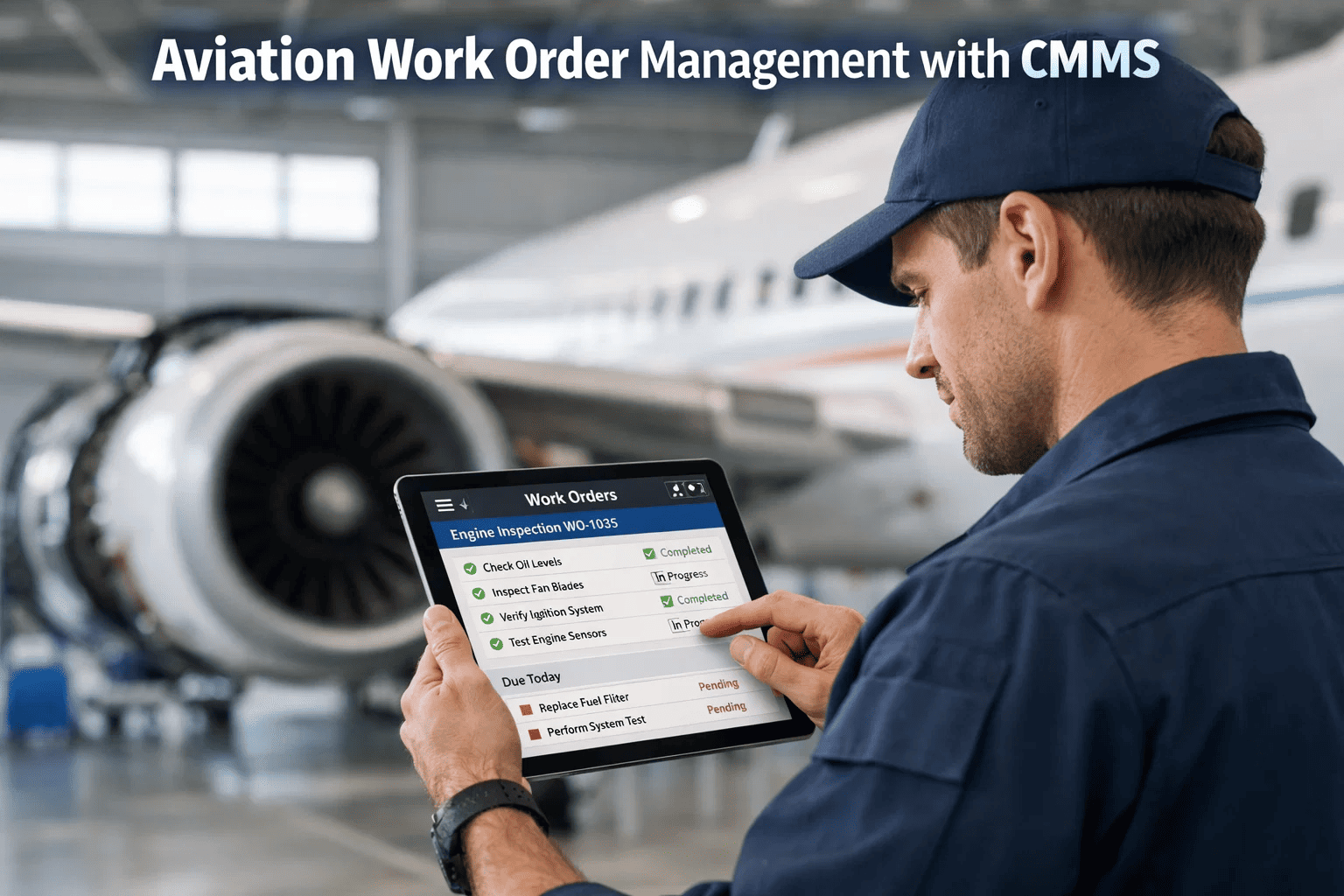
Airport maintenance work orders sit at the centre of every operational outcome — fast turnarounds, regulatory compliance, technician productivity, and finance accountability. When work orders are paper-based, radio-dispatched, or trapped in disconnected systems, every other metric degrades silently: PM compliance drops below 60 percent, emergency-to-planned ratios climb above 40 percent, paper records lose 15–25 percent of maintenance requests, and FAA Part 139 audit preparation absorbs days of binder hunting that should have been five minutes of filtering. Work order automation is no longer a productivity upgrade for airport maintenance teams — it is the operational mechanism that determines whether the maintenance organisation is running the assets or chasing them. This guide shows operations directors, maintenance managers, and facility leads at airports across the USA, UK, Canada, UAE, Germany, and Australia exactly how a CMMS-driven work order programme transforms ramp response times, terminal compliance, and total maintenance cost. start a free trial to configure automated work orders in Oxmaint, or book a demo to see live airport work order routing.
Cut Maintenance Response Time by 30% in the First Quarter
Eliminate the documentation gaps, dispatch delays, and reactive firefighting that consume 30–45 percent of every airport maintenance budget — replaced with automated work orders routed to the right technician in seconds.
No heavy implementation required — works across multi-site airport portfolios.
What Work Order Automation Means at an Airport
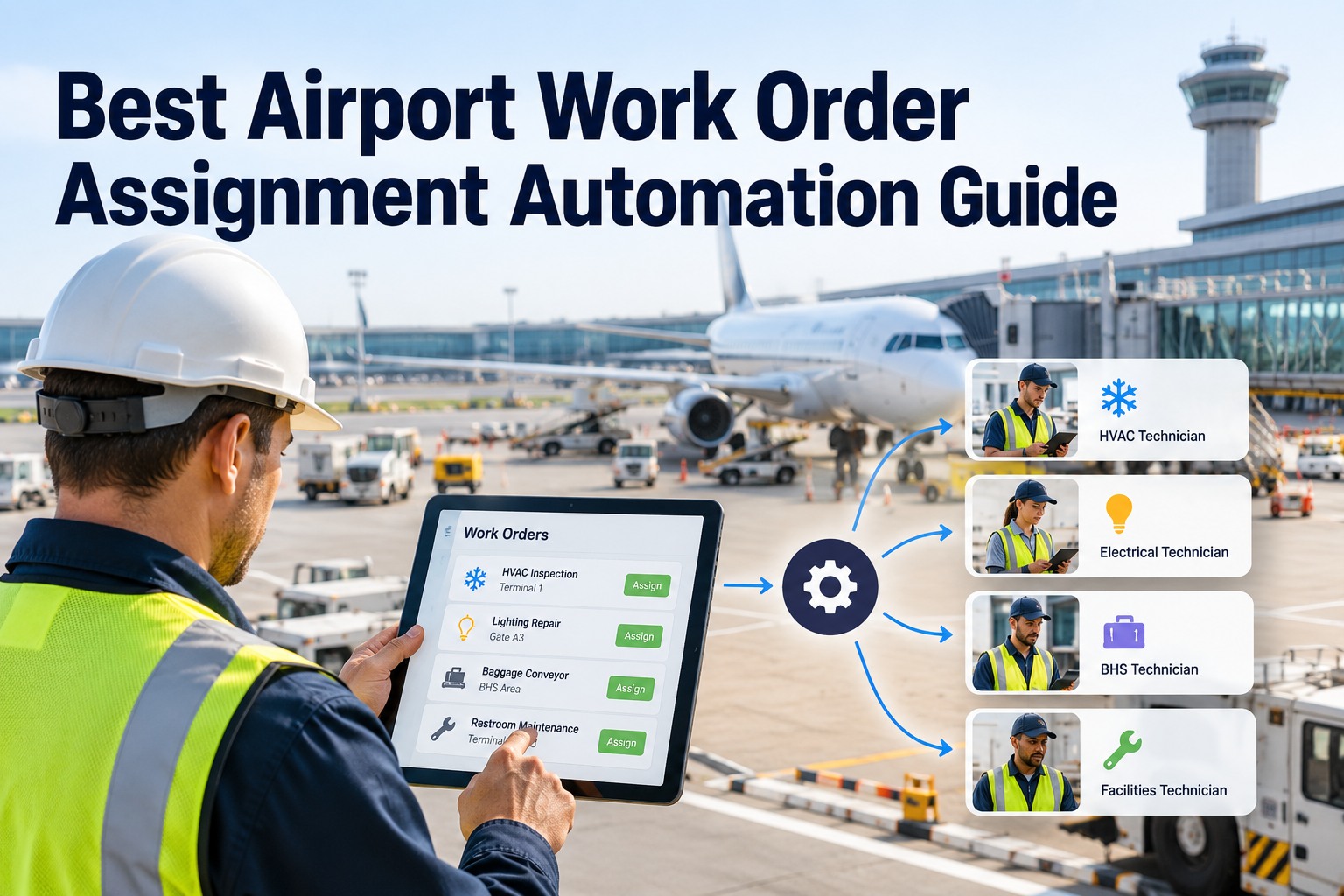
Work order automation at an airport is the end-to-end digitisation of the maintenance request lifecycle — from event trigger, through routing, dispatch, mobile execution, parts consumption, and final sign-off — without paper, radio, or supervisor manual scheduling at any point in the chain. The trigger can be a scheduled PM date, a sensor anomaly, an operator pre-use check finding, or a passenger or airline service request. Whatever the trigger, the work order is generated automatically, populated with asset history and procedure data, routed to the qualified technician based on availability and skill matrix, executed on a mobile device with parts and time captured live, and closed with mandatory fields enforced before sign-off.
For airport operations the implication is structural. The single largest source of audit findings — gaps between identifying a problem and documenting its resolution — disappears, because the gap is closed at the system level rather than by reminders. start a free trial and route your first automated airport work order today.
The Eight Stages of an Automated Airport Work Order
Automated Trigger
PM date, sensor anomaly, operator pre-use check, or passenger service request — work order generated without human dispatch.
Asset Context Loaded
Asset history, manufacturer documentation, applicable procedures, and prior work orders attached automatically at creation.
Skill-Matched Routing
Routed to the qualified technician based on certification, location, and current workload — no supervisor dispatch needed.
Mobile Execution
Technician receives the order on mobile, reviews procedure, scans parts at issue, photographs defects, completes the checklist.
Parts Auto-Reservation
Required parts checked against inventory; if not in stock, procurement request triggers automatically before technician is assigned.
Escalation Triggers
SLA-based escalation fires automatically if response or resolution windows lapse — no manual chase-up required.
Mandatory Closure Fields
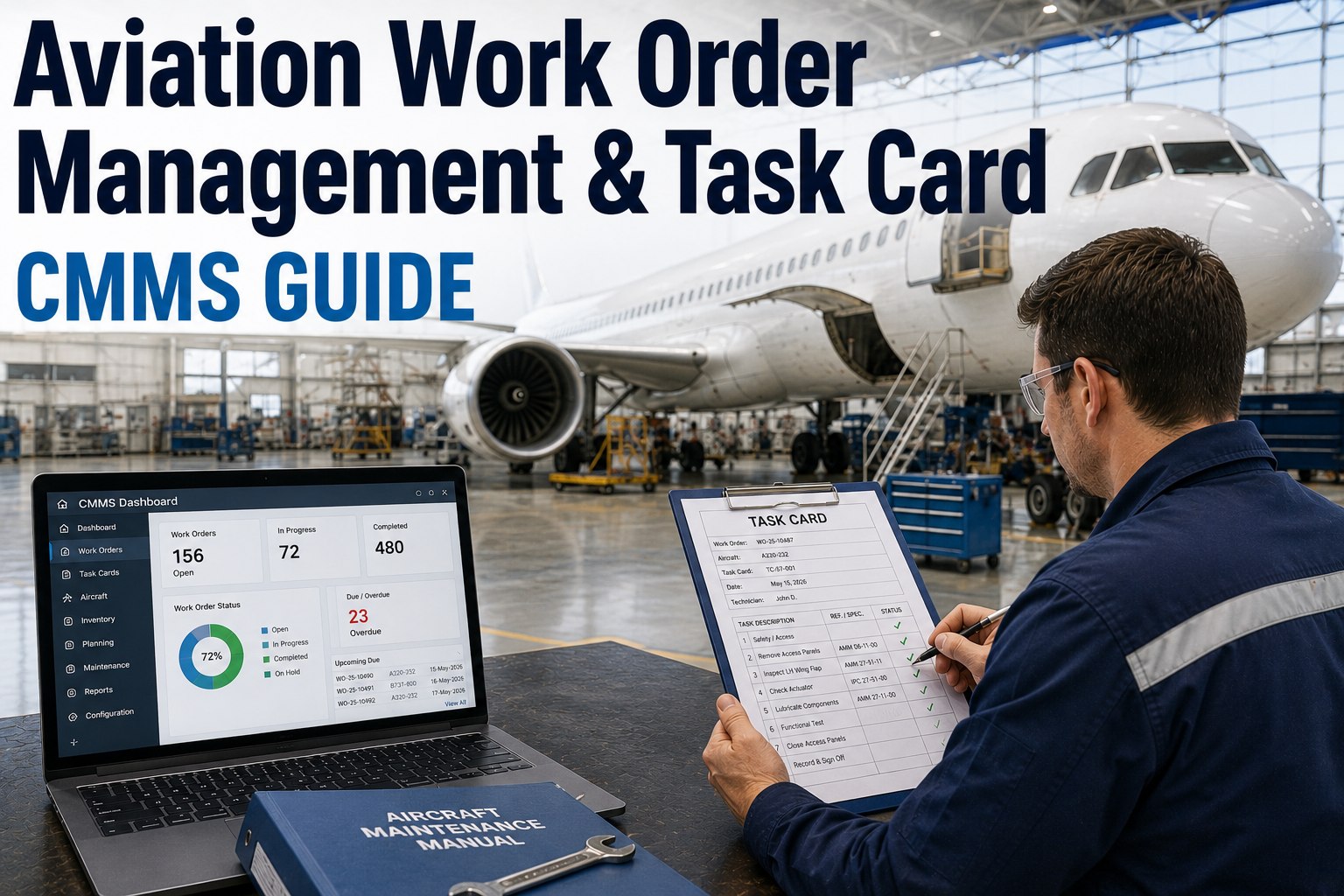
Root cause, corrective action, photo evidence, and technician sign-off enforced before the work order can be closed.
Audit-Ready Record
Closed work order is immediately part of the FAA Part 139, ICAO, EASA, OSHA evidence base — no separate compliance step.
Most airports lose 15–25% of paper-based maintenance requests between submission and assignment — automation closes this gap entirely.
The Pain Points Manual Work Order Management Creates
Paper Requests Lost Between Submission and Assignment
Service requests dropped at a maintenance counter, scribbled on shift logs, or radio-called and forgotten — 15–25 percent of paper maintenance requests fail to reach the technician who could act on them.
Supervisor Dispatch Bottleneck
Every job waiting on a supervisor to triage, prioritise, and assign — a serial workflow that adds hours to response time and goes to zero capacity the moment the supervisor is in a meeting.
PM Schedules Drifting Out of Sync
Calendar PMs missed during high-traffic weeks, carried over indefinitely, accumulating service debt that surfaces as a wave of failures the following month. PM compliance below 60% is the silent norm.
Closure Without Root Cause
Work orders signed off as complete with no root-cause documentation, no photo evidence, no corrective action linked — the same fault recurring on the same asset three months later, undetected.
Parts Stockouts Mid-Job
Technician arrives, opens the panel, and finds the part is not on the shelf — the job is paused, rebooked, and now consumes twice the labour. The cost: 4.8x the planned event.
No Trending or Pattern Detection
Work order history exists somewhere on paper but nobody can answer: which asset is costing the most, which fault is recurring, which technician is most efficient. Operating without data, by default.
Airport maintenance teams switching from manual to automated work orders routinely cut response time by 30 percent and emergency callouts by 50 percent — start a free trial to experience this shift, or book a demo to model your specific maintenance flow.
How Oxmaint Delivers Airport Work Order Automation
Multi-Source Work Order Generation
PM schedules, sensor anomalies, operator pre-use checks, passenger requests, airline service tickets — every trigger produces a structured work order with no manual dispatch step required.
Skill-Matrix Auto-Routing
Work orders routed automatically to the qualified technician based on certification, current workload, location proximity, and shift schedule — eliminating the supervisor as a dispatch bottleneck.
Mobile-First Execution
Technicians execute every work order on phone or tablet — procedure, parts, photo evidence, time tracking, sign-off all captured live, even in basements and airside zones with limited connectivity.
Parts Reservation and Auto-Procurement
Required parts checked against live inventory at work order creation; if absent, procurement request triggers before the technician is assigned — mid-job stockouts eliminated structurally.
SLA-Based Auto-Escalation
Response and resolution SLAs configured per work order priority. Breaches escalate automatically through the maintenance hierarchy — the supervisor and director see the breach without needing to ask.
Audit-Ready Closure Records
Mandatory closure fields enforce root cause, corrective action, and photo evidence before sign-off. Every closed work order is FAA Part 139, ICAO, EASA, and OSHA-grade documentation by default.
Limited onboarding slots available this quarter — see measurable airport work order automation results in the first 30 days.
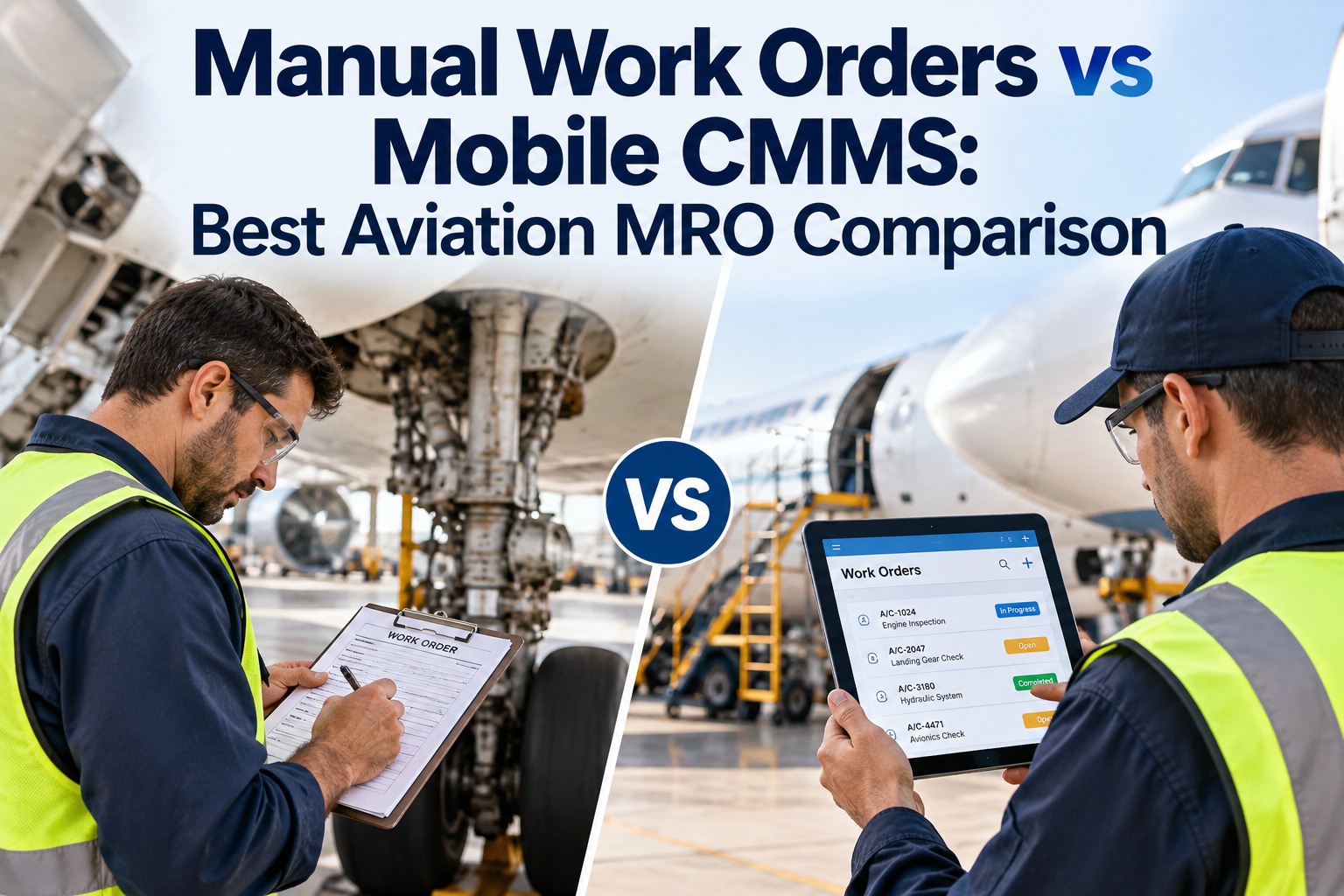
Manual Work Orders vs Automated Work Orders: The Operational Gap
| Work Order Dimension | Manual / Paper-Based | Oxmaint Automated |
|---|---|---|
| Request capture | 15–25% of requests lost between submission and assignment | 100% capture — every trigger produces a tracked work order |
| Assignment time | Hours — waiting for supervisor triage and dispatch | Seconds — skill-matrix auto-routing to qualified technician |
| PM compliance | 55–65% — calendar PMs missed in high-traffic weeks | 90–96% — schedules enforced and tracked in real time |
| Emergency-to-planned ratio | 40%+ reactive — failures discovered after impact | Below 15% reactive — predictive triggers catch faults early |
| Parts availability at job start | Stockouts mid-job, 4.8x cost multiplier on reactive purchase | Parts reserved at WO creation, procurement auto-triggered if needed |
| Closure documentation | Verbal handover, signature, no root cause required | Mandatory root cause, corrective action, photo evidence enforced |
| Audit preparation | Days of binder hunting before FAA Part 139 inspection | Inspection-area export by date range — minutes, not days |
| Cost outcome | Reactive overtime, emergency parts, missed PMs compounding | 20–40% maintenance cost reduction, 50% downtime reduction |
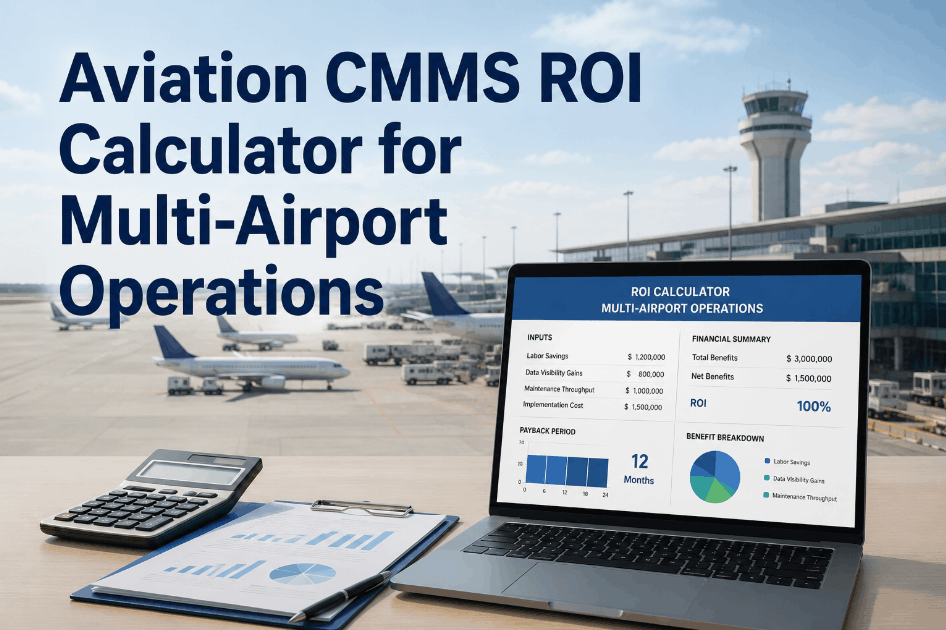
Measured ROI From Airport Work Order Automation
Frequently Asked Questions
What kinds of airport work orders can Oxmaint automate?
Oxmaint automates the complete range of airport maintenance work order types — scheduled preventive maintenance orders triggered by calendar, run hours, or cycles; condition-based corrective orders triggered by IoT sensor anomalies; inspection orders for FAA Part 139, ICAO Annex 14, EASA, and OSHA compliance cycles; reactive corrective orders from operator pre-use checks, passenger requests, and airline service tickets; and capex-linked orders for replacement and refurbishment programmes. Each work order type carries its own routing logic, mandatory documentation, and SLA structure. All orders link to the relevant asset in the airport hierarchy so every technician starts a job with complete context — prior maintenance history, open defects, applicable procedures, certification requirements, and required parts.
How does Oxmaint route work orders to the right airport technician automatically?
Oxmaint applies a skill-matrix and availability engine to every work order at the point of creation. The routing logic considers the certification requirements of the task (a CCR vault inspection requires an electrical-certified technician; a refrigerant intervention requires a refrigerant-handling licensed technician), the current workload of qualified technicians, location proximity within the airport, shift schedule, and SLA priority of the request. Work orders are dispatched in seconds rather than waiting in a supervisor queue. SLA-based escalation fires automatically if response or resolution windows lapse — eliminating the most common failure mode of paper-based systems, where a supervisor in a meeting becomes the dispatch bottleneck for the entire maintenance team.
How does work order automation support FAA Part 139 and ICAO compliance?
Every Oxmaint work order produces a timestamped, electronically signed audit record linked to the specific asset, the specific regulatory standard, and the technician who performed the work. Mandatory closure fields enforce root cause, corrective action, and photo evidence before any work order can be signed off — eliminating the most common audit finding, which is closure without supporting documentation. Pre-configured compliance templates are aligned to FAA Part 139, ICAO Annex 14, EASA airport certification, GCAA Part VIII, CASA aerodrome certification, and OSHA safety requirements. When an FAA Part 139 surveyor requests the complete airfield inspection history for the past 18 months, the report exports in seconds rather than after days of binder retrieval — converting compliance from an annual sprint into a continuous operational state maintained as a byproduct of daily work.
How does Oxmaint handle work orders across multiple airport sites?
Oxmaint's multi-site portfolio architecture is designed for airport groups and authorities operating multiple facilities. Each airport maintains its own work order queue, technician roster, asset hierarchy, and compliance documentation, while corporate operations directors see a portfolio dashboard of all-airport work order volume, SLA performance, PM compliance, and emergency-to-planned ratios simultaneously. Common patterns — a recurring HVAC fault across multiple terminals, a baggage handling issue appearing at sister airports — surface as fleet-wide trends rather than isolated problems. Operations leaders act on the trend with a single engineering programme rather than five reactive responses. Multi-site is a core architectural feature, not an enterprise add-on, and requires no additional licensing tier to activate.
Stop Running Maintenance on Whiteboards and Radios
Airport operations and maintenance directors across the USA, UK, Canada, UAE, Germany, and Australia use Oxmaint to convert every PM, every sensor alert, every operator check, and every passenger request into a tracked, routed, mobile-executed, audit-ready work order — without the supervisor dispatch bottleneck that historically defines airport maintenance.
- Real-time work order visibility across every airport asset
- Skill-matched auto-routing in seconds, not hours
- FAA Part 139 and ICAO Annex 14 audit-ready records built-in