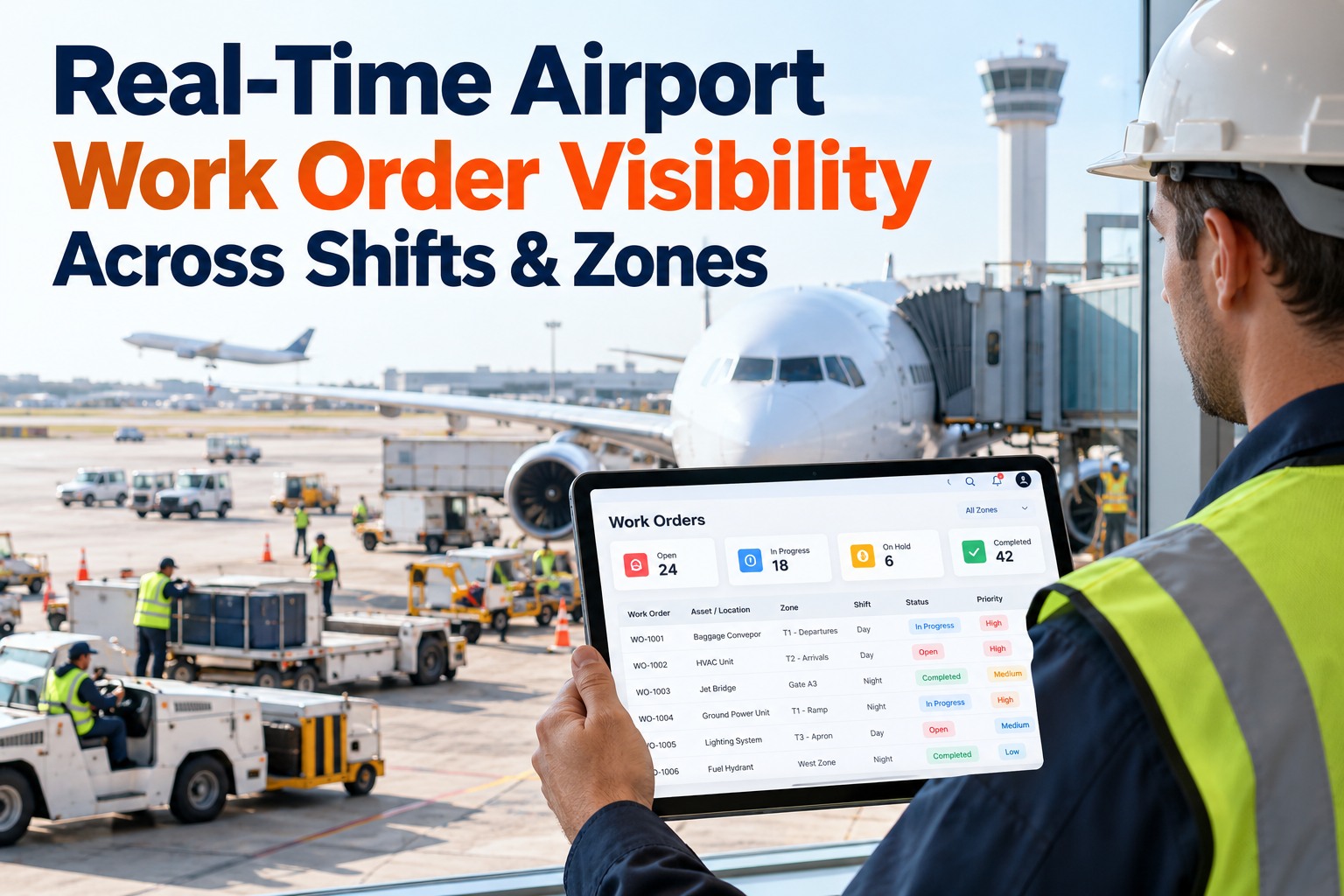
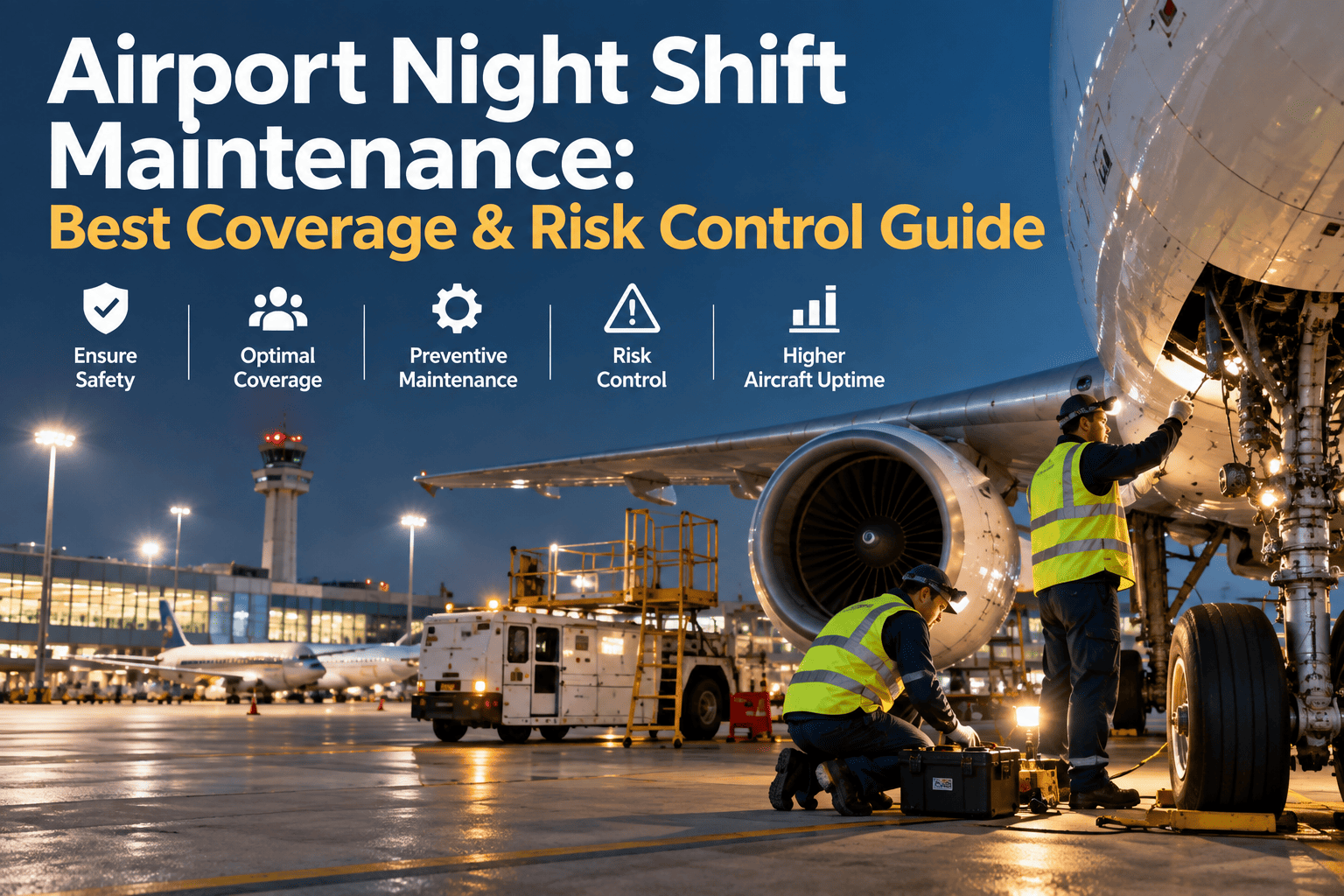
Overtime pressure in airport maintenance crews does not start the moment someone is asked to stay late — it builds weeks earlier through backlog accumulation, crew availability gaps, and labor balancing failures that go undetected until capacity limits are already breached. Facilities using Sign Up Free with Oxmaint track overtime hours, task backlog growth, and crew utilization rates against each maintenance team record — surfacing pressure indicators early enough to act rather than react. Airport maintenance environments run on tight service continuity requirements where a single understaffed shift creates downstream disruption that cannot easily be recovered. Book a Demo to see how Oxmaint structures overtime pressure data for airport maintenance operations. The measurement problem is that overtime spikes look sudden but are always predictable in hindsight — the warning indicators were present for weeks before authorization was required. Sign Up Free and configure Oxmaint's workforce analytics module to monitor backlog buildup, dispatch efficiency, and crew availability trends across every maintenance zone. When overtime pressure is visible in advance, scheduling interventions prevent budget exposure and crew fatigue. Book a Demo to explore how Oxmaint supports airport maintenance teams with predictive workload monitoring and overtime control reporting.
OVERTIME PRESSURE · AIRPORT MAINTENANCE · BACKLOG CONTROL · LABOR BALANCING · 2026
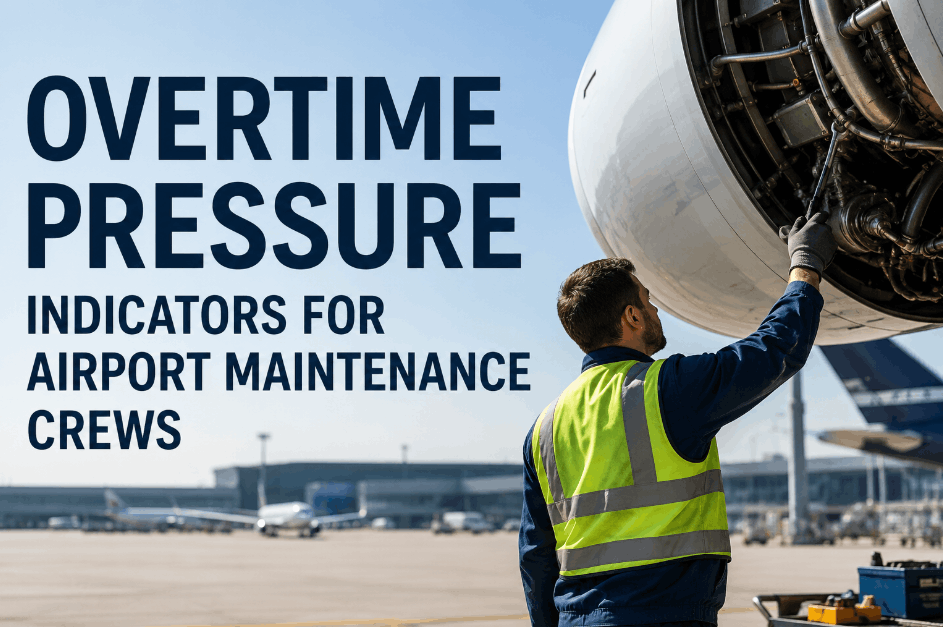
Overtime Pressure Indicators for Airport Maintenance Crews
Overtime in airport maintenance is a symptom, not a cause — backlog buildup, crew availability gaps, and labor balancing failures are the indicators that appear weeks before overtime authorization becomes unavoidable.
18–22%Average overtime premium cost as a share of airport maintenance labor budgets when pressure goes unmanaged
BacklogWork backlog accumulation is the earliest detectable indicator of approaching overtime pressure in maintenance crews
Real-TimeOxmaint surfaces crew utilization and backlog trends before overtime thresholds are breached
5 yrsMinimum labor and overtime record retention required for airport authority compliance reviews
Overtime Pressure Indicators That Appear Before the Spike
Overtime authorization is the end of a chain of early warning indicators that most airport maintenance operations are not configured to detect — backlog carry-forward, crew availability shortfalls, qualification matrix gaps, and declining dispatch efficiency all appear before a single overtime hour is logged. Oxmaint's workforce analytics module tracks these indicators continuously against each maintenance crew and zone record — turning predictable pressure into preventable cost. Sign Up Free to configure Oxmaint's overtime pressure monitoring for your airport maintenance operation.
Work Backlog Accumulation
Earliest Overtime Pressure Signal
When a crew's backlog grows across consecutive shifts, available capacity is already below task demand. Oxmaint tracks backlog carry-forward by crew, zone, and task type — alerting supervisors when growth trends predict an overtime threshold breach.
Crew Availability Shortfalls
Absenteeism and Coverage Gaps
A crew running at 80% planned headcount for three consecutive shifts is accumulating overtime risk invisibly. Oxmaint compares planned versus actual availability per shift — flagging shortfalls before they convert backlog into mandatory overtime.
Labor Balancing Imbalances
Uneven Task Distribution Across Crews
When one crew consistently carries a heavier task volume than adjacent crews at the same staffing level, overtime pressure concentrates rather than distributes. Oxmaint's labor balancing reports show task volume distribution across crews by shift and zone.
Dispatch Efficiency Decline
Response Time Creep
Increasing task response times signal that crews are operating near capacity — each new assignment takes longer to begin as bandwidth narrows. Oxmaint tracks dispatch efficiency trends as a leading indicator of approaching workload limits.
Qualification Matrix Coverage
Skill Gaps Creating Hidden Delays
When the available crew on a shift lacks the qualification to perform a high-priority task, that task either waits or triggers an out-of-shift call-in — both generate overtime pressure. Oxmaint flags qualification gaps during scheduling before the shift starts.
Repair Throughput Rate
Work Order Completion vs. Intake
When work order intake consistently exceeds completion rate, backlog — and the overtime that follows — is inevitable. Oxmaint tracks throughput ratio by crew and week so supervisors can intervene with scheduling or resourcing adjustments before the gap widens.
Overtime Pressure Control — 5-Stage Monitoring Structure for Airport Maintenance
1
Zone and Crew Registry — Define Monitoring Boundaries
Create asset and crew records in Oxmaint for each airport maintenance zone, defining crew size, shift structure, qualification matrix requirements, and overtime thresholds per zone. Monitoring parameters differ by facility type and regulatory classification.
2
Backlog and Availability Threshold Configuration
Configure Oxmaint alert thresholds for backlog carry-forward volume, crew availability percentage, and dispatch response time — triggering supervisor notifications when any indicator crosses the defined pressure level for a crew or zone.
3
Daily Pressure Indicator Review Workflow
Schedule daily Oxmaint dashboard reviews for maintenance supervisors covering backlog status, crew availability, and throughput rate by zone — embedding pressure awareness into the daily operational routine rather than weekly reports.
4
Labor Balancing Intervention Workflow
Configure Oxmaint to generate rebalancing recommendations when task distribution imbalances exceed defined thresholds — automatically suggesting crew reassignment options and requiring a supervisor decision before the work order queue advances.
5
Overtime and Pressure Trend Reporting
Export complete overtime, backlog, and crew utilization trend reports from Oxmaint's workforce analytics module — covering pressure indicator history, intervention records, and budget impact data — for operational and compliance reviews.
Overtime Pressure Indicators — Monitoring Thresholds for Airport Maintenance
| Pressure Indicator |
Alert Threshold |
Risk When Unaddressed |
Intervention Action |
| Work Backlog Carry-Forward |
> 10% of shift task volume for 3+ shifts |
Compounding backlog converts to mandatory overtime |
Crew rebalancing; priority task re-sequencing |
| Crew Availability vs. Plan |
< 85% of planned headcount |
Extended shortfall creates systemic overtime dependency |
On-call activation; cross-zone redeployment |
| Dispatch Response Time |
Creeping beyond zone baseline |
Response time increase signals crew at capacity ceiling |
Task priority review; crew capacity assessment |
| Repair Throughput Ratio |
Intake exceeds completion for 2+ weeks |
Sustained throughput gap guarantees backlog and overtime |
Scheduling review; resourcing escalation |
| Overtime Hours per Crew (weekly) |
Per operational budget threshold |
Chronic overtime accelerates fatigue and turnover |
Shift structure review; hiring or contract resource plan |
From Pressure Indicators to Intervention — Before Overtime Is Authorized
Oxmaint tracks backlog buildup, crew availability, and dispatch efficiency against each airport maintenance zone so supervisors can act on overtime pressure indicators before they become payroll exceptions.
Frequently Asked Questions — Overtime Pressure in Airport Maintenance
What are the earliest indicators of overtime pressure in airport maintenance?
Work backlog carry-forward across consecutive shifts and crew availability falling below 85% of planned headcount are the earliest detectable pressure signals — both appear weeks before overtime authorization is required.
How does Oxmaint help airport maintenance managers control overtime costs?
Oxmaint tracks backlog accumulation, crew availability, and dispatch efficiency in real time — alerting supervisors when pressure indicators cross defined thresholds so labor balancing interventions happen before overtime is needed.
Can Oxmaint identify which zones or crews are generating the most overtime pressure?
Yes. Oxmaint's workforce analytics module segments overtime, backlog, and utilization data by crew, zone, and shift — pinpointing where pressure is concentrated and which structural changes would have the highest impact.
How does labor balancing reduce overtime in airport maintenance operations?
Labor balancing redistributes task volume before one crew reaches capacity while adjacent crews have headroom — preventing the concentration of work that makes overtime unavoidable without changing total headcount.
Can Oxmaint generate overtime pressure reports for airport authority compliance reviews?
Yes. Oxmaint exports complete overtime history, pressure indicator logs, and intervention records for any crew or zone as a structured compliance report — covering the full retention period required by most airport authority frameworks.
Overtime Control Starts with Visible Pressure Indicators.
Oxmaint gives airport maintenance managers a structured platform to monitor backlog buildup, crew availability gaps, and dispatch efficiency — so overtime pressure is addressed at the indicator stage, not the authorization stage.