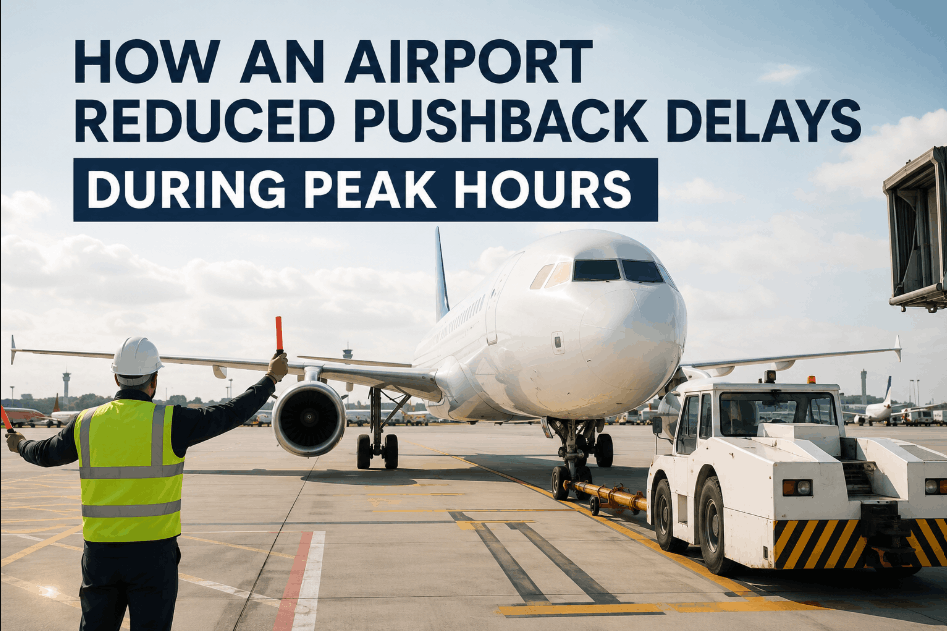
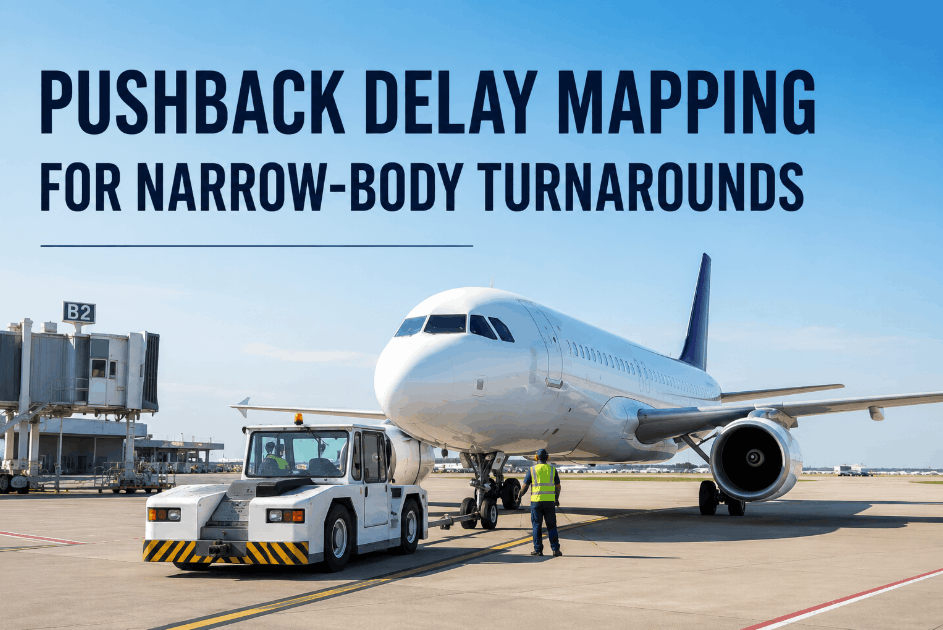
Departure performance at busy airports rarely collapses because of a single catastrophic failure — it erodes through accumulated pushback delays that compound across a peak-hour block until the entire departure sequence is off-rhythm. CRAC units, tug fleets, and stand allocation decisions interact constantly on the apron, and when pushback sequencing runs on habit rather than structured data, late pushbacks cascade into missed slot windows and gate conflicts. A mid-size international airport handling over 180 daily departures identified exactly this pattern: pushback timing was inconsistent across stands, tug staging lacked coordination with departure lists, and there was no mechanism to flag a late-ready aircraft before its slot window closed. If your ramp operations are managing departure sequencing without digital turnaround tracking or tug dispatch coordination, Sign Up Free to see how Oxmaint structures ground ops for pushback performance — or Book a Demo with a ground operations specialist.
Pushback Sequencing · Tug Staging · Departure Slot Control
Stop Losing Departure Slots to Pushback Timing Gaps
Digital turnaround tracking, tug dispatch coordination, and stand-readiness alerts — Oxmaint helps ground operations teams restore on-time departure rhythm across every peak-hour block.
Facility Profile
The Operation: A Departure Schedule Losing Ground to Uncoordinated Pushback Sequences
Facility Overview
IndustryCommercial aviation — mid-size international airport
Scope1 terminal, 28 contact stands, 180+ daily departures, 14 pushback tugs, 3 ramp supervisors per shift
Team48 ramp agents, 9 tug operators, 3 shift supervisors, 1 apron operations manager
Prior SystemWhiteboard-based departure list with verbal tug dispatch and no digital stand-readiness feed
Oxmaint FeaturesWork Order Management · AI & Automation · Analytics & Reporting Dashboards · Asset Management · Inspections & Checklists · Real-Time Alerts
Baseline Pushback Issues
11.4 min
Average pushback delay per departure during peak hours (target: under 4 minutes)
34%
Of peak-hour departures missed their ATC slot window due to late pushback
No data
Stand-readiness status was not tracked digitally — tug dispatch ran entirely on radio calls
Root Cause Analysis
Why Pushback Delays Were Compounding Across Peak Departure Blocks
A review of departure logs, ATC slot records, and ramp supervisor incident notes identified four structural gaps driving late pushbacks. The aircraft were ready — the sequencing process was not. Sign Up Free to bring digital pushback sequencing to your ramp — or Book a Demo to see turnaround tracking on a live operation.
41%
Tug Staging Based on Radio Calls, Not Stand-Readiness Data
Tugs were dispatched when operators heard verbal confirmation, not when readiness was verified — creating a lag between actual stand status and tug arrival at the aircraft nose.
27%
No Early Warning When a Turnaround Was Running Behind Schedule
Supervisors had no system to flag a delayed catering, fueling, or boarding close-out in time to adjust tug positioning before the departure slot window opened.
20%
Departure Sequence Prioritization Done Manually Per Shift
Each shift supervisor rebuilt the pushback priority list from the departure board by hand, introducing inconsistencies and occasional mis-sequencing during busy blocks.
12%
No Post-Shift Data Connecting Pushback Timing to Slot Losses
Operations management couldn't quantify how many slot misses were directly caused by pushback timing versus airline-side delays, making root cause accountability unclear.
The Solution
How Oxmaint Structured Pushback Sequencing and Tug Dispatch Around Live Turnaround Data
The airport deployed Oxmaint to digitize turnaround milestones, feed live stand-readiness status to tug dispatch, and automate pushback sequence prioritization based on slot windows. Sign Up Free to see departure slot protection on your own operation — or Book a Demo to walk through tug staging coordination live.
01
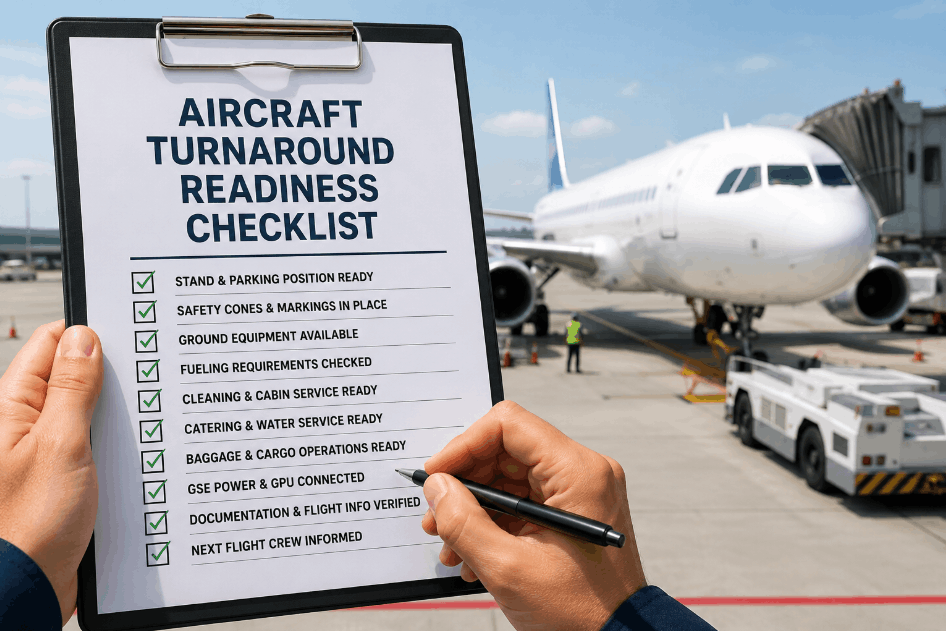
Digital Turnaround Checklists Gave Ramp Agents a Live Milestone Feed Per Stand
Oxmaint's mobile inspection and checklist tools let ramp agents close out each turnaround milestone — fueling, catering, boarding complete — from their device, making stand-readiness visible to the dispatch desk in real time instead of waiting for a radio call.
02
Automated Alerts Flagged Delayed Turnarounds Before the Slot Window Closed
When a turnaround milestone ran past its scheduled time, Oxmaint automatically triggered an alert to the shift supervisor, giving enough lead time to pre-position a tug or initiate early slot protection coordination with ATC.
03
Pushback Sequence Prioritization Rebuilt Around Slot Windows, Not Verbal Queues
Oxmaint's work order and task management layer organized the pushback sequence by slot urgency, giving tug operators a prioritized dispatch list that updated as turnaround status changed — removing the manual rebuild each shift had been doing from the whiteboard.
04
Post-Shift Analytics Connected Pushback Timing to Slot Performance and Delay Accountability
Shift-level reporting in Oxmaint broke down slot misses by cause — pushback delay, airline-side issue, or ATC hold — giving operations management the data to separate ramp accountability from external factors for the first time.
Results at 60 Days
Pushback Timing, Slot Protection, and Departure Performance Two Months After Deployment
67%
Reduction in average pushback delay per peak-hour departure
3.8 min
Average pushback delay — down from 11.4 minutes at baseline
34% → 9%
Peak departures missing ATC slot window due to pushback timing
100%
Of stands now reporting live turnaround milestone status to dispatch
3×
Faster tug pre-positioning during flagged delayed turnarounds
2.6×
ROI on Oxmaint within 60 days from slot recovery and reduced ATC penalties
| Metric |
Before Oxmaint |
60 Days After |
Change |
| Avg pushback delay (peak hours) |
11.4 minutes |
3.8 minutes |
-67% |
| Slot misses from pushback timing |
34% of peak departures |
9% of peak departures |
-74% |
| Stand-readiness visibility |
Radio call only |
Live digital milestone feed |
Real-time |
| Tug dispatch method |
Manual, verbal queue |
Slot-priority digital dispatch list |
Automated |
| Delay cause attribution |
Not tracked |
Per-departure breakdown available |
New capability |
| Platform ROI |
Not measured |
2.6× within 60 days |
2.6× |
Key Business Impact
What Pushback Sequencing Discipline Means for Airport On-Time Departure Performance
Pushback delays rarely come from a tug breaking down — they come from a sequence that was assembled from incomplete information. When stand-readiness is verbal and dispatch is reactive, you're always one late catering truck away from losing a slot window. Putting live turnaround milestone data in front of the dispatch desk and letting the system flag when a block is running behind changes the whole dynamic — tugs move to where they're actually needed before the window closes, not after. Oxmaint gives ramp teams that coordination layer without replacing the people making the calls.
Daniel Osei, Airport Ground Operations & Turnaround Efficiency Specialist
16 years airside operations · Former ramp operations manager, regional hub · Specialist in pushback sequencing, tug fleet coordination, and peak-hour departure performance recovery
Turnaround Tracking · Slot Protection · Dispatch Coordination
Give Your Ramp Team a Departure Sequence Worth Trusting
Live stand-readiness feeds, automated delay alerts, slot-priority tug dispatch, and shift-level performance reporting — Oxmaint helps ground operations teams protect every peak-hour departure block.
FAQs
Frequently Asked Questions
How does Oxmaint help reduce pushback delays during peak departure hours?
By digitizing turnaround milestones and feeding live stand-readiness to tug dispatch, Oxmaint removes the radio-call lag that causes tugs to arrive after a slot window has already opened.
Can Oxmaint alert supervisors when a turnaround is running behind schedule?
Yes. When any turnaround milestone passes its scheduled time, Oxmaint triggers an automatic alert so supervisors can adjust tug positioning or initiate slot protection before it's too late.
Does Oxmaint support pushback sequence prioritization based on departure slots?
Yes. Work orders and task queues can be organized by slot urgency, giving tug operators a live dispatch list that updates automatically as stand-readiness status changes.
How does Oxmaint help attribute slot misses to ramp versus airline causes?
Post-shift analytics break down each slot miss by root cause — pushback delay, boarding overrun, or external hold — giving operations management clear accountability data per departure.
How quickly can a ramp team go live with Oxmaint's turnaround tracking tools?
Most ground operations teams complete digital checklist setup and dispatch integration within the first two weeks, with automated alerts active shortly after.
Every Departure, One Reliable Sequence
Bring Pushback Sequencing and Turnaround Tracking to Your Ramp Operation
Oxmaint brings live stand-readiness feeds, automated delay alerts, slot-priority dispatch, and shift-level departure analytics to ground operations teams — without replacing your existing dispatch tools.