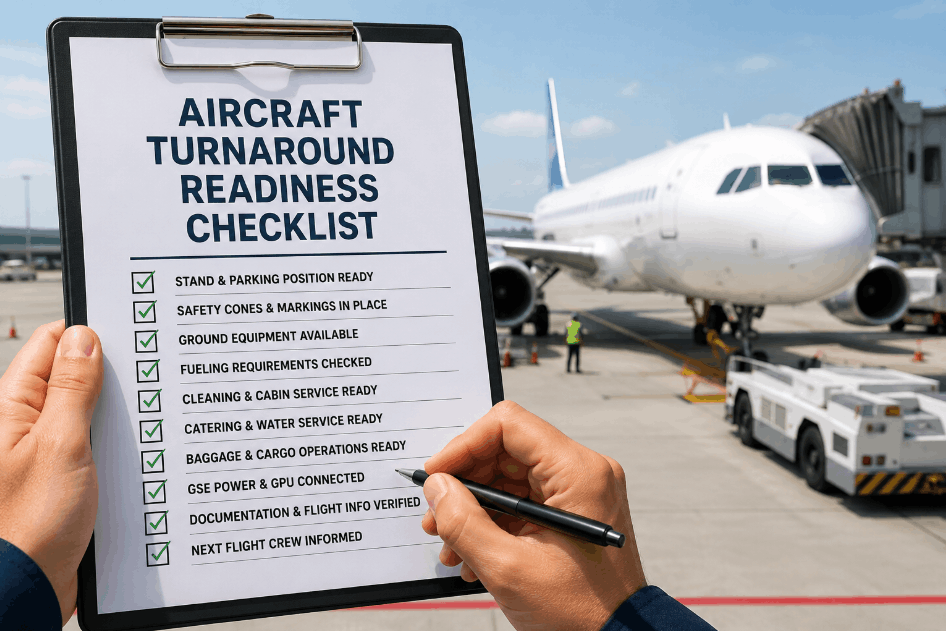
MRO turnaround delays rarely trace back to a single missed task — they accumulate from sequencing gaps that each look minor in isolation. A refuel team that arrives before the baggage offload clears the stand, a cabin reset crew waiting on a part confirmation that was never escalated, a dispatch handoff that carried forward an open defect without flagging it to the incoming technician: each one adds minutes, and across two busy hubs running parallel rotations the minutes become schedule variance that cascades into the afternoon. An MRO operation managing line maintenance across two regional hubs found that its turnaround discipline depended entirely on individual crew knowledge — there was no system enforcing sequence, synchronizing crew availability against task order, or surfacing handoff gaps before the next aircraft arrived at the stand. Sign Up Free to see how Oxmaint structures MRO sequencing and crew sync across multiple hubs — or Book a Demo with a maintenance operations specialist.
Sequencing · Crew Sync · Dispatch Handoff
Stop Losing Turnaround Minutes to Sequencing Gaps and Handoff Gaps Your Current System Can't See
Task sequencing enforcement, crew availability sync, automated handoff checklists, and real-time work order status across hubs — Oxmaint helps MRO teams cut turnaround delays without adding supervisory headcount.
Operation Profile
The Operation: A Two-Hub MRO Team Running Turnarounds Without Enforced Sequencing
Operation Overview
IndustryAviation MRO — line maintenance and turnaround services at two regional hubs
Scope2 hubs, 34 daily rotations managed, 11 task categories per turnaround across 4 crew disciplines
Team2 hub supervisors, 18 line maintenance technicians, 1 operations planning coordinator
Prior SystemVerbal crew briefings, paper task cards, phone-based handoff updates between hubs
Oxmaint FeaturesWork Orders · Inspection Management · Preventive Maintenance · Asset Management · Analytics & Reporting
Baseline Turnaround Issues
22 min
Average turnaround overrun per rotation during peak daily windows across both hubs
54%
Of delay events linked to sequencing conflicts or handoff information gaps at shift change
3.1×
Frequency of open defects carried forward without documented escalation to incoming crew
Root Cause Analysis
Why Turnaround Delays Persisted Across Both Hubs Despite Experienced Crews
A structured review of delay reports, task card completion records, and shift handoff logs across both hubs found four compounding gaps in how turnaround work was sequenced, assigned, and communicated. The crew skill was not the problem — the system around that skill was. Sign Up Free to bring sequencing structure and handoff discipline to your MRO operation — or Book a Demo to see cross-hub work order visibility live.
35%
No Enforced Task Sequence Across Crew Disciplines
Refuel, baggage, cabin reset, and technical sign-off teams operated from individual task awareness rather than a shared sequence, so parallel tasks collided at the stand and serial dependencies were missed.
29%
Crew Sync Depended on Verbal Updates That Didn't Cross Hubs
Status updates within a hub relied on radio calls and face-to-face briefings; nothing surfaced cross-hub delays to the planning coordinator in time to adjust the downstream rotation sequence.
23%
Dispatch Handoffs Carried Open Items Without Escalation Flags
Open defects and incomplete tasks passed from one shift to the next without a mandatory escalation step, so incoming crews discovered outstanding items at aircraft arrival rather than before.
13%
No Cross-Hub Visibility Into Real-Time Rotation Status
Hub supervisors had no shared system showing live task completion status across both locations, making delay correlation and proactive schedule adjustment impossible until after the disruption was already cascading.
The Solution
How Oxmaint Structured Sequencing, Crew Sync, and Handoff Discipline Across Both Hubs
The MRO team deployed Oxmaint to enforce turnaround task sequences, synchronize crew assignments to task dependency order, and require documented escalation at every shift handoff. Book a Demo to walk through MRO turnaround configuration on a live system.
01
Turnaround Task Templates With Enforced Sequence Dependencies
Oxmaint turnaround work orders are structured with task dependencies built in, so downstream steps are not available for assignment until upstream prerequisites are confirmed complete, eliminating the sequencing collisions that were causing stand conflicts.
02
Crew Assignment Visibility Across Both Hubs in a Single Dashboard
Hub supervisors and the planning coordinator share a live Oxmaint dashboard showing task completion status, crew assignment, and rotation progress across both locations, replacing radio calls with a common operating picture.
03
Mandatory Escalation Checklist at Every Dispatch Handoff
Shift handoffs in Oxmaint require completion of a digital escalation checklist that captures open work orders, deferred defects, and pending part confirmations before the outgoing crew can close their shift — ensuring incoming crews see outstanding items before aircraft arrival.
04
Automated Alerts When Rotation Milestones Fall Behind Schedule
Oxmaint monitors task completion against rotation timeline targets and sends automated alerts to supervisors when a milestone is running late, giving the planning coordinator time to adjust downstream assignments before the delay propagates.
Results at 60 Days
Turnaround Performance, Delay Reduction, and Handoff Compliance After Deployment
67%
Reduction in average turnaround overrun time across both hubs during peak rotation windows
91%
Of shift handoffs completed with a documented escalation checklist — up from near zero
58%
Fewer delay events linked to sequencing conflicts or missed task dependencies
100%
Of open defects now documented with escalation status at every shift transition
44%
Reduction in supervisor time spent on verbal status gathering across hub teams
3.1×
ROI on Oxmaint platform cost within 60 days from reduced delay penalties and overtime
| Metric | Before Oxmaint | 60 Days After | Change |
|---|
| Average turnaround overrun | 22 min per rotation | 67% reduction | -67% |
| Handoffs with escalation checklist | ~0% documented | 91% compliant | +91% |
| Sequencing conflict delay events | 54% of delays | 58% reduction | -58% |
| Open defects documented at handoff | Inconsistent | 100% documented | Unified |
| Supervisor verbal status gathering | Baseline hours | 44% reduction | -44% |
| Platform ROI | Not measured | 3.1× within 60 days | 3.1× |
Key Business Impact
What Turnaround Sequencing Discipline Means for MRO Schedule Reliability
MRO turnaround delays almost never come from a crew that doesn't know their job — they come from a system that lets parallel crews work without a shared sequence and lets shift handoffs carry forward open items without forcing an escalation decision. Once the task order is enforced in the work order itself and handoffs require a documented escalation checklist, the delay pattern changes completely. You stop discovering problems at the stand and start resolving them before the aircraft arrives. Oxmaint gives line maintenance teams that structure without replacing the crew knowledge that already drives the quality of the work.
Priya Nambiar, Aviation MRO Operations and Turnaround Reliability Specialist
16 years line maintenance and MRO operations · Former hub supervisor, regional airline MRO · Specialist in turnaround sequencing, crew sync programs, and cross-hub delay reduction
Sequence Enforcement · Cross-Hub Visibility · Handoff Compliance
Give Your MRO Teams the Sequencing Structure Your Turnaround Schedule Depends On
Task dependency enforcement, shared crew visibility, mandatory escalation checklists, and automated milestone alerts — Oxmaint helps MRO operations cut turnaround delays across multiple hubs.
FAQs
Frequently Asked Questions
How does Oxmaint enforce task sequencing in MRO turnaround work orders?
Turnaround work order templates in Oxmaint include task dependency rules that block downstream steps until prerequisites are confirmed complete, preventing crews from working out of sequence.
Can Oxmaint provide visibility into turnaround status across multiple MRO hubs?
Yes. Supervisors and planning coordinators share a live dashboard showing real-time task completion, crew assignment, and rotation progress across all connected hubs in a single view.
How does Oxmaint handle open defect escalation at MRO shift handoffs?
Shift handoffs in Oxmaint require completion of a digital escalation checklist that captures all open work orders and deferred defects before the outgoing crew can close their shift record.
Does Oxmaint alert supervisors when a rotation milestone falls behind schedule?
Yes. Automated alerts notify supervisors when task completion falls behind rotation timeline targets, giving time to adjust downstream assignments before the delay cascades.
How long does it take to configure MRO turnaround templates in Oxmaint?
Most MRO teams have turnaround task templates, escalation checklists, and hub dashboards configured within two to three weeks of initial deployment.
Every Hub, One Turnaround Standard
Bring Sequencing Discipline and Handoff Compliance to Your MRO Turnaround Operation
Oxmaint brings task dependency enforcement, shared crew visibility, mandatory escalation checklists, and milestone alerts to MRO line maintenance teams across multiple hubs.