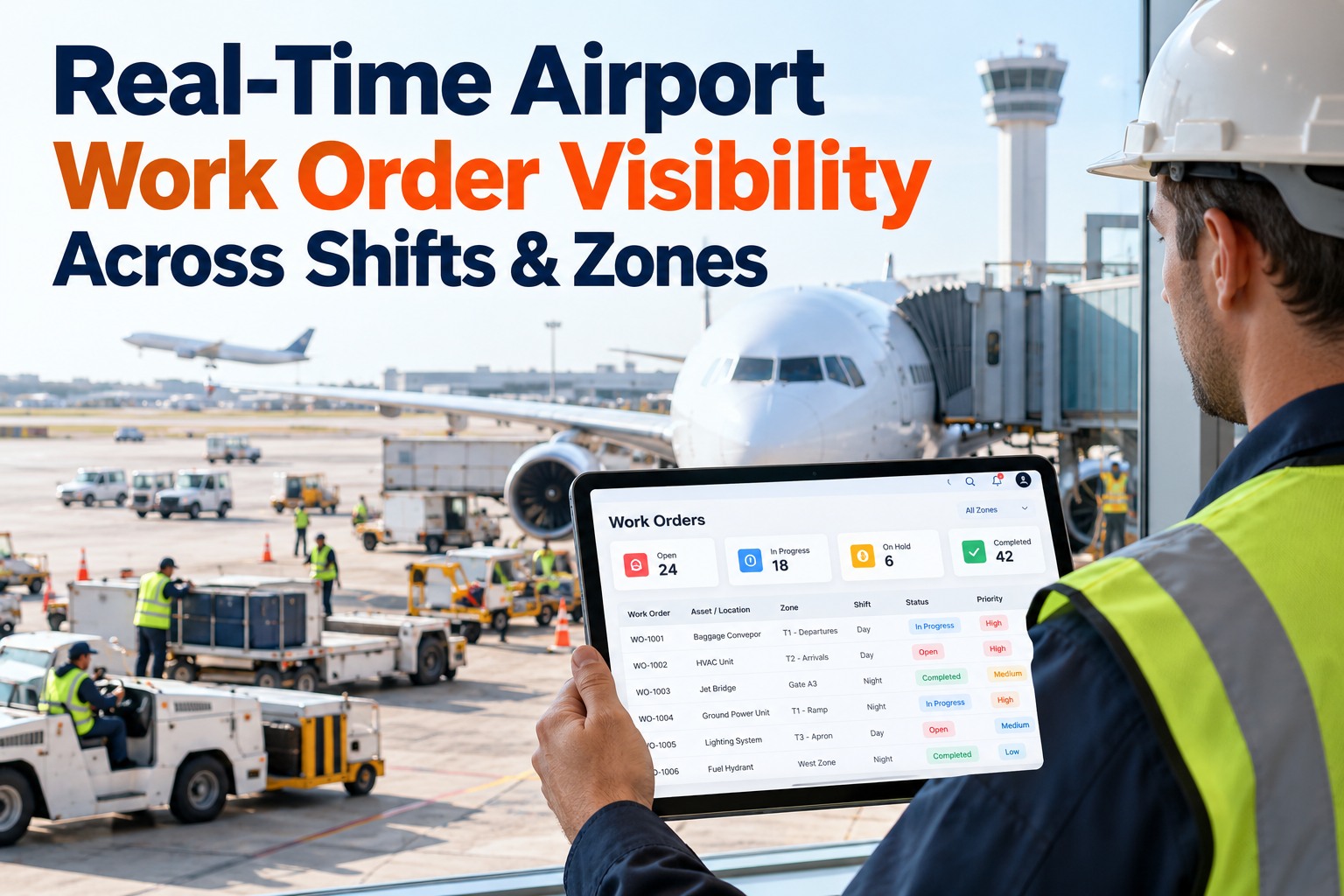
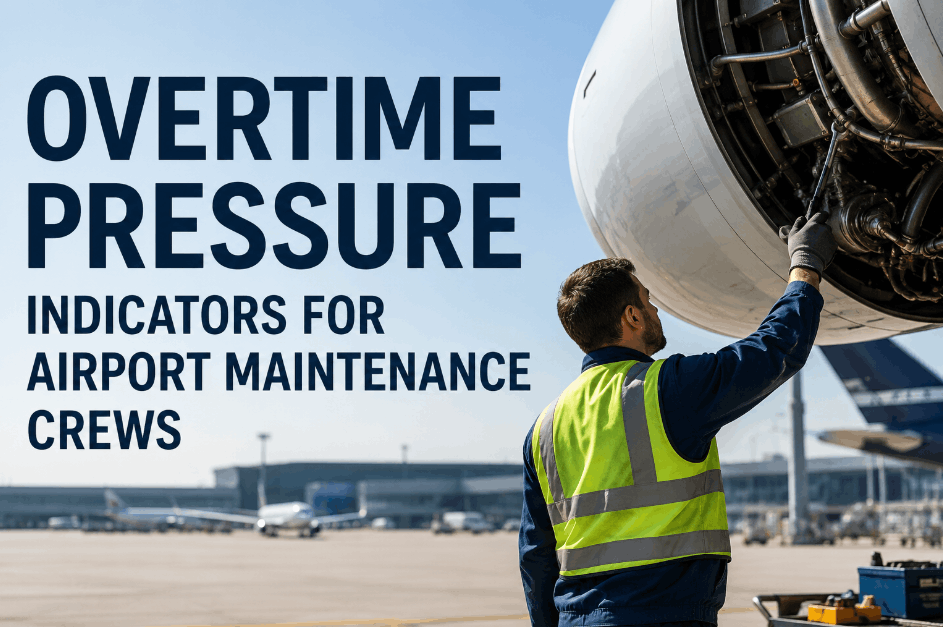
Wrench time benchmarking for aircraft service crews is how maintenance managers move from feeling that their teams are productive to proving it — when active repair time, job-card flow, and response metrics are tracked against shift targets, the minutes lost to travel, waiting, and rework become visible and recoverable. Operations using Sign Up Free with Oxmaint log job card completion times, task response intervals, and technician utilization rates against each aircraft service record — creating a benchmarking baseline that shows where productive minutes go and what it costs to leave them there. Without structured wrench time data, labor balancing decisions are made on perception rather than evidence, and inefficiencies become permanent. Book a Demo to see how Oxmaint structures aircraft service crew performance data for wrench time analysis. The measurement challenge is not tracking time — it is linking time data to job cards, crew assignments, and delay categories so the productivity index reflects reality. Sign Up Free and configure Oxmaint's work order and crew performance modules to capture active repair time at task level across every shift. When benchmarking data is accurate and searchable, delay control and crew scheduling decisions follow naturally. Book a Demo to explore how Oxmaint supports aircraft service teams with continuous wrench time visibility and labor benchmarking reports.
WRENCH TIME · AIRCRAFT SERVICE · JOB CARDS · CREW UTILIZATION · BENCHMARKING · 2026
Wrench Time Benchmarking for Aircraft Service Crews
Active repair time benchmarking shows exactly where aircraft service crews lose productive minutes — turning gut feel about crew efficiency into structured data that drives labor balancing and delay control decisions.
25–35%Typical wrench time in aviation MRO environments — most crews have significant recoverable minutes
Job CardFlow accuracy drives wrench time benchmarking — every delay category must be captured at task level
Real-TimeOxmaint captures active repair time against each work order without manual time entry
LaborBalancing crew utilization across shifts requires benchmarked wrench time data — not schedule assumptions
Wrench Time Losses That Benchmarking Makes Visible
Aircraft service crews lose productive minutes to delays that are rarely measured — parts waiting, tooling unavailability, unclear job cards, and travel time within the hangar or line station all consume active repair capacity without appearing in shift reports. Oxmaint's work order module captures task-level time data against each job card, crew assignment, and delay code — building the benchmarking dataset that separates actual wrench time from scheduled labor hours. Sign Up Free to start capturing wrench time data in Oxmaint across your aircraft service operation.
Active Repair Time Capture
Job Card Level Time Tracking
Wrench time is only meaningful when captured at task level, not shift level. Oxmaint logs start, pause, and close times against each job card — giving supervisors a true picture of active repair time versus administrative and delay time.
Delay Category Classification
Parts, Tools, Approval, Travel
Unclassified delay time is unrecoverable. Oxmaint requires technicians to log delay categories when closing a paused work order — building delay data by type so supervisors know whether to fix parts availability, tooling logistics, or approval workflows.
Response Time Benchmarking
Dispatch to First-Wrench Intervals
Response time from task assignment to first active repair minute is a direct measure of dispatch efficiency. Oxmaint benchmarks this interval by crew, shift, and task type — revealing where queuing or communication delays are consuming crew capacity.
Team Utilization Rate
Active vs. Available Labor Hours
Team utilization rate compares active repair time to total available labor hours. Oxmaint calculates this ratio per shift and crew — showing whether low productivity reflects a staffing problem, a scheduling problem, or a delay control problem.
Job Card Flow Analysis
Queue Depth and Cycle Time
Job card queue depth and average cycle time by task type reveal scheduling mismatches before they generate backlog. Oxmaint tracks job card flow across all open work orders — flagging congestion before it compresses wrench time across the crew.
Shift-Over-Shift Benchmarking
Trend Comparison and Improvement Tracking
A single wrench time reading is a data point; a trend is a business decision. Oxmaint benchmarks wrench time, utilization rate, and delay distribution across shifts and weeks — showing whether improvement actions are working or the problem is structural.
Wrench Time Benchmarking Program — 5-Stage Structure for Aircraft Service
1
Crew and Task Registry — Define Benchmarking Scope
Create crew and aircraft records in Oxmaint that define the scope of wrench time measurement — including task types, shift structures, and delay codes relevant to each service crew's work environment.
2
Job Card Configuration with Time Capture Fields
Build Oxmaint job card templates for each task category with mandatory active time, delay time, and delay code fields. Time capture must be embedded in the work order flow — not added as a separate reporting step.
3
Baseline Benchmarking — Establish Current Wrench Time
Run Oxmaint's reporting module across the first month of structured time capture to establish baseline wrench time, utilization rate, and delay distribution by crew and task type — creating the benchmark target for improvement measurement.
4
Delay Alert and Corrective Workflow
Configure Oxmaint to escalate alerts when delay time exceeds defined thresholds by category — automatically notifying the shift supervisor and requiring a corrective action log before the work order can progress.
5
Benchmarking Report Generation for Labor Reviews
Export complete wrench time and utilization benchmarking data from Oxmaint's crew performance record — covering active repair time trends, delay distributions, and response time comparisons — as a structured report for labor planning sessions.
Wrench Time Benchmarks — Target Ranges for Aircraft Service Crews
| Performance Metric |
Target Range |
Risk When Below Target |
Corrective Action |
| Wrench Time (active repair %) |
55–70% of available hours |
Below 55% indicates systemic delay — not a staffing gap |
Delay root cause analysis; logistics review |
| Response Time (dispatch to first wrench) |
< 20 min per task type |
High response time compresses active repair time per shift |
Dispatch process review; pre-staging review |
| Team Utilization Rate |
75–90% of labor hours |
Low utilization signals scheduling mismatch or delay concentration |
Job card rebalancing; crew assignment review |
| Delay Time per Job Card |
Per task type threshold |
High delay per card reduces throughput without reducing headcount |
Delay category review; parts pre-order process |
| Job Card Cycle Time |
Per task type benchmark |
Extended cycle times signal rework, unclear scope, or qualification gaps |
Job card review; technician qualification check |
From Active Repair Time to Labor Insight — Without the Manual Counting
Oxmaint captures wrench time, delay categories, and team utilization against each aircraft service job card — building the benchmarking dataset that turns labor hours into actionable performance data.
Frequently Asked Questions — Wrench Time Benchmarking for Aircraft Service
What is wrench time and why does it matter for aircraft service crews?
Wrench time is the percentage of available labor hours spent on active repair work. In aircraft service, industry averages sit below 40% — meaning most crews have significant recoverable capacity being lost to delays, travel, and administrative time.
How does Oxmaint capture wrench time data without disrupting technician workflow?
Oxmaint embeds time capture fields directly in job card templates so technicians log start, pause, and close times as part of their normal work order process — no separate time sheets or manual reporting required.
What delay categories should aircraft service crews track for benchmarking?
The most impactful delay categories are parts availability, tooling access, engineering approval, and intra-facility travel. Oxmaint allows custom delay code configuration to match each crew's specific workflow and service environment.
Can Oxmaint benchmark wrench time across multiple aircraft service crews?
Yes. Oxmaint's benchmarking reports compare wrench time, utilization rate, and delay distribution across crews, shifts, and stations — identifying which teams have best-practice performance and which need intervention.
How quickly can an aircraft service team establish a wrench time benchmark in Oxmaint?
Most teams establish a meaningful baseline within 4–6 weeks of structured job card time capture. Oxmaint's reporting module generates benchmark comparisons automatically once sufficient data is recorded.
Wrench Time Improvement Starts with Accurate Measurement.
Oxmaint gives aircraft service crews a structured platform to capture active repair time, classify delays, and benchmark utilization — so labor balancing decisions are driven by data rather than assumptions about where productive minutes go.