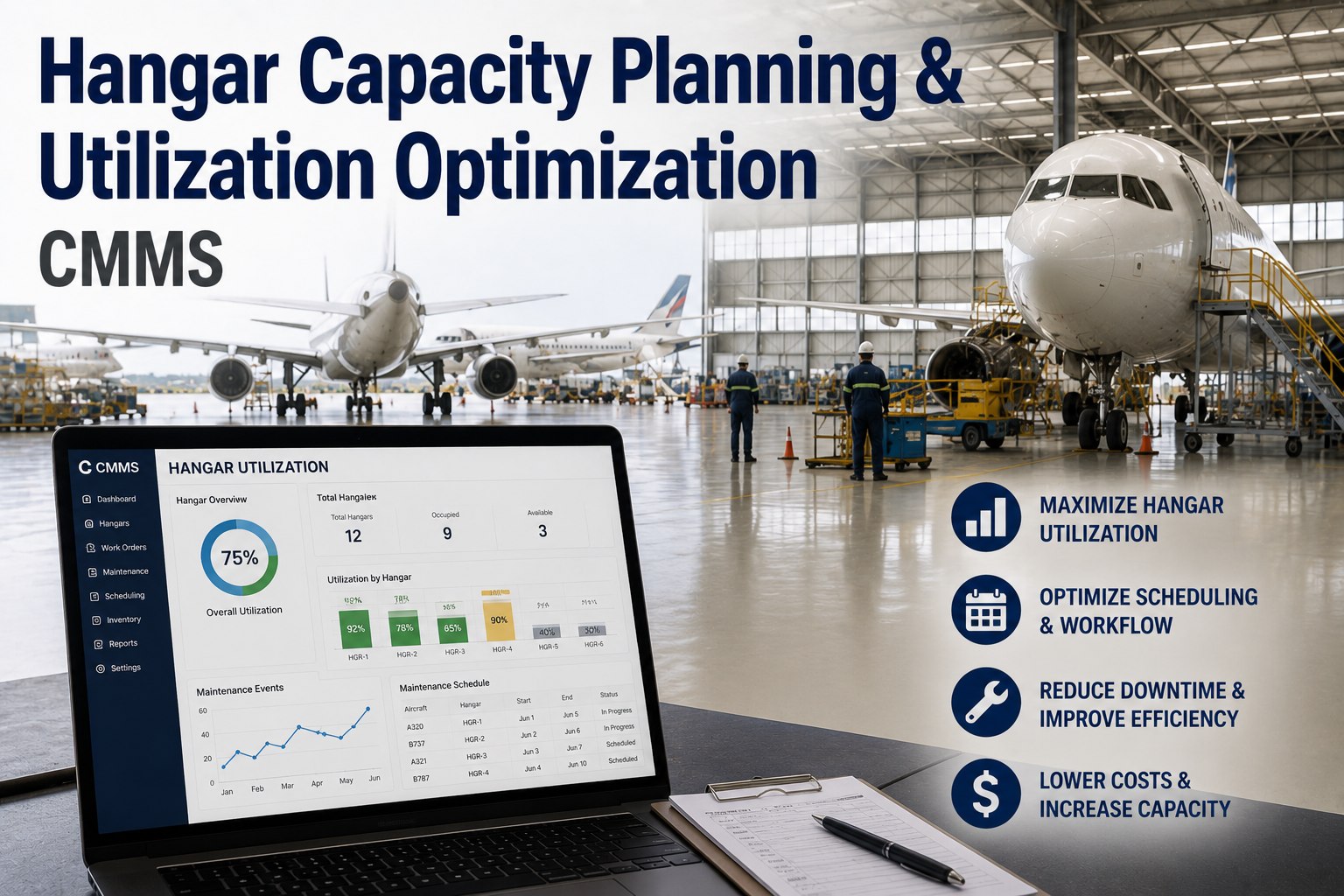
Skills mix planning in regional MRO departments is the discipline that prevents a well-staffed team from being the wrong team — when qualification matrix data, repair throughput metrics, and team utilization rates are analyzed together, the gap between available skills and actual task demands becomes measurable and correctable before service continuity is compromised. Regional MRO operations using Sign Up Free with Oxmaint link technician certification records to work order data — creating a live qualification matrix that shows which skill categories are overstaffed, understaffed, or concentrated in a single shift. Skills mix gaps rarely appear as immediate failures; they show up as delayed task assignments, repeat rework, and chronic overtime on specific task types. Book a Demo to see how Oxmaint structures qualification and utilization data for regional MRO skills mix analysis. The planning challenge is not knowing what certifications a team holds — it is knowing whether those certifications are distributed across shifts and stations in a pattern that matches the actual work arriving each week. Sign Up Free and configure Oxmaint's qualification matrix and work order analytics to identify skills mix gaps by shift, station, and task category. When skills distribution is visible in the same system as work order flow, planning decisions are based on data rather than intuition. Book a Demo to explore how Oxmaint supports regional MRO departments with structured skills mix planning and workforce development tracking.
SKILLS MIX · REGIONAL MRO · QUALIFICATION MATRIX · TEAM UTILIZATION · WORKFORCE PLANNING · 2026
Skills Mix Planning for Regional MRO Departments
A regional MRO team's qualification matrix tells you what skills exist — skills mix planning tells you whether they are distributed across shifts and stations in a pattern that matches your actual work demand.
Qual MatrixLinking certification data to work orders reveals the actual skills mix gap — not the assumed one
40%MRO task delays attributable to skills mix mismatches rather than headcount shortfalls
Real-TimeOxmaint surfaces qualification coverage gaps during scheduling before tasks are assigned
5 yrsMinimum qualification and training record retention for regulatory and audit compliance in MRO
Skills Mix Gaps That Surface in Repair Throughput Before They Show in Staffing Reports
Regional MRO departments with adequate headcount still experience throughput bottlenecks when the available skills mix does not align with the incoming task profile — specialized repair categories get queued waiting for the one qualified technician available, while other crew members are underutilized on lower-complexity work. Oxmaint connects qualification matrix records to live work order data so skills mix gaps are visible in the scheduling workflow, not discovered after a delay. Sign Up Free to build your regional MRO qualification matrix in Oxmaint and link it to your work order scheduling workflow.
Qualification Matrix Visibility
Live Certification Coverage per Shift
A static certification list does not show whether qualified technicians are present on the shift that needs them. Oxmaint's qualification matrix tracks certification coverage by shift, station, and task category — making skills availability a scheduling input, not an afterthought.
Repair Throughput by Task Category
Volume vs. Qualified Capacity
Throughput analysis by task category reveals which repair types are consistently delayed relative to intake volume — and whether that delay traces to a skills mix gap or a workload distribution problem. Oxmaint reports throughput ratios by task type and qualification requirement.
Team Utilization Rate by Skill
Over- and Under-Utilization Detection
Low utilization in one skill category paired with high utilization in another on the same shift signals a skills mix imbalance, not a headcount problem. Oxmaint calculates utilization rate by qualification level so planners can see where the mismatch is concentrated.
Task Allocation Accuracy
Matching Work to Qualified Crew
Task allocation errors — assigning work to an unqualified technician — generate rework, compliance risk, and downstream delays. Oxmaint validates qualification coverage at work order dispatch and blocks assignment when the technician's certification record does not match the task requirement.
Training Hours Tracking
Qualification Development Progress
Closing a skills mix gap requires knowing how far each technician is from adding a needed qualification. Oxmaint tracks training hours, course completion, and certification status by technician — giving MRO managers a development pipeline view alongside current coverage data.
Work Order Flow Analysis
Delay Attribution by Skill Category
When a work order is delayed waiting for a qualified technician, that delay should be recorded against a skills-availability delay code — not simply as a scheduling gap. Oxmaint captures delay attribution by category so skills mix planning decisions are based on actual delay data.
Skills Mix Planning Program — 5-Stage Structure for Regional MRO
1
Qualification Registry — Map Every Certification to Every Technician
Create technician profiles in Oxmaint with complete qualification records including certification type, issue date, expiry, and task categories each certification covers. Skills mix analysis requires accurate qualification data at the individual level before aggregate patterns can be identified.
2
Task Profile Analysis — Define Skill Requirements by Work Type
Map each work order category in Oxmaint to the minimum qualification level required for compliant execution. This task-to-qualification mapping is the foundation for skills mix gap analysis — without it, throughput data cannot be linked to qualification coverage.
3
Shift-Level Coverage Analysis — Identify Distribution Gaps
Run Oxmaint's qualification coverage report by shift and station to identify where specific skill categories lack coverage — revealing whether gaps are concentrated in particular shifts, stations, or days of week before they translate into throughput delays.
4
Development Pipeline Configuration
Configure Oxmaint to track training progress for technicians developing qualifications that address identified gaps — linking development milestones to the skills coverage dashboard so planners can see when the gap will close and plan coverage interim solutions.
5
Skills Mix Report Generation for Workforce Planning Reviews
Export complete qualification matrix, utilization rate, and throughput data from Oxmaint's workforce analytics module for regional MRO planning cycles — covering coverage gaps, delay attribution, and development pipeline status as a structured planning package.
Skills Mix Planning Indicators — Benchmarks for Regional MRO Departments
| Planning Indicator |
Target Benchmark |
Risk When Below Target |
Planning Response |
| Qualification Coverage per Shift |
100% of required task categories covered |
Uncovered task categories create dispatch delays and compliance risk |
Shift reassignment; interim cross-qualification |
| Team Utilization Rate by Skill |
75–90% for each qualification tier |
Low utilization in one tier signals misallocated skills mix |
Task rebalancing; qualification development targeting |
| Skills-Related Task Delay Rate |
< 5% of work orders delayed by qualification gap |
Above 5% confirms structural skills mix problem — not scheduling issue |
Targeted hiring or accelerated training investment |
| Repair Throughput by Task Category |
Intake-to-completion ratio ≥ 1.0 per category |
Persistent sub-1.0 ratio in specific categories signals skills concentration |
Cross-training plan; shift coverage redesign |
| Training Hours per Technician (annual) |
Per qualification development target |
Below target delays pipeline closure for identified gaps |
Training schedule review; external course sourcing |
From Qualification Records to Workforce Planning — Without the Spreadsheet Work
Oxmaint links regional MRO qualification matrix data to work order flow and team utilization reporting — building the skills mix visibility that workforce planning decisions require without manual data assembly.
Frequently Asked Questions — Skills Mix Planning for Regional MRO
What is skills mix planning and why does it matter for regional MRO departments?
Skills mix planning ensures that the qualifications held by a maintenance team are distributed across shifts and stations in a pattern that matches actual task demand — preventing throughput delays caused by the wrong skills being available at the wrong time.
How does Oxmaint support qualification matrix management for MRO operations?
Oxmaint stores technician qualification records linked to work order task requirements — flagging coverage gaps at scheduling time and blocking dispatch when a task requires a certification not held by the assigned technician.
How can MRO managers identify which skill categories need development investment?
Oxmaint's skills-related delay attribution report shows which task categories generate the most qualification-gap delays — directly pointing workforce development investment toward the skill categories with the highest operational impact.
Can Oxmaint track technician training progress as part of skills mix planning?
Yes. Oxmaint tracks training hours, course completion, and certification milestones by technician — giving MRO planners a development pipeline view that shows when identified gaps will be closed by in-progress training.
How long should MRO qualification and training records be retained for compliance?
Most aviation and MRO regulatory frameworks require minimum 5-year retention for qualification and training records. Oxmaint stores all certification and development records indefinitely against each technician profile without manual archiving.
Skills Mix Planning Starts with Accurate Qualification Data.
Oxmaint gives regional MRO departments a structured platform to map qualification coverage, track team utilization by skill tier, and identify training investment priorities — so workforce planning decisions are grounded in actual task demand rather than headcount assumptions.