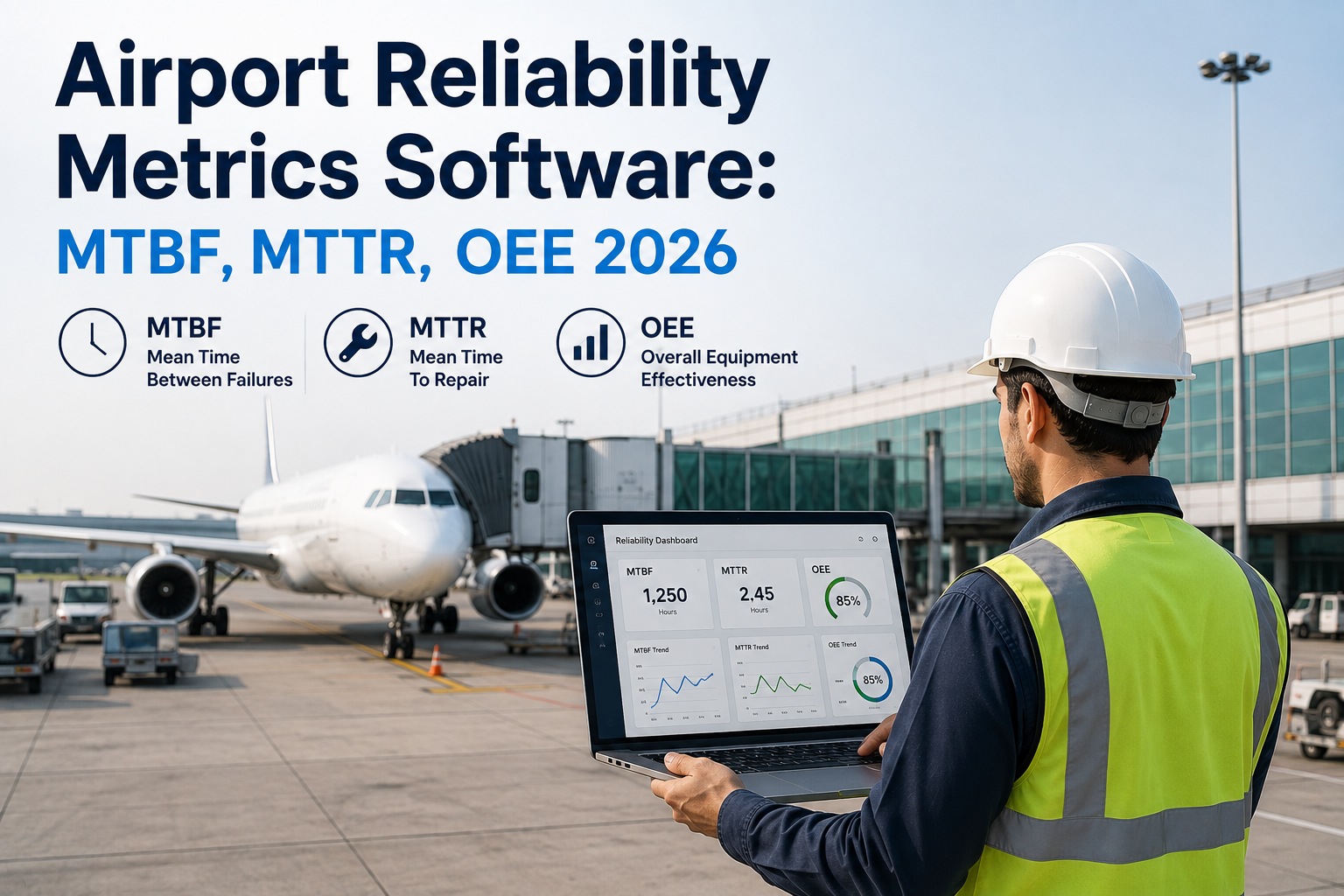
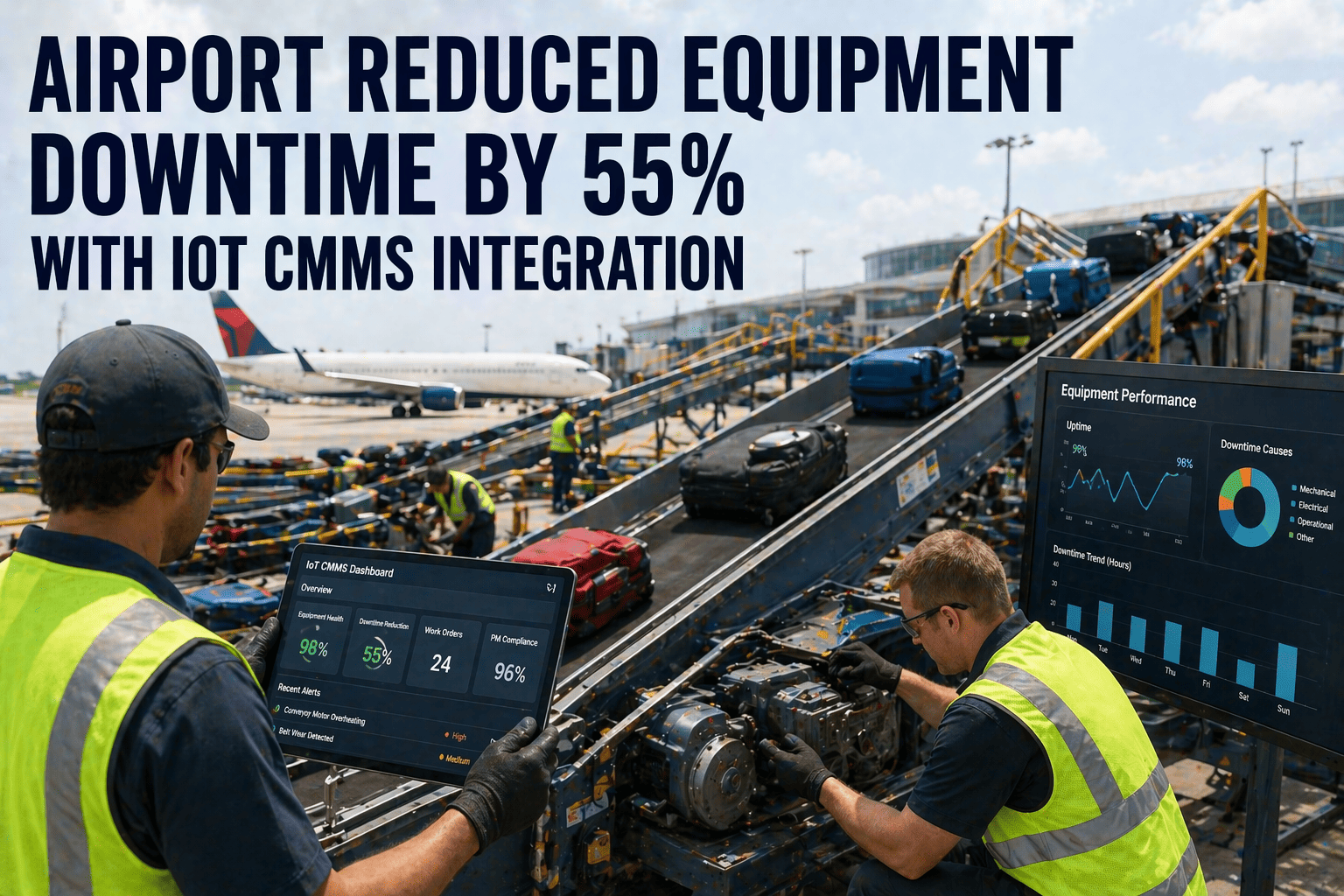
Every minute of equipment downtime at your airport cascades into delayed flights, frustrated passengers, and operational chaos. Yet most maintenance teams still troubleshoot blind — dispatching technicians without knowing what's wrong, waiting for parts that aren't in stock, and making repeat visits because the root cause wasn't identified the first time. OXmaint's IoT-powered remote diagnostics cuts through this cycle by delivering real-time equipment health data, automated fault analysis, and AI-driven repair insights directly to your maintenance team — reducing Mean Time to Repair (MTTR) by up to 40%. Schedule a demo to see how faster diagnostics transform your airport maintenance.
The Hidden Cost of Slow Repairs
Airport equipment failures don't just affect maintenance teams — they ripple across every operation. When a baggage conveyor stops, flights are delayed. When a passenger boarding bridge fails, gate schedules collapse. The longer the repair takes, the bigger the impact.
15-45 min
Failure Detection
Equipment fails. Operators notice the problem and report it manually through calls or emails.
30-90 min
On-Site Diagnosis
Technician travels to the asset, inspects it physically, and tries to identify the root cause.
1-4 hrs
Parts & Resources
Correct parts are identified, located in inventory, or ordered. Specialized tools are gathered.
1-3 hrs
Actual Repair
The physical repair, testing, calibration, and return to service.
Up to 70%
of total MTTR is spent on detection, diagnosis, and parts — not the actual repair itself. This is where IoT remote diagnostics eliminates wasted time.
Blind Troubleshooting
Technicians arrive at the asset with no data on what's wrong. They spend the first 30-90 minutes just identifying the root cause through trial and error.
Repeat Site Visits
Incomplete first diagnoses lead to multiple trips — first to inspect, then to get parts, then to actually repair. Each visit adds hours to the total downtime.
Wrong Parts, Wrong Time
Without knowing the fault in advance, technicians bring generic toolkits. The correct spare parts are identified only after diagnosis, causing delay.
Cascading Operational Impact
A single baggage conveyor failure can delay dozens of flights. HVAC failure in a terminal affects thousands of passengers. Every minute of MTTR compounds.
Stop sending technicians in blind. Start using OXmaint's IoT diagnostics to know what's wrong before your team even arrives on site.
Start Free
How IoT Remote Diagnostics Slashes MTTR
OXmaint connects IoT sensors on your airport equipment to an intelligent diagnostics platform. Instead of waiting for failures to be reported, the system detects anomalies in real time, identifies probable causes, and arms your technicians with everything they need before they leave the workshop.
1
Continuous Health Monitoring
IoT sensors track temperature, vibration, pressure, current draw, and operating hours on critical airport assets 24/7 — feeding data to OXmaint in real time.
2
Performance Deviation Detection
AI compares real-time data against baseline performance. When vibration increases or temperature spikes beyond normal range, the system flags the anomaly instantly.
3
Remote Fault Analysis
The platform analyzes fault codes and sensor patterns against historical failure data. It identifies the probable root cause and recommends specific repair actions — before a technician is dispatched.
4
Smart Technician Dispatch
OXmaint assigns the right technician based on skill match, location, and availability — and sends them with the correct parts list, repair history, and step-by-step instructions on their mobile device.
5
First-Time Fix
The technician arrives prepared with the diagnosis, the parts, and the instructions. The repair is completed in a single visit — no guessing, no return trips, no wasted time.
Before vs. After IoT Diagnostics
The difference isn't incremental — it's transformational. Here's how each phase of the repair cycle changes when IoT remote diagnostics replaces manual troubleshooting.
Failure Detection
15-45 min (manual report)
Instant (automated alert)
Up to 45 min
Root Cause Diagnosis
30-90 min (on-site inspection)
Pre-diagnosed remotely
Up to 90 min
Parts Identification
1-4 hrs (after diagnosis)
AI-predicted with alert
Up to 3 hrs
Technician Dispatch
Generic assignment
Skill-matched routing
Fewer repeat visits
Repair Execution
Multiple visits common
First-time fix enabled
Eliminates return trips
Total MTTR Impact
3-8+ hours typical
Reduced by up to 40%
Hours recovered daily
See the MTTR Reduction in Action
Book a personalized demo and we'll walk you through exactly how OXmaint's IoT diagnostics can cut your airport maintenance repair times and keep critical equipment running.
The Numbers Behind IoT Maintenance
Organizations implementing IoT-powered predictive and remote diagnostics are seeing measurable, industry-validated improvements across every maintenance KPI.
40%
Reduction in MTTR
Faster fault identification and pre-diagnosed repairs dramatically accelerate the complete repair cycle
Industry Implementation Studies
35-50%
Reduction in unplanned downtime
Predictive alerts catch failures before they happen, shifting from reactive to proactive maintenance
US Department of Energy / IoT Research
25-30%
Lower maintenance costs
Fewer emergency repairs, reduced overtime, and optimized parts inventory cut operational spending
McKinsey & Company Research
70-75%
Fewer equipment breakdowns
Continuous monitoring catches degradation early — preventing catastrophic failures entirely
US Department of Energy Analysis
20-40%
Extended asset lifespan
Condition-based maintenance reduces wear from over-servicing while preventing damage from neglect
Industry Analyst Reports
Airport Assets Covered
OXmaint's IoT diagnostics platform monitors the full range of critical airport infrastructure — from airside equipment to terminal systems. Every asset that keeps your airport running can be connected, monitored, and maintained smarter.
Engine temp
Battery health
Hydraulic pressure
Operating hours
Tow tractors, belt loaders, pushback tugs, fuel trucks, de-icing vehicles
Motor vibration
Belt tension
Motor current
Jam detection
Conveyor belts, sortation systems, carousels, screening integration lines
Hydraulic flow
Drive motor load
Position sensors
PCA unit status
Jet bridges, auto-levelers, pre-conditioned air, ground power units
Compressor load
Airflow rate
Refrigerant pressure
Filter differential
AHUs, chillers, boilers, building automation systems, exhaust fans
Circuit current
Lamp intensity
Transformer temp
Insulation resistance
Runway edge lights, taxiway lighting, approach lights, CCR regulators
Step chain tension
Drive vibration
Speed deviation
Handrail sync
Escalators, moving walkways, elevators, vertical transport systems
KPIs You'll Improve
IoT remote diagnostics doesn't just reduce repair time — it improves every metric your maintenance operation is measured by. Here's the dashboard view of what changes after deployment.
MTTR
Reduced
From hours to minutes for common faults with remote pre-diagnosis
Equipment Uptime
Increased
Predictive alerts prevent failures before they cause any downtime
First-Time Fix Rate
Increased
Technicians arrive with correct diagnosis, parts, and repair instructions
Response Time
Reduced
Automated alerts eliminate manual reporting delays and dispatch lag
Technician Utilization
Optimized
Skill-based routing and fewer wasted trips free capacity for planned work
Real-World Airport Scenarios
Here's how IoT remote diagnostics plays out in the daily reality of airport maintenance operations — turning reactive firefighting into proactive, data-driven repair.
Baggage Handling
Failing Conveyor Motor — Caught Before Breakdown
IoT sensors detect increasing vibration and rising temperature in a baggage conveyor motor during the overnight shift. OXmaint's AI flags it as a bearing degradation pattern, auto-generates a work order with the specific bearing part number, and schedules the repair for the next low-traffic window. The motor is replaced during off-peak hours — zero impact on flights.
Airfield Systems
Overheating Airfield Lighting Circuit
A runway lighting circuit transformer shows a gradual temperature increase over several days. The system recognizes this as an insulation degradation pattern, alerts the airfield maintenance team, and pre-identifies the transformer model and replacement parts. The technician arrives with everything needed and completes the swap in a single visit — before the circuit fails during night operations.
Gate Operations
Passenger Boarding Bridge Hydraulic Fault
Hydraulic pressure sensors on a jet bridge detect a slow pressure drop indicating a seal leak. OXmaint correlates this with the bridge's repair history, identifies which seal is likely failing, and dispatches a hydraulics-certified technician with the correct seal kit. The bridge is repaired between flights — no gate reassignment needed.
Terminal Facilities
HVAC Performance Degradation
Terminal HVAC airflow sensors show decreasing output while compressor load increases — classic filter clogging pattern. OXmaint triggers a condition-based maintenance alert with the filter specifications, location, and estimated time to failure. Maintenance replaces the filters during low-occupancy hours, preventing a full HVAC shutdown during peak travel season.
Ground Support
Reducing Repeat GSE Breakdown Visits
A tow tractor keeps getting flagged for the same electrical fault. IoT data reveals that the issue recurs when ambient temperature drops below a threshold — pointing to a cold-sensitive relay rather than the wiring harness that was replaced twice before. The correct component is identified and replaced once, ending the cycle of repeat failures.
System Integration
OXmaint's IoT diagnostics platform doesn't work in a silo — it connects directly into your existing maintenance ecosystem, ensuring every alert flows into the right workflow automatically.
OXmaint AI Engine
Analyzes, diagnoses, and routes
Airport CMMS
Auto-generated work orders with diagnosis and priority
Spare Parts Inventory
AI-predicted parts checked against stock and pre-reserved
Mobile Maintenance App
Technicians receive full repair kits on their devices
Work Order Management
Priority-ranked queue with real-time status tracking
Operations Control Center
Live equipment health dashboard for airport-wide visibility
Frequently Asked Questions
What does "reduce MTTR by 40%" actually mean in practice?
If your average repair cycle currently takes 5 hours from failure to restoration, a 40% reduction brings that down to 3 hours. The savings come primarily from eliminating blind troubleshooting (remote pre-diagnosis), reducing parts hunting (AI-predicted spare parts), and preventing repeat visits (first-time fix with correct information). Industry research validates that IoT-enabled maintenance can achieve these levels of improvement consistently.
Do we need to install new sensors on all our equipment?
Not necessarily. Many modern airport assets already have built-in sensors and fault code outputs that OXmaint can connect to directly. For older equipment, retrofitting with IoT sensors is straightforward — typical installations are completed in hours per asset, not days. We recommend starting with your most critical and failure-prone assets first, then expanding coverage based on ROI.
Schedule a demo to assess your current asset readiness.
How does OXmaint predict which spare parts will be needed?
The AI engine analyzes real-time sensor data against historical failure patterns for each asset type. When it detects a developing fault, it correlates the failure signature with past repairs on similar equipment to predict which specific components are likely to need replacement. This parts prediction is included in the work order sent to the technician, so they can verify inventory and bring the right parts on the first visit.
Can this work with our existing CMMS and work order system?
Yes. OXmaint is designed to integrate with your existing maintenance management infrastructure — not replace it. IoT alerts automatically generate work orders in your CMMS with pre-populated diagnosis, parts lists, and priority levels. If you're using OXmaint as your primary CMMS, the integration is built in natively.
How quickly can we see results after deployment?
Most airports begin seeing measurable MTTR improvements within weeks of connecting their first assets. The AI engine starts learning your equipment's specific behavior patterns immediately and improves its diagnostic accuracy over time. Sensor installation itself can be completed in a single day per asset group, and the cloud platform deploys within days.
Book a demo to discuss a phased rollout plan for your airport.
Cut Your MTTR. Keep Your Airport Running.
OXmaint's IoT-powered remote diagnostics gives your maintenance team real-time equipment intelligence, automated fault analysis, and AI-driven repair insights — so every repair is faster, smarter, and completed the first time.