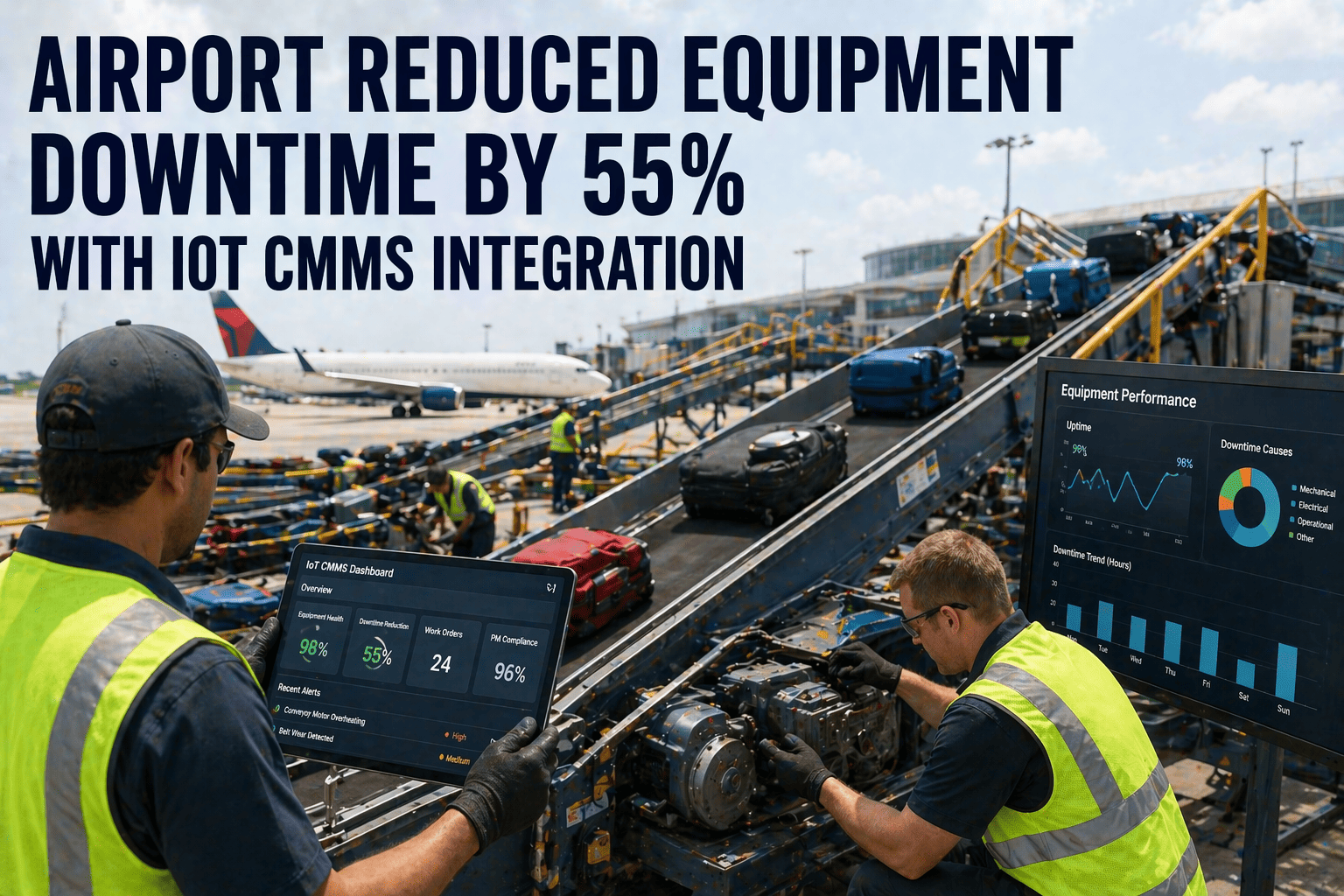
Predictive Maintenance for Airport GSE Using IoT | Reduce Ground Support Equipment Downtime
By Oxmaint on January 29, 2026
Everyminute an aircraft sits at the gate costs airlines $100 or more—and GSE inefficiencies are the second leading cause of preventable flight delays after ATC issues. When a pushback tractor stalls or a belt loader breaks mid-turnaround, the ripple effects cascade through your entire operation. IoT-powered predictive maintenance transforms ground support equipment from unpredictable liabilities into reliable assets by detecting failures days or weeks before they disrupt aircraft turnarounds. Schedule a consultation to discover how real-time equipment monitoring can eliminate surprise breakdowns and keep your flights departing on time.
The True Cost of GSE Failures
Ground support equipment failures don't just delay one flight—they create cascading disruptions across your entire operation. A single pushback tractor breakdown during peak operations can delay multiple aircraft, miss connection windows, and trigger costly passenger compensation claims.
The Domino Effect of One GSE FailureHow a 15-minute equipment breakdown cascades into major disruption
0 min
Pushback Tractor Fails
Hydraulic system warning ignored for weeks finally causes complete failure at gate
+5 min
Backup GSE Dispatched
Operations scrambles to locate and route replacement tractor from remote stand
+15 min
Flight Delayed
Aircraft misses departure slot; ATC assigns new slot 25 minutes later
+40 min
Cascade Impact
3 connecting flights affected, 47 passengers miss connections, crew duty limits at risk
Direct Delay Cost$4,000+
Passenger Compensation$8,500+
Downstream Disruption$12,000+
Total Impact$24,500+
$100
Cost per minute of flight delay
Airlines for America, 2024
2nd
GSE is 2nd leading cause of preventable delays
After ATC issues
40%
Of aircraft ground damage involves GSE
IATA Safety Report
60%
Of flight delays are preventable
OAG/Microsoft Report 2024
Calculate your delay exposure. Create a free OXmaint account and our team will analyze your GSE fleet to identify high-risk equipment before it fails.
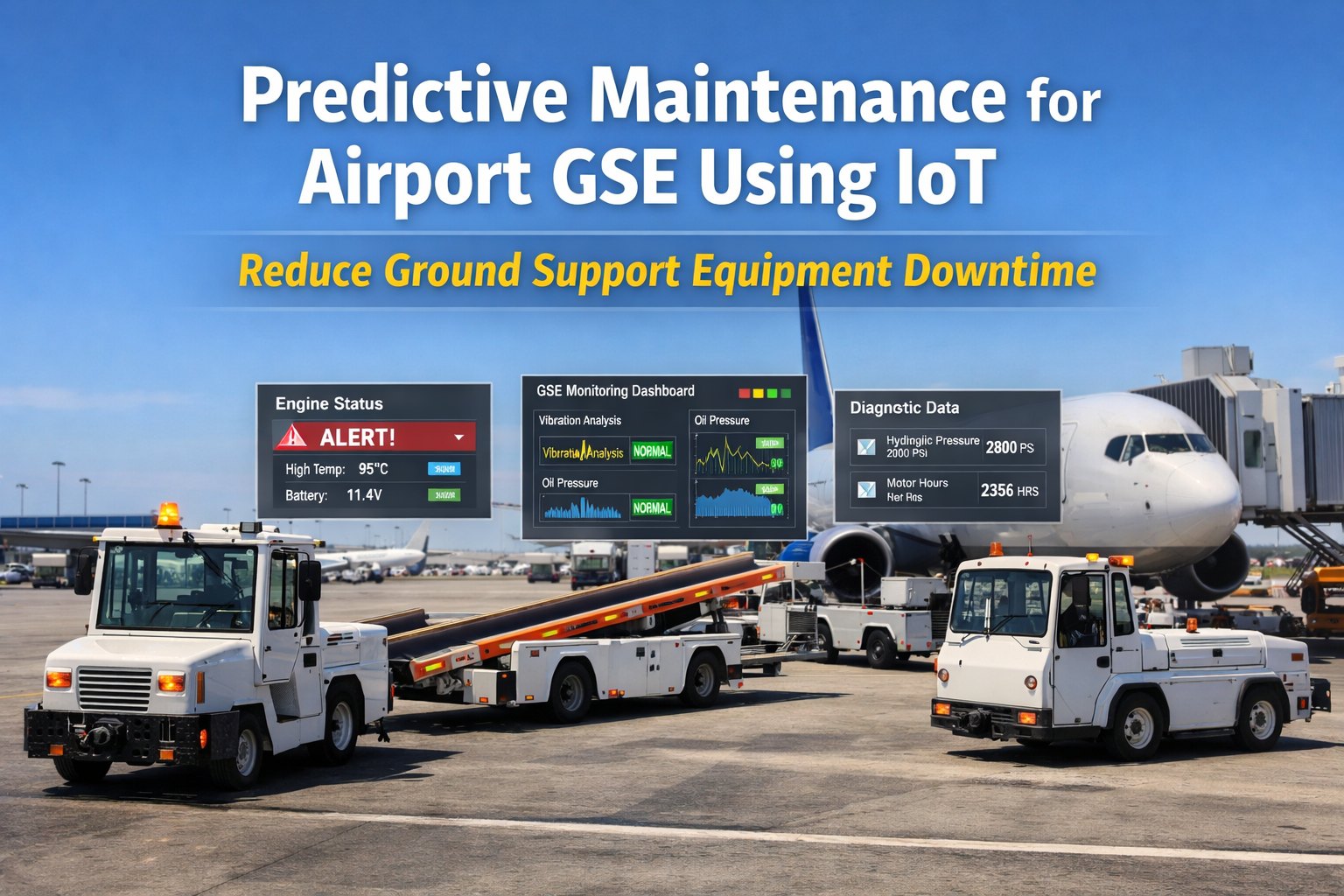
IoT sensors continuously monitor critical parameters across your GSE fleet—temperature, vibration, hydraulic pressure, battery health, and engine performance. Machine learning algorithms analyze this data to detect anomalies and predict failures days or weeks before they occur.
From Sensor to Action
01
IoT Sensors Collect
Wireless sensors on tugs, loaders, and tractors continuously monitor vibration, temperature, pressure, and electrical systems
02
AI Analyzes Patterns
Machine learning compares real-time data against baseline patterns and historical failure signatures
03
Predictive Alerts
System generates alerts 2-4 weeks before predicted failure with severity level and recommended action
04
Scheduled Repair
Maintenance performed during off-peak hours—parts pre-ordered, technician scheduled, zero turnaround impact
Critical GSE Monitoring Points
Different equipment types have different failure modes. IoT sensors are strategically placed to monitor the specific components most likely to fail on each type of ground support equipment.
Pushback Tractors
Hydraulic pressure & temp
Towbar connection stress
Engine vibration patterns
Transmission health
Failure Impact:Critical
Belt Loaders
Conveyor motor current
Belt tension & alignment
Lift mechanism strain
Roller bearing vibration
Failure Impact:High
Ground Power Units
Output voltage stability
Generator temperature
Frequency regulation
Cable connection integrity
Failure Impact:High
Fuel Trucks
Pump pressure & flow rate
Hose integrity sensors
Filter differential pressure
Deadman valve response
Failure Impact:Critical
See GSE monitoring in action. Book a demo and we'll show you real-time fleet health dashboards and predictive alert workflows.
Traditional reactive maintenance waits for equipment to fail before responding. Predictive maintenance uses real-time sensor data to identify problems weeks in advance—transforming emergency repairs into scheduled maintenance that never impacts aircraft turnarounds.
Maintenance Approach Comparison
Reactive Maintenance
Equipment runs until failure
Emergency repairs during peak operations
Spare GSE often unavailable when needed
Unpredictable maintenance costs
Flight delays and passenger compensation
3-5xhigher cost than planned repairs
IoT Predictive Maintenance
Failures predicted 2-4 weeks ahead
Repairs scheduled during off-peak hours
Parts pre-ordered, technicians ready
Maintenance costs reduced 25-40%
Near-zero turnaround disruptions
50%reduction in unplanned downtime
Real-Time Fleet Dashboard
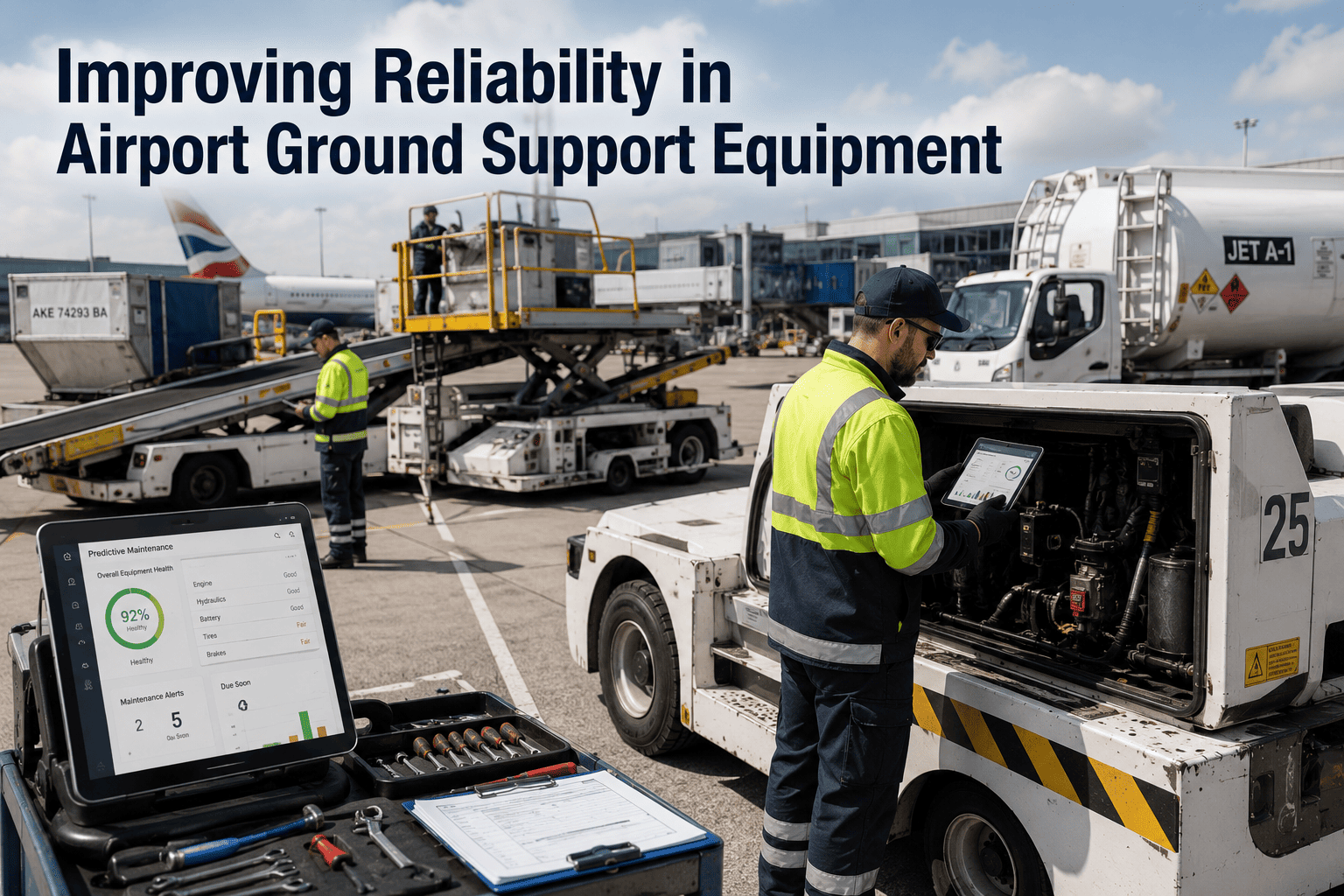
A centralized dashboard provides instant visibility into the health status of every piece of ground support equipment across your operation—from individual sensor readings to fleet-wide availability metrics.
GSE Fleet Health OverviewLive
47
Healthy
8
Attention
2
Critical
5
In Service
Active Alerts
Critical
Tug #T-14: Hydraulic pressure dropping - Predicted failure in 3 days
Warning
Belt Loader #BL-07: Motor temperature trending high - Schedule inspection
Info
GPU #G-22: Scheduled maintenance due in 5 days - Parts on order
Fleet Availability
92%
Measurable Results
Airports and ground handlers implementing IoT predictive maintenance consistently achieve significant improvements in equipment availability, maintenance costs, and on-time performance.
50%
Reduction in unplanned downtime
40%
Lower maintenance costs
25%
Fewer fleet breakdowns
30%
Extended equipment lifespan
Stop Reacting to GSE Failures—Start Predicting Them
OXmaint's IoT-powered predictive maintenance platform monitors your entire GSE fleet in real time, alerting you to potential failures weeks before they disrupt turnarounds. Transform ground operations from reactive firefighting to proactive fleet management.
Deploying IoT predictive maintenance across your GSE fleet follows a proven methodology that delivers quick wins while building toward comprehensive coverage.
Install IoT sensors on priority equipment during scheduled maintenance windows—no operational disruption
Week 5-8
Baseline Learning
AI models learn normal operating patterns for each equipment type; initial alerts calibrated
Week 9+
Full Production
Predictive alerts flowing, maintenance scheduled proactively, continuous model improvement
Expert Perspectives
Industry leaders and aviation maintenance professionals recognize the transformative impact of IoT-based predictive maintenance on ground operations efficiency and reliability.
"Predictive maintenance using IoT sensors has fundamentally changed how we approach GSE fleet management. We've moved from reactive firefighting to proactive planning, and the impact on our turnaround reliability has been remarkable."
Michael Torres
Director of Ground Operations
Major U.S. Hub Airport
35%Reduction in GSE-related delays
"The ROI case for IoT predictive maintenance is compelling. When you consider that a single prevented tractor failure during peak operations can save $15,000-25,000 in direct and indirect costs, the investment pays for itself within months."
Dr. Sarah Chen
Aviation Operations Consultant
Former IATA Ground Operations Advisor
18 moTypical payback period
"What impressed us most was the accuracy of failure predictions. The system alerted us to a hydraulic issue on one of our pushback tractors two weeks before it would have failed. That single alert prevented what could have been a major disruption during our busiest travel period."
James Richardson
Fleet Maintenance Manager
International Ground Handling Company
2-4 wksAdvance failure warning
Industry Recognition
IATA Recommended PracticePredictive maintenance recognized as key strategy for reducing GSE-related ground damage
McKinsey ResearchIoT predictive maintenance reduces costs by 40% and cuts downtime by up to 50%
Airport Cooperative ResearchACRP identifies condition monitoring as critical for GSE fleet optimization
Frequently Asked Questions
What types of GSE can be monitored with IoT sensors?
Virtually all powered GSE can be monitored including pushback tractors, belt loaders, cargo loaders, ground power units, air start units, fuel trucks, lavatory trucks, and catering vehicles. The specific sensors and monitoring points are customized for each equipment type based on common failure modes. Schedule a consultation to discuss your specific fleet composition.
How far in advance can failures be predicted?
Most equipment issues can be detected 2-4 weeks before complete failure occurs. Some gradual degradation patterns—like bearing wear or hydraulic system deterioration—can be identified even earlier. The advance warning gives maintenance teams ample time to order parts, schedule technicians, and plan repairs during off-peak hours.
Will sensor installation require taking equipment out of service?
Sensor installation is typically performed during scheduled maintenance windows or overnight periods. Most sensors can be installed in 30-60 minutes per unit without any modifications that would affect equipment certification or warranty. No extended downtime is required.
How does the system integrate with our existing maintenance management?
OXmaint integrates with major CMMS and EAM platforms through standard APIs. Predictive alerts can automatically generate work orders in your existing system, ensuring seamless workflow integration. The platform also provides standalone dashboards and mobile alerts for operations teams. Sign up for a free account to explore integration options.
What ROI can we expect from predictive maintenance?
Most airports see 12-18 month payback through reduced emergency repair costs, fewer delay-related expenses, and extended equipment life. A single prevented turnaround delay can save $10,000-25,000 in direct and indirect costs—often covering the annual monitoring cost for multiple pieces of equipment.
Keep Aircraft Moving with Reliable GSE
Every minute of delay costs money and reputation. OXmaint's IoT predictive maintenance ensures your ground support equipment is ready when aircraft arrive—eliminating surprise failures, reducing maintenance costs, and keeping your operation running on schedule.