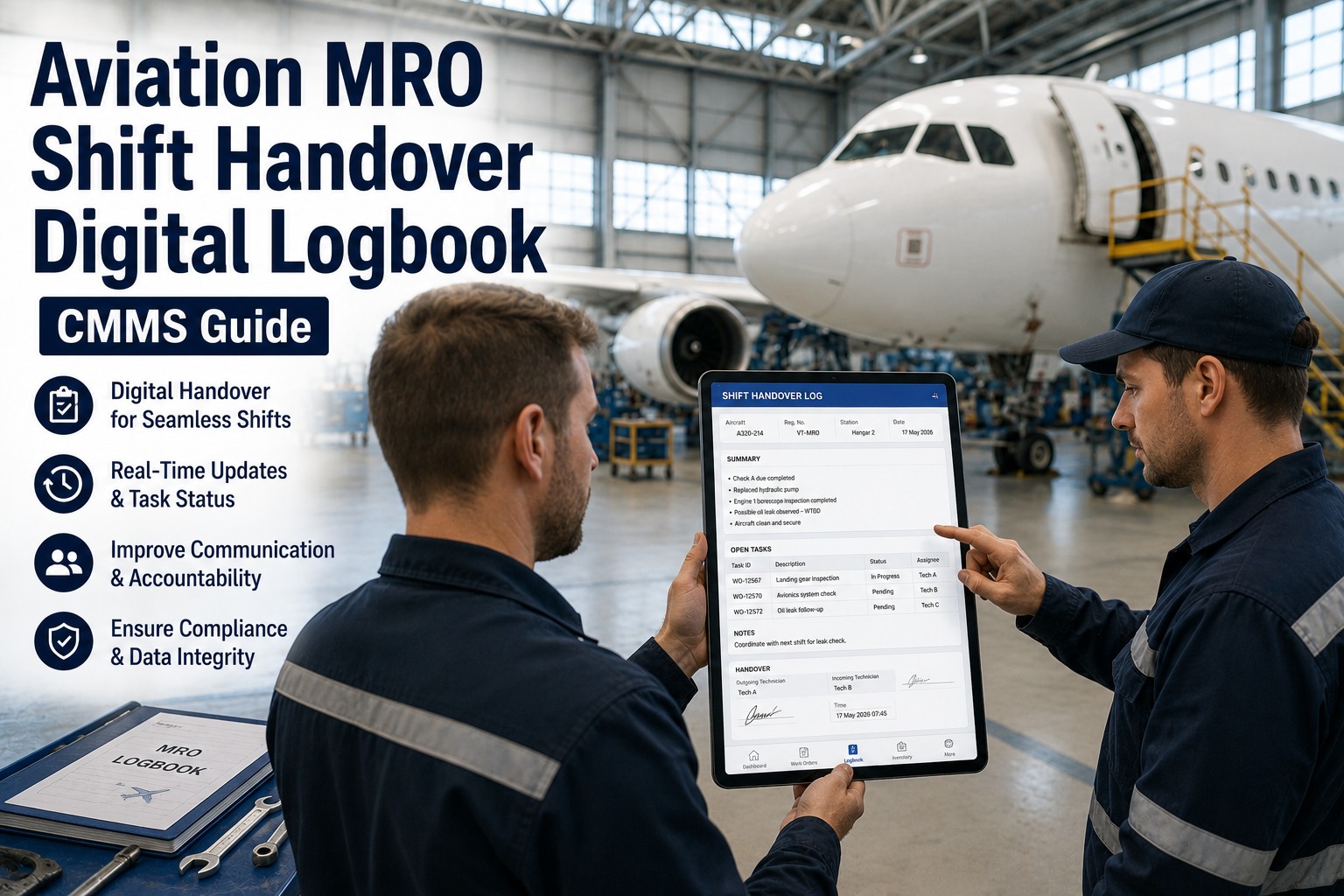
MRO facilities run on precision — aircraft airworthiness, regulatory deadlines, and safety-critical sign-offs leave no room for workforce gaps. Yet most maintenance operations still schedule technicians the same way they did twenty years ago: spreadsheets, phone calls, and gut instinct. The result is predictable — chronic overtime, skill mismatches on the hangar floor, fatigue violations, and coverage gaps that turn routine inspections into emergency scrambles. AI-based shift scheduling changes the equation entirely. By analysing work order demand, technician certifications, fatigue risk scores, and historical no-show patterns simultaneously, it builds optimised rosters in minutes rather than hours — and adjusts them in real time when conditions change. Oxmaint's scheduling module is built directly into the same platform your team uses for work orders, asset tracking, and compliance documentation, so scheduling decisions are always driven by real maintenance demand, not guesswork. Start a free trial to see how intelligent scheduling works inside a live MRO environment, or book a demo and let us walk through your current scheduling workflow.
34%
Average overtime reduction achieved by MRO facilities within six months of deploying AI scheduling
2.3x
Faster roster generation compared to manual spreadsheet-based scheduling processes
91%
Schedule adherence rate when AI-driven rosters account for demand, skills, and fatigue risk simultaneously
$127K
Estimated annual labor cost savings per mid-size MRO facility from reduced overtime and improved utilisation
Stop Scheduling Manually. Start Scheduling Intelligently.
Oxmaint's AI scheduling module reads your live work order queue, technician certifications, and fatigue exposure — then builds shift rosters that cover every task, respect every regulation, and cost less to run. No spreadsheets. No guesswork. No 6am panic calls.
What Is AI-Based Shift Scheduling for MRO?
AI-based shift scheduling in MRO is the practice of using machine-learning algorithms and real-time operational data to automatically generate, adjust, and optimise technician rosters — replacing static spreadsheets with a living schedule that responds to actual maintenance demand. Unlike generic HR scheduling tools, MRO-specific AI schedulers must understand certification requirements, fatigue hours under CAR/EASA/FAA frameworks, hangar bay capacity, and the downstream impact of understaffing a specific shift on aircraft TAT (Turn-Around Time). The system continuously re-evaluates the roster as work orders are created, completed, or escalated, ensuring that the right technician with the right certifications is always positioned where the highest-priority work is. Facilities using demand-driven scheduling report a 22% improvement in on-time aircraft release rates alongside measurable reductions in both overtime spend and fatigue-related safety events. Want to see this in action for your operation? Start a free trial and explore the scheduling dashboard on day one, or book a demo to see a live build of a roster using your actual shift patterns.
D
Demand-Driven Rostering
Shift composition is determined by the live work order queue — not a fixed headcount. As aircraft come in, the AI recalculates crew requirements by task type, certification, and estimated duration. Overstaffed quiet periods and understaffed peak periods are eliminated simultaneously.
S
Skills-Based Matching
Each work order is tagged with the license type, type rating, and skill tier it requires. The scheduler matches tasks to the most appropriately qualified available technician — ensuring B1/B2 licences are not wasted on tasks a Category A mechanic can complete, freeing senior staff for complex work.
F
Fatigue Risk Modelling
Consecutive duty hours, rest interval gaps, and cumulative shift patterns are tracked per technician against FRMS (Fatigue Risk Management System) thresholds. The AI will not schedule a technician into a safety-critical task if their fatigue score exceeds the configured limit — regardless of headcount pressure.
C
Compliance-Aware Scheduling
Scheduling rules are encoded directly — FTL limits, rest minimums, certification expiry dates, and labour agreement constraints. If a schedule action would breach a rule, it is blocked before the roster is issued. Every shift generated is audit-ready from the moment it is approved.
Where Manual Scheduling Is Breaking MRO Operations
The real cost of reactive, manual scheduling is not visible on a single shift — it accumulates over quarters. Overtime creep, fatigue violations, skill mismatches, and last-minute callout chaos compound into a workforce that is simultaneously over-budget and under-utilised. These are the four most operationally damaging patterns that AI scheduling is specifically designed to eliminate.
01
Callout Voids and Coverage Collapse
A single technician calling out sick triggers a manual replacement chain — supervisors calling down a list, negotiating overtime premiums, and often settling for an under-qualified substitute. In facilities averaging 14% unplanned absence rates, this is not an edge case. It is a structural daily problem. AI scheduling maintains a real-time standby pool ranked by skill fit and fatigue availability so that callout response is automated, not panicked.
14% average unplanned absence rate in MRO — each incident costs 3.2 supervisor hours to resolve manually
02
Overtime Spend Without Visibility
Manual schedulers cannot see cumulative overtime exposure across a workforce in real time. The result is that overtime is approved shift-by-shift, with no visibility into whether the same technician has already accumulated 18 hours of OT that week. MRO facilities running spreadsheet-based scheduling report overtime costs averaging 19-24% of total labor spend — 8-11 percentage points above AI-scheduled peers.
19-24% of labor spend consumed by overtime in manually-scheduled MRO facilities vs 10-13% in AI-scheduled operations
03
Skill Mismatches Causing Rework and Delay
When scheduling is done by availability alone — "who is free?" rather than "who is qualified?" — tasks are routinely assigned to technicians whose certification scope does not match the work. The consequences range from wasted time (task returned to queue for reassignment) to compliance failures (work signed off by an unqualified certifier). Rework rates in facilities with unstructured scheduling average 11% of completed tasks.
11% rework rate attributable to certification mismatches in facilities without skills-based scheduling logic
04
Fatigue Violations Without Early Warning
Aviation fatigue regulations — FTL under EASA, Hours of Service under FAA — are not optional. But manual roster builders cannot track cumulative fatigue exposure across rolling 28-day windows for each individual technician while simultaneously building the next week's roster. Violations are only discovered after the fact, during audit, when the penalty is a finding rather than a preventive schedule change.
EASA audit findings related to FTL and rest violations account for 17% of Part 145 non-conformances in MRO facilities
How Oxmaint Solves Shift Scheduling Across Your MRO Operation
Oxmaint's AI scheduling module is not a standalone workforce tool bolted onto your CMMS. It is built into the same platform that manages your work orders, asset records, and compliance documentation — meaning the scheduler reads live maintenance demand directly, not a manually entered headcount estimate. Every feature below operates from the same data layer your technicians already use on the hangar floor.
Core Engine
AI-Driven Shift Builder
Generates optimised rosters from live work order data, technician availability, certification scope, and fatigue exposure in under 90 seconds. Rosters are presented with an explanation of each allocation decision — supervisors approve, not build.
Live Operations
Real-Time Coverage Dashboard
A live view of current shift coverage by bay, task type, and certification tier — updated every time a work order status changes or a technician clocks in or out. Coverage gaps are flagged before they become delays, not after.
Workforce Intelligence
Certification Expiry Tracking
Every technician's license, type rating, and task authorisation is tracked with expiry alerts at 90, 30, and 7 days. Expired certifications are automatically excluded from eligible roster slots so that scheduling cannot produce a compliance violation — even under pressure.
Safety Compliance
FRMS Fatigue Risk Engine
Fatigue scores are calculated per technician per shift using configurable FRMS models aligned to EASA ORO.FTL, FAA 117, or custom fatigue rules. Technicians exceeding risk thresholds are automatically moved to non-safety-critical tasks or rest status — not assigned to engine sign-offs.
Absence Management
Automated Callout Response
When a technician reports absent, Oxmaint instantly identifies the best-qualified available standby from the pool — ranked by certification fit, fatigue score, and overtime exposure — and issues the replacement recommendation. What previously took 40 minutes of supervisor phone calls takes under 3 minutes.
Multi-Site Operations
Cross-Facility Workforce Pooling
For MRO groups operating multiple hangars or line maintenance stations, Oxmaint provides a unified workforce pool view. Technicians can be deployed across sites when demand dictates — with travel time, site certifications, and per-diem costs factored into the scheduling decision automatically.
Work Order Integration
Demand-Pulled Scheduling
Oxmaint's scheduler reads the live work order backlog — not a manager's estimate of what work is coming. When three heavy checks land simultaneously, the AI sees the actual task list, calculates the real labor demand, and builds the roster accordingly. No more under-planning peak periods.
Audit Readiness
Immutable Schedule Audit Trail
Every schedule version, change, override, and approval is timestamped and stored. Regulators can review not just what the final roster was, but what it was changed from, by whom, and with what justification. Audit preparation for scheduling compliance is reduced from days to minutes.
Manual Scheduling vs. AI-Optimised Scheduling — The Operational Difference
The gap between manual roster-building and AI-optimised scheduling is not just in the time it takes to produce a shift plan. It runs through every operational metric that matters to MRO leadership — from labor cost and TAT performance to compliance risk and technician retention. The comparison below reflects real-world outcomes across MRO facilities of 50-250 technicians.
The ROI Case for AI Scheduling in MRO — By the Numbers
Scheduling optimisation is one of the highest-ROI investments available to MRO leadership precisely because labor is the largest controllable cost in the operation. These outcomes are drawn from MRO facilities that deployed AI-based scheduling and tracked outcomes across a 12-month period against their manual baseline. The figures below represent median results, not best-case projections. Start a free trial and run a scheduling pilot in your first week, or book a demo to see a modelled ROI projection based on your workforce size and current overtime rates.
34%
Overtime Reduction
Median reduction in overtime hours within 6 months. Driven by proactive load distribution across the full available workforce before premium rates apply.
18%
Higher Technician Utilisation
Improvement in productive hours per technician per shift when demand-driven scheduling eliminates idle overstaffing and skill mismatches simultaneously.
22%
Faster Aircraft TAT
Turn-around time improvement when the right certifications are always present for the scheduled work. Fewer task holds waiting for the right sign-off authority to arrive.
Zero
Expired Cert Assignments
Scheduling system with certification enforcement built in. Regulatory audit findings attributable to scheduling non-conformance eliminated within 90 days of deployment.
Frequently Asked Questions
How does Oxmaint's AI handle last-minute technician absences mid-shift?
When a technician reports absent — whether before shift start or mid-shift — Oxmaint's absence response engine activates immediately. It queries the standby pool for technicians who are available, hold the required certifications for the affected work orders, have a fatigue score within safe limits, and have the lowest accumulated overtime exposure. The ranked replacement recommendation is surfaced to the supervisor within under 3 minutes. The supervisor approves, the replacement is notified through the platform, and the affected work orders are automatically reassigned. The full transaction — including the reason for change, who authorised it, and who was deployed — is logged to the schedule audit trail. In facilities averaging one unplanned absence per 8-hour shift, this eliminates approximately 40 minutes of supervisor administrative time per incident.
Can Oxmaint manage scheduling across multiple MRO sites with different shift patterns?
Yes — multi-site scheduling is a core capability, not an add-on. Oxmaint supports a Portfolio-level workforce view that spans all your MRO facilities simultaneously. Each site maintains its own shift pattern configuration — 3-shift, 4-on-4-off, day-night splits, or custom structures — and the platform manages all of them from a single interface. When one site is short-staffed and a neighbouring site has surplus qualified technicians, Oxmaint identifies the cross-deployment opportunity automatically, factoring in travel time, per-site certification requirements, and per-diem cost. Portfolio-level managers see aggregate coverage and overtime exposure across all sites in real time, not site-by-site in separate systems. This is particularly valuable for MRO groups managing line maintenance stations across multiple airports alongside a central heavy maintenance hangar.
Does AI scheduling in Oxmaint integrate with existing HR and payroll systems?
Oxmaint's scheduling module integrates with major HRIS and payroll platforms through its open API. Technician master records — employment status, contracted hours, pay grade, leave entitlements — are synced from your HR system so that scheduling is always working from current headcount data, not a manually maintained copy. Approved roster data flows back to payroll systems with shift classification codes, overtime flags, and site codes pre-applied, eliminating the manual reconciliation step that typically consumes 6-10 hours per pay period in facilities running separate HR and scheduling tools. Integration connectors are available for SAP HCM, Workday, ADP, and BambooHR, with custom connector support for legacy systems. Implementation typically takes 2-4 weeks, with no heavy consulting engagement required.
How quickly can an MRO facility expect measurable results from AI scheduling?
Most facilities see measurable overtime reduction within the first four weeks of live scheduling — before any behaviour change from the workforce, simply from the AI distributing load more evenly across available headcount than a manual scheduler can manage under time pressure. Certification compliance improvements are immediate from day one, since the system blocks scheduling errors that would previously have required audit discovery. Fatigue risk metrics improve progressively over the first 8-12 weeks as the system builds a fuller picture of each technician's cumulative exposure patterns. Facilities tracking TAT improvement typically see the first measurable shift in week 6-8, once scheduling accuracy has cascaded into fewer task holds and rework cycles. The median payback period across Oxmaint deployments at facilities of 80 or more technicians is under four months from go-live.
Build the Roster Your Operation Actually Needs — Automatically
Oxmaint's AI scheduling module reads your live work order queue, matches every task to the right technician, enforces fatigue limits and certification rules, and handles callout replacement without a single phone call — all from the same platform your team already uses for maintenance management. Reduce overtime by up to 34%, improve technician utilisation by 18%, and arrive at every regulatory audit with a clean, immutable scheduling record.