The Smart Hangar of 2026: Drones, Robots, IoT, and Digital Twins Converge
By Lewis Abbott on March 21, 2026
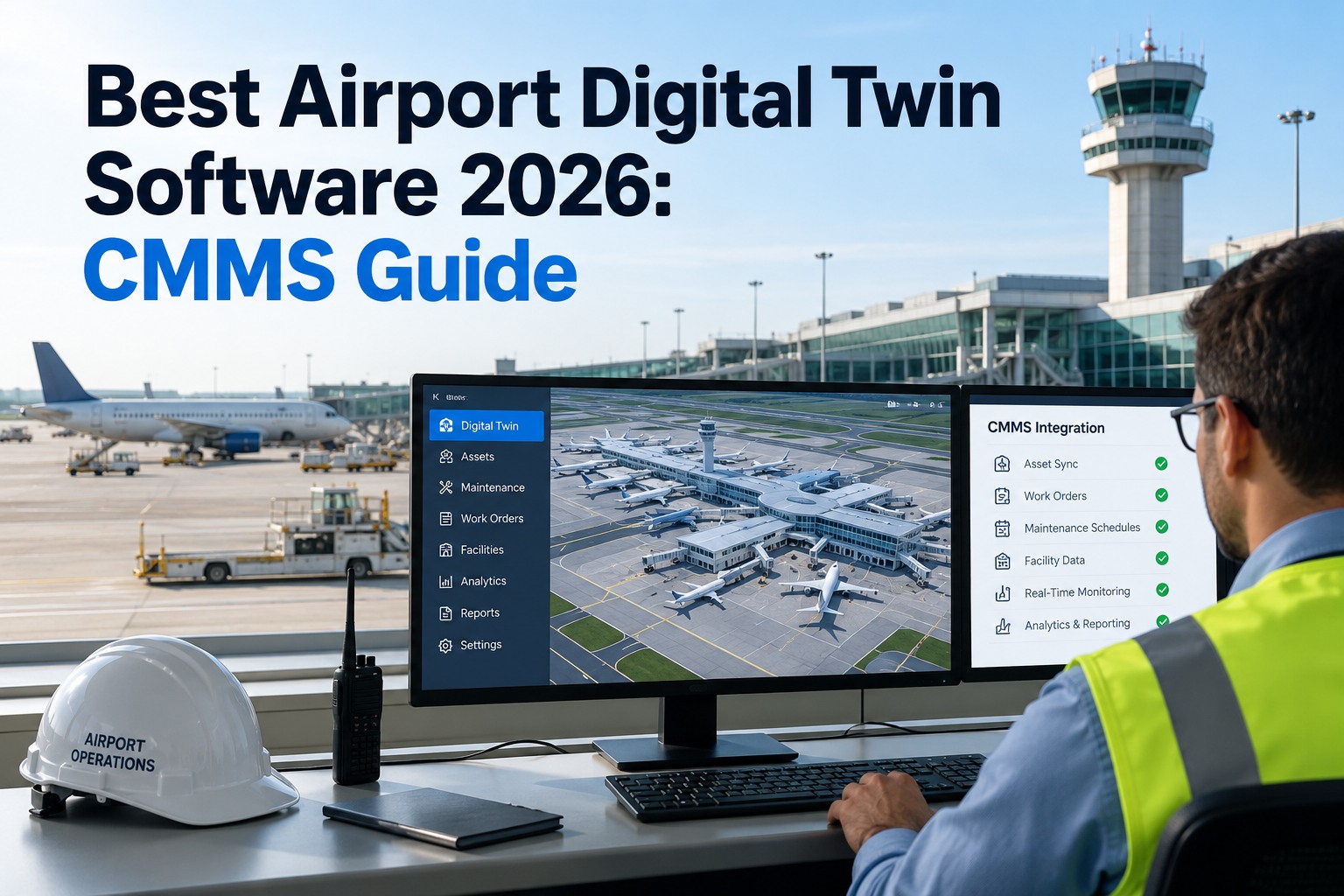
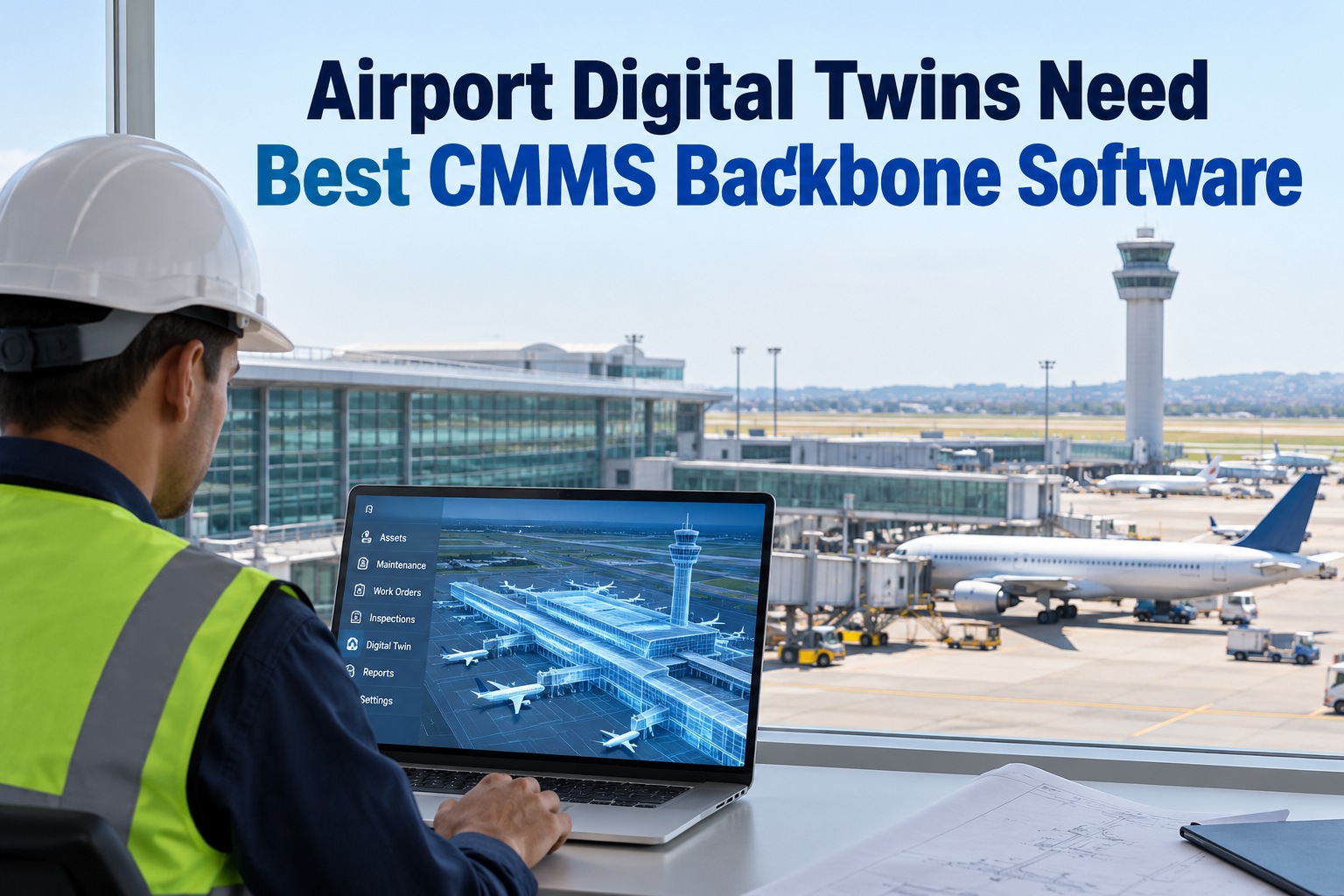
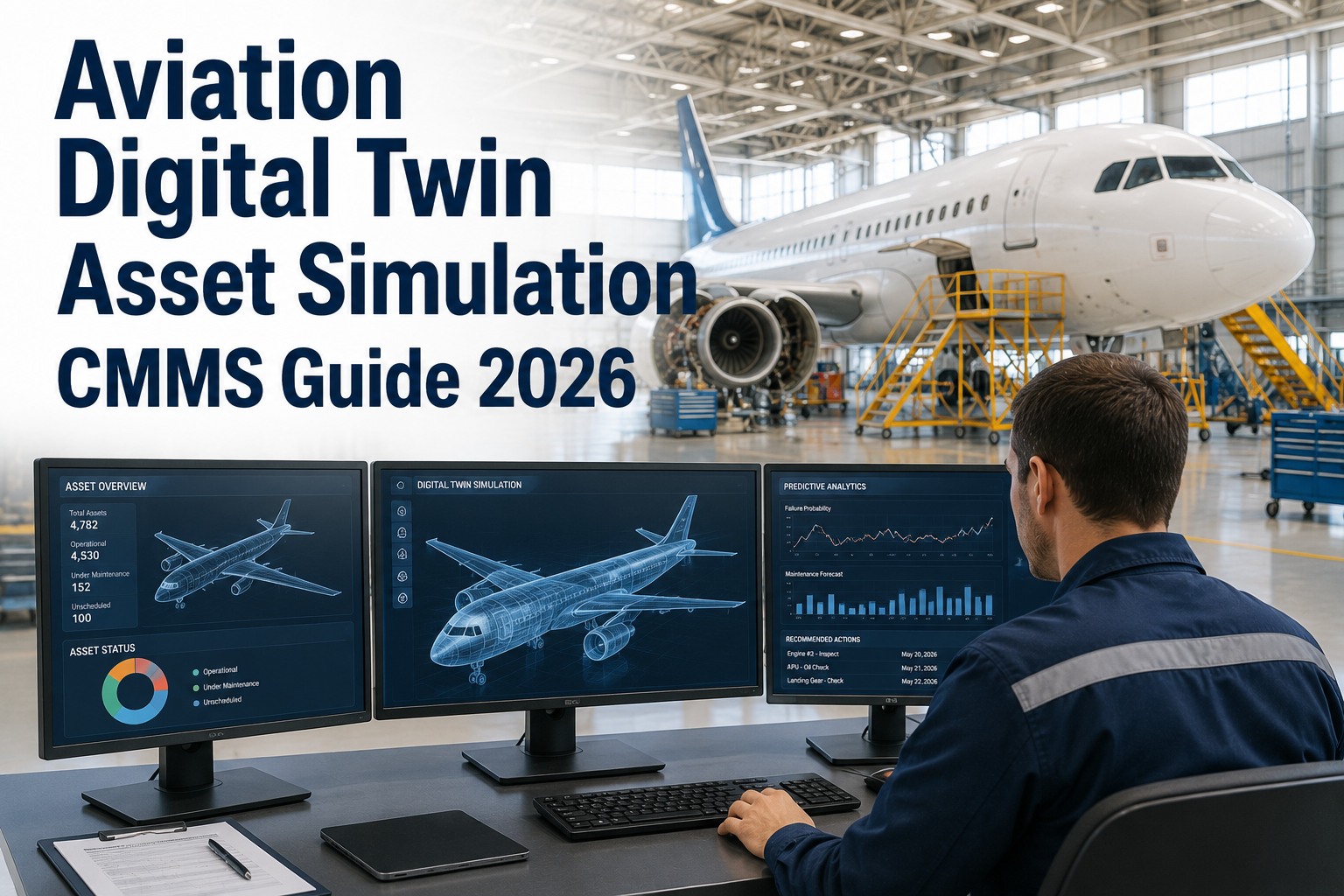
By 2026, the aircraft maintenance hangar is no longer just a building — it is a living, data-driven ecosystem. Autonomous inspection drones circle fuselages at 3 a.m. Collaborative robots torque fasteners to micrometer precision. IoT sensors embedded in tooling, equipment, and structural surfaces stream real-time telemetry to a digital twin that mirrors every physical event with millisecond fidelity. The maintenance engineers who once carried clipboards now carry tablets — and the platform behind every alert, every work order, and every compliance record is a next-generation CMMS built for exactly this environment. This is the smart hangar of 2026, and it is already being built.
$113B
Global MRO Market by 2028
Up from $81B in 2023
40%
Reduction in Inspection Time
Using autonomous drone fleets
62%
Of MRO Leaders Deploying IoT
Across hangar operations by 2026
30%
Lower Unplanned AOG Events
With digital twin integration
Is Your Hangar Ready for Industry 5.0?
Oxmaint connects your smart hangar hardware — drones, IoT sensors, robotics — to a single maintenance intelligence platform. See exactly how in a live walkthrough.
A smart hangar is an MRO facility where physical infrastructure, digital systems, and autonomous technologies are fully integrated to eliminate information gaps between assets, technicians, and management. It is the operational manifestation of Industry 5.0 applied to aviation maintenance — where machines assist humans, not replace them, and every action generates structured data that improves every future action.
The defining characteristic is not any single technology. It is the convergence: drones feed inspection data to digital twins, digital twins trigger IoT-monitored work orders, robots execute precision tasks, and the CMMS orchestrates it all into a single audit-ready operational record. Want to see how this convergence works in practice? Start a free trial and explore Oxmaint's smart hangar platform, or book a demo with our MRO specialists.
01
Autonomous Sensing
Drones and embedded sensors that detect, measure, and transmit asset condition data continuously — no human trigger needed.
02
Connected Assets
Every aircraft, GSE unit, and hangar system linked in a single live registry — configuration, status, and history accessible in seconds.
03
Digital Twin Sync
A virtual replica of every physical asset updated in real time — enabling simulation, forecasting, and instant configuration lookup.
04
Intelligent Orchestration
The CMMS layer that coordinates every data stream, work order, and compliance record into one coherent operational picture.
The Four Pillars
Technologies Converging in 2026
01
Autonomous Inspection Drones
Equipped with LiDAR, thermal imaging, and high-resolution cameras, hangar drones conduct full fuselage inspections in under 90 minutes — a task that takes human teams 8 hours. Fleet operators using drone inspection report a 40% reduction in ground time per aircraft check cycle.
90 min vs 8 hrs per fuselage check
02
Collaborative Robotics (Cobots)
Cobots handle repetitive, precision-critical tasks: panel removal, fastener torquing, sealant application, and component swaps. They work beside technicians — not instead of them — with force-limiting sensors that make them safe in shared workspaces. Error rates on torque-sensitive tasks drop by 78% versus manual methods.
78% fewer torque errors vs manual
03
Pervasive IoT Sensor Networks
Thousands of low-power sensors embedded in hangar equipment, tooling, HVAC, ground power units, and structural zones stream continuous telemetry. Real-time condition monitoring enables condition-based maintenance triggers instead of fixed intervals — reducing over-maintenance by up to 22% and eliminating surprise failures.
22% reduction in over-maintenance
04
High-Fidelity Digital Twins
Every aircraft, piece of ground support equipment, and hangar system has a living virtual replica updated in real time. Technicians can simulate repairs before execution, test configuration changes virtually, and identify maintenance sequencing conflicts before they occur on the physical asset — reducing rework by 35%.
35% less rework per heavy check
The Real Problem
Why Traditional Hangars Are Breaking Down
The MRO industry loses an estimated $50 billion annually to inefficiencies that smart hangar technology is designed to eliminate. These are not abstract problems — they are daily operational failures that drive up costs, extend turnaround times, and create compliance exposure. If any of these sound familiar, you need to book a demo to see how Oxmaint addresses each one at the system level, or start a free trial today.
!
Inspection Blind Spots
Manual visual inspections miss 23% of surface defects detectable by thermal imaging. Composite panels, wing leading edges, and nacelle interiors are particularly vulnerable to human inspection limitations.
!
Disconnected Data Silos
Technician records, parts systems, inspection reports, and scheduling tools operate in isolation. Cross-referencing takes hours. Emergency directives that should trigger instant fleet scans instead trigger days of manual research.
!
TAT Overruns
Average heavy check TAT overruns by 18% in facilities without digital workflow management. Every additional day an aircraft sits in the hangar costs the operator between $50,000 and $200,000 in lost revenue.
!
Compliance Documentation Gaps
Regulators demand complete, timestamped records for every maintenance action. Paper-based and hybrid-digital systems routinely produce gaps that trigger findings during audits — some resulting in aircraft grounding pending documentation remediation.
!
Tool and Parts Availability
Technicians spend an average of 47 minutes per shift searching for tools, waiting on parts, or resolving inventory discrepancies. In a large hangar bay, this translates to hundreds of lost productive hours per month.
!
Knowledge Drain
Aviation MRO faces a projected shortage of 65,000 qualified technicians by 2030. As experienced engineers retire, their diagnostic intuition leaves with them — unless it has been systematically captured in digital maintenance records and inspection templates.
Platform Intelligence
How Oxmaint Powers the Smart Hangar
Oxmaint is the operational intelligence layer that connects every technology in the smart hangar — drones, robots, IoT sensors, and digital twins — to the people and decisions that matter. It is not a bolt-on tool. It is the system of record for the entire maintenance environment. Want to explore it firsthand? Start a free trial or book a demo and see the platform live in a real hangar workflow.
Asset Intelligence
Full Asset Registry with Condition Scoring
Every aircraft, engine, component, and piece of ground support equipment tracked with serial numbers, configuration states, installation history, and live condition scores fed by IoT and inspection data.
IoT Integration
Real-Time Sensor Data to Work Orders
IoT sensor thresholds automatically trigger maintenance alerts and generate work orders — no human intermediary required. Condition-based triggers replace fixed-interval schedules, cutting over-maintenance by up to 22%.
Drone Integration
Automated Inspection Data Capture
Drone inspection findings feed directly into Oxmaint inspection records with geotagged photos, defect classifications, and severity scores. Corrective work orders are created automatically at the moment a finding is logged.
Digital Twin Sync
Virtual Asset State Always Current
Every maintenance action, parts replacement, and configuration change in Oxmaint updates the corresponding digital twin record in real time — ensuring the virtual model always reflects actual asset state.
Compliance Engine
Audit-Ready Documentation by Default
Every work order, inspection, parts transaction, and technician sign-off is captured with full timestamps and digital signatures. Compliance reports for FAA, EASA, and GCAA are generated in seconds, not days.
CapEx Forecasting
Rolling 5–10 Year Capital Planning
Asset lifecycle data and condition scores drive automated CapEx forecasting models. Maintenance directors and portfolio managers get investor-grade replacement planning — not spreadsheet guesswork — for every asset in the hangar.
OEE Tracking
Hangar Throughput Analytics
Real-time OEE dashboards at the bay and line level surface TAT performance, technician utilization, and equipment uptime. Identify bottlenecks before they become TAT overruns — not after an aircraft is already delayed.
MRO Procurement
Spare Parts and Inventory Control
Integrated spare parts inventory with minimum stock alerts, MRO procurement workflows, and parts traceability tied to every work order. The 47-minute daily tool and parts search becomes a 90-second scan.
Before vs After
Traditional Hangar vs Smart Hangar with Oxmaint
Traditional MRO Hangar
Smart Hangar with Oxmaint
Inspection Process
8-hour manual visual inspection per aircraft. 23% defect miss rate on composite surfaces. Paper findings logged later.
90-minute autonomous drone sweep. Thermal and LiDAR data. Findings auto-logged in Oxmaint with corrective work orders created instantly.
Emergency Directive Response
12–48 hours to identify affected aircraft. Manual cross-reference of paper logbooks. Some aircraft fly additional cycles before identification.
Seconds to filter fleet by configuration. Auto-generated work orders for all affected assets. Complete response tracked and documented in real time.
Work Order Management
Paper or disconnected digital forms. Assignment by phone or email. Status visible only to the person holding the paper.
Mobile work orders with assigned technicians, priority levels, parts requirements, and real-time status visible to all stakeholders.
Regulatory Audit Prep
Days of manual record assembly. Staff pulled from operations. Risk of gaps, missing sign-offs, and incomplete history.
Filtered export by aircraft, date, work type, or technician. Complete audit file with timestamps and digital signatures in seconds.
CapEx Planning
Annual budget guesswork based on age and gut feel. Replacement decisions reactive to failure, not proactive to condition.
Rolling 5–10 year CapEx models driven by live asset condition scores and lifecycle data. Investor-grade reports on demand.
TAT Performance
18% average TAT overrun. Delays caused by parts unavailability, sequencing conflicts, and rework from missed defects.
Real-time TAT dashboards, proactive parts staging, and digital twin simulation reduce overruns and rework significantly.
Measurable Impact
ROI From the Smart Hangar Transition
35%
Reduction in Rework
Digital twin simulation and drone inspection data eliminate most rework from missed defects and sequencing errors during heavy checks
4.8x
Cost of Reactive vs Planned
Emergency AOG repairs cost 4.8 times more than planned maintenance events. Smart hangar condition monitoring keeps assets on the planned track
22%
Less Over-Maintenance
Condition-based IoT triggers replace fixed-interval schedules, so maintenance happens when assets need it — not just when the calendar says so
60%
Faster Audit Response
Regulatory documentation requests that previously took 3–5 days of manual assembly are fulfilled in minutes with Oxmaint's filtered export tools
Common Questions
Frequently Asked Questions
How does Oxmaint integrate with existing hangar drone and IoT systems?
Oxmaint connects to existing IoT sensor networks and drone data outputs via standard APIs and SCADA integration. Sensor threshold alerts automatically create tracked work orders in Oxmaint — no manual transfer required. Drone inspection data, including geotagged photos and defect classifications, uploads directly into the corresponding asset's inspection record. Implementation typically takes 2–4 weeks depending on existing infrastructure. Ready to map out your integration? Book a demo with our technical team, or start a free trial to explore the integration interface yourself.
Is Oxmaint suitable for MRO facilities managing third-party aircraft?
Yes. Oxmaint's multi-site, multi-operator architecture is purpose-built for MRO facilities managing aircraft from multiple airline clients simultaneously. Role-based access ensures each client sees only their own asset data, while your operations team maintains visibility across all aircraft in the hangar. Work order management, compliance documentation, and audit exports are all segmented by operator. This is a core differentiator for contract MRO organizations managing complex multi-client environments.
What does the digital twin functionality in Oxmaint actually do?
Oxmaint's digital twin layer maintains a live virtual record of every asset's current configuration, maintenance history, condition scores, and component-level status. When a technician completes a work order or logs a parts replacement, the digital twin updates automatically. This enables maintenance simulation before physical execution, instant configuration lookup during emergency directives, and real-time status visibility for remote operations and portfolio managers. The digital twin is the foundation — Oxmaint is the platform that keeps it accurate and actionable.
How quickly can a large MRO facility go live on Oxmaint?
Most MRO facilities complete initial deployment within 2–4 weeks, including asset registry migration, inspection template configuration, and technician onboarding. Hangar teams are typically running fully digital work orders within the first week. For large multi-bay facilities, Oxmaint provides a phased rollout path that maintains operational continuity throughout. There are no heavy implementation fees or multi-month onboarding delays — this is one of the most common reasons MRO operations choose Oxmaint over legacy alternatives.
The Smart Hangar Is Not a Future Concept. It Is Being Built Now.
MRO facilities that delay digital transformation are not saving money — they are accumulating risk. Every year without condition-based maintenance, digital inspection records, and IoT integration is a year of TAT overruns, compliance exposure, and CapEx guesswork. Oxmaint is the platform that brings all of it together — from the sensor on the ground power unit to the portfolio report in the boardroom.