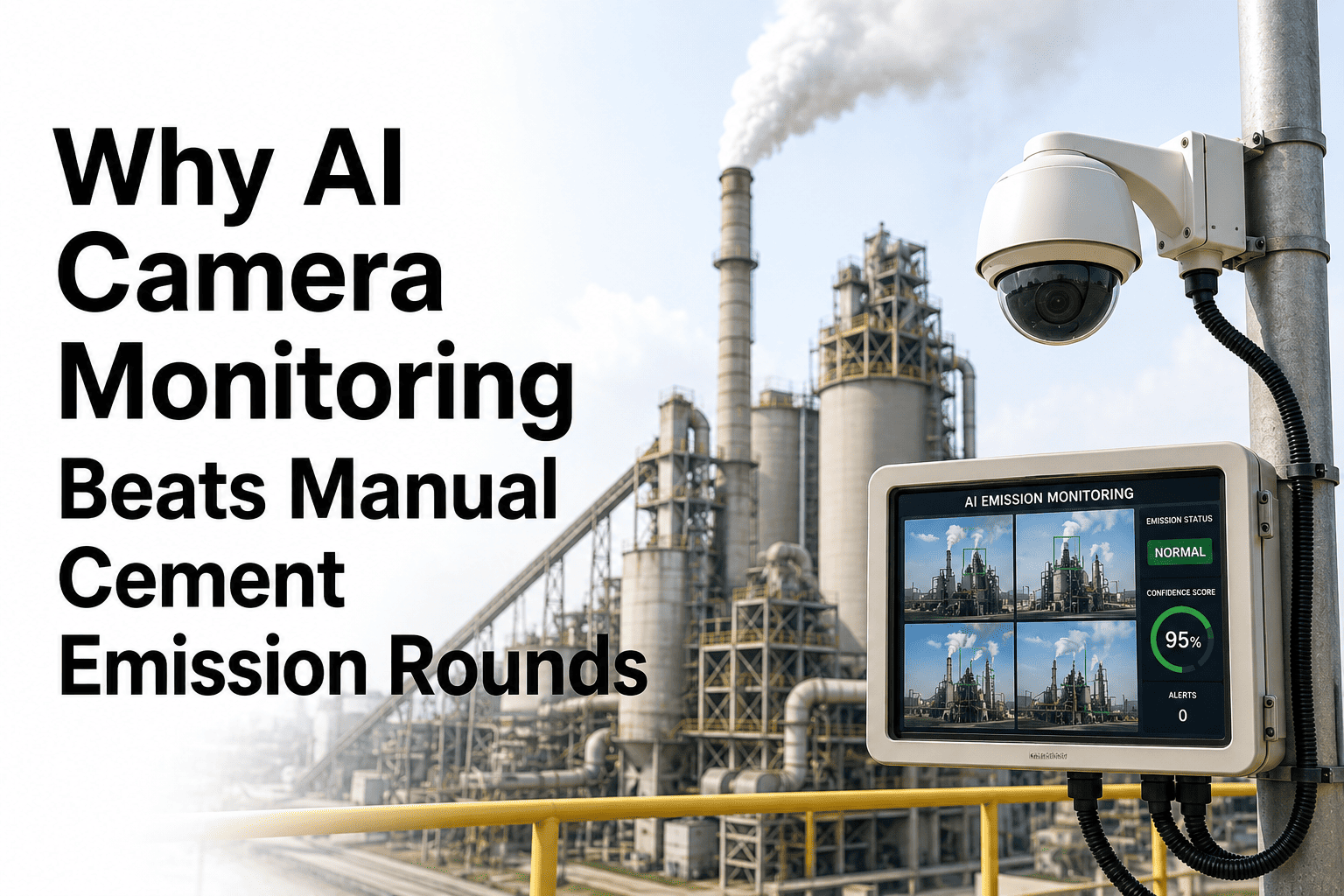
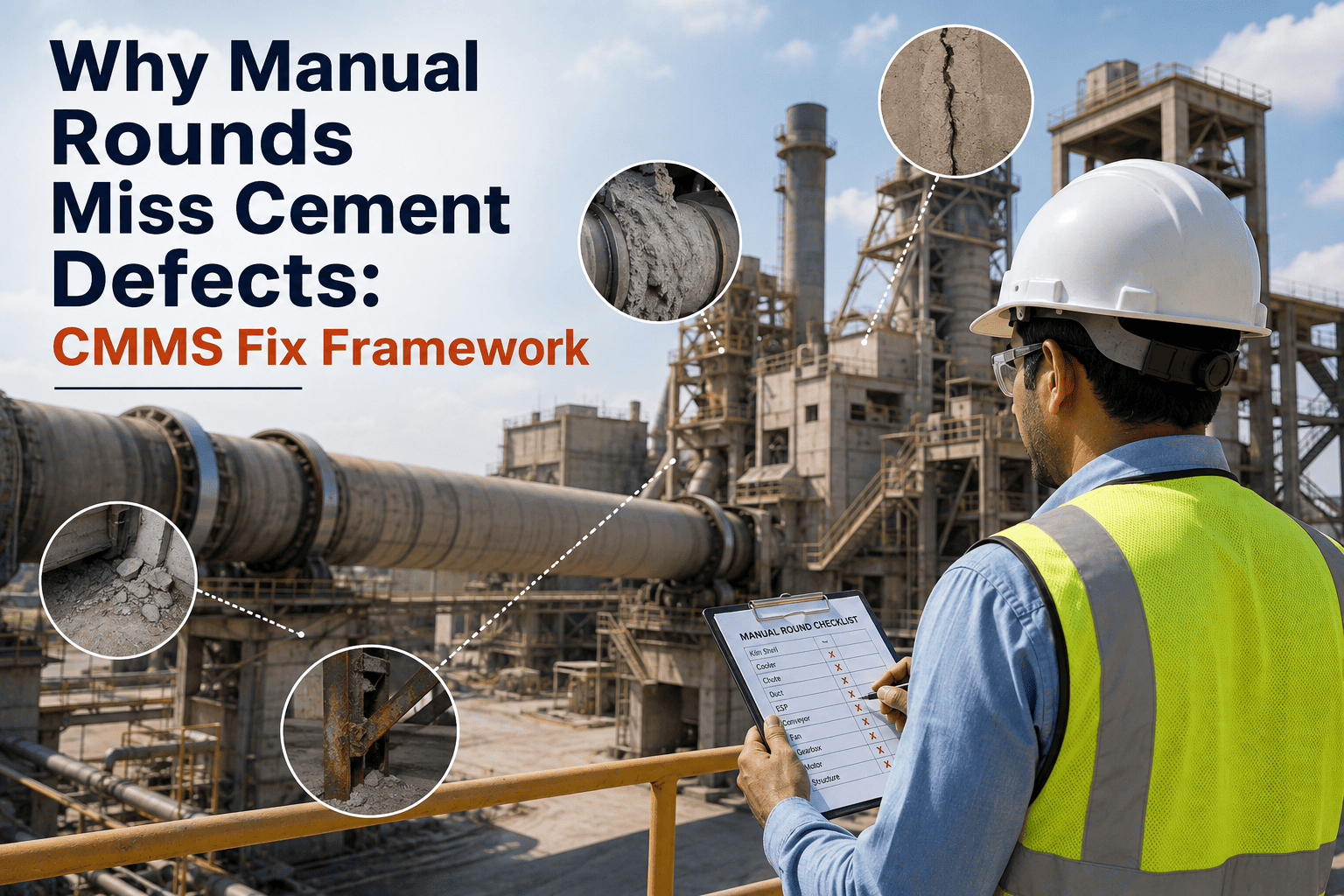
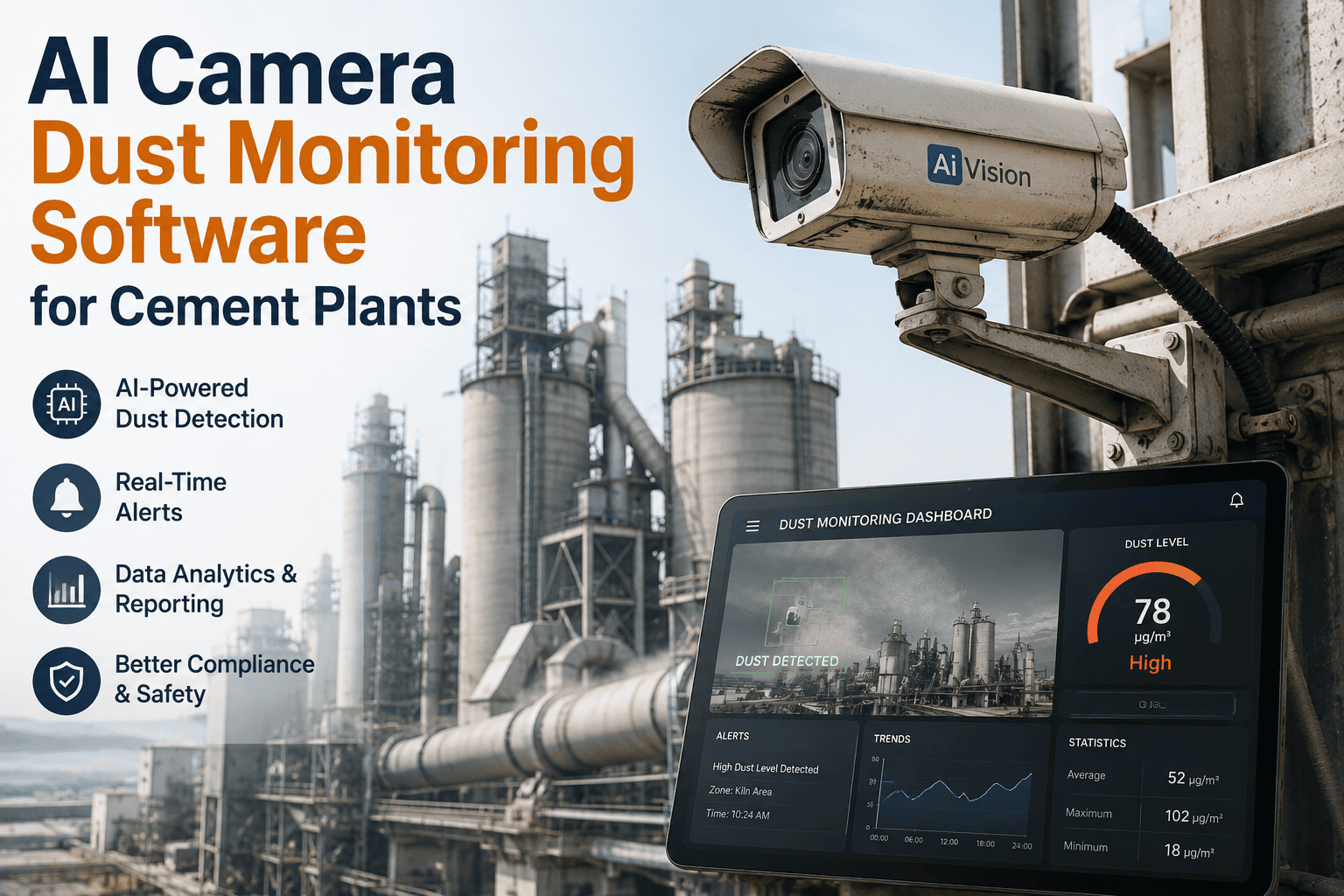
A stack technician walks the emission points twice a shift, notes what looks visibly clear, and moves on. Between those two rounds, a bag filter can develop a tear, a damper can stick partway open, and a plume that would have triggered an alarm at hour one goes unrecorded until hour four. Manual visible observation was never built to catch a gradual change — it was built to catch an obvious one, at the exact moment someone happens to be standing there. Cement plants running only on manual rounds are, by design, blind for most of every shift. An AI camera watching the same stack continuously does not blink, does not skip a round during a busy shutdown, and does not wait for the next scheduled walk to flag a drift. Paired with a CMMS that logs every reading automatically, it turns emission monitoring into a standing record — see how that record is built at app.oxmaint.ai.
Why Manual Emission Rounds Fall Short
Visible observation rounds are a compliance minimum, not a monitoring strategy — the gaps between rounds are where most preventable exceedances happen.
2-4 Hrs
Typical Round Gap
Time between manual visible observations at a single stack
24/7
AI Camera Coverage
Continuous watch across every shift, weekend, and shutdown
Minutes
Detection Lag
Time for a camera-linked CMMS to flag a visible plume change
100%
Logged Record
Share of observation windows with a stored, timestamped entry
The Core Problem: A round every two to four hours covers a handful of minutes out of every shift. Everything that happens in between — a filter tear, a stuck damper, a slow plume change — goes unrecorded until the next scheduled walk.
What Continuous Monitoring Catches That Rounds Miss
Each stage of a stack issue has a different failure mode on paper rounds versus a camera feed connected to CMMS. See the monitoring workflow in action.
What happens: A gradual opacity increase begins, well before it becomes visibly obvious to a passing observer.
Manual rounds: unnoticed until the next scheduled walk, up to four hours away.
AI camera: opacity trend is tracked continuously against a threshold.
What happens: The plume crosses a level that would count as a reportable exceedance if observed.
Manual rounds: only counted if a technician happens to be present at that moment.
AI camera: alert is raised automatically the moment the threshold is crossed.
What happens: The underlying cause — a torn bag, a stuck damper — needs a work order before it worsens.
Manual rounds: response depends on how quickly the observation gets reported.
AI camera: a CMMS work order opens automatically against the linked asset.
What happens: The event needs a timestamped record that can be produced during a regulatory review.
Manual rounds: reconstructed from paper logs that are often incomplete.
AI camera: automatic digital record, always current and audit-ready.
Every gap between manual rounds is a gap in your compliance record, not just your visibility. A continuous camera feed tied to your CMMS closes both at the same time.
What AI Camera Monitoring Actually Delivers
M
Monitoring Layer
Continuous plume tracking: watches opacity trends across the full shift instead of a handful of point checks.
Automatic exceedance flagging: raises an alert the moment a reading crosses a threshold.
R
Response Layer
CMMS-linked work orders: ties a flagged event directly to the asset and opens a work order automatically.
Shift visibility: the alert and its status carry forward automatically across shift changes.
A
Audit Layer
Standing compliance record: stores every reading with a timestamp, ready for review without reconstructing logs.
Trend history: shows patterns over weeks, not just isolated incidents.
Manual Rounds vs AI Camera Monitoring
Placed side by side, the difference is less about technology and more about what gets missed in the hours nobody is standing at the stack. Request a monitoring gap assessment.
Coverage Between Checks
None — a full gap exists until the next scheduled round.
Coverage Between Checks
Continuous, every minute of every shift, including weekends.
Consistency
Depends on the observer and workload on any given day.
Consistency
The same standard applied every time, automatically.
Response Time
Delayed until the round is completed and reported.
Response Time
Alert and work order raised within minutes of detection.
Audit Documentation
Paper logs that are often incomplete or delayed.
Audit Documentation
A digital record generated automatically and always current.
Manual Rounds Coverage:
~10-15%
vs
A single missed round is an audit finding waiting to happen. Try the platform that closes the gap between rounds automatically.
Rolling Out AI Camera Monitoring
Most plants move from pilot to full coverage in three stages rather than switching every stack over at once. Get your rollout plan.
Choose the highest-risk or most cited stack and connect one camera to the CMMS to validate alert thresholds.
Run the pilot alongside manual rounds for thirty days to tune sensitivity and confirm alerts match real conditions.
Extend coverage to remaining stacks and retire the manual-only log in favor of the automatic compliance record.
Frequently Asked Questions
Does AI camera monitoring replace manual visible observations entirely?
Most plants keep manual rounds for physical inspection but let the camera carry continuous coverage between them, which is where the biggest visibility gap has always been.
What happens when the camera flags a possible exceedance?
The alert is logged with a timestamp and, through a connected CMMS like
OxMaint, a work order is opened automatically against the responsible asset.
How long does a pilot take before full rollout?
Most plants run a single stack in parallel with manual rounds for about thirty days to calibrate thresholds before expanding coverage.
Does this help during an environmental or OSHA audit?
Yes. A continuous, timestamped digital record replaces reconstructed paper logs, which is typically the first thing an auditor asks to see.
How do we start a pilot at our own plant?
Every emission compliance gap review reaches the same conclusion: the exceedance was visible in the footage long before it was visible on paper. Manual rounds cannot watch continuously, paper logs cannot raise an alert, and a shift handover cannot carry a full record of what happened between checks. AI camera monitoring does not change what the stack does — it makes sure someone, or something, is always watching it.
OxMaint CMMS pairs continuous AI camera monitoring with automatic work orders and an always-current compliance record.
Minutes
Detection to Alert
For compliance teams: a free emission-monitoring gap review is included with every demo.