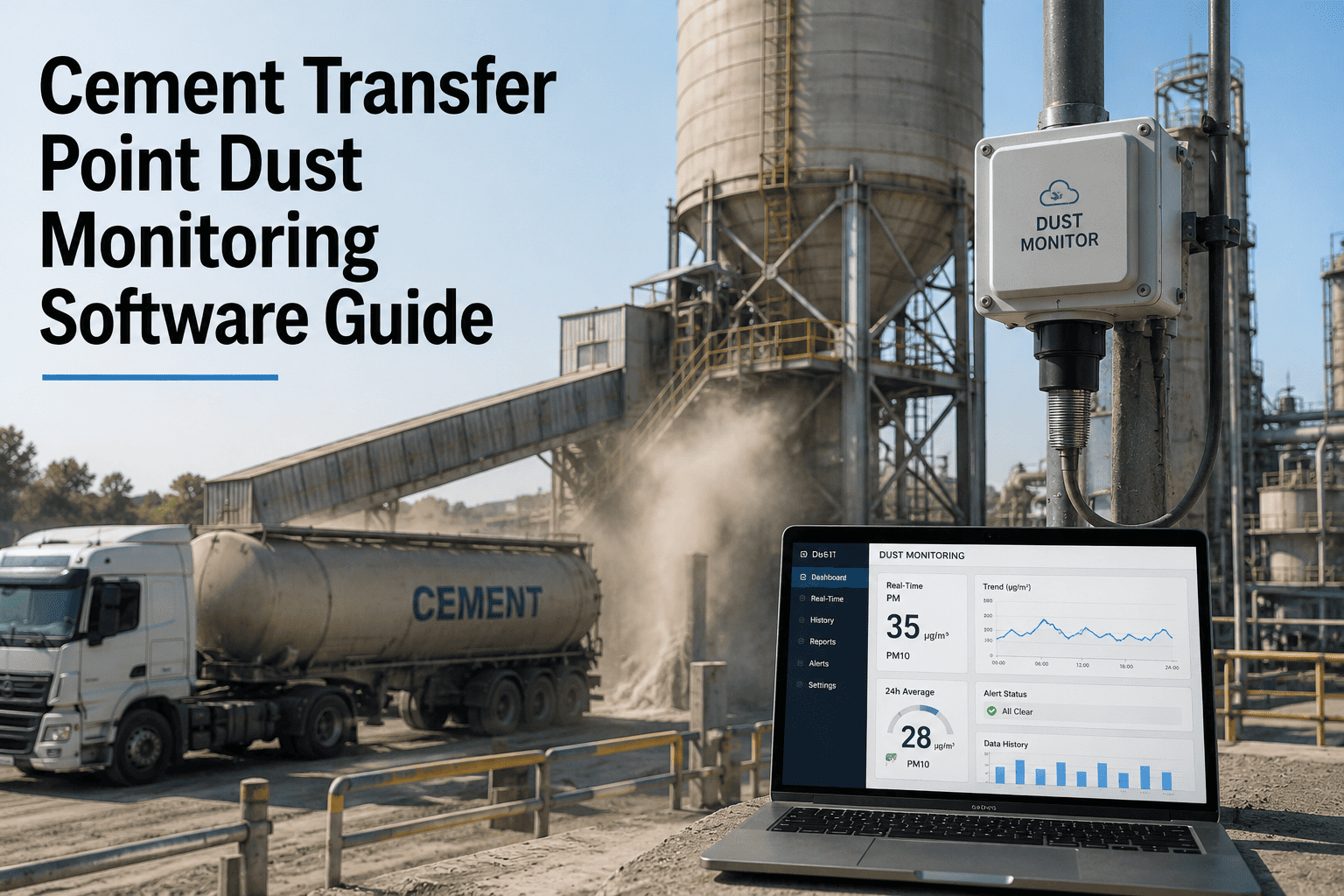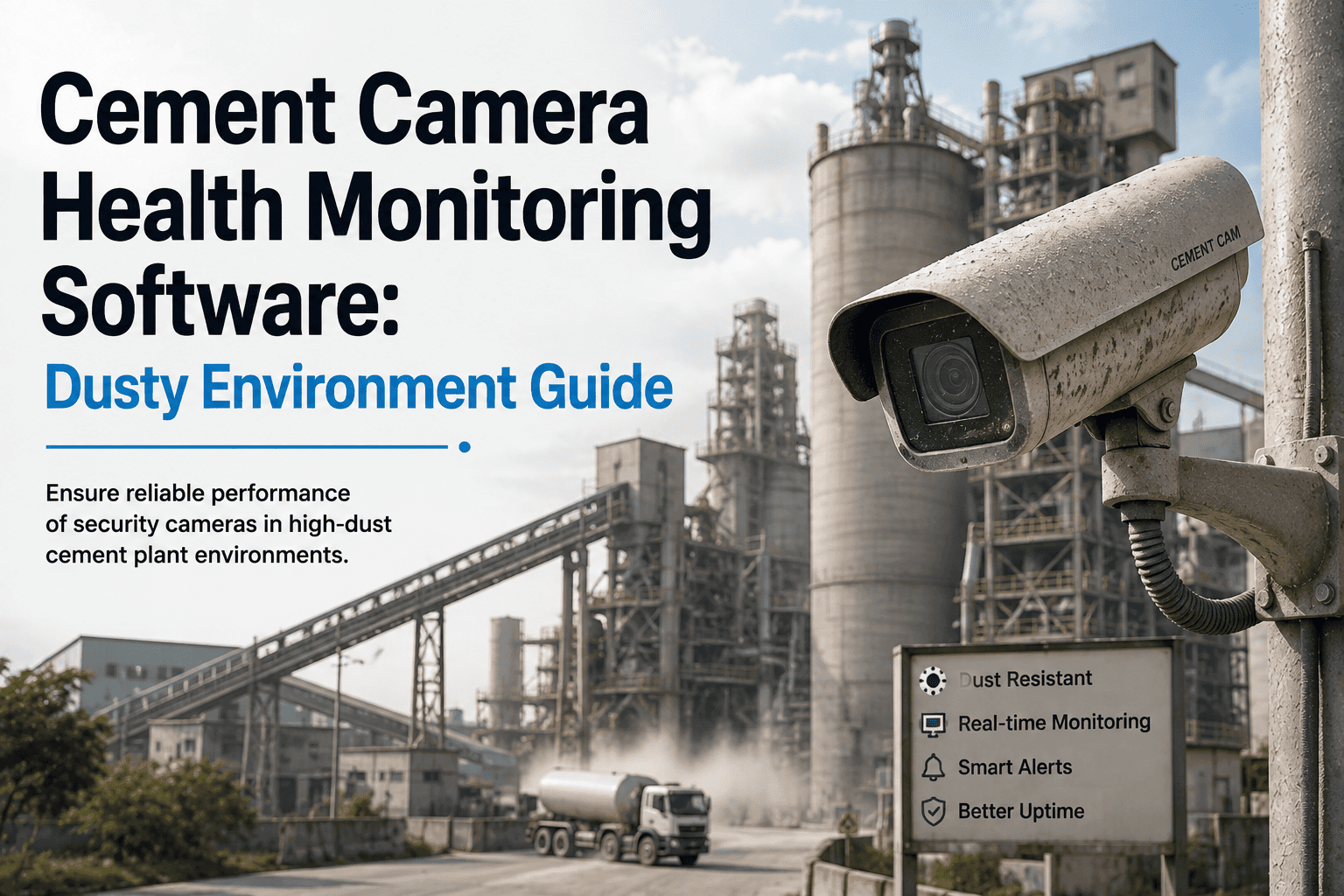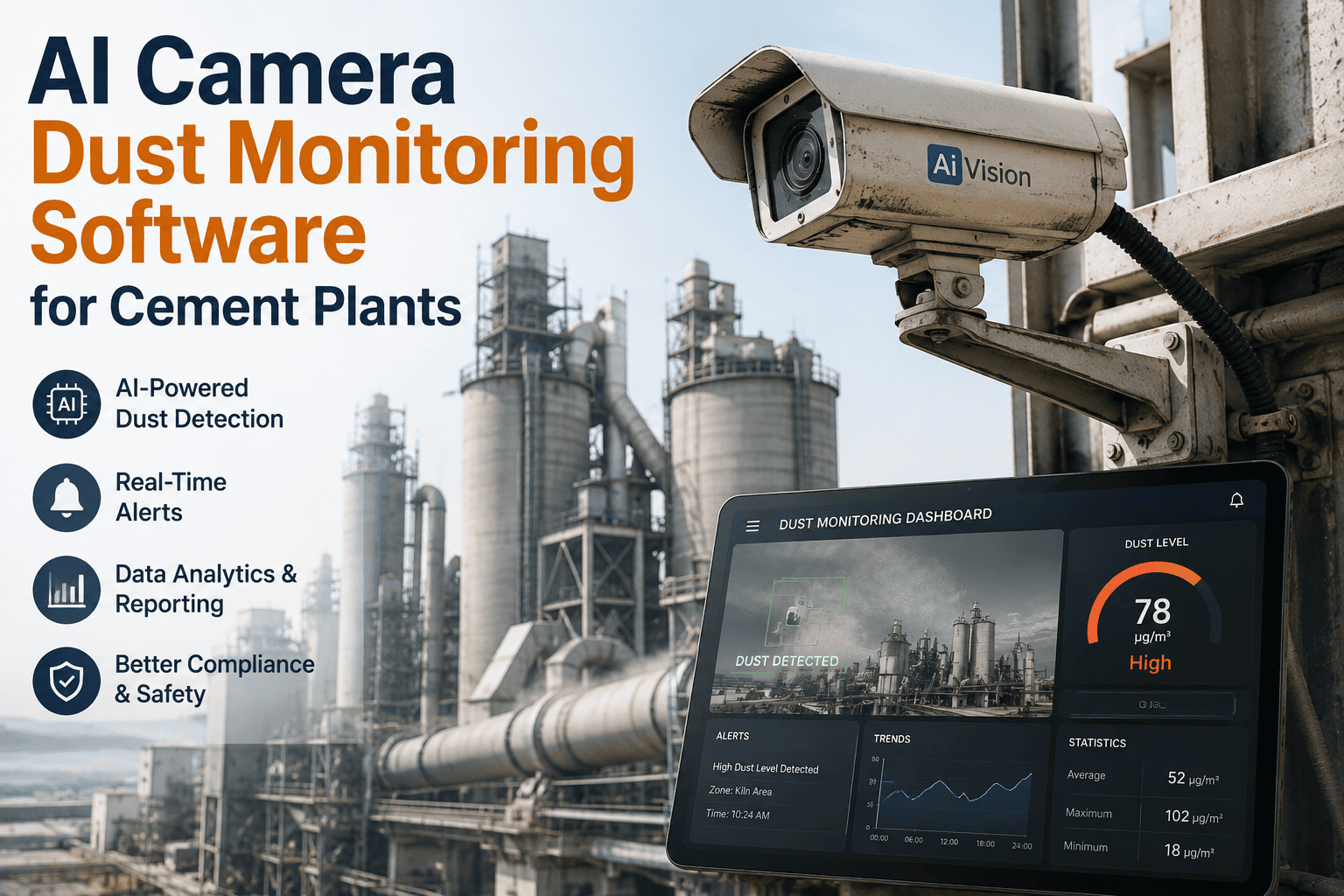
Dust is the single most visible indicator of process health in a cement plant — and the most contested one when an inspector arrives. AI camera dust monitoring turns every existing CCTV feed on transfer points, baghouses, stack outlets, and stockpiles into a 24/7 emissions and reliability sensor, automatically raising a work order the moment a plume changes shape, density, or origin. OxMaint's cloud-based CMMS ingests those AI events, routes them to the right technician, and closes the loop with isolation, root cause, and compliance evidence in one audit-ready trail. For a mid-size plant running 180+ assets, that typically means catching 60–70% of fugitive dust events before they become reportable. You can Start Free Trial to wire it into your existing camera network this week.
Turn every cement-plant camera into a 24/7 dust inspector.
Connect your existing CCTV to OxMaint and convert dust events into prioritized work orders, LOTO-isolated repairs, and audit-ready reports — across kilns, mills, coolers, conveyors, and stacks.
Five monitoring points that drive 80% of dust events
Most fugitive-dust incidents in a cement plant originate from a small, predictable set of choke points. Here is where AI camera monitoring delivers the fastest payback and the strongest audit trail.
Kiln & preheater stacks
Continuous opacity-pattern detection on the main stack and bypass outlet flags ESP/FF degradation, ammonia slip, and CO-driven draft upsets before they breach permit limits.
Conveyor transfer points
Vision models track plume growth at belt-to-belt transfers and head/tail pulleys, auto-triggering belt-wetting, dust-suppression, or chute inspection work orders.
Crusher & mill discharge
Hammer-mill and ball-mill discharge hoods are monitored for seal leakage and vent-duct rupture — two leading causes of silica-bearing fugitive releases.
Stockpiles & reclaim
Wind-driven erosion on limestone, clinker, and gypsum piles is quantified hourly, triggering suppression cannons or pile reshaping before off-site migration.
Packers & loadout
Spout misalignment, torn bag sleeves, and truck-loadover dust are caught at the packing house — the last line before product leaves the gate.
Silos & remote bins
Level-indicator failures and pressure-relief venting on remote silos are detected without a manned patrol — critical for sites with limited night-shift coverage.
From dust plume to closed work order
A worked example: a 1.8 MTPA plant in the southern US ran this loop on 42 cameras across kiln, mill, and loadout for six months. Average event-to-assignment time fell from 4.5 hours to under 90 seconds.
AI vision detects anomaly
On-camera or edge-server model classifies a dust plume by origin, density, and persistence — filters out steam, fog, and lighting changes with a 96%+ confidence threshold.
Event pushed to OxMaint
Event payload (camera ID, timestamp, snapshot, severity, asset tag) arrives via secure API and is matched to the asset registry using QR-tagged equipment.
Auto work-order creation
CMMS rule engine assigns priority, technician crew, and required LOTO isolations based on asset class and severity — no dispatcher involvement needed.
Mobile alert & acknowledgement
Assigned tech receives push notification with snapshot, asset history, last RCA, and isolation procedure — even offline, thanks to mobile sync.
Repair logged, RCA filed, report ready
After fix, the tech closes the WO with photos; root-cause category and corrective action auto-populate the OSHA/MSHA compliance dashboard.
What a 180-asset plant saves in year one
AI camera dust monitoring is not a compliance line item — it is a reliability investment. The formula below uses conservative figures from three mid-size US cement plants that deployed OxMaint over 12 months.
| Savings driver | Before OxMaint | With AI camera + CMMS | Year-1 value |
|---|---|---|---|
| Reportable dust events / year | 14 | 4 | $48K avoided penalties |
| Mean time to detect fugitive release | 4.5 hours | <90 seconds | $22K reduced product loss |
| Baghouse filter life (months) | 11 | 15 | $31K parts & labor |
| Compliance report prep (hours/quarter) | 38 | 6 | $9.6K EHS time |
| Unplanned kiln downtime (hours/yr) | 62 | 41 | $210K recovered output |
Total estimated Year-1 benefit: $320K on a 180-asset, 1.8 MTPA plant — against a fully loaded software + camera-AI cost of roughly $42K. Typical payback: under 11 weeks.
Stop inspecting dust the way you did in 2008.
Put AI cameras, mobile work orders, and audit-ready reports on one platform — deployed across every kiln, mill, and silo in your group.
What cement maintenance teams report
"We cut reportable dust events from 11 to 3 in the first eight months. The killer feature isn't the camera — it's that every plume becomes a work order with a photo, an asset, and an isolation procedure before my phone even leaves my pocket."
"Our last MSHA audit took 90 minutes instead of two days. Every event had a timestamped photo, a root cause, and a corrective action already filed. The inspector asked for the platform name."
"Before OxMaint, a fugitive dust event at the #3 transfer point meant four hours of phone calls. Now it means one push notification and a closed work order before lunch."
— Night-shift supervisor, 1.4 MTPA plant, FloridaAnswers for cement plant teams
Do I need to replace my existing CCTV cameras?
No. OxMaint integrates with most IP and analog-camera encoders you already have at the kiln deck, mill floor, and loadout. If a camera position is poor for dust detection, we will recommend a re-aim or a $400 add-on — not a rip-and-replace. Most plants are live within two weeks. Book a Demo and we will map your existing feeds to monitoring points on a call.
How does the system tell dust from steam or fog?
The vision model uses motion-vector, persistence, color, and thermal-context cues to distinguish particulate plumes from condensation, fog, and lighting artifacts. You set a confidence threshold — typically 90–96% — so only high-certainty events become work orders. False-positive rates in cement deployments average under 4% after the first tuning week.
Does it generate reports for OSHA and MSHA inspections?
Yes. Every detected event, work order, root cause, and corrective action is logged with a timestamp, camera snapshot, and technician signature. A one-click export produces a PDF bundle organized by date, asset, and severity — the same format inspectors expect. Most plants cut report-prep time from 38 hours per quarter to under 6.
Can it work at remote silos and quarry sites with no Wi-Fi?
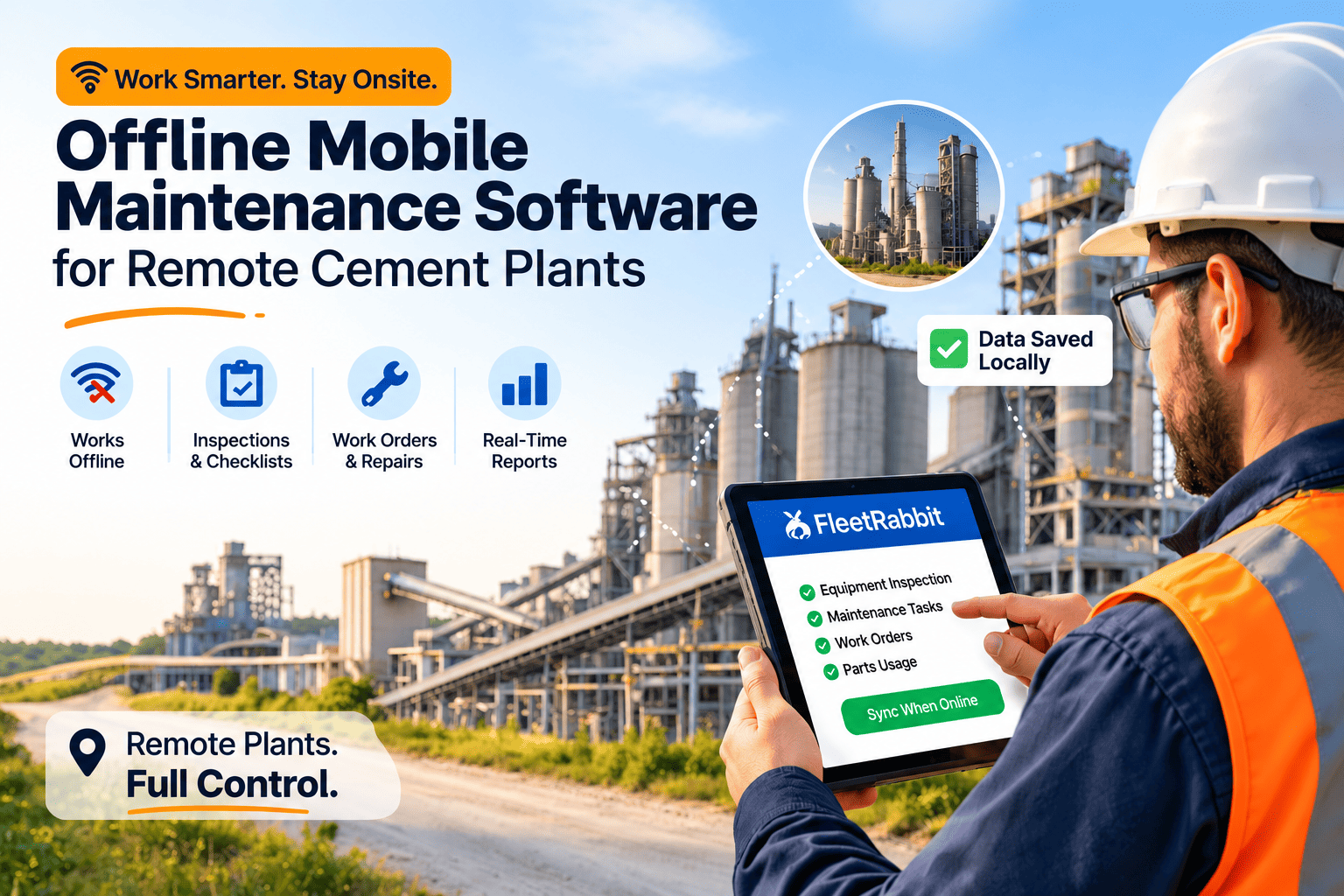
Yes. The OxMaint mobile app runs in offline mode on tablets and phones, syncing work orders, photos, and inspections the moment connectivity returns. For truly remote camera-AI, we support edge servers that buffer events locally and push to the cloud over LTE — no plant LAN required.
How quickly can we be up and running?
A typical 180-asset plant is live in 10–14 days: camera-AI onboarding in week one, asset registry and QR tagging in week two, and the first compliance export by the end of week three. You can Start Free Trial today and begin importing assets before our onboarding call.
Wire AI dust monitoring into your CMMS this week.
Join cement plants using OxMaint to cut reportable dust events by 60–70%, extend baghouse life by 35%, and walk into every audit prepared.
Free 14-day trial · No credit card