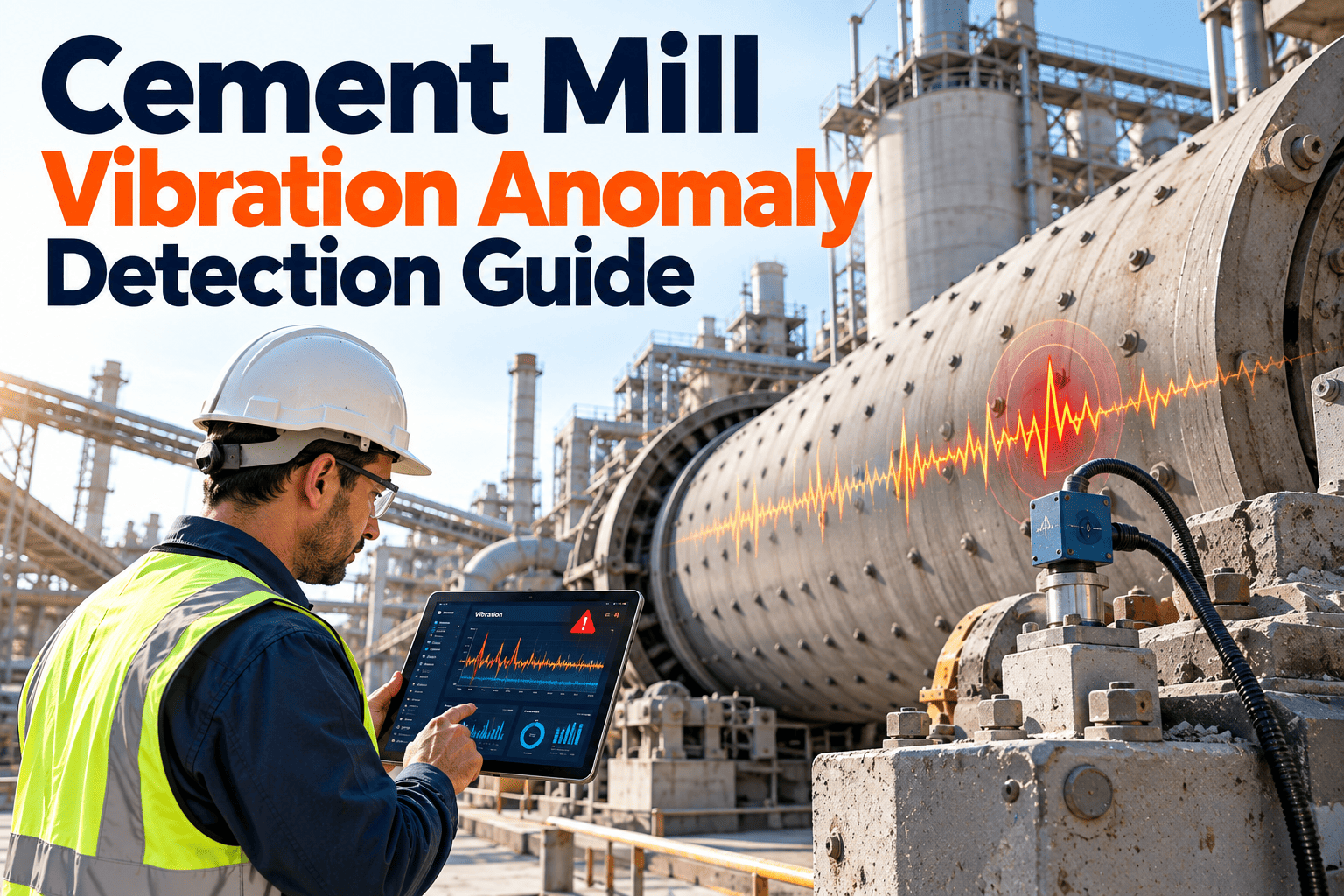
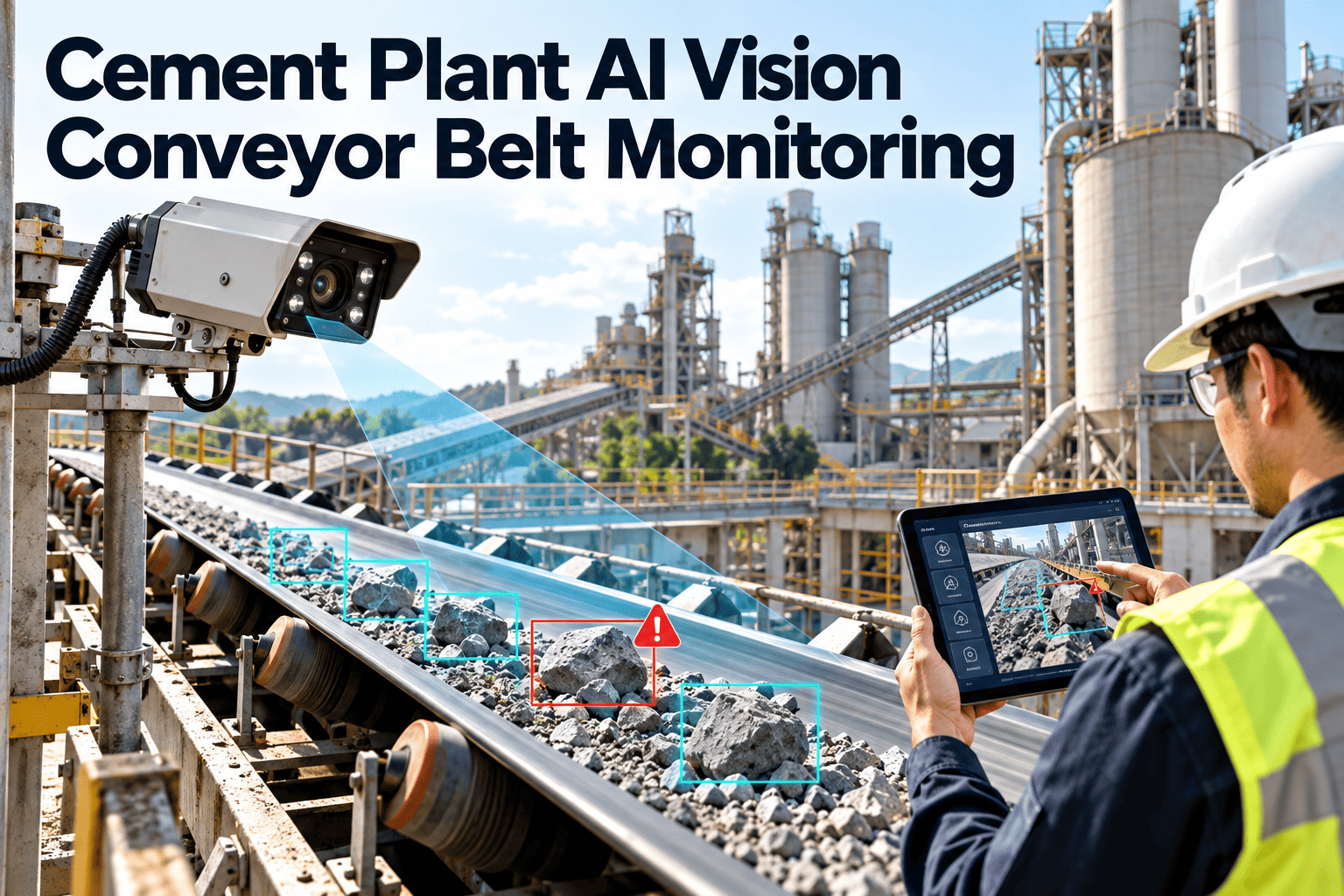
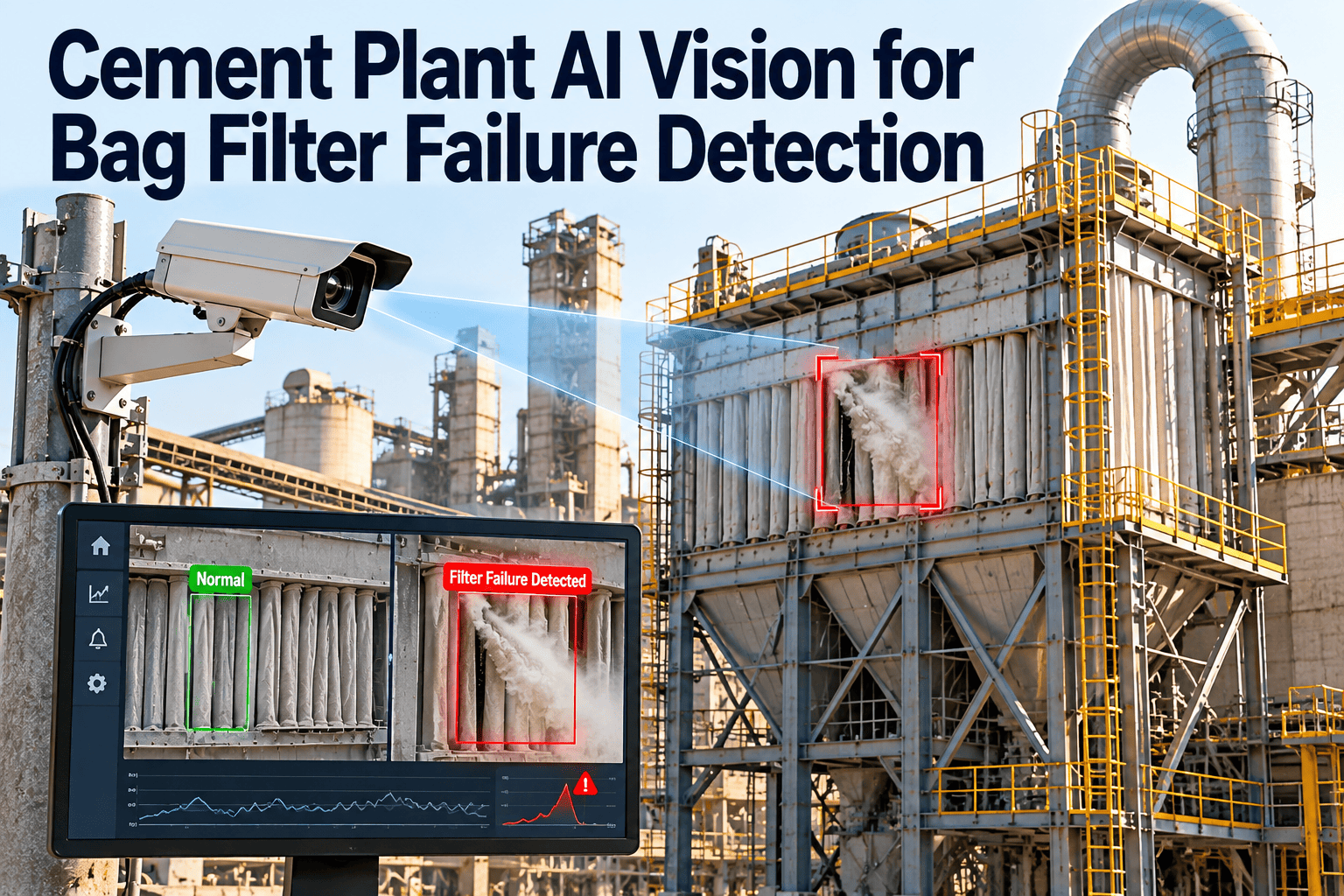
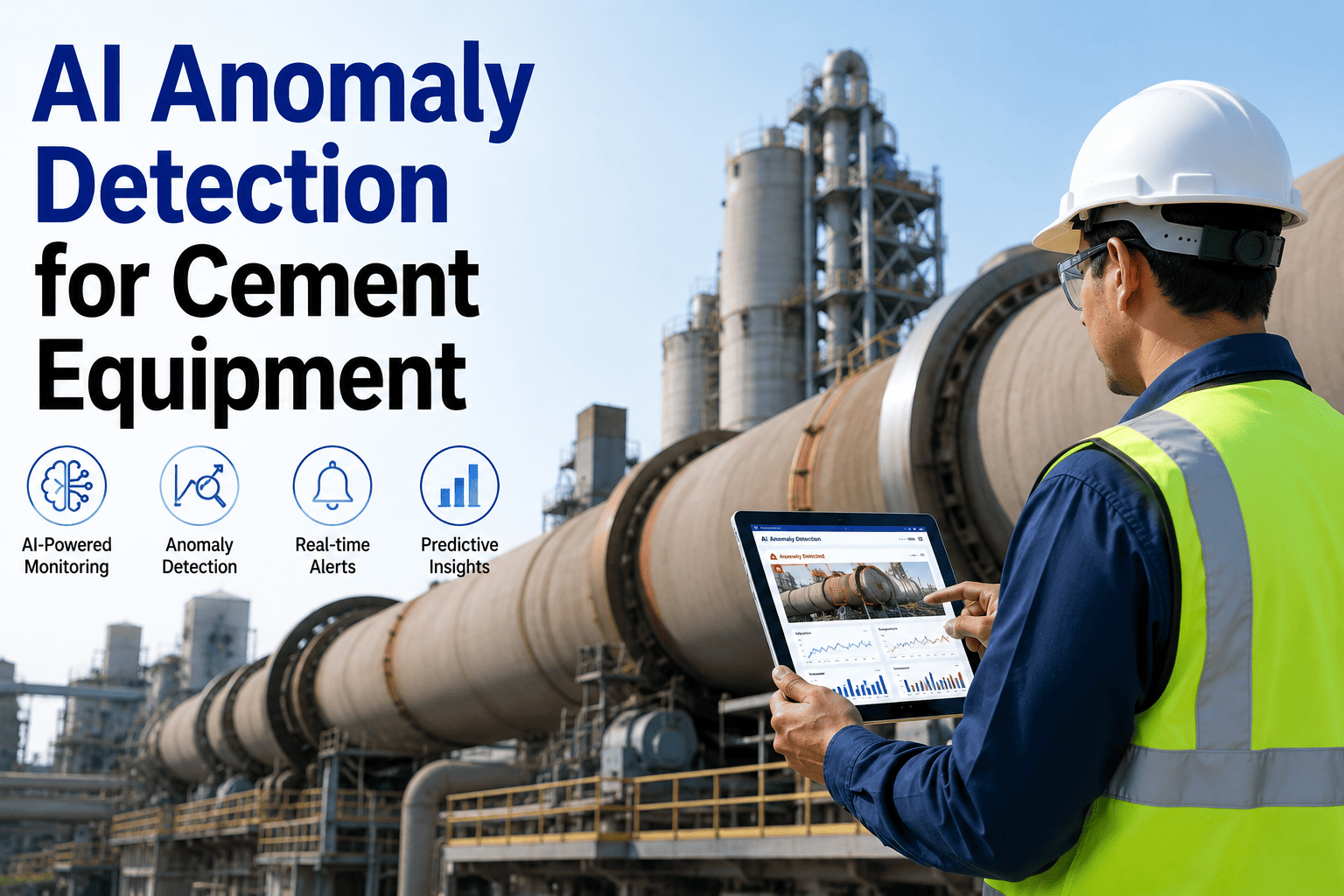
Your cement plant already has cameras. Dozens of them — mounted on walls, pointed at conveyors, overlooking the kiln area. But here's the uncomfortable truth: those cameras are just recording. Nobody watches 90% of that footage until after something breaks, someone gets hurt, or production grinds to a halt. What if those same cameras could think? What if they could spot a hairline crack forming on a conveyor belt, detect material buildup inside a chute before it jams, or flag a worker entering a hazard zone without proper PPE — and alert your team in real time, 24 hours a day, without a single person staring at a monitor?
That's exactly what AI vision cameras do. And in cement plants — where extreme heat, abrasive dust, rotating heavy equipment, and confined spaces create a uniquely dangerous environment — this technology isn't a luxury. It's becoming the dividing line between plants that react to failures and plants that prevent them. If you're still relying on scheduled walkarounds and manual inspections to catch equipment problems, book a demo to see how AI vision works in real cement environments.
95%
anomaly detection accuracy with trained AI models
70%
reduction in conveyor belt related downtime
82%
fewer crusher blockages with real-time rock detection
30%
longer refractory life with thermal hotspot monitoring
How AI Vision Cameras Actually Work in a Cement Plant
AI vision isn't some futuristic concept — it's computer vision algorithms running on live camera feeds, analyzing every frame for patterns that signal trouble. The system learns what "normal" looks like for each piece of equipment, and then flags anything that deviates. No programming from your side, no complex setup — just cameras doing what human eyes physically cannot: watching everything, all the time, without fatigue or distraction.
1
Capture
Industrial-grade cameras (visible + thermal) installed at critical monitoring points across the plant — kilns, conveyors, crushers, mills, packing lines, and hazard zones.
2
Analyze
Edge AI processes video frames in real time using deep learning models trained specifically on cement plant conditions — dust, heat shimmer, vibration, and low visibility.
3
Detect
The system identifies anomalies — belt tears, material spillage, hotspots, oversized rocks, misalignment, buildup, PPE violations — with over 95% accuracy.
4
Act
Instant alerts to maintenance teams via mobile, CMMS integration for automatic work order creation, and historical image logs for root cause analysis.
Where to Deploy AI Cameras Across Your Plant
Not every corner of a cement plant needs an AI camera. The highest ROI comes from targeting the equipment and zones that cause the most unplanned downtime, safety incidents, and production losses. Here's where smart plants are deploying first — and what each camera watches for.
Thermal hotspotsRefractory life +30%
Shell deformationEarly crack detection
Flame shape analysis2-5% fuel savings
Ring formationPrevent blockages
Thermal IR + Visible Light
Belt tears & cracks70% less downtime
Misalignment & driftPrevent belt damage
Material spillageReduce waste
Roller conditionExtended belt life
High-speed Visible Light
Oversized rock detection82% fewer jams
Foreign object alertProtect jaw plates
Feed rate monitoringOptimize throughput
Wear pattern trackingPlan replacements
Rugged Visible Light
Bearing temperaturePrevent seizure
Vibration anomaliesEarly fault detection
Oil leak detectionAvoid contamination
Liner wear assessmentSchedule relining
Thermal IR + Vibration
Bag fill accuracyQuality control
Vehicle movementCollision prevention
Truck loading countDispatch accuracy
Dust emission levelsCompliance monitoring
Visible Light + Dust Sensor
PPE compliance96% detection rate
Restricted area entryGeo-fence alerts
Lone worker trackingMan-down detection
Unsafe behaviorReal-time coaching
Wide-angle Visible Light
See AI Vision in Action at Your Plant
Oxmaint integrates AI-powered camera monitoring directly into your maintenance and safety workflows — no separate system, no data silos.
AI Vision vs. Manual Inspection: The Real Difference
Plant managers often ask: "We already do daily walkarounds — why add cameras?" The answer isn't that inspections are bad. It's that human inspections have physical limits that AI doesn't. A senior inspector might walk a conveyor line in 20 minutes and catch visible problems. An AI camera monitors that same conveyor 86,400 seconds per day and catches problems the human eye literally cannot see.
Coverage
2-3 inspections per shift
24/7/365, every second
Consistency
Varies by inspector, shift fatigue
Same precision at midnight and noon
Detection speed
Hours to days after onset
Sub-second anomaly detection
Hazardous areas
Risk to inspector's safety
Monitors without human exposure
Documentation
Paper notes, subjective
Auto-logged images with timestamp
Trend analysis
Impossible at scale
Historical image comparison, degradation curves
Cost per inspection
Labor cost increases over time
Fixed cost, decreases per inspection over time
Handling Cement's Toughest Challenge: Dust
The number one concern plant engineers raise about AI cameras is dust. And it's a fair concern — cement plants generate massive amounts of particulate matter that can obscure camera lenses within hours. But this problem has been solved. Modern industrial AI camera systems designed for cement environments use multiple strategies to maintain clear vision even in the dustiest conditions.
Air Purge Enclosures
Positive-pressure housings blow filtered air across the lens, creating a barrier that prevents dust from settling. Standard in all kiln-area and crusher-area deployments.
Thermal IR Cameras
Infrared imaging penetrates dust and smoke far better than visible light. For kiln monitoring and hotspot detection, thermal cameras deliver clear images even in heavy particulate environments.
AI Image Preprocessing
Algorithms trained on dusty images can enhance visibility before detection processing. The model learns to "see through" varying dust densities because it was trained on real cement plant footage.
Strategic Placement
Camera positioning matters. Mounting cameras upstream of dust generation points, in ventilated corridors, or behind protective shields dramatically reduces exposure while maintaining full field of view.
What Plant Leaders Are Saying
"We started with AI cameras on just two conveyor lines as a pilot. Within 45 days, the system detected a belt edge tear that our routine inspection had missed — it would have caused a full line shutdown within a week. That single save paid for the entire pilot. We've now expanded to 14 camera points covering kilns, crushers, and all major conveyors. The maintenance team doesn't see it as surveillance — they see it as their best early warning tool. Unplanned downtime on monitored equipment dropped by over 50% in the first year."
Rajesh Mehta
Head of Maintenance & Reliability
4,500 TPD Cement Plant, Gujarat, India
22 years in cement plant operations
Integration With Your Existing Systems
AI vision cameras don't replace your CMMS, DCS, or ERP — they feed into them. When a camera detects an anomaly, the real value comes from what happens next: a work order auto-generated in your maintenance management system, an alert pushed to the right technician's phone, and a historical log saved for your next reliability review. That's where Oxmaint connects the dots.
AI Camera Detects
Belt tear, hotspot, oversized rock, PPE violation, material buildup
Oxmaint Processes
Auto-creates work order, assigns technician, sets priority, attaches image evidence
Team Acts
Mobile notification, guided repair procedure, parts check, completion confirmation
Plant Learns
Trend dashboards, failure prediction models, MTBF improvement, reliability analytics
Connects With
DCS / SCADA
SAP PM
Oracle EAM
Existing CCTV
PLC / RTU
Historian
ERP Systems
IoT Sensors
ROI: What the Numbers Actually Look Like
Plant managers need hard numbers, not promises. Here's what AI vision monitoring delivers for a typical 3,000-5,000 TPD cement plant based on documented industrial implementations. If these numbers look relevant to your operation, schedule a conversation with our cement industry team to build a custom ROI model for your plant.
Cost Savings (Annual)
$180K-$400K
Avoided unplanned downtime
$80K-$150K
Extended equipment lifespan
$50K-$120K
Reduced manual inspection labor
$30K-$80K
Lower safety incident costs
Performance Gains
6-8 mo
Typical payback period
50%+
Unplanned downtime reduction
Getting Started: A Practical Rollout Plan
You don't need to camera-up the entire plant on day one. The smartest approach is a focused pilot on your highest-pain equipment, prove the value, and then expand. Here's how a typical Oxmaint AI Vision deployment looks in practice.
Phase 1
Pilot (4-6 weeks)
Install 3-5 cameras on your biggest problem areas — usually one kiln thermal camera, two conveyor cameras, and one crusher camera. Configure detection models, set alert thresholds, integrate with Oxmaint CMMS. Validate accuracy against manual inspection findings.
Phase 2
Expand (Month 3-6)
Add cameras to remaining conveyors, mill areas, and packing lines. Begin PPE compliance monitoring. Roll out mobile alerts to all maintenance supervisors. Build historical baseline for trending. Start measuring downtime reduction.
Phase 3
Optimize (Month 6-12)
Refine detection models using your plant's own data. Enable predictive failure alerts based on degradation patterns. Integrate with energy management and quality systems. Expand to multi-plant benchmarking if applicable. Document ROI for leadership review.
Give Your Cameras a Brain
Your plant's cameras should be doing more than recording footage nobody watches. Oxmaint's AI Vision module turns existing cameras into intelligent monitoring systems — integrated directly with your maintenance workflows, safety dashboard, and reliability analytics.
Frequently Asked Questions
Can AI cameras work with our existing CCTV infrastructure?
Yes. Most deployments leverage existing camera infrastructure where possible. AI processing happens at the edge (via an on-site compute unit) or in the cloud, analyzing feeds from cameras you already have. New cameras are only needed for specific monitoring points that require thermal imaging or higher resolution than existing units provide.
How accurate is detection in heavy dust environments?
Modern systems achieve over 95% detection accuracy even in dusty conditions by combining air-purged camera enclosures, thermal imaging for high-dust zones, and AI models trained specifically on cement plant footage. Thermal cameras are especially effective because infrared imaging penetrates particulate matter far better than visible light.
What's the difference between AI vision and traditional vibration monitoring?
They're complementary, not competitive. Vibration sensors detect internal mechanical faults (bearing wear, imbalance). AI vision cameras detect visual anomalies (belt tears, material buildup, surface cracks, hotspots, misalignment). Together they provide the most complete picture of equipment health. Oxmaint integrates data from both.
How long until we see measurable results?
Most plants report their first meaningful detection within 2-4 weeks of going live — usually something a manual inspection would have missed. Measurable downtime reduction typically appears within 3-6 months. Full ROI is achieved in 6-8 months for most implementations.
Does this replace our maintenance inspectors?
No — it makes them more effective. AI cameras handle the continuous, routine monitoring that's physically impossible for humans to do 24/7. Your inspectors focus on complex assessments, decision-making, and repairs that require human judgment. Think of it as giving your best inspector a tireless assistant that never misses a shift.