Weighing accuracy in a cement plant is not a peripheral technical concern — it is the foundation of every commercial transaction, production recipe, and regulatory compliance record the plant generates. A belt weigher delivering incorrect raw meal feed rates causes kiln instability that shows up in clinker chemistry weeks later. A weighbridge with uncalibrated axle load measurement creates inaccurate dispatch records that expose the plant to commercial claims and legal metrology violations. A dosing scale that has drifted outside tolerance produces blended cement with incorrect supplementary material content — a product liability issue that ASTM and EN standards take seriously. These failures share a common cause: calibration programmes that exist on paper but are not reliably executed, recorded, and acted upon. Sign up for Oxmaint to put your weighbridge, belt weigher, and dosing scale calibration programmes on a structured schedule with automatic record generation and out-of-tolerance alerts.
Cement Plant Weighbridge and Mass Flow Calibration Programs
Every tonne dispatched, every blend ratio set, and every kiln feed rate controlled passes through a weighing system. When that system drifts, the consequences span commercial, quality, and regulatory exposure simultaneously.
Dispatching by incorrect weighbridge mass creates over- or under-delivery claims. A 0.5% weighbridge error on 2,000 t/day dispatch = 10 tonnes daily commercial variance.
A 2% belt weigher drift on fly ash dosing at 25% substitution rate shifts blend composition by 0.5% — potentially outside EN 197 or ASTM C595 specification limits.
Legal metrology regulations in most jurisdictions require pattern-approved and verified weighing instruments for trade use. Operating with an unverified weighbridge is a regulatory offence regardless of actual accuracy.
Four Weighing System Categories in a Cement Plant — Each With Distinct Calibration Requirements
A complete cement plant weighing programme covers four distinct instrument categories. Each serves different functions, operates under different regulatory frameworks, and requires different calibration methods and frequencies.
Static weighbridges at dispatch gates are the primary commercial custody transfer instruments. They operate under national legal metrology regulations (OIML R76, NIST HB44, or national equivalents) and require periodic verification by an accredited metrology authority — not just internal calibration. Pattern approval, installation qualification, and annual re-verification are all mandatory.
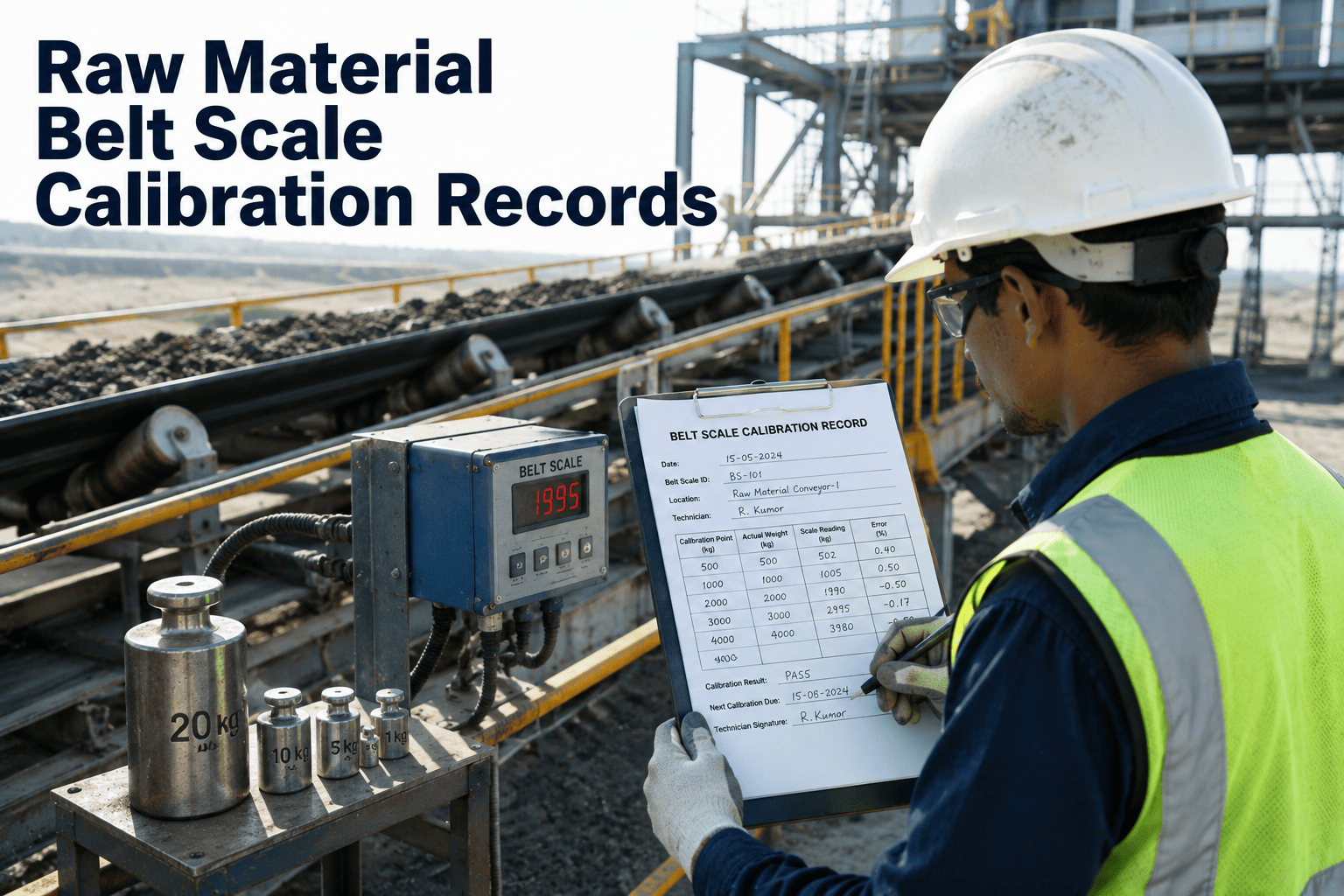
Belt weighers on raw meal, clinker, coal, and additive conveyors are the primary process control instruments for mass flow. They are sensitive to belt tension variation, idler wear, material distribution across belt width, and calibration weight condition. Monthly zero checks and quarterly material test calibrations are the minimum for process-critical belt weighers — commercial-grade belt weighers require the same frequency as static weighbridges.
Weigh feeders and gravimetric dosing scales on clinker, gypsum, fly ash, slag, and limestone lines set the blend ratios that determine cement product type and specification compliance. Calibration drift on any dosing scale directly affects product quality and can generate out-of-specification cement that must be reworked or disposed of. Weekly span checks and monthly material calibrations are standard in quality-critical applications.
Bagged cement packing scales are regulated as pre-packaged goods weighing instruments in most jurisdictions (EU Directive 2014/32/EU, equivalent national regulations). Net weight verification and statistical compliance with average fill weight requirements are mandatory. CMMS-tracked calibration records and shift-start tare checks provide the traceability these regulations demand.
Never Miss a Calibration Due Date. Never Lose a Calibration Record.
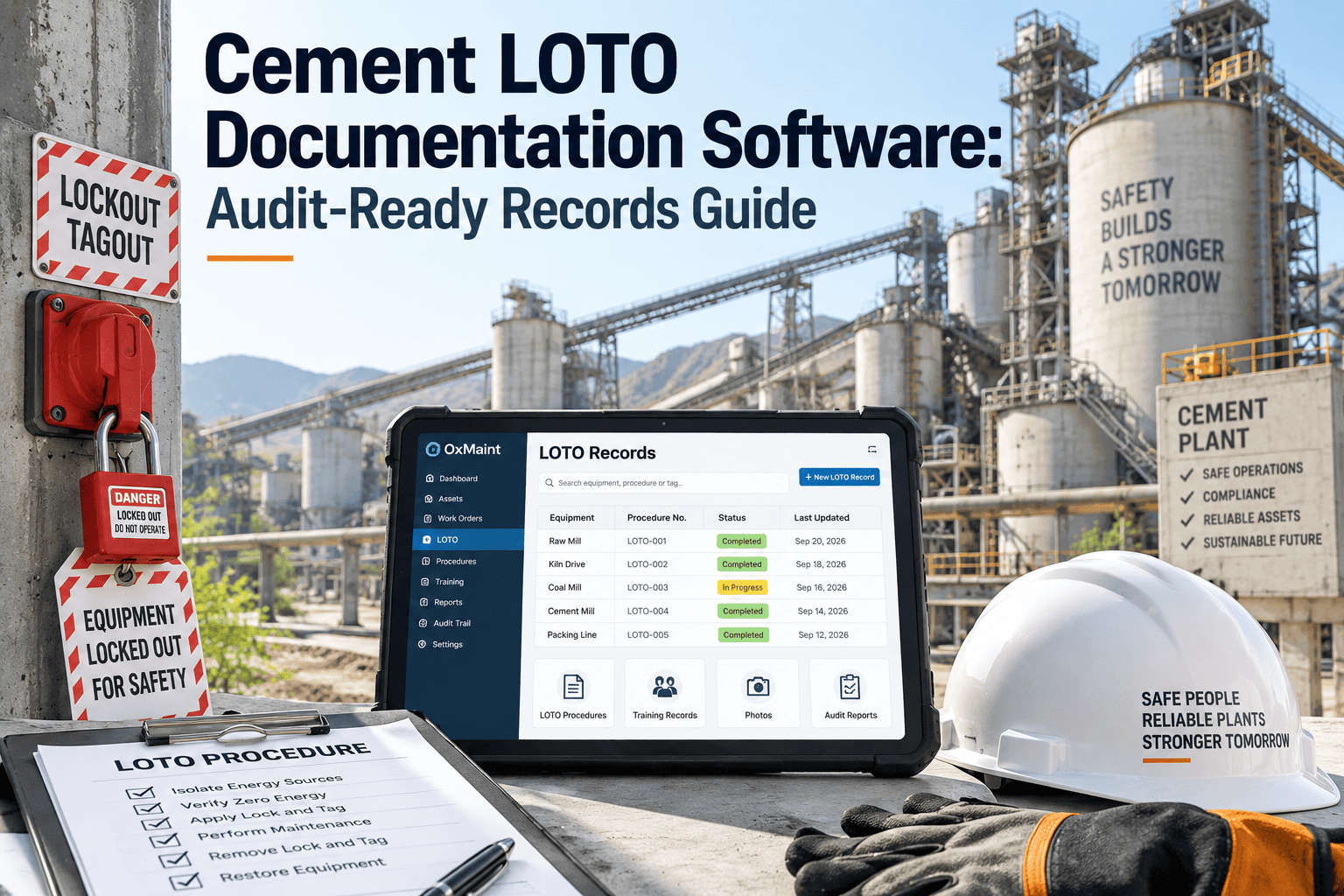
Oxmaint automatically schedules calibration work orders for every weighing instrument in your plant, routes them to the right team, and stores the results against the instrument asset record — giving you a complete, audit-ready calibration history at any time.
Building a CMMS-Managed Calibration Programme That Meets OIML and NIST Requirements
A calibration programme that satisfies both internal quality requirements and external legal metrology obligations has six essential components. Most plants have some of these — world-class operations have all six, systematically managed in their CMMS.
Every weighing instrument in the plant is registered as an asset in the CMMS with its regulatory classification (legal metrology, quality-critical, or process), location, model, serial number, and applicable standard. This register drives the PM schedule and determines which instruments require external verification versus internal calibration.
Legal metrology instruments follow externally mandated intervals. Quality-critical instruments follow intervals set by internal risk assessment — typically monthly to quarterly for production-critical belt weighers. Process instruments are calibrated at intervals set by process variability requirements. CMMS PM records carry the interval definition and enforce due-date compliance.
Calibration is only as accurate as the reference standards used. Test weights, certified chains, and reference material masses used in plant calibrations must themselves be traceable to national measurement standards. CMMS records for each plant calibration should reference the test equipment used and its current certification status.
When a calibration result falls outside tolerance, a defined response is required — not an ad hoc decision. The protocol defines: when to adjust versus when to quarantine output, who is notified, what production records are reviewed for the period since the last calibration, and what root cause investigation is required. CMMS work orders capture this response and provide the audit trail.
External verification certificates for legal metrology instruments must be stored, accessible, and renewable before expiry. CMMS document attachment to instrument asset records, combined with automated renewal reminders, ensures certificates are never expired when a regulatory inspector arrives on site.
Individual calibration results tell you whether an instrument passed or failed on one day. A trend across six to twelve calibrations tells you whether the instrument is stable, drifting slowly, or cycling in a way that suggests a systematic problem with the installation. CMMS-stored calibration results, reviewed quarterly as a trend, is the early warning system that prevents commercial and quality exposure.
Cement Plant Weighing Calibration — Commonly Asked Questions
Internal calibration is performed by plant staff using certified test equipment to verify and adjust the instrument. Legal metrology verification is a statutory process performed by an accredited authority under national weights and measures legislation — it results in a verification mark or certificate that authorises the instrument for trade use. Cement plants dispatch product commercially and therefore require both. Sign up for Oxmaint to track both calibration and external verification records in one place.
Monthly material test calibration is the minimum for belt weighers on blend-critical dosing lines. Weekly zero-span checks with recorded results are standard practice in world-class operations. Calibration frequency should increase when process variability data shows quality drift that cannot be explained by material chemistry variation — this correlation is only possible when calibration records are stored in the same system as quality data.
Inspectors typically check: the current verification certificate (not expired), the pattern approval documentation, the installation record, and recent calibration check results showing the instrument was in tolerance between verifications. CMMS-stored records accessible on a tablet or printable on demand are significantly more impressive — and complete — than paper-based filing systems. Book a demo to see Oxmaint's calibration record management.
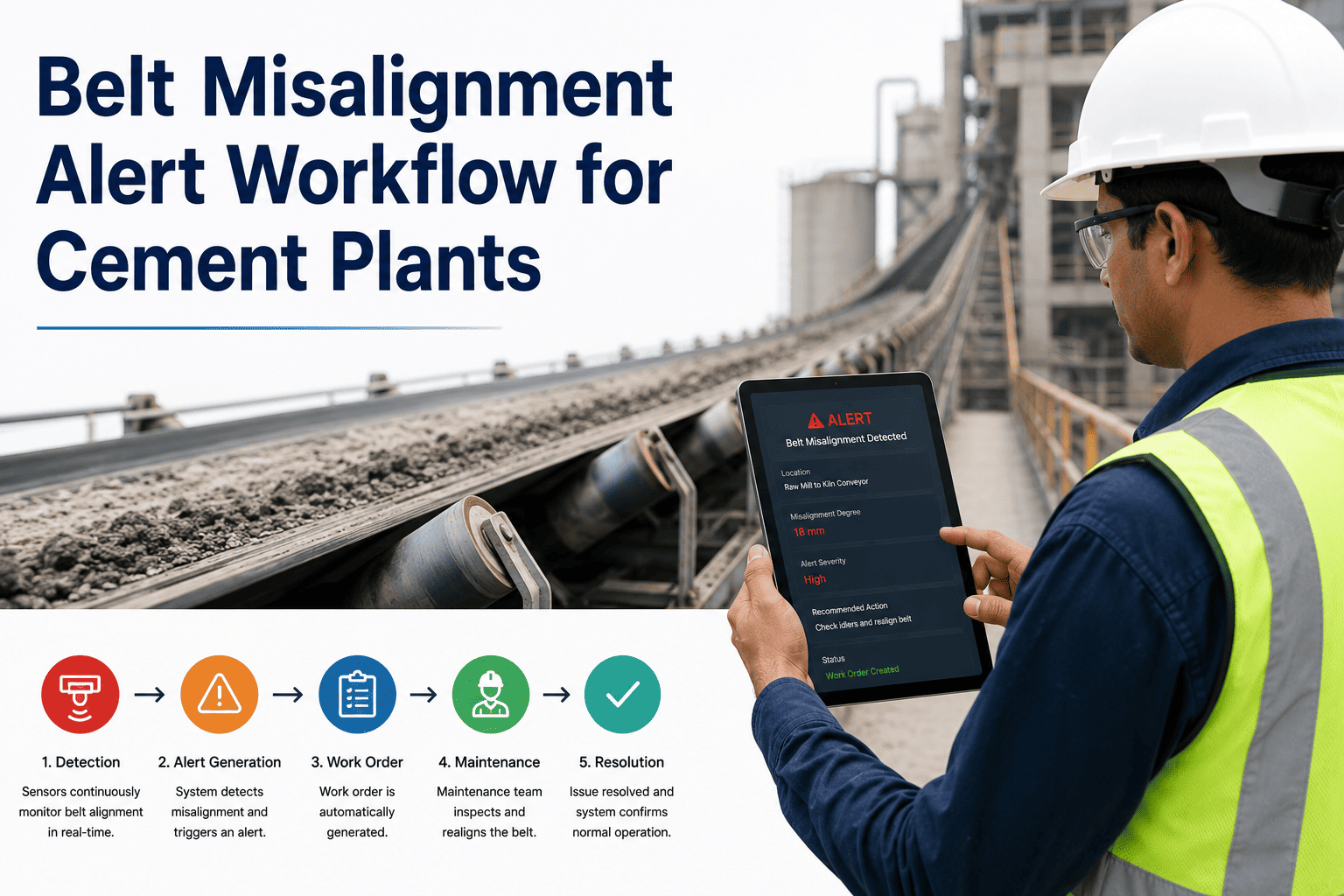
Belt tension variation is the primary cause of belt weigher span drift in cement plants. Conveyor belt tension changes with belt temperature, moisture, material loading history, and take-up condition — all of which change frequently in a cement environment. Regular belt tension checks as part of the conveyor PM programme, combined with the belt weigher calibration programme, address the root cause rather than just correcting the symptom at each calibration.
An out-of-tolerance result should trigger a documented review of all commercial dispatches and production records since the last in-tolerance calibration. The magnitude and direction of the error determines whether commercial adjustments are needed. CMMS-linked calibration records with timestamps make this review straightforward and defensible — without structured records, quantifying the exposure and demonstrating corrective action to customers or regulators is nearly impossible.
Every Tonne Your Plant Dispatches Depends on an Accurate Scale. Make Sure Every Scale is Managed Like It Matters.
Oxmaint gives cement plant QC and maintenance teams a complete calibration management programme — scheduled work orders, result recording, out-of-tolerance alerts, certificate storage, and trend dashboards — for every weighing instrument from quarry to dispatch gate.