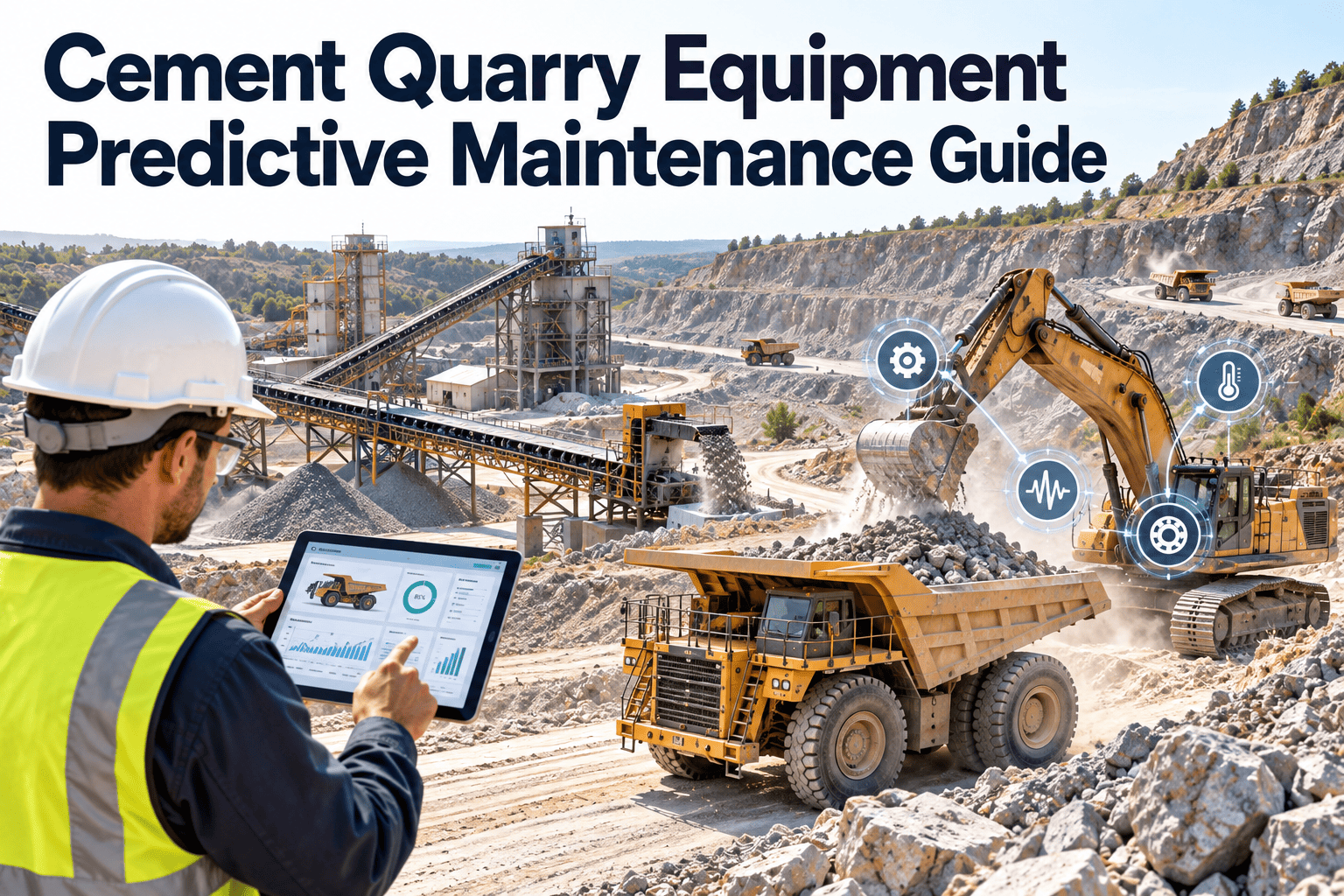
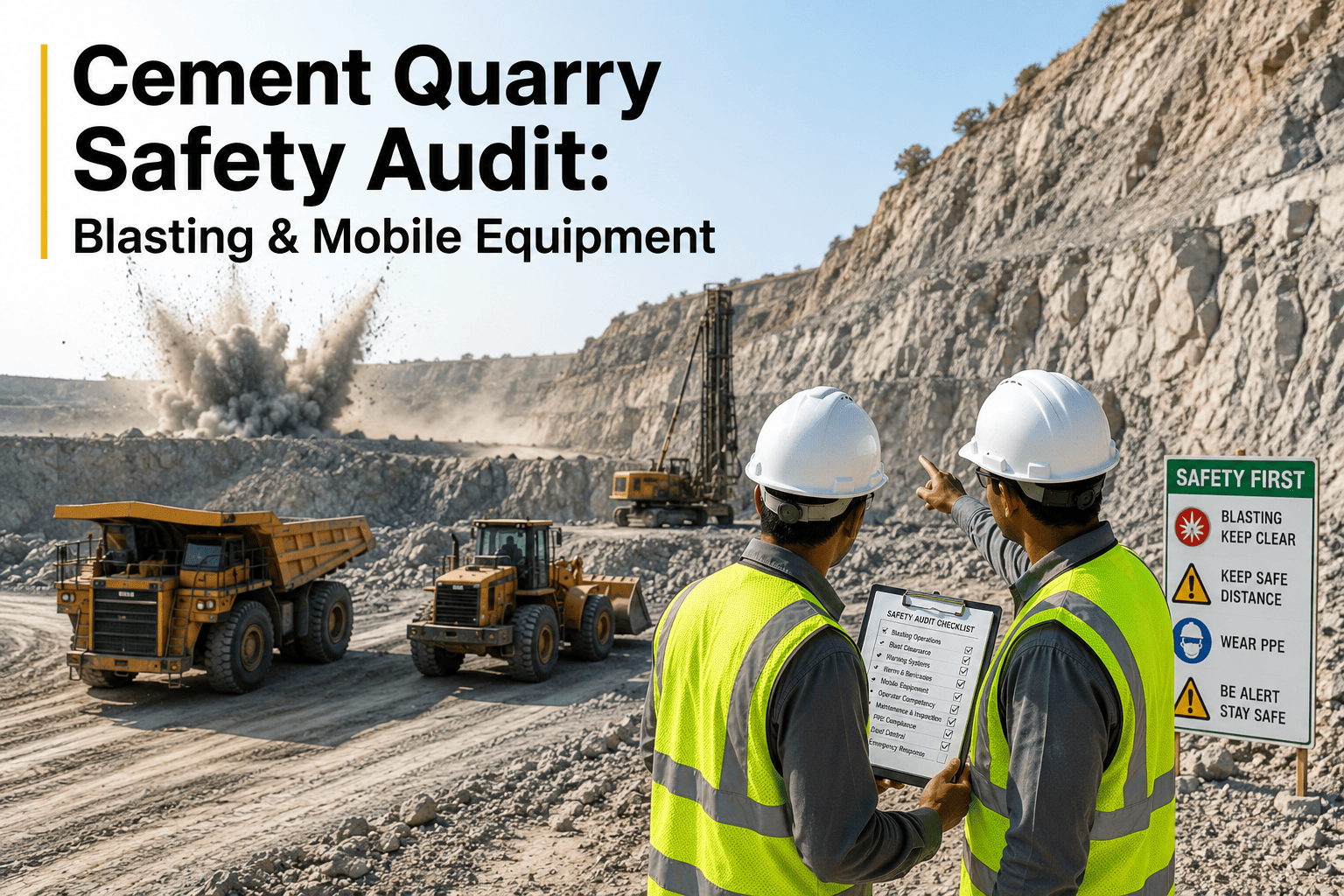
Quarry mobile equipment maintenance is one of the highest-stakes maintenance challenges in cement manufacturing — and one of the least systematically managed. Haul trucks, wheel loaders, and drill rigs operating in a cement quarry environment face extreme conditions: abrasive rock dust, steep gradients, continuous heavy cycling, and ambient temperatures that accelerate both mechanical wear and component fatigue. When a 100-tonne haul truck fails on a quarry bench, it does not simply stop production — it blocks other trucks, disrupts blasting schedules, and can trigger a cascade of downstream plant starvation that affects kiln output for hours. Yet most quarry mobile equipment programmes remain largely reactive, driven by breakdown response rather than structured PM and condition monitoring. Sign up for Oxmaint to bring CMMS-grade planning, MSHA compliance records, and condition-based PM triggers to your quarry mobile fleet.
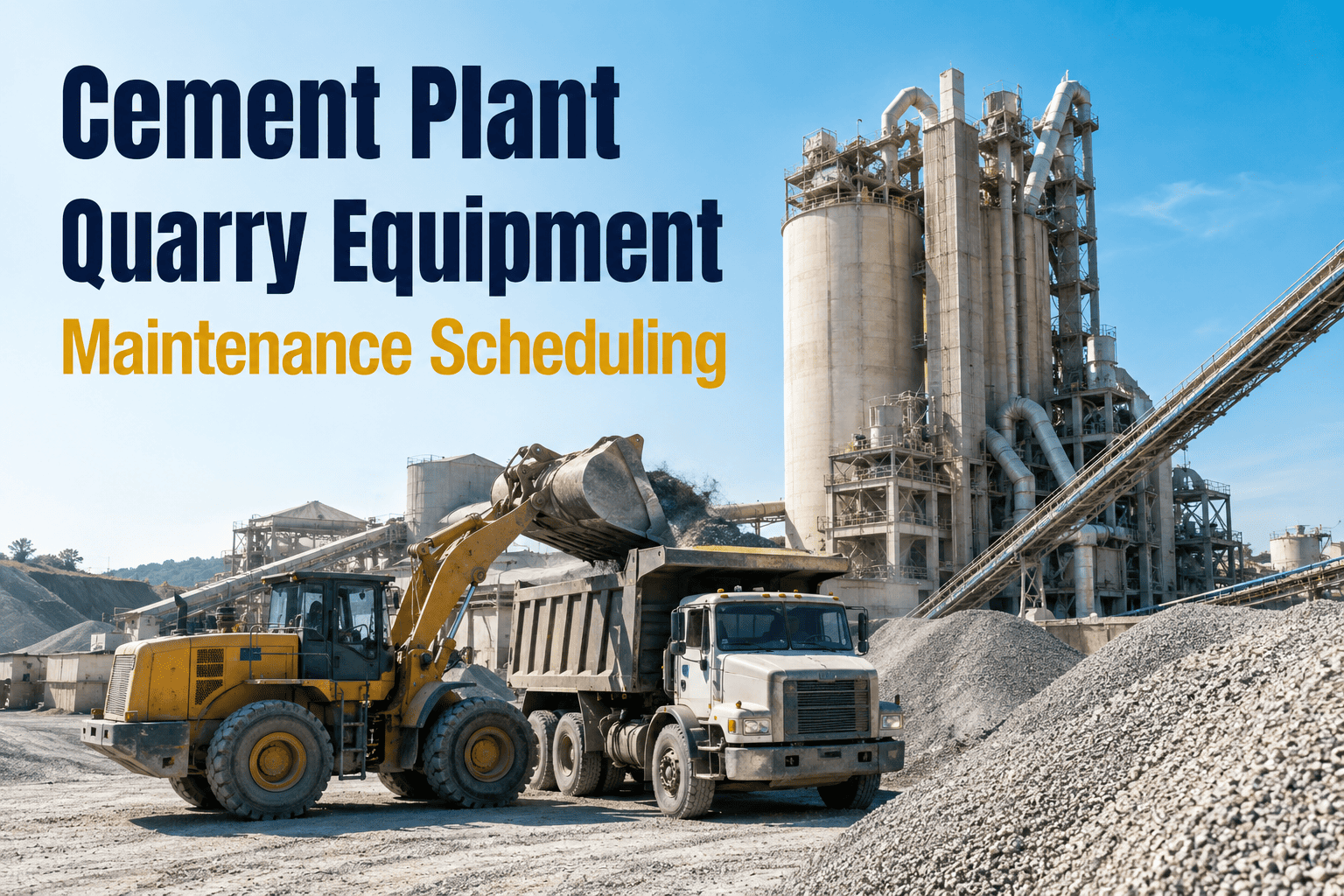
Cement Plant Quarry Mobile Equipment Maintenance
Haul trucks, wheel loaders, and drill rigs in cement quarries demand structured PM programmes, operator inspection discipline, and MSHA-compliant records. Here is how world-class operations manage their mobile fleet.
Three Equipment Categories — Three Distinct Maintenance Strategies
Quarry mobile equipment does not have a single maintenance profile. Each machine category operates under different duty cycles, failure modes, and regulatory requirements. Applying a single PM template across the fleet is the most common planning mistake in quarry maintenance.
- Suspension cylinder leak and seal degradation
- Drive axle bearing failure from overloading
- Body hoist cylinder wear and contamination
- Engine coolant system failure from dust ingress
- Tyre sidewall damage from sharp quarry rock
- Hydraulic cylinder rod seal failure from abrasive dust
- Bucket cutting edge and tooth wear beyond replacement limit
- Articulation joint bearing wear and lubrication starvation
- Transmission overheating from continuous load-haul cycles
- Boom pin wear from high-frequency lift cycles
- Drill rod thread wear and connection fatigue
- Compressor valve failure from dust-contaminated intake air
- Bit wear rate exceeding replacement trigger (variable by formation)
- Mast and crowd cylinder seals from abrasive dust environment
- Rotary head bearing failure from shock load in hard formation
MSHA Compliance Records: What Quarry Maintenance Teams Must Document
Mine Safety and Health Administration (MSHA) and equivalent mining safety regulations in other jurisdictions require documented maintenance records for quarry mobile equipment. Inspectors look specifically for these record types during site audits — and their absence results in citations regardless of the actual condition of the equipment.
MSHA 30 CFR Part 56 requires documented pre-shift inspections for all self-propelled mobile equipment. Records must include the date, equipment ID, inspector name, items checked, and any defects found with corrective action taken. CMMS digital forms replace paper-based systems and create a searchable, tamper-evident record.
Service brake, parking brake, and secondary brake system performance must be tested and documented at defined intervals. CMMS-scheduled brake tests with pass/fail records linked to the equipment asset ensure regulators can see a continuous inspection history, not just the most recent test.
ROPS certification and condition records must be maintained for all equipment operating at heights or on gradients above regulatory thresholds. Any ROPS modification, repair weld, or impact event must be documented and re-certification triggered. CMMS work orders provide the event history required for audit.
Haul truck tyre failures are a leading cause of quarry fatalities. MSHA expects documented tyre inspection logs, inflation pressure records, and scrapping decisions with justification. CMMS tyre tracking per wheel position, with inflation and tread depth logs, satisfies this requirement completely.
Hydraulic hose assemblies on dump bodies, work platforms, and loader booms are safety-critical and require documented condition inspections. Age-based replacement programmes with CMMS work order histories provide the evidence that safety-critical hoses are managed proactively, not reactively.
When an operator identifies a defect during pre-shift inspection, the corrective action — and confirmation that the equipment was not used until the defect was resolved — must be documented. CMMS-linked defect-to-work-order workflows create this chain of evidence automatically.
Put Your Quarry Fleet Maintenance and MSHA Records in One Platform
Oxmaint supports pre-shift inspection forms, PM scheduling by engine hours, safety-critical system records, and tyre lifecycle tracking — all linked to individual equipment assets and accessible from mobile devices in the quarry.
Why Operator Pre-Shift Inspections Are the Most Valuable Maintenance Input in a Quarry
Quarry operators spend 8–12 hours per shift with their equipment. They notice fluid leaks, unusual sounds, vibration changes, and control response differences before any sensor does. Structured pre-shift inspection programmes, with CMMS-linked defect reporting, turn this proximity into a systematic early warning system.
CMMS mobile form covers fluid levels, tyre condition, brake response, lights, ROPS, fire suppression, and safety equipment. Takes 12–15 minutes. Results log automatically against the equipment asset record.
Any reported defect generates a work order routed to the quarry maintenance supervisor. Safety-critical defects (brakes, ROPS, tyres) generate high-priority alerts that prevent equipment despatch until resolved.
The technician closes the work order with parts used, time taken, and root cause classification. The equipment is cleared for despatch only after work order closure — creating the MSHA-auditable corrective action chain.
CMMS repeat defect analysis identifies components generating recurring operator reports. These become reliability improvement projects — PM interval adjustments, component upgrades, or operational practice changes — driving long-term fleet availability improvement.
Quarry Mobile Equipment Maintenance — Frequently Asked Questions
Engine hours combined with tonne-kilometre accumulation provides the most accurate PM trigger for haul trucks, because wear correlates with both running time and loading severity. Calendar-based PM intervals consistently result in either over-maintenance on lightly loaded trucks or under-maintenance on trucks running at maximum payload on steep grades. Sign up for Oxmaint to configure custom meter-based PM triggers for your fleet.
Per-position tyre records — tracking fitment date, inflation history, rotation history, tread depth measurements, and scrapping decision — provide the audit trail MSHA and safety regulations require. CMMS tyre asset records linked to individual wheel position on each truck give maintenance managers visibility of fleet tyre age and condition at a glance.
Articulation joint bearing failure from lubrication starvation is the most frequently reported premature failure mode in wheel loaders across cement quarry operations. Greasing intervals are consistently extended under production pressure, and auto-lubrication system failures are not caught without structured inspection records. CMMS-scheduled greasing work orders with completion verification are the primary preventive measure. Book a demo to see lubrication route scheduling in Oxmaint.
The combination that consistently delivers top-quartile availability is: PM compliance above 90%, operator pre-shift inspection compliance above 95%, critical spare parts available for the top 20 failure modes, and MTBF trending reviewed monthly. No single measure achieves 85% availability — it is the discipline across all four that drives top-quartile fleet performance.
Blast hole pattern accuracy and drill rod integrity records are increasingly required as part of quarry blasting permit documentation in regulated jurisdictions. Drill metre logging per rod assembly, compressor maintenance records, and bit wear tracking — all stored in a CMMS and linked to the specific drill rig asset — provide the maintenance history component of blast compliance documentation.
Your Quarry Fleet is Running. Make Sure Your Maintenance Programme Is Running Harder.
Oxmaint gives quarry maintenance teams hour-meter triggered PM scheduling, digital operator inspection forms with automatic defect routing, MSHA-compliant record keeping, and fleet availability dashboards — all in a mobile-first platform built for the demands of mining and quarrying environments.