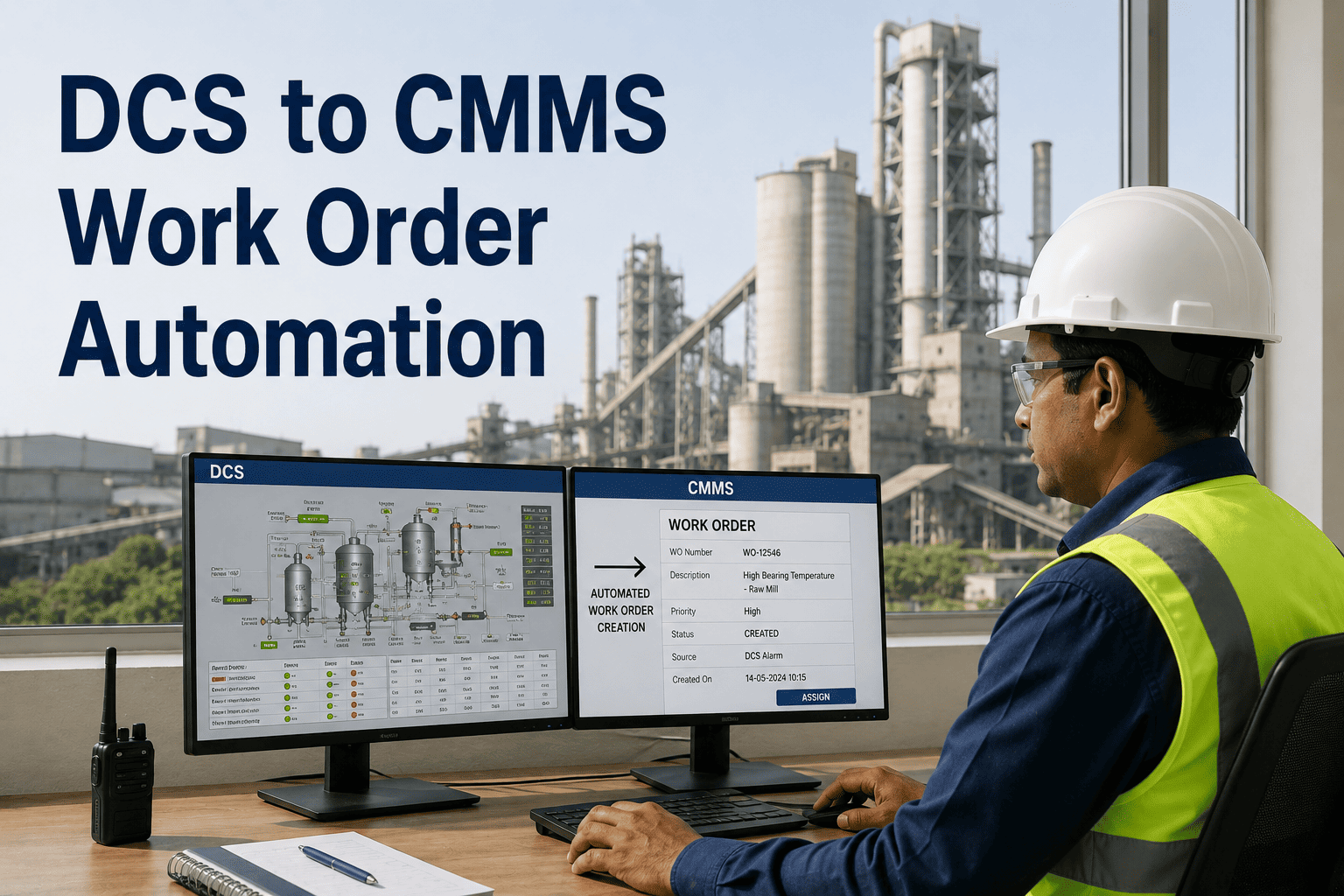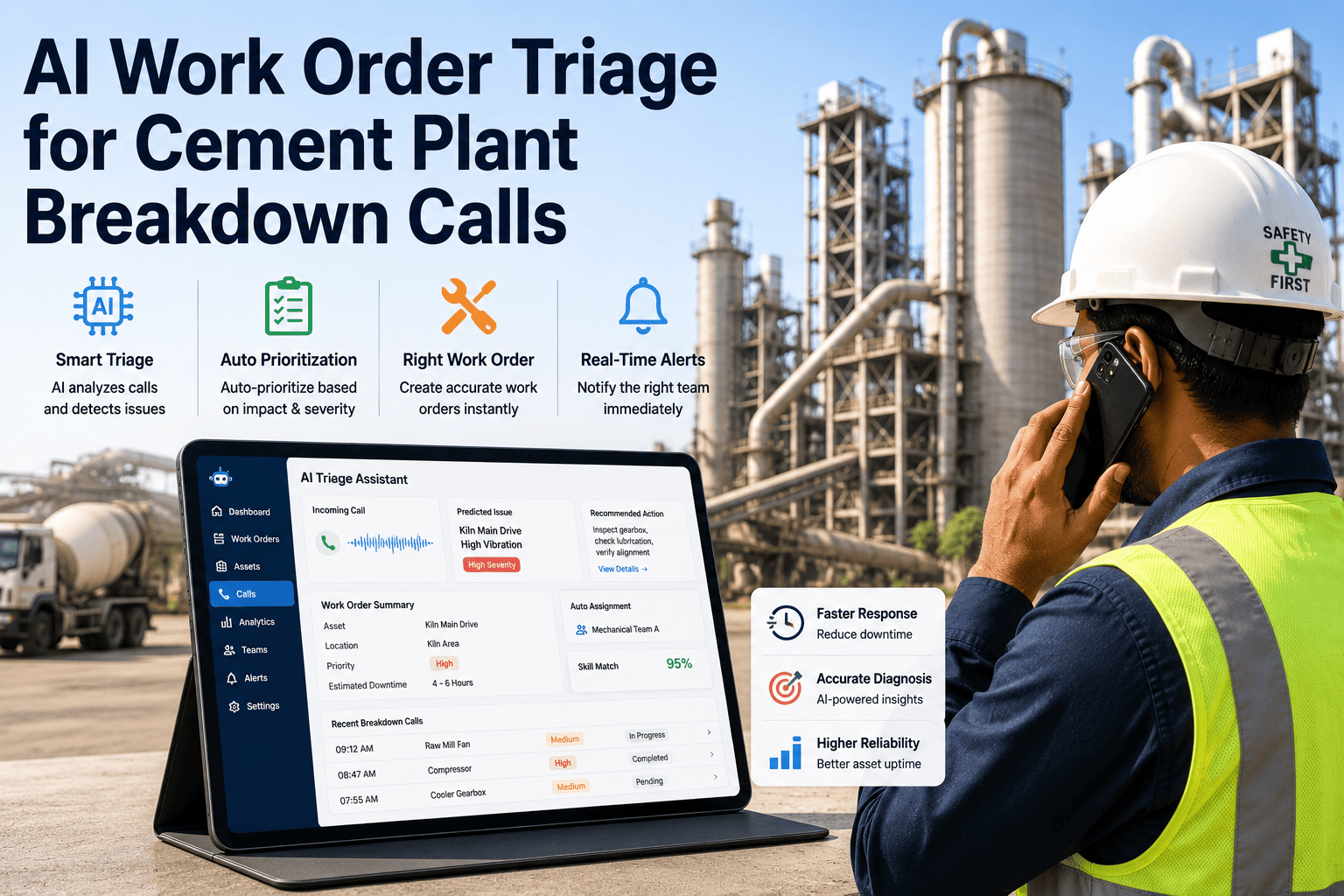
When a breakdown call comes in at a cement plant, the loudest voice on the radio usually wins — not the most critical asset. A jammed conveyor on a non-bottleneck line can pull a crew away from a kiln drive showing early warning signs, simply because someone called it in first. Triage by urgency of the phone call instead of actual risk is how minor issues get fixed fast while major ones quietly wait their turn. OxMaint's AI work order triage ranks every breakdown call by asset criticality, safety risk, and production impact the moment it's logged, and you can see it triage your next call for free.
Not Every Breakdown Call Deserves the Same Response Time
OxMaint's AI triage engine scores every incoming breakdown call against asset criticality, safety risk, and production impact — so the kiln drive gets the crew before the non-critical conveyor, every time.
From Call to Crew, Scored in Seconds
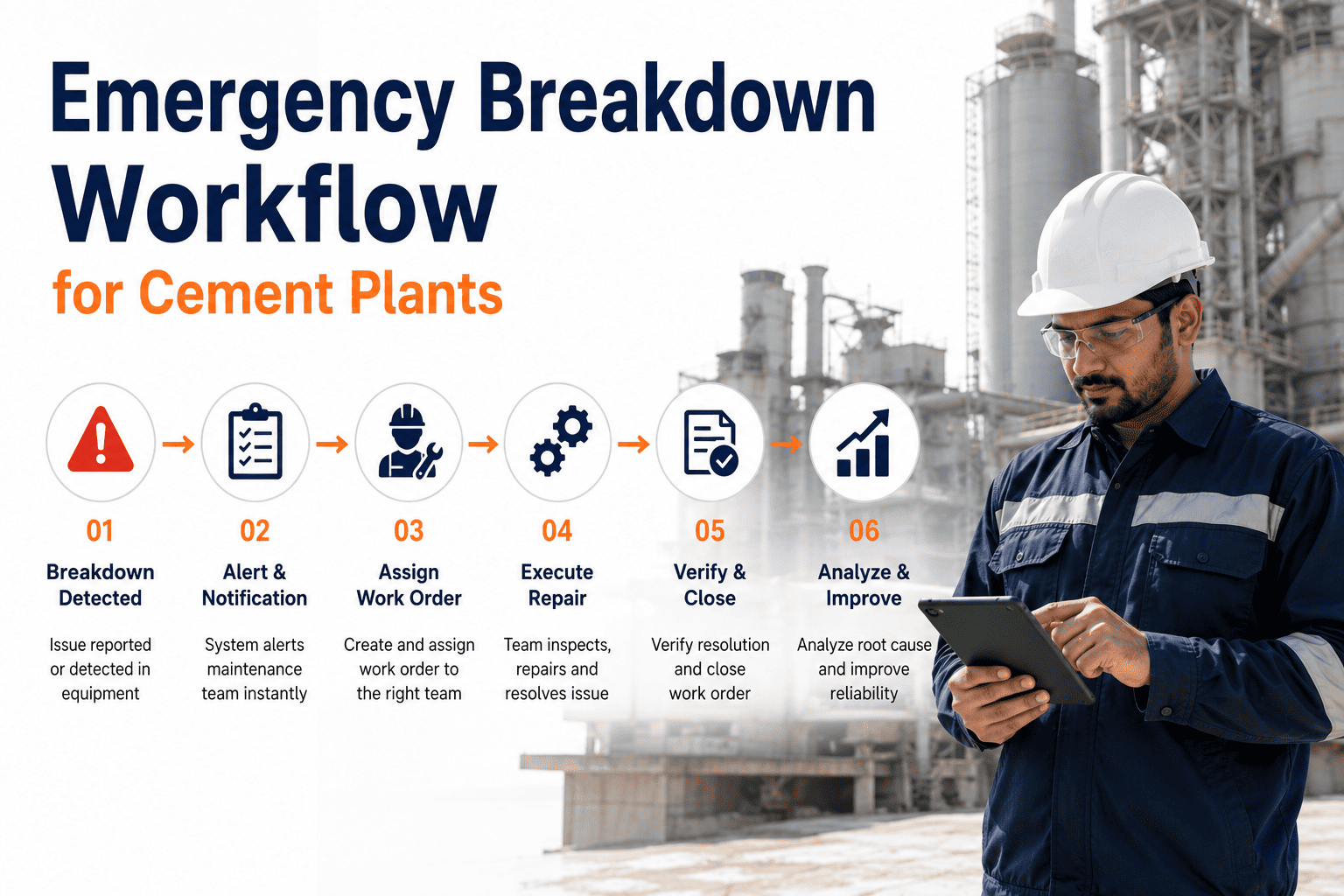
A breakdown is reported via mobile app, radio dispatch entry, or sensor alert — capturing asset, location, and a brief description of the symptom.
OxMaint checks the asset's criticality tier, current safety risk flags, and downstream production dependency to calculate an urgency score automatically.
The highest-scoring open call is surfaced first on the dispatcher's queue, with the right-skilled technician matched and notified instantly.
Let Asset Risk Decide Dispatch Order, Not Call Volume
OxMaint's AI triage removes the guesswork from breakdown response — ranking every call by what actually matters to plant uptime and safety.
Three Factors Behind Every Priority Ranking
Kiln drives, ID fans, and main mills carry a higher baseline weight than redundant or low-impact equipment, reflecting their role in overall plant uptime.
Reports involving potential energy release, confined space exposure, or structural risk are automatically escalated above routine mechanical complaints.
Calls tied to a bottleneck process step or a line currently running at full capacity score higher than issues on idle or buffered equipment.
Manual Radio Triage vs OxMaint AI Triage
| Dispatch Factor | Manual Radio Triage | OxMaint AI Triage |
|---|---|---|
| Priority Basis | Whoever calls in first or loudest gets attention | Scored by asset criticality, safety risk, and production impact |
| Technician Matching | Nearest available person, regardless of skill fit | Matched by required skill set and certification |
| Visibility | Dispatcher juggles calls from memory and notepads | Live ranked queue visible to dispatcher and supervisors |
| Escalation Trigger | Senior engineer pulled in only after things go wrong | Automatic escalation flag when risk score crosses threshold |
AI Work Order Triage — Common Questions
How does OxMaint know which assets are most critical to my plant?
Can AI triage override a dispatcher's judgment on a specific call?
How quickly is a new breakdown call scored after it's logged?
Does triage account for which technicians are actually qualified for the job?
Can safety-related breakdown calls be flagged for automatic escalation?
Stop Letting Call Order Decide What Gets Fixed First
OxMaint's AI triage ranks every breakdown call by what truly matters to your plant — so the right crew reaches the right asset before the risk grows.