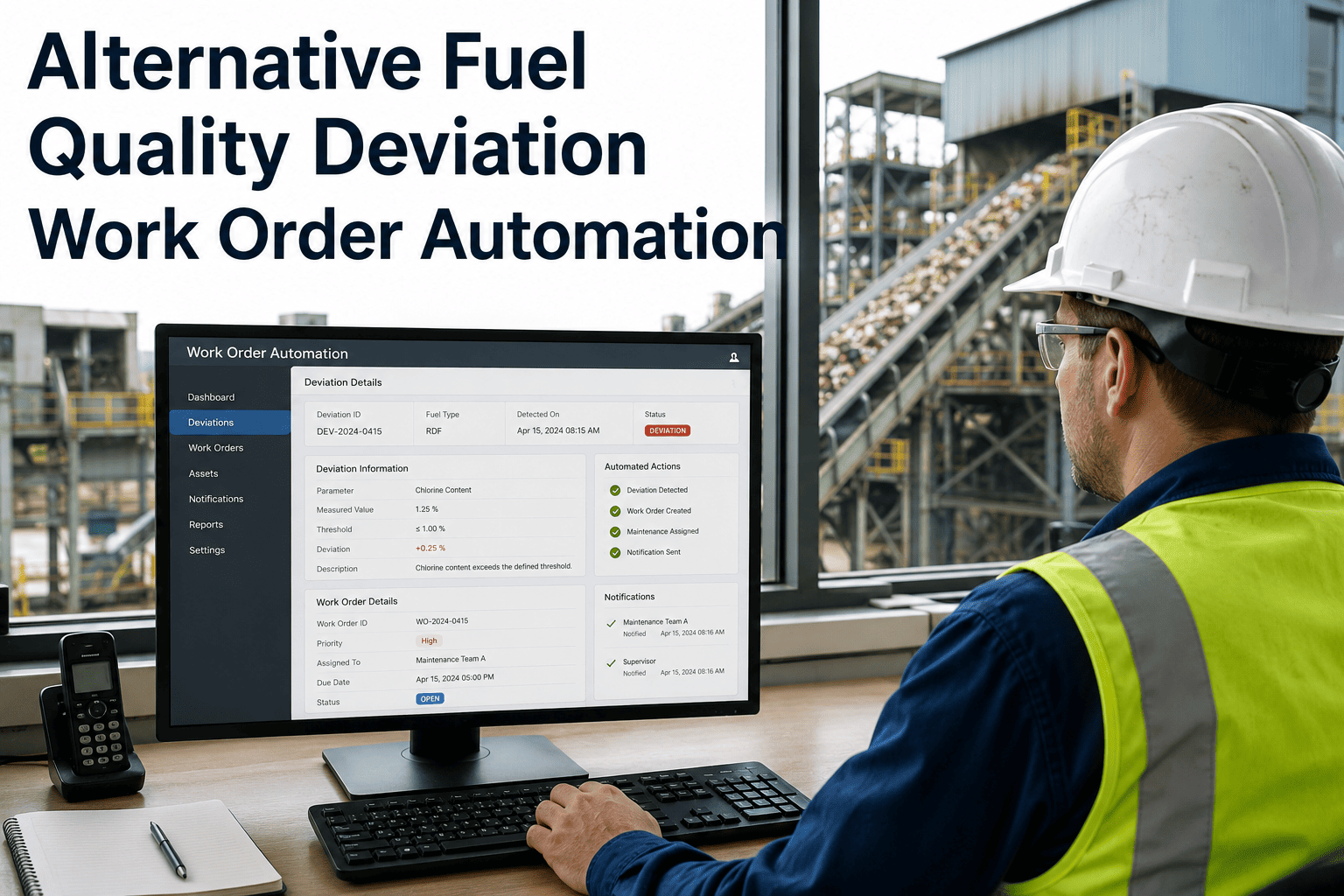
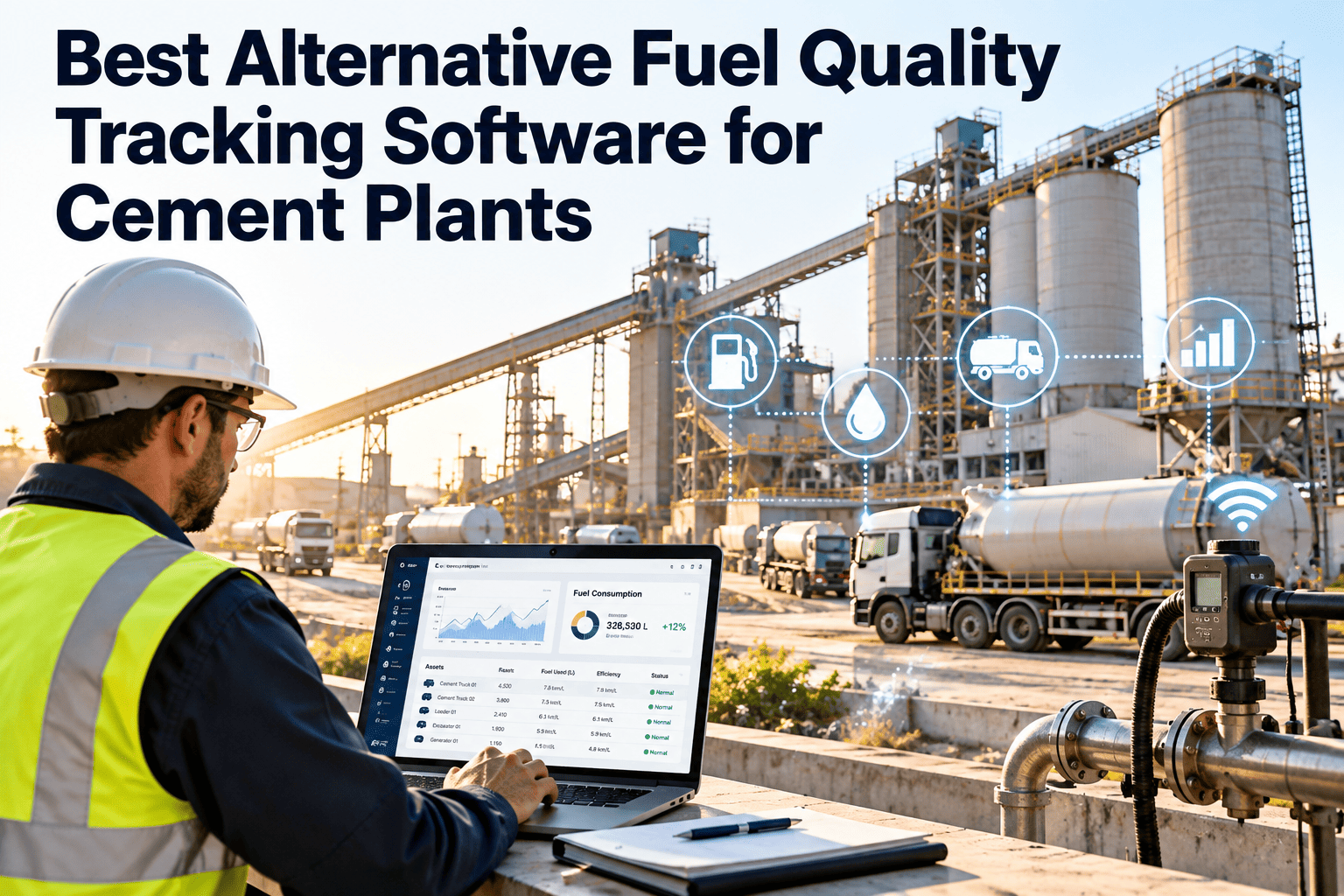
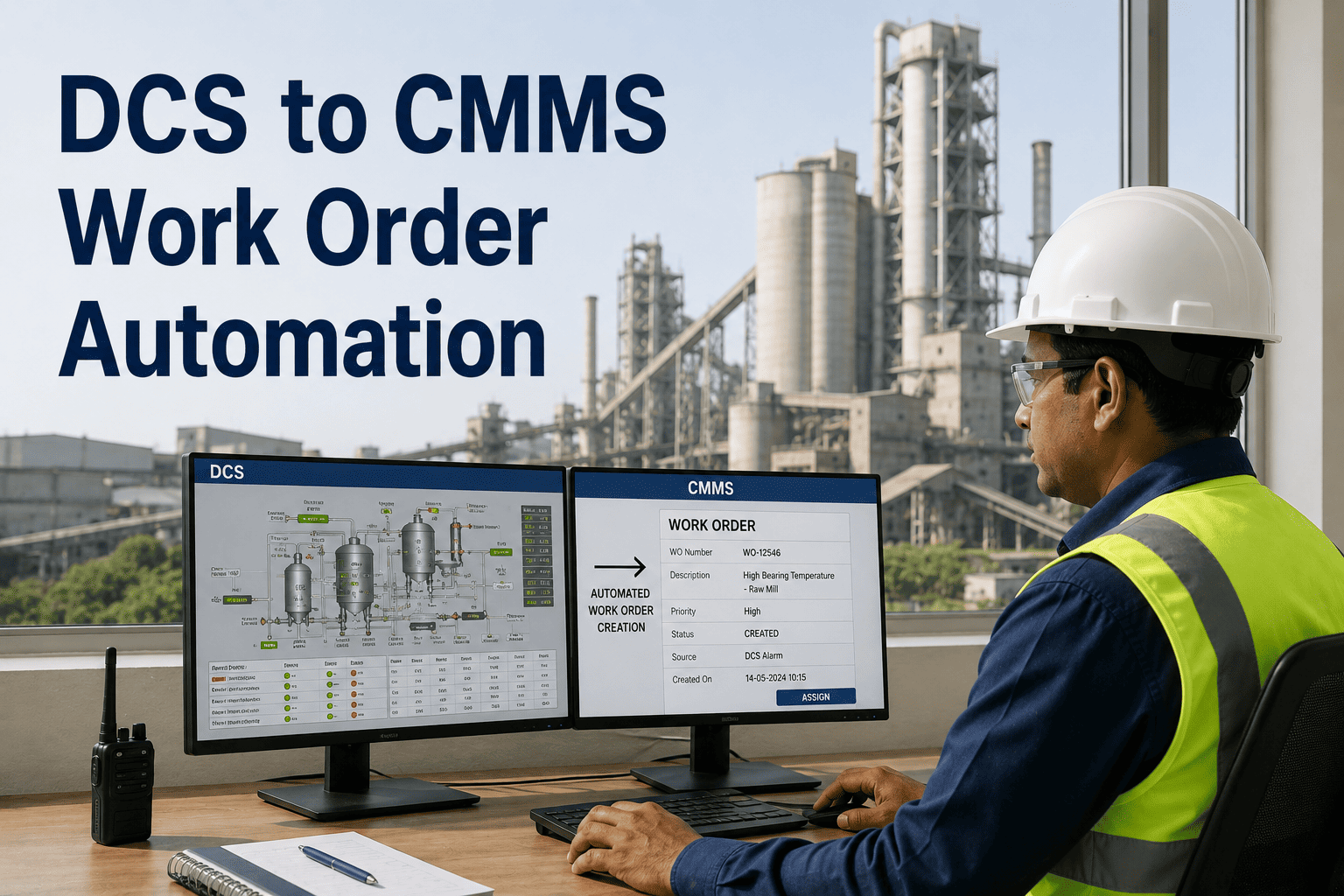
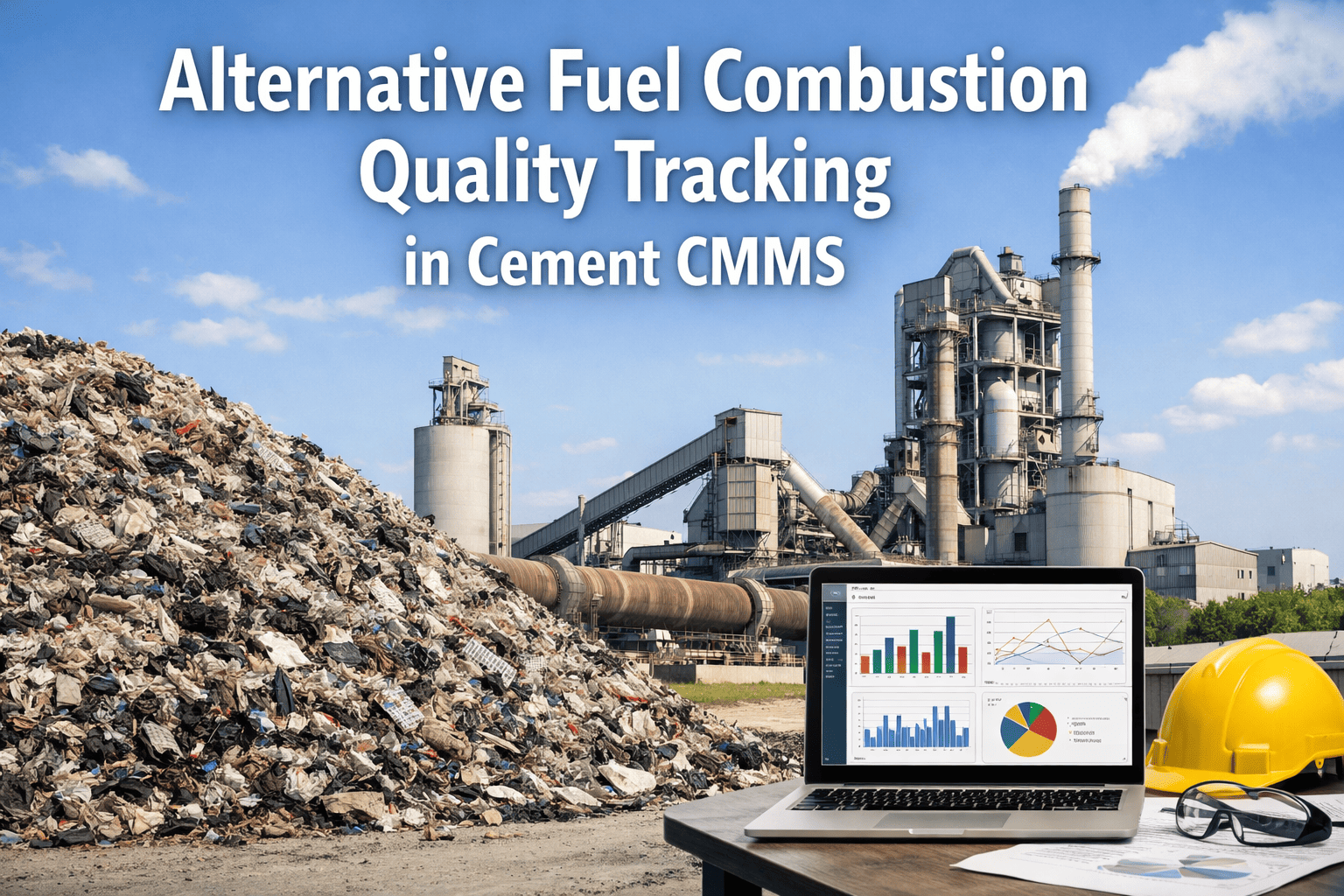
Every truckload of alternative fuel that reaches the gate carries a quiet decision: accept it as-is, hold it for review, or reject it outright. That decision used to live in a technician's head and a paper test sheet, with the result reaching the kiln team only after the load was already being dosed. A chlorine reading above the bypass threshold, a moisture spike that throws off calorific value, or a marginal heavy metals result all deserve the same thing, an automatic and documented action the moment the number comes back, which is exactly what runs behind Oxmaint.
What Gets Tested At The Gate
Six parameters drive almost every accept, hold, or reject decision on an incoming alternative fuel load. Each one needs its own threshold, because a batch can pass on calorific value and still fail on chlorine.
Calorific Value
10–15 MJ/kg target
The economic operating range for most alternative fuel streams. Below it, the kiln needs more tonnage to deliver the same heat.
Moisture
Fuel-specific limit
Excess moisture quietly lowers net calorific value, which is why moisture and calorific value are always checked together, never alone.
Chlorine
Below bypass threshold
A chlorine spike above the bypass activation point accelerates ring formation and preheater build-up if it isn't caught before dosing.
Sulfur
Balanced against alkalis
Sulfur has to stay in balance with alkali content, or the kiln risks the same build-up and corrosion issues chlorine causes.
Heavy Metals
Permit-defined limits
Tracked against the plant's environmental permit, with a marginal result usually triggering a hold rather than an outright pass or fail.
Particle Size
Feed system tolerance
Oversized particles damage dosing screws and feed gates long before anyone notices a combustion problem.
Six parameters, one decision, made instantly
Oxmaint logs every gate reading against the qualified range for that fuel type and acts the moment a number falls outside it.
The Decision, Three Ways
Accept
Every reading falls within the qualified range for that fuel type. The batch is logged automatically and released to the feed system with no manual sign-off needed.
Hold
A reading is marginal or borderline against its threshold. The batch is paused and a review work order opens automatically, routed to whoever owns that parameter.
Reject
A reading exceeds a hard limit, such as a chlorine spike past the bypass threshold. The batch is blocked from the feed system and the supplier is flagged automatically.
Manual Review vs. Automatic Trigger
Manual Review
4–8 hours
Typical lag between a lab result coming back and a corrective action reaching the kiln team, when the result has to travel through paper or email.
Automated Trigger
Under 5 minutes
Time from a reading crossing its threshold to a work order being created, assigned, and visible to everyone who needs to act on it.
Deviation Type & Automatic Action
See your own quality gate rules running live
A short walkthrough maps your current accept, hold, and reject thresholds onto automated work order triggers for every AFR stream you receive.
Frequently Asked Questions
What counts as a deviation versus normal batch-to-batch variation?
Normal variation stays inside the qualified range set for that specific fuel type and supplier, while a deviation is a reading that crosses a defined threshold, whether that's a hard limit like a chlorine cap or a softer band that triggers a hold for review. The thresholds themselves are configured per fuel type, not applied as one blanket rule across every stream.
How fast does a hold work order actually get created after a bad reading?
As soon as the reading is entered or received from a connected analyzer, the threshold check runs immediately and the work order is created within minutes, not at the end of a shift. The assigned reviewer sees the batch, the reading, and the threshold it crossed in the same notification.
Does this need a new lab system, or can it use our existing test equipment?
It runs on top of whatever rapid and detailed testing you already do at the gate, whether that's a handheld analyzer or a full lab workflow. Readings are entered or imported into Oxmaint and checked against your thresholds, so there's no need to replace existing test equipment. See how data entry works at
app.oxmaint.ai.
What happens to a batch that's placed on hold, does it just sit there?
A held batch is blocked from the feed system until the review work order is closed, with a clear owner and a clear next step attached to it, rather than sitting in an ambiguous state. Once the reviewer confirms a path forward, whether that's re-testing, blending, or rejection, the batch status updates automatically.
Can the rules be different for each alternative fuel type we receive?
Yes, TDF, RDF, and biomass each get their own thresholds for calorific value, moisture, chlorine, and the other parameters that matter for that fuel, since a chlorine level that's normal for one stream might be a reject for another. Book a short call at
calendly.com/oxmaintapp/30min to map your specific fuel streams.
Turn every gate reading into an instant, documented decision
Accept, hold, or reject every AFR batch automatically, with the right person notified the moment a reading crosses its threshold.