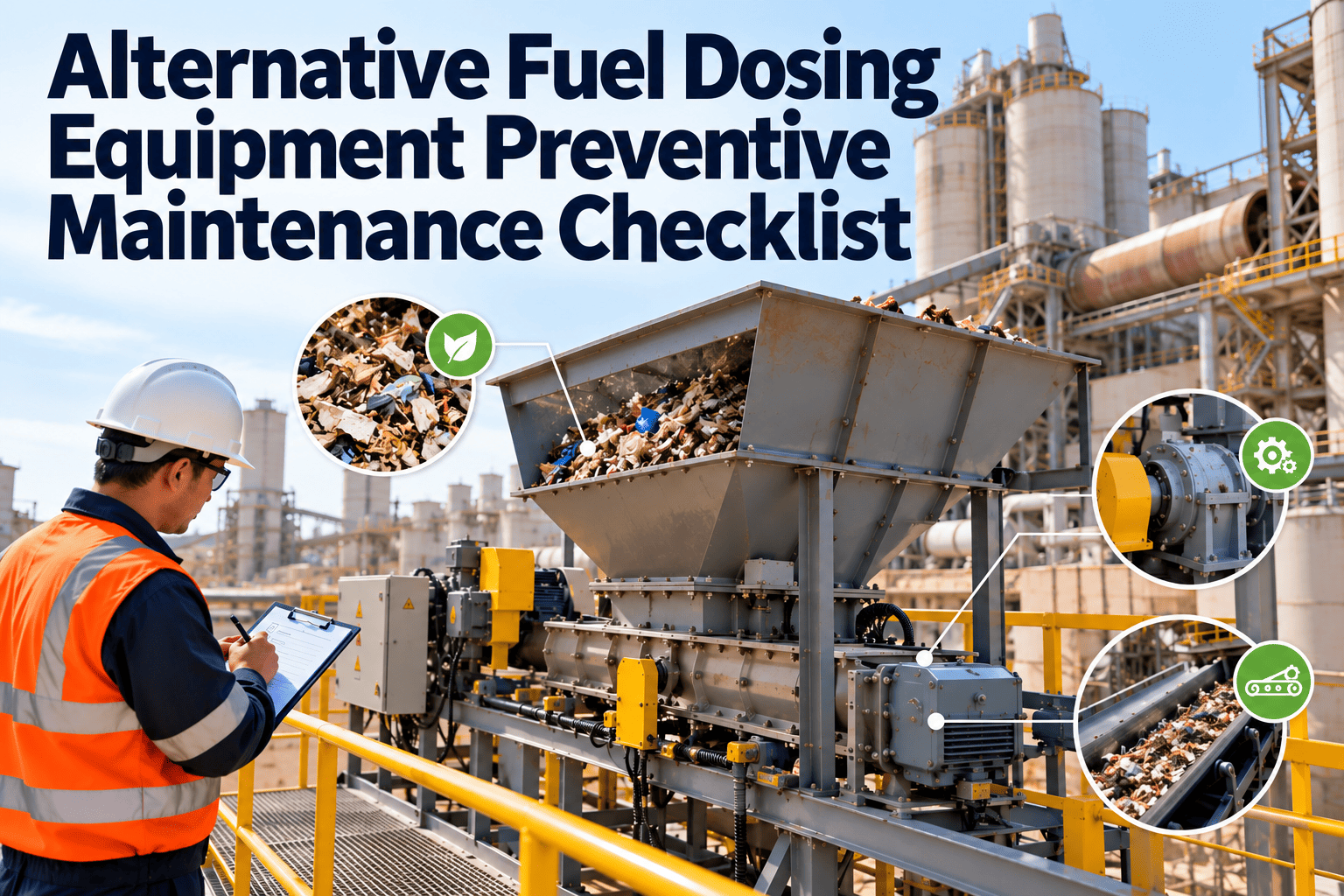
Alternative fuel and raw material storage is one of the quieter fire risks in a cement plant. Shredded refuse derived fuel, biomass, tyre chips and sludge can heat internally for days before smoke appears, and a small ignition source near dry, fluffy material can spread quickly. Preventing that starts with regular field checks, clear alarm limits and defined escalation steps. This checklist supports that routine, and maintenance management software helps keep inspections, readings and follow-up work orders in one traceable record.
Alternative Fuels and Safety
Alternative Fuel Storage Fire Risk Inspection Checklist
Structured field checks, condition indicators, maintenance actions and escalation criteria for AFR storage areas in cement plants.
Level 1 NormalReadings stable. Routine rounds continue.
Level 2 WatchRising trend. Increase checks and turn the pile.
Level 3 AlarmLimit exceeded. Relocate material, notify supervisor.
Level 4 EmergencySmoke or flame. Fire response and evacuation plan.
Understand the Risk
How AFR Storage Fires Start
Local fire codes, insurer requirements and your own site risk assessment set the final limits. Use this checklist to structure inspections against them.
| Ignition path | What to look for | Typical control |
|---|---|---|
| Self-heating | Warm spots, steam, sweet or acrid smell in stored biomass, sludge or RDF | Temperature probes, FIFO rotation, limited pile height |
| Hot work and sparks | Welding or cutting near stored material, damaged conveyors | Hot work permits, fire watch, cleared work zone |
| Electrical faults | Overheated cables, motors, lighting and panels in dusty areas | Thermal imaging, housekeeping, cable inspection |
| Mobile equipment | Hot exhausts and brakes on loaders, forklifts and trucks | Equipment checks, designated routes |
| Foreign materials | Batteries, gas cylinders or aerosols mixed into loads | Incoming inspection, rejection procedure |
Inspection frequency key
SEvery shift
DDaily
WWeekly
MMonthly or annual
Section 01
Receiving and Incoming Material
Incoming loads inspected before tipping for smoke, heat, steam, odour and foreign items such as batteries, cylinders or aerosols.
Escalate if: a load is warm or smouldering. Isolate it in the designated area and notify the supervisor.
Supplier and material type recorded with delivery time, so any hot spot can be traced back to a source and a batch.
Escalate if: repeated hot loads come from one supplier. Raise a supplier review.
Moisture, particle size and contamination noted against acceptance criteria. Fine, dry or wet organic material each carry a different heating risk.
Escalate if: material is outside specification. Hold it and record the rejection.
Separate zones confirmed for hot, suspect or rejected material, kept clear and away from stored fuel.
Escalate if: the zone is blocked or in use. Clear it before further unloading.
Section 02
Storage Layout and Housekeeping
Pile height, width and spacing compared with the site limit, with clear firebreaks and access lanes for equipment and fire crews.
Escalate if: piles exceed limits. Redistribute stock and record the correction.
Stock rotation confirmed as first in, first out. Old material left at the back of a bay is where self-heating usually develops.
Escalate if: material has been stored beyond the site age limit. Prioritise its use.
Dust and loose fuel cleared from structures, cable trays, motors and conveyors. Accumulated fine material can ignite and spread fire.
Escalate if: build-up returns quickly. Raise a corrective job for the source.
Ignition sources controlled: smoking rules, hot work permits, unauthorised heaters and idle vehicles kept away from storage.
Escalate if: hot work is found without a permit. Stop work immediately.
Section 03
Temperature Monitoring and Early Detection
The aim is to catch heating before flame. Trend readings rather than reacting to a single number.
Temperature probe or thermal camera readings taken at defined pile locations and depths, recorded against the same points each round.
Escalate if: a reading rises steadily or passes the site alarm value. Move to the next alert level.
Fixed detection tested where installed: heat, smoke, flame, or carbon monoxide detectors and alarm panels.
Escalate if: a device fails its test. Raise a work order and add a fire watch until repaired.
Visual and smell walk-down for steam, haze, discolouration or acrid odour, especially after rain or a hot spell.
Escalate if: any of these are present. Investigate immediately with thermal imaging.
Electrical equipment in the storage area scanned with a thermal camera for hot connections, motors and panels.
Escalate if: a component runs hotter than similar equipment. Plan a repair before the next shift.
Make Fire Risk Rounds Traceable
Oxmaint lets crews complete storage inspections on mobile, log readings against each area and raise work orders the moment a check fails.
Section 04
Fire Protection and Emergency Readiness
Extinguishers, hydrants, monitors and deluge or sprinkler systems inspected for condition, pressure and unobstructed access.
Escalate if: a system is impaired. Notify safety and restore before storing more fuel.
Water supply, pumps and drainage confirmed available. Firewater should have a place to go, so runoff does not create a second problem.
Escalate if: pumps fail a test. Treat as a critical corrective job.
Emergency plan, contact list and muster points current. Crews should know how to isolate feed systems and stop conveyors.
Escalate if: contacts or routes are out of date. Update and reissue.
Fire drill or scenario exercise recorded, including lessons and open actions.
Escalate if: actions remain open. Assign owners and due dates.
Section 05
Feed Systems, Conveyors and Maintenance Actions
Reclaimers, walking floors, screws and conveyors checked for jams, friction points, hot bearings and material build-up.
Escalate if: a bearing or roller runs hot. Stop the equipment and clear material.
Magnets, metal detectors and screening devices confirmed working to keep metal and sparks out of the system.
Escalate if: a device is bypassed or faulty. Repair before the next delivery.
Open findings linked to work orders with owners, due dates and status, reviewed at the weekly safety meeting.
Escalate if: a fire-related job is overdue. Move it to the top of the backlog.
Measure It
AFR Fire Risk KPIs
| KPI | How to measure | Direction |
|---|---|---|
| Round completion | Inspections completed against schedule | Aim for complete |
| Temperature alarms | Readings above alert level by area | Trending down |
| Detector test pass rate | Devices passing weekly tests | Aim for complete |
| Fire action closure time | Days from finding to close-out | Trending down |
| Stock age | Days material has been stored | Within site limit |
Oxmaint capabilities for AFR safety workflows
- Mobile inspection checklists with readings and notes.
- Work orders for failed detectors, hot equipment and housekeeping issues.
- Asset records for detectors, pumps and fire systems with test history.
- Preventive maintenance schedules and compliance records for audits.
Frequently Asked Questions
How often should AFR storage be inspected?
Most sites walk storage every shift and log temperatures daily. Your risk assessment sets the final interval.
What are early signs of self-heating in stored fuel?
Steam, haze, unusual odour and rising probe readings. Trend the data rather than waiting for smoke.
Which AFR materials carry higher fire risk?
Dry fine fractions, biomass and mixed waste often need closer control. Assess each material on its own.
Can a CMMS track fire protection tests?
Yes. Schedule tests and keep records against each asset. Try Oxmaint to set it up.
Can this checklist run on mobile?
Yes. Book a demo to see mobile rounds with photos and alerts.
Catch Heat Before It Becomes Fire
Use Oxmaint to schedule storage inspections, record condition readings and track every fire protection action to close-out.