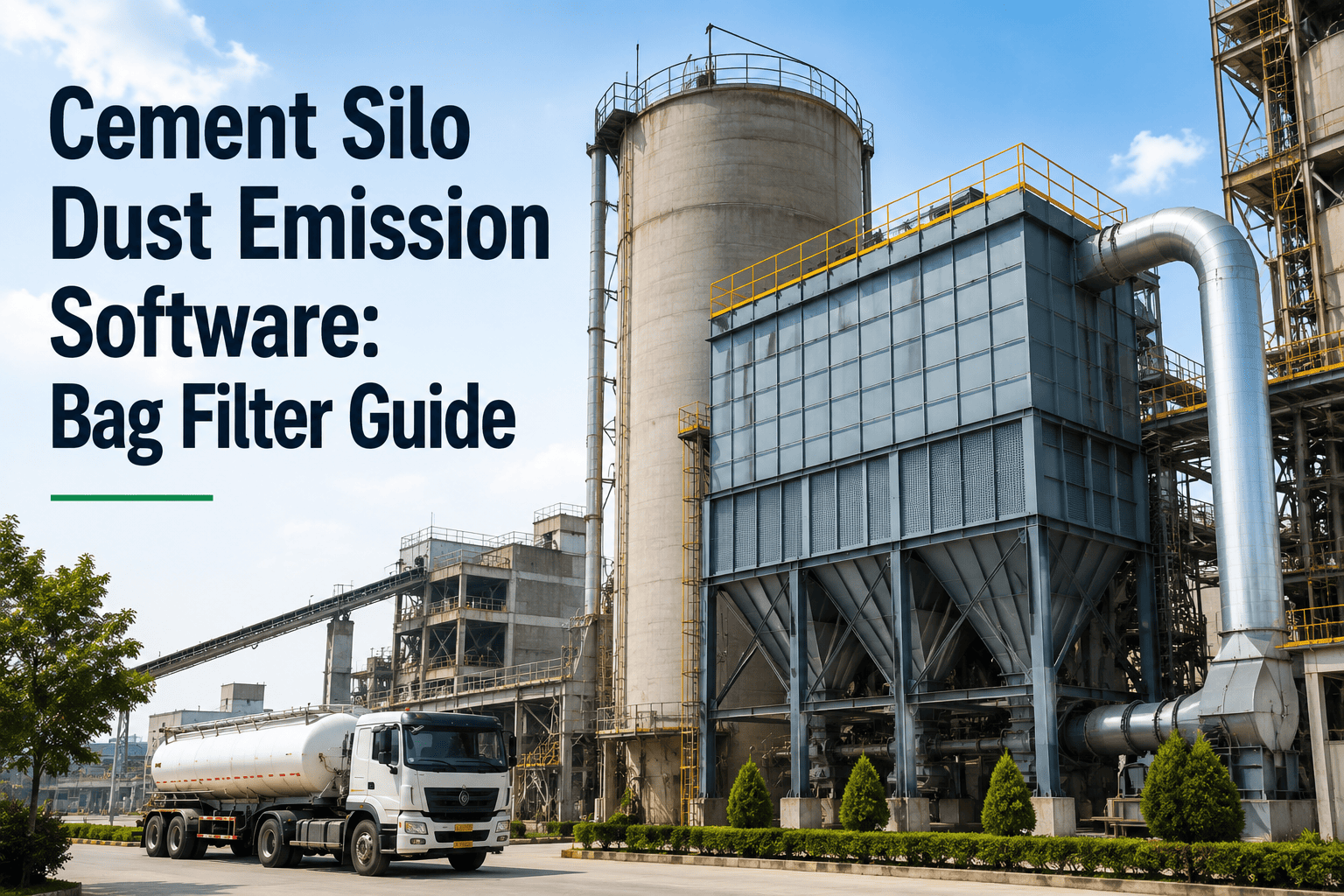
Baghouse failure in cement operations rarely announces itself — differential pressure drift, blinded bags, and cage corrosion accumulate over weeks before emission exceedances or fan trip events force an unplanned shutdown. A structured inspection program covering DP logging, bag condition, pulse-jet performance, and fan mechanical health reduces avoidable downtime and keeps operations inside regulatory limits. Book a demo to see how Oxmaint automates DP logging, inspection scheduling, and emission compliance reporting across your plant's dust control assets.
This checklist covers five inspection categories for cement plant bag filters and dust collectors: daily differential pressure and visual rounds, weekly pulse-jet and cleaning system verification, monthly bag and cage condition assessment, quarterly fan and drive mechanical inspection, and emission compliance documentation. Use it as a standalone PM template or import it into Oxmaint as a recurring work order with DP logging fields tied to your asset condition records.
Daily Inspection Checklist — Differential Pressure and Operational Status
Daily rounds establish the DP baseline and catch early-stage blinding, bag failures, and hopper bridging before they compound. Readings outside the normal operating band of 100 to 200 mm W.C. on a clean-pulse baghouse require same-shift investigation, not a next-day response.
Weekly Inspection Checklist — Pulse-Jet Cleaning System
Pulse-jet cleaning system integrity determines whether DP remains stable between major overhauls. Diaphragm valve failure, solenoid faults, and manifold moisture accumulation are the primary cleaning system failure modes — all detectable on a weekly inspection cycle before they degrade bag cleaning efficiency.
Automate DP Logging and Inspection Scheduling in Oxmaint
Oxmaint records DP readings against each baghouse asset record, triggers work orders on threshold breach, and generates emission compliance documentation automatically. Book a demo to see DP logging and emission compliance tracking for your dust control assets.
Monthly Inspection Checklist — Bag and Cage Condition
Internal access inspection is the only reliable method to assess bag fabric condition, cage wire corrosion, and tubesheet seating integrity before failures progress to emission exceedances. Entry requires confined space permit, lock-out/tag-out on fan and pulse system, and residual gas cooling to safe entry temperature — ensure these prerequisites are in place before opening access doors.
Quarterly Inspection Checklist — Fan, Drive, and Mechanical Components
Fan mechanical condition is the second most common cause of unplanned baghouse outage after bag failure. Impeller erosion from abrasive dust, bearing wear, and drive belt or coupling deterioration develop gradually and are detectable well in advance of failure with structured quarterly inspection and vibration trending.
Emission Compliance Checklist — Regulatory Documentation
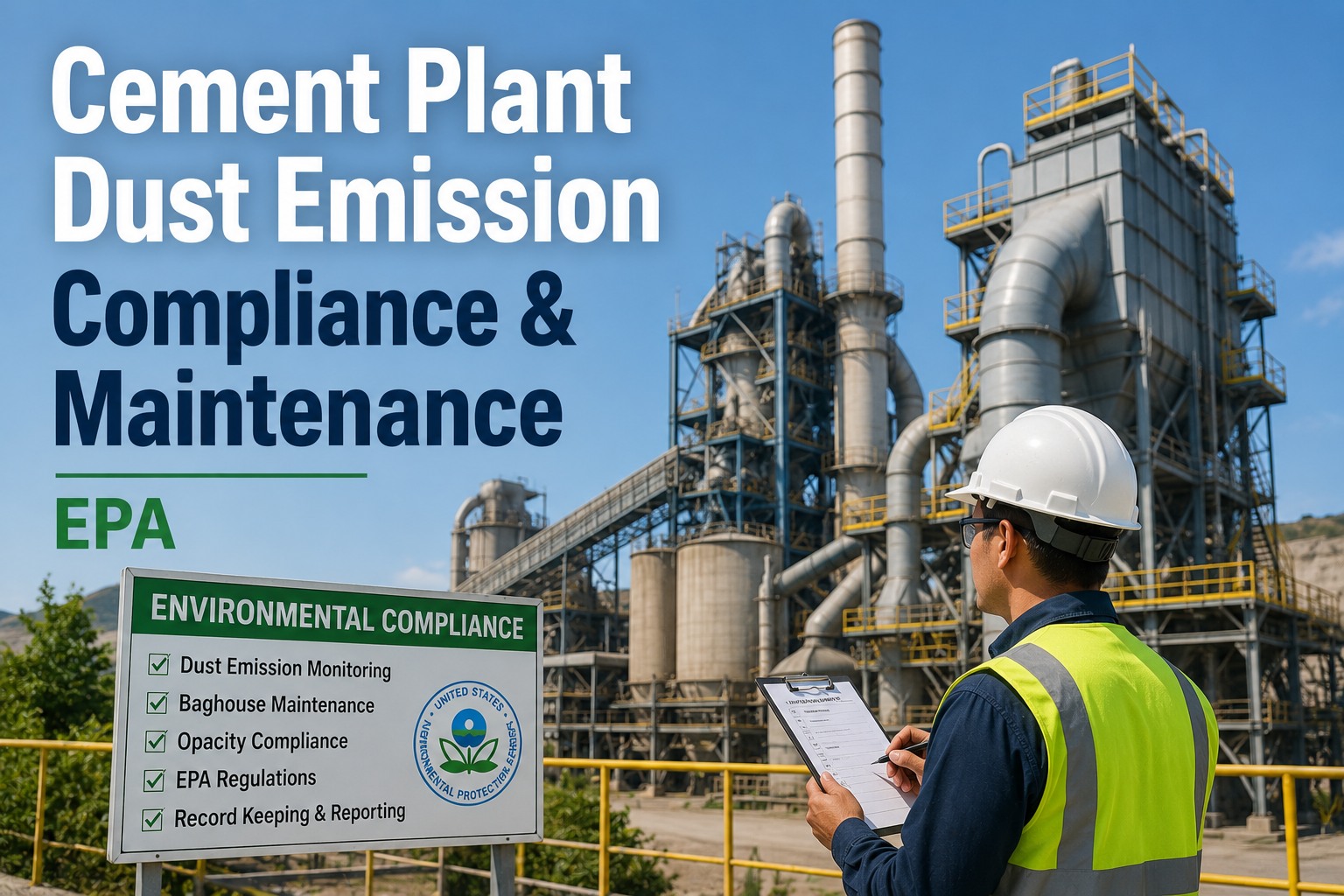
Emission compliance documentation for baghouse assets requires systematic record-keeping that connects DP readings, bag condition findings, and corrective actions into an auditable maintenance history. OSHA PSM, EPA MACT, and EU IED permit conditions all specify documentation retention periods and corrective action response windows — the checklist below establishes the minimum documentation standard.
DP Trend Reference: Fault Diagnosis by Differential Pressure Pattern
Differential pressure pattern is the primary diagnostic indicator for baghouse condition. The table below maps DP behavior to the most probable fault cause — use it to prioritise investigation scope before opening access doors.
| DP Pattern | Most Probable Cause | Recommended Action |
|---|---|---|
| Steadily rising DP over 2 to 4 weeks | Progressive bag blinding — cake not fully removed by pulse cycle | Increase pulse frequency, check air pressure and solenoid function. Monthly inspection to assess bag condition. |
| Sudden DP drop to near-zero | Major bag failure — multiple bags or full row failure. Unfiltered gas bypass to stack. | Immediate CEMS or opacity check. Isolate compartment. Internal inspection and bag replacement before restart. |
| DP stable but opacity exceedance observed | Single bag collar displacement or small bag pinhole — insufficient to register on DP but visible on opacity monitor | Clean-air plenum inspection to locate dust source. Replace affected bag at next maintenance window. |
| High DP unresponsive to increased pulse frequency | Moisture-hardened cake, chemical blinding (calcium sulphate deposit), or bag fabric collapse under negative pressure | Internal inspection required. Assess cake character — powdery vs hardened. Review gas temperature and dew point history. |
| DP cycling erratically across full normal range | Hopper full or discharge system failed — dust re-entrainment onto bags during each cleaning cycle | Check hopper level and discharge equipment immediately. Clear hopper before assessing bag condition. |
| Compartment DP significantly higher than adjacent compartments | Compartment isolation valve fault or uneven bag blinding within the compartment group | Verify isolation valve operation. Compare pulse cycle counts across compartments — identify rows with missed pulses. |
Oxmaint Compliance Coverage by Region
| Region | Emission Frameworks | Oxmaint Documentation Coverage |
|---|---|---|
| USA / Canada | EPA MACT, Title V, OSHA PSM, NSPS | Timestamped DP logs, CEMS exceedance records, corrective action work order linkage, stack test filing |
| UK / Germany | EU IED, BREF BAT, BImSchG, BetrSichV | BAT compliance inspection records, emission monitoring documentation, TUV-compatible maintenance audit trails |
| UAE / Saudi Arabia | SASO, Civil Defence, UAE Federal Law No. 24 | Emission control inspection records, asset condition documentation for Civil Defence permit compliance |
| Australia | NGER, Safeguard Mechanism, state EPL conditions | Environmental Protection Licence maintenance records, NGER-compatible emission performance documentation |
DP Logging, Emission Records, and Corrective Actions — All in One Platform.
Oxmaint links every inspection finding to the asset record, every DP exceedance to a work order, and every corrective action to the compliance documentation required under your permit conditions.
Key Performance Indicators: Baghouse Maintenance Program Health
Frequently Asked Questions
Continue Reading
Run This Checklist as a Live Work Order in Oxmaint
Import this bag filter inspection checklist into Oxmaint as a recurring PM work order — daily, weekly, monthly, and quarterly tiers scheduled automatically. DP readings log directly to the asset condition record. Emission compliance documentation generated without post-processing.