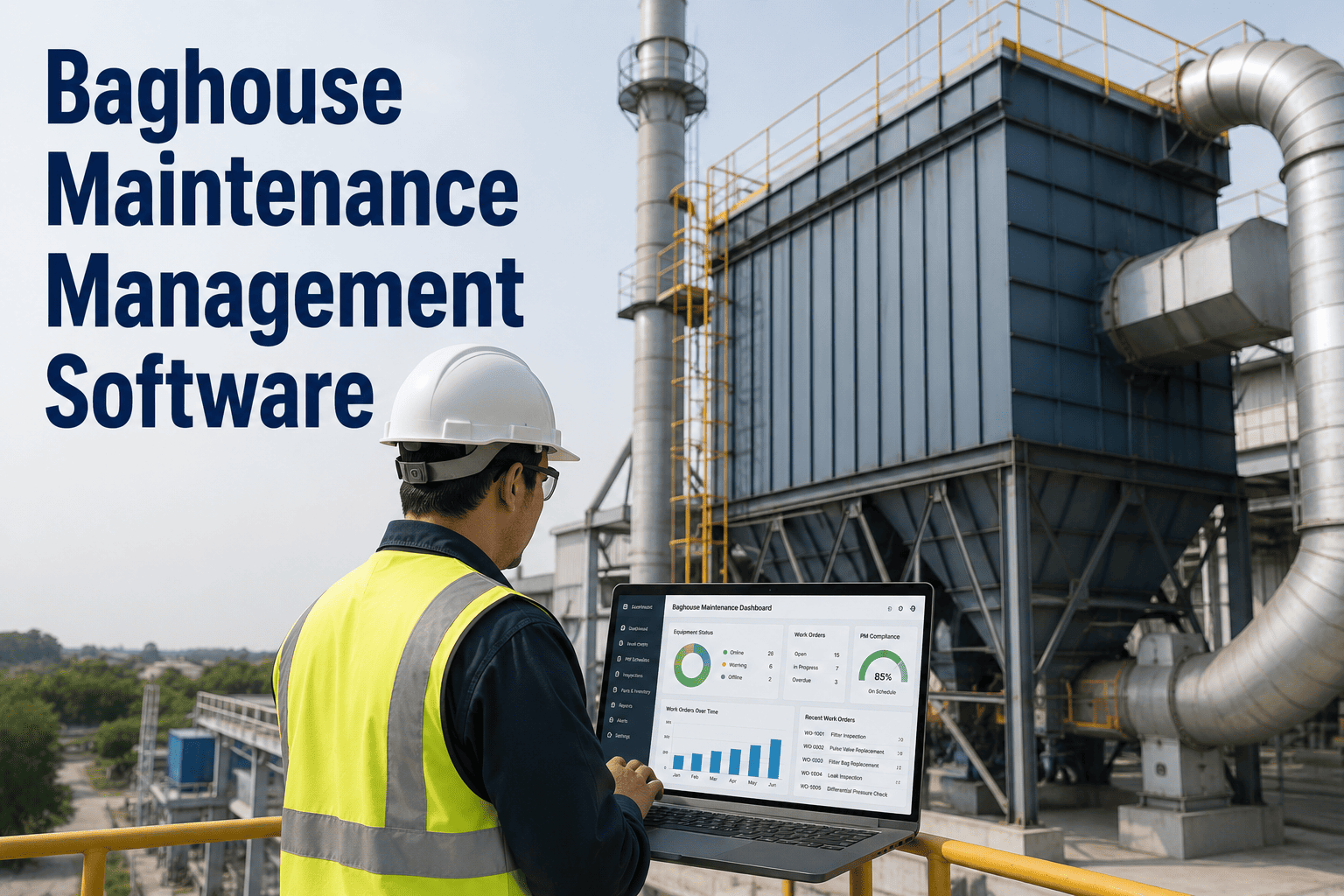
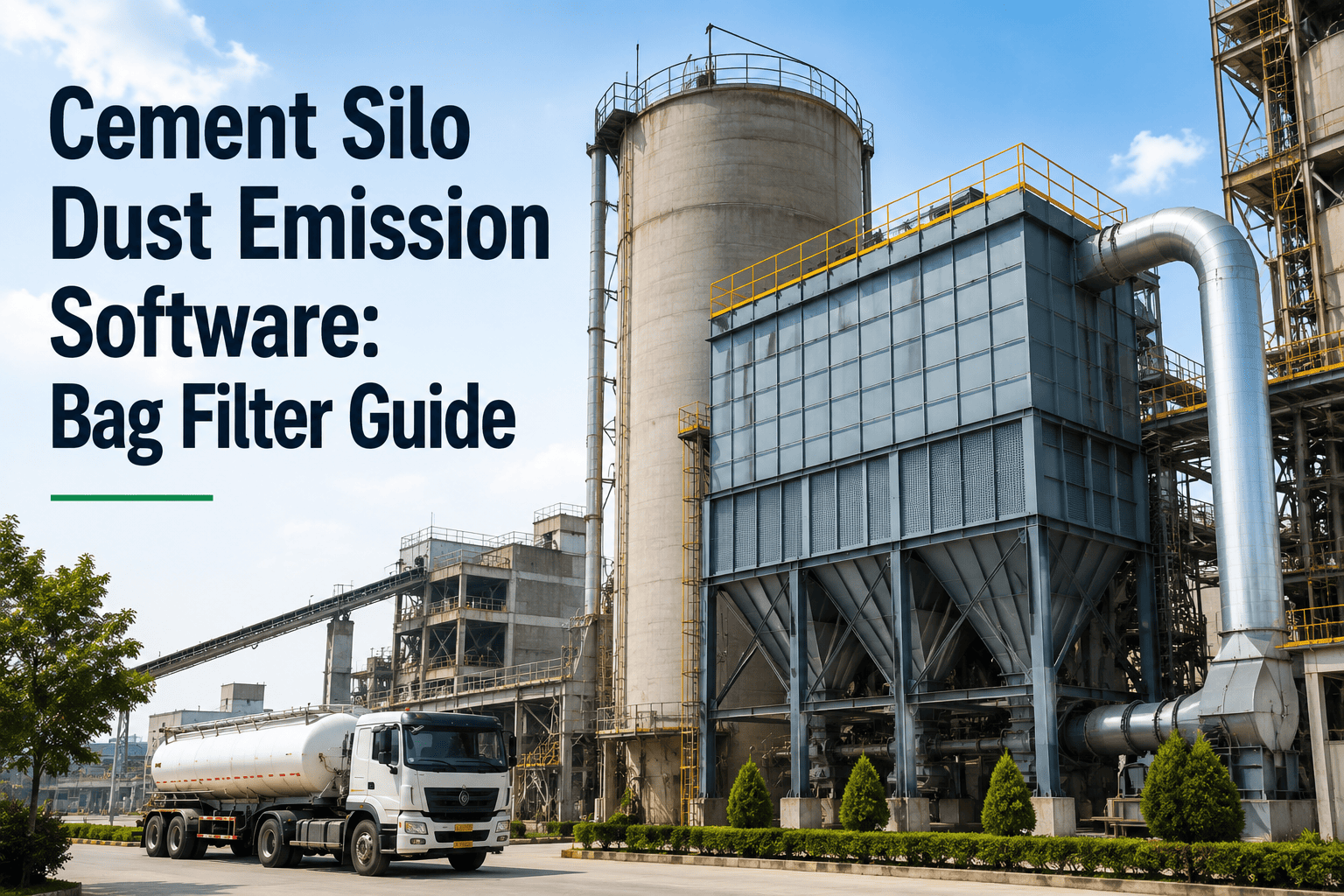
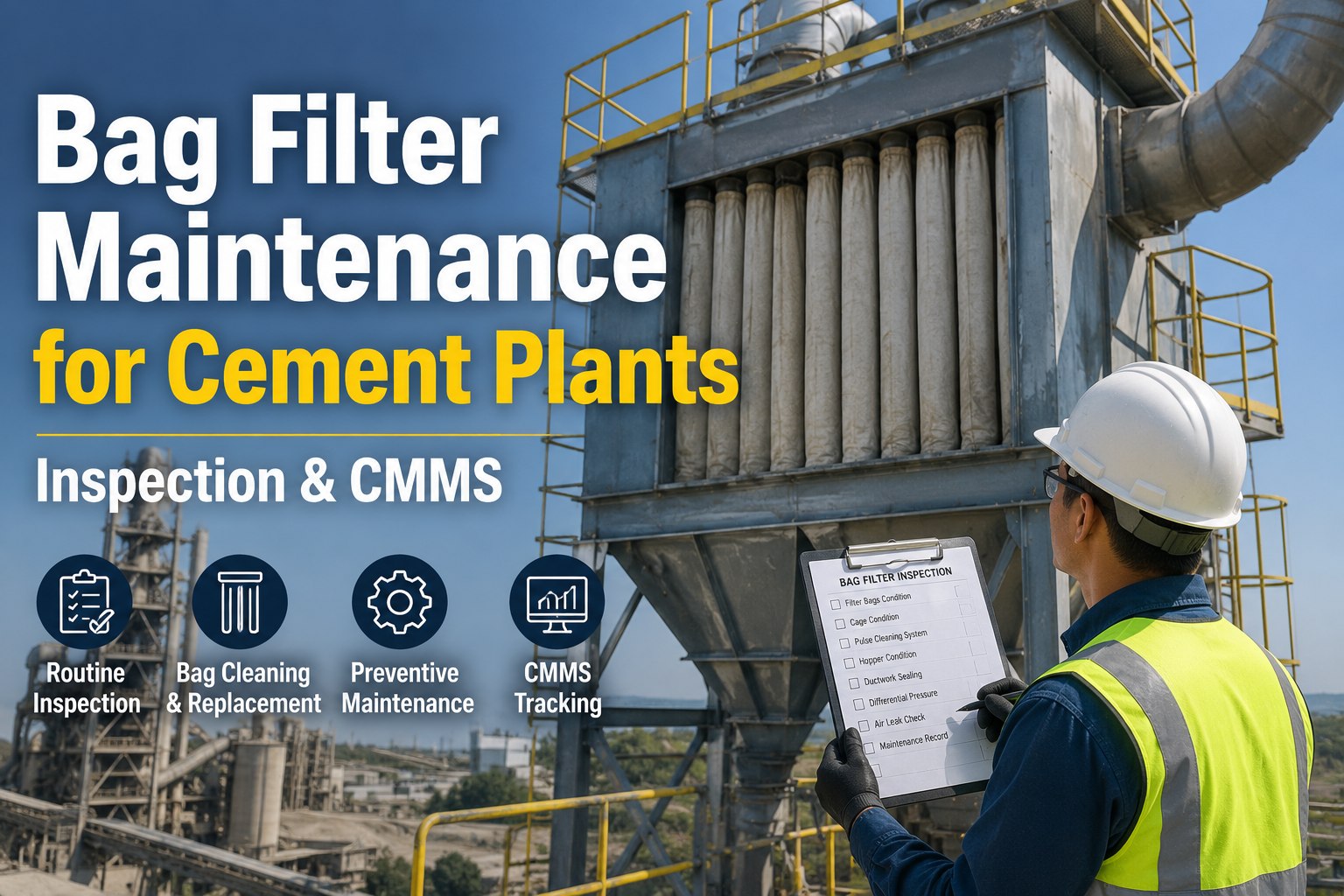
Baghouse dust collectors in cement plants carry dual responsibility: environmental compliance and process protection. A filter bag failure or missed inspection does not just create a dust emission event — it can trigger a regulatory notice, a production shutdown, and a multi-day recovery that costs far more than the maintenance it would have taken to prevent it. Managing baghouse health across a cement plant requires more than a paper inspection log. It requires a system that schedules inspections, tracks differential pressure readings, manages filter bag change histories, and stores compliance evidence automatically. Sign Up Free on Oxmaint to put structured baghouse maintenance and compliance documentation in one platform your maintenance and environmental teams both trust.
Manage Baghouse Compliance and Maintenance from One Platform
Oxmaint gives cement maintenance teams inspection scheduling, differential pressure tracking, filter bag change records, and compliance evidence storage — so nothing falls through the cracks before an audit or an emission event.
Why Baghouse Maintenance Fails in Most Cement Plants
Baghouse failures are almost always preceded by a maintenance management gap, not a sudden unforeseen event. Understanding which gaps are most common helps maintenance managers target improvements where they matter most.
No Systematic Differential Pressure Trend Tracking
Rising delta-P across compartments signals filter blinding and reduced cleaning effectiveness weeks before bags fail — but only if readings are trended over time. Point-in-time checks without historical comparison miss the progression entirely.
Filter Bag Change History in Spreadsheets or Paper
When bag change dates, compartment maps, and inspection findings are spread across paper logs and individual spreadsheets, no one has a reliable answer to which compartment is overdue for replacement — until a failure provides the answer.
Compliance Evidence Not Centralized
Environmental audits require inspection records, corrective action evidence, and PM completion documentation. When these exist in disparate systems, audit preparation becomes a days-long data collection exercise — with gaps that create compliance risk.
Cleaning Cycle Performance Not Monitored
Pulse-jet or shaker cleaning system faults — stuck valves, pressure regulator failures, timer malfunctions — are rarely caught before bags begin blinding. Logging cleaning system performance as part of regular inspection creates the detection trail that prevents this progression.
What a Complete Baghouse Maintenance Management System Covers
Oxmaint structures baghouse management across three integrated layers: equipment health monitoring, planned maintenance execution, and compliance documentation — all linked to the same asset records so every data point builds toward both operational and regulatory objectives.
Equipment Health
Differential pressure trending by compartment
Outlet opacity reading log
Cleaning system performance records
Bag condition ratings at inspection
Inlet temperature and humidity tracking
Planned Maintenance
Scheduled compartment inspections by frequency
Filter bag change work orders by compartment and date
Cleaning valve and timer PM schedules
Hopper inspection and discharge equipment PM
Automated work order generation from alert thresholds
Compliance Documentation
Inspection completion records with timestamps
Corrective action work orders and closure evidence
Filter bag change documentation with materials used
PM compliance rate reporting for regulatory review
Exportable audit trail for environmental submissions
Differential Pressure Management: The Operational Heart of Baghouse Monitoring
Differential pressure is the single most informative real-time indicator of baghouse health. Understanding what different delta-P patterns indicate allows maintenance teams to intervene at the right time for the right reason — not just when an emission event has already occurred.
| Delta-P Pattern |
What It Indicates |
Recommended Action |
Urgency |
| Steadily rising across all compartments |
Progressive bag blinding — dust cake exceeding cleaning capacity |
Review cleaning cycle frequency and pressure; schedule inspection |
High — schedule within days |
| One compartment high vs. others |
Localized cleaning failure — stuck valves or timer fault in that row |
Inspect cleaning system for affected compartment; check valve operation |
Immediate inspection |
| Sudden drop in one compartment |
Bag failure allowing unfiltered gas to pass — potential emission event |
Visual inspection and outlet opacity check; isolate if confirmed |
Emergency response |
| High delta-P after cleaning cycle |
Residual dust cake not releasing — bags at end of service life |
Plan filter bag replacement in affected compartment |
Plan within current cycle |
| Cyclically high at shift start |
Process startup surge exceeding filter conditioning |
Review inlet load management during startup sequence |
Process review |
Compliance Tracking Built Into Every Maintenance Action
Environmental compliance for cement plant baghouses is not a separate program — it is the outcome of consistent maintenance execution, documented at every step. Oxmaint makes compliance documentation automatic by capturing the evidence as work is done, not as a separate administrative task after the fact.
Automatic
Inspection records with technician identity, timestamp, and findings generated every time a checklist is completed in Oxmaint
Linked
Every corrective work order connects to the inspection finding that triggered it — creating an unbroken chain of evidence from observation to resolution
Exportable
PM compliance rates, inspection histories, and work order closure records can be exported for environmental audit submissions at any time
Baghouse Compliance Starts with Baghouse Maintenance
Oxmaint CMMS connects your inspection schedules, filter bag change history, differential pressure trends, and compliance documentation so your team is always ready for an audit — and always ahead of an emission event.
Frequently Asked Questions: Baghouse Maintenance Management
How often should cement plant baghouses be inspected?
Differential pressure readings and cleaning system checks should occur daily or per shift on critical collectors directly connected to kiln and raw mill processes. Full compartment visual inspections are typically conducted quarterly, with complete bag condition assessments during planned shutdowns.
Oxmaint automates these scheduling decisions and sends reminders so nothing is deferred silently.
What causes filter bags to fail prematurely in cement baghouses?
Premature failure typically comes from one of four causes: inlet temperature exceedances that degrade bag fabric; chemical attack from condensation or process gas composition; cleaning system failures that allow dust cake buildup to physical damage level; or mechanical abrasion from high-velocity inlet flow or poor bag-to-cage fit. All four are trackable with structured inspection data.
Book a demo to see how Oxmaint structures this monitoring.
How does a CMMS help with baghouse compliance documentation?
A CMMS like Oxmaint captures inspection records, corrective work orders, and PM completion data automatically as maintenance actions are executed. This creates a timestamped, technician-attributed audit trail that satisfies environmental inspection requirements without any separate administrative effort — the documentation is built as the work is done.
What is the right differential pressure range for a cement baghouse?
Acceptable ranges vary by collector size, bag type, and process inlet load — but most pulse-jet baghouses on cement processes operate healthily between 1.0 and 2.0 kPa across the filter. Values consistently above 2.5 kPa indicate blinding; a sudden drop below 0.5 kPa suggests a bag failure event. The trend pattern matters more than the absolute value at any single reading.
Can Oxmaint manage multiple baghouses across a cement plant from one system?
Yes — Oxmaint supports multi-asset management across an entire plant, with each baghouse registered as its own equipment asset with separate inspection schedules, maintenance records, and compliance histories. Plant managers and maintenance supervisors get a fleet-level view of baghouse compliance status alongside drill-down access to individual collector records.
Sign up free to configure your plant's collector fleet today.
Stay Ahead of Every Baghouse Inspection, Audit, and Bag Change
Cement plants using Oxmaint spend less time chasing inspection records and more time running reliable, compliant baghouse systems that protect both production and environmental standing.