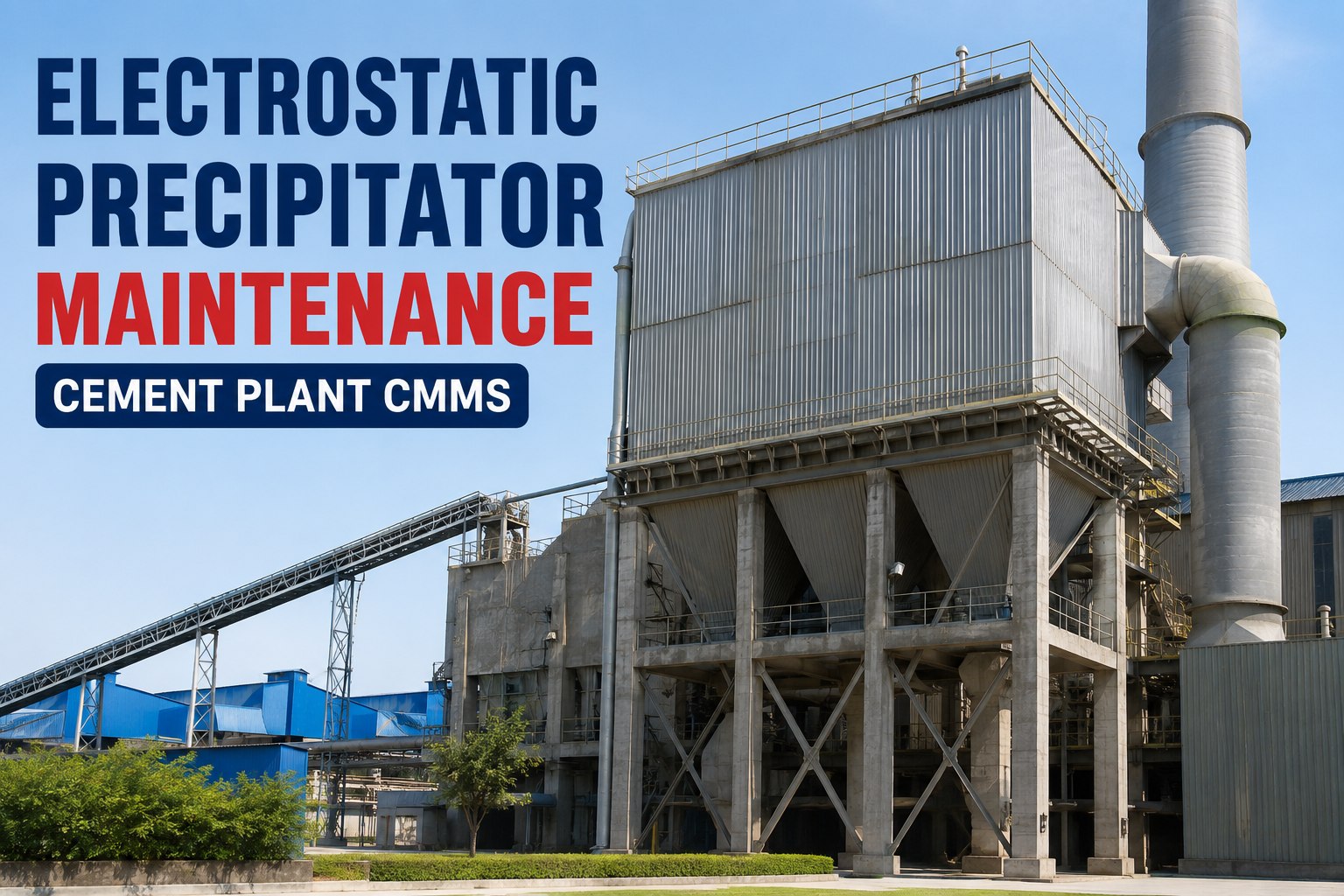
An electrostatic precipitator running at peak efficiency is invisible — it quietly removes particulate from kiln exhaust gas without drawing attention. But an ESP that's underperforming tells everyone: visible stack plumes, opacity exceedances, permit violations, and unplanned shutdowns during the worst possible moments. Maintaining an ESP on a cement kiln isn't just a maintenance task — it's a compliance obligation, a production dependency, and an asset management challenge all at once. OxMaint CMMS gives cement plant maintenance teams the tools to plan shutdown work, track inspection findings, manage spare parts, and keep compliance records current — all in one connected system built for the complexity of cement kiln gas systems.
Plan Every ESP Shutdown. Track Every Inspection. Never Miss a Compliance Record.
OxMaint helps cement plant maintenance engineers manage electrostatic precipitator PM programs with structured inspection checklists, shutdown planning tools, spare parts tracking, and audit-ready compliance documentation.
Why ESP Maintenance on Cement Kilns Is Uniquely Demanding
Cement kiln ESPs face some of the harshest operating conditions in any industrial application. Understanding the failure modes helps maintenance teams allocate resources correctly and plan shutdowns before problems escalate.
Clinker Dust Buildup
Cement kiln gas carries fine, adhesive clinker dust that accumulates on discharge electrodes and collecting plates, reducing field strength and collection efficiency between rapper cycles.
Rapper Mechanical Failures
Electromagnetic rappers experience coil burnout, shaft wear, and timing control failures — causing localized dust accumulation that compounds over days before visible performance degradation occurs.
Electrode Misalignment
Thermal cycling during kiln operations causes differential expansion in electrode systems. Misalignment produces short-circuit sparking that reduces corona current and collection efficiency.
Hopper Blockages
Collected dust bridging in hoppers causes re-entrainment — a catastrophic failure mode where captured material re-enters the gas stream and exits the stack, triggering immediate opacity violations.
The Complete ESP Maintenance Inspection Framework
Operating Monitoring
- Secondary voltage and current per field
- Spark rate monitoring and TR controller status
- Rapper cycle completion confirmation
- Stack opacity indicator or CEMS data review
- Hopper level indicator checks
Operational Inspection
- Rapper coil resistance check (external)
- TR panel warning light audit
- Hopper evacuation system confirmation
- Casing inspection for air inleakage
- Grounding system visual check
Internal Inspection
- Electrode alignment — all fields measured
- Collecting plate condition and spacing
- Rapper shaft and bearing replacement
- Insulator cleaning and condition rating
- Gas distribution plate inspection
- Hopper interior inspection and weld assessment
How OxMaint Manages the Full ESP Shutdown Work Cycle
Pre-Shutdown Work Order Generation
OxMaint generates a full shutdown work package 3–4 weeks before the planned outage date — including task lists, parts requirements, contractor assignments, and permit prerequisites — so nothing is scrambled at the last minute.
Spare Parts Availability Confirmation
Rappers, electrodes, insulators, TR transformers, and hopper heating elements are checked against current inventory. OxMaint triggers purchase orders for long-lead items weeks before they're needed on the maintenance floor.
LOTOTO and Entry Permits
Confined space entry permits, high-voltage isolation procedures, and lockout-tagout verification steps are embedded directly into ESP shutdown work orders — ensuring safety compliance is documented alongside technical tasks.
Inspection Findings Capture
Technicians record electrode alignment measurements, plate condition ratings, and rapper performance findings in structured OxMaint checklists — with photos attached and findings linked directly to the asset maintenance history.
Post-Shutdown Performance Baseline
After restart, OxMaint records performance restoration metrics — secondary voltage recovery, opacity improvement, rapper cycle confirmation — establishing the baseline for the next maintenance interval assessment.
ESP Shutdowns That Run on Time and on Budget Start With Better Planning
OxMaint's shutdown planning module ensures your ESP maintenance team walks into every planned outage with complete task lists, confirmed spare parts, and documented safety permits — and walks out with a full audit trail of every finding and action taken.
ESP Inspection Documentation That Satisfies Regulators
EPA and state environmental agencies increasingly require evidence that emission control equipment is maintained according to manufacturer specifications and best practices. OxMaint creates that evidence automatically.
Inspection History by Asset
Every field, rapper, insulator set, and hopper has its own maintenance log — showing every inspection date, finding, corrective action, and technician name going back years.
Corrective Action Closure
When an internal inspection identifies a deficiency — misaligned electrode, worn rapper shaft — OxMaint creates a corrective work order, tracks it to closure, and links the repair to the original inspection finding.
Shutdown Documentation Package
The complete record of each shutdown outage — scope of work, tasks completed, parts replaced, findings recorded, and performance post-restart — is accessible as a single exportable package.
Performance Trend Tracking
Secondary voltage data, rapper cycle logs, and opacity trend records from successive maintenance periods reveal whether your ESP program is improving or deteriorating — before inspectors notice.
Questions From Cement Plant Engineers Managing ESP Programs
Better ESP Maintenance Starts With a Better Maintenance System
Cement kiln ESPs are too critical — and too complex — to manage on spreadsheets and memory. OxMaint gives your maintenance engineering team the platform to plan shutdowns rigorously, execute inspections consistently, and document everything compliantly. Start your free trial today.