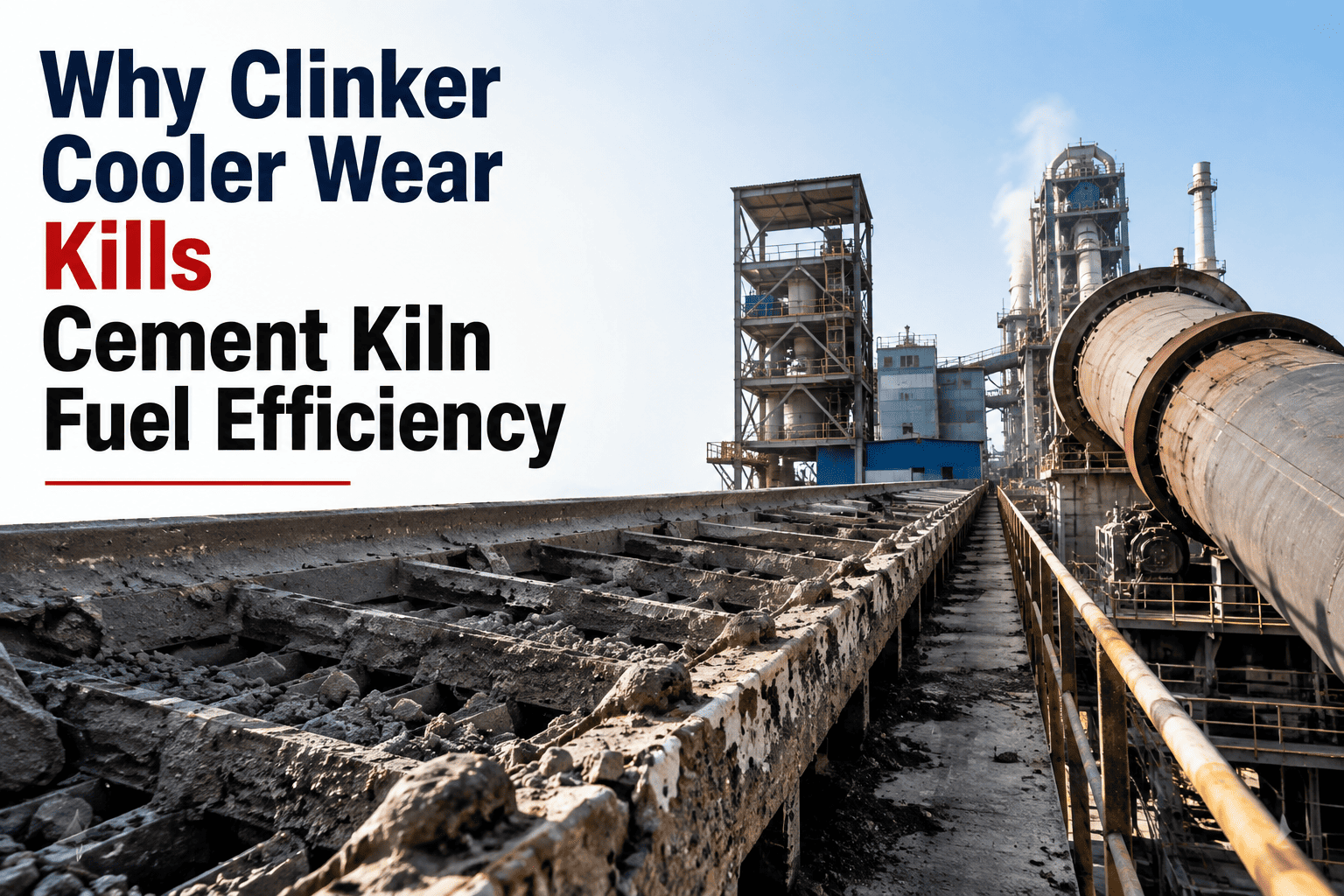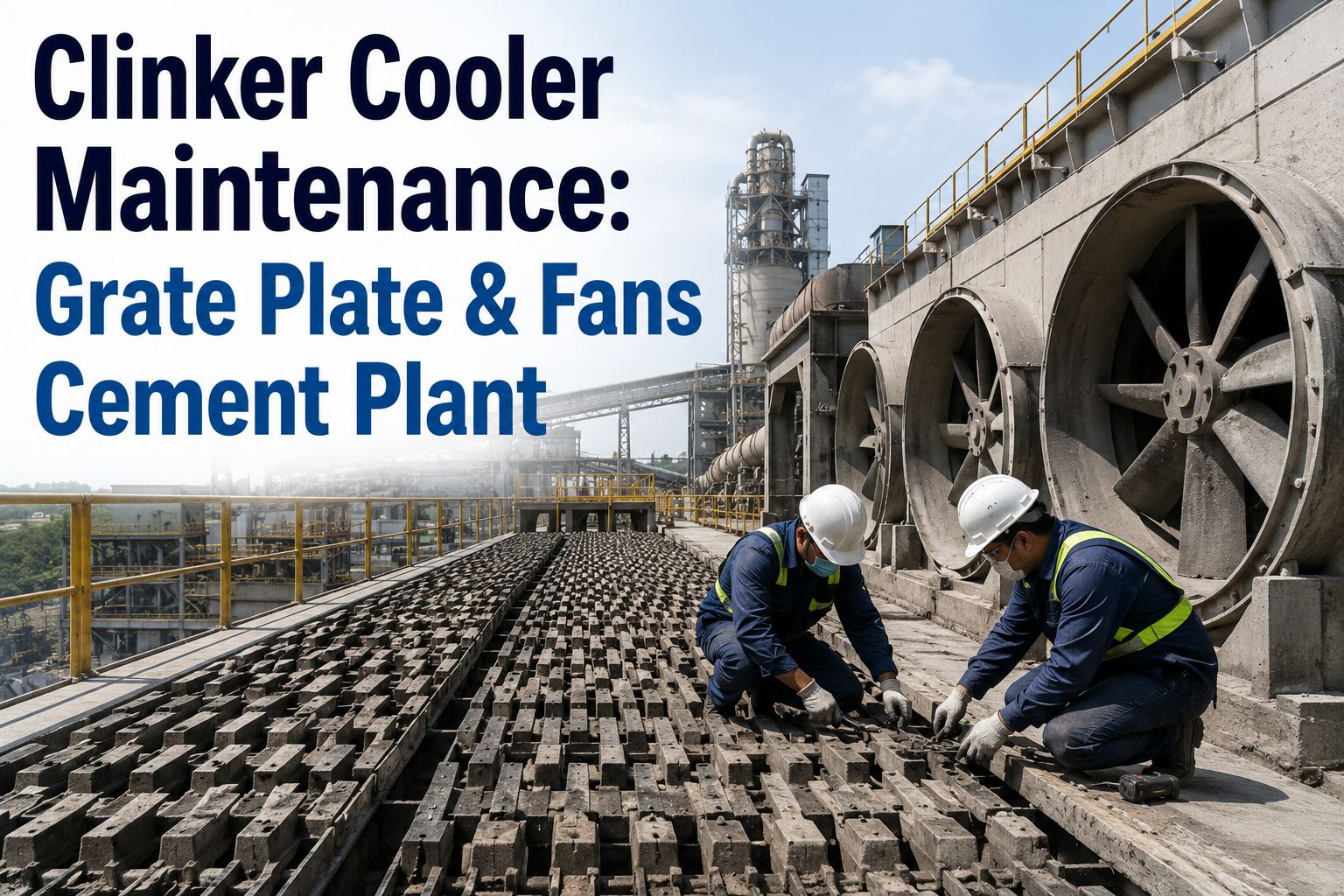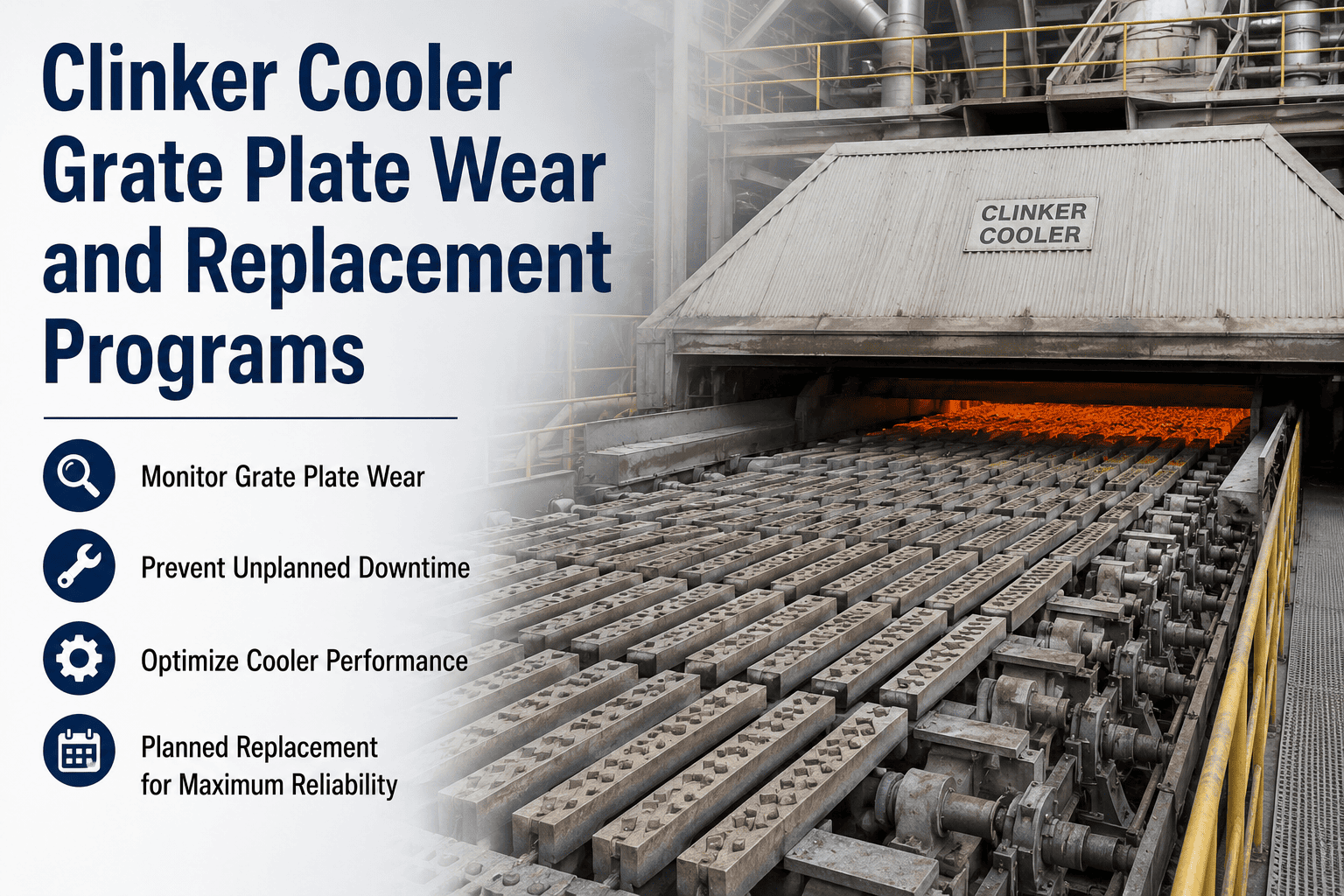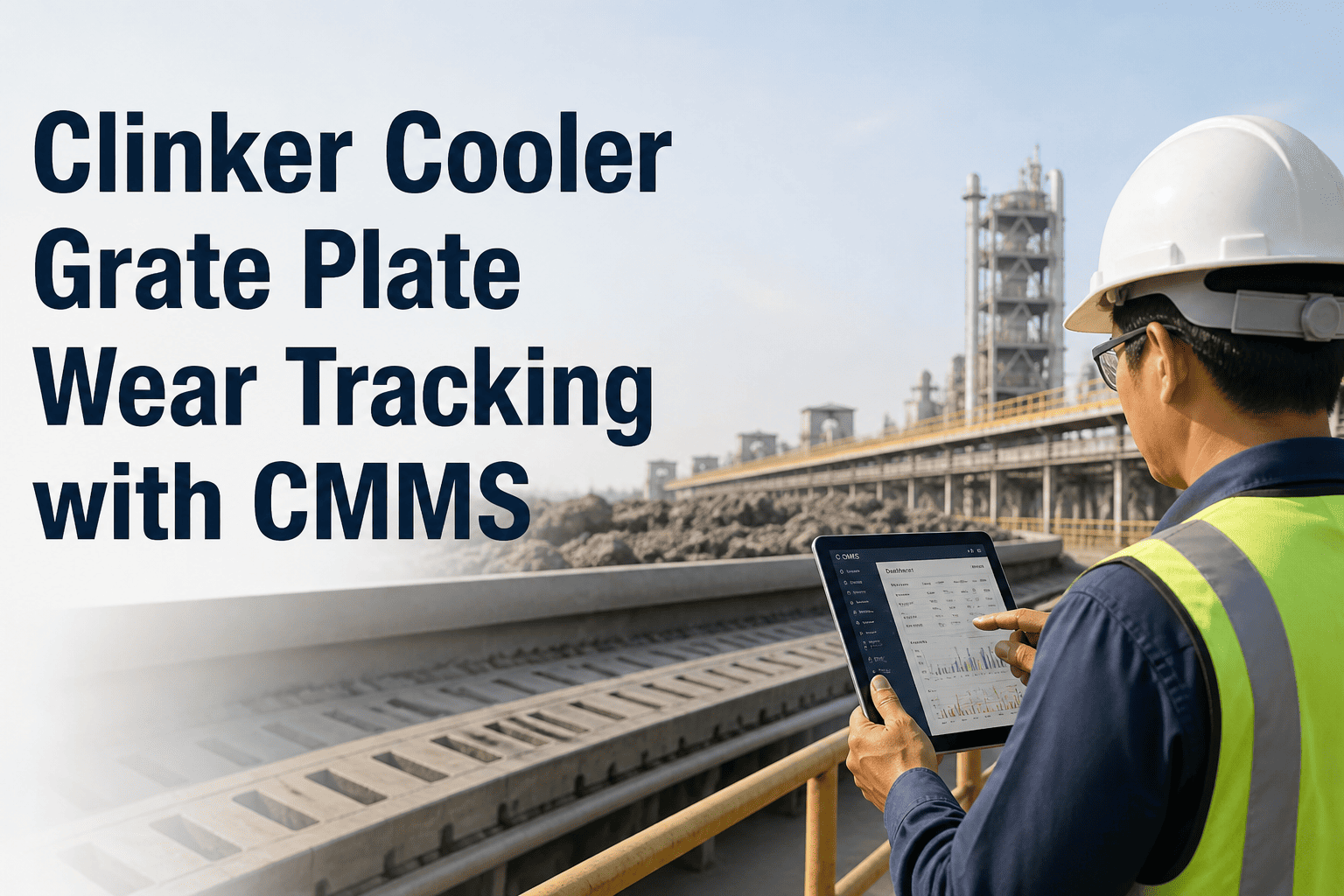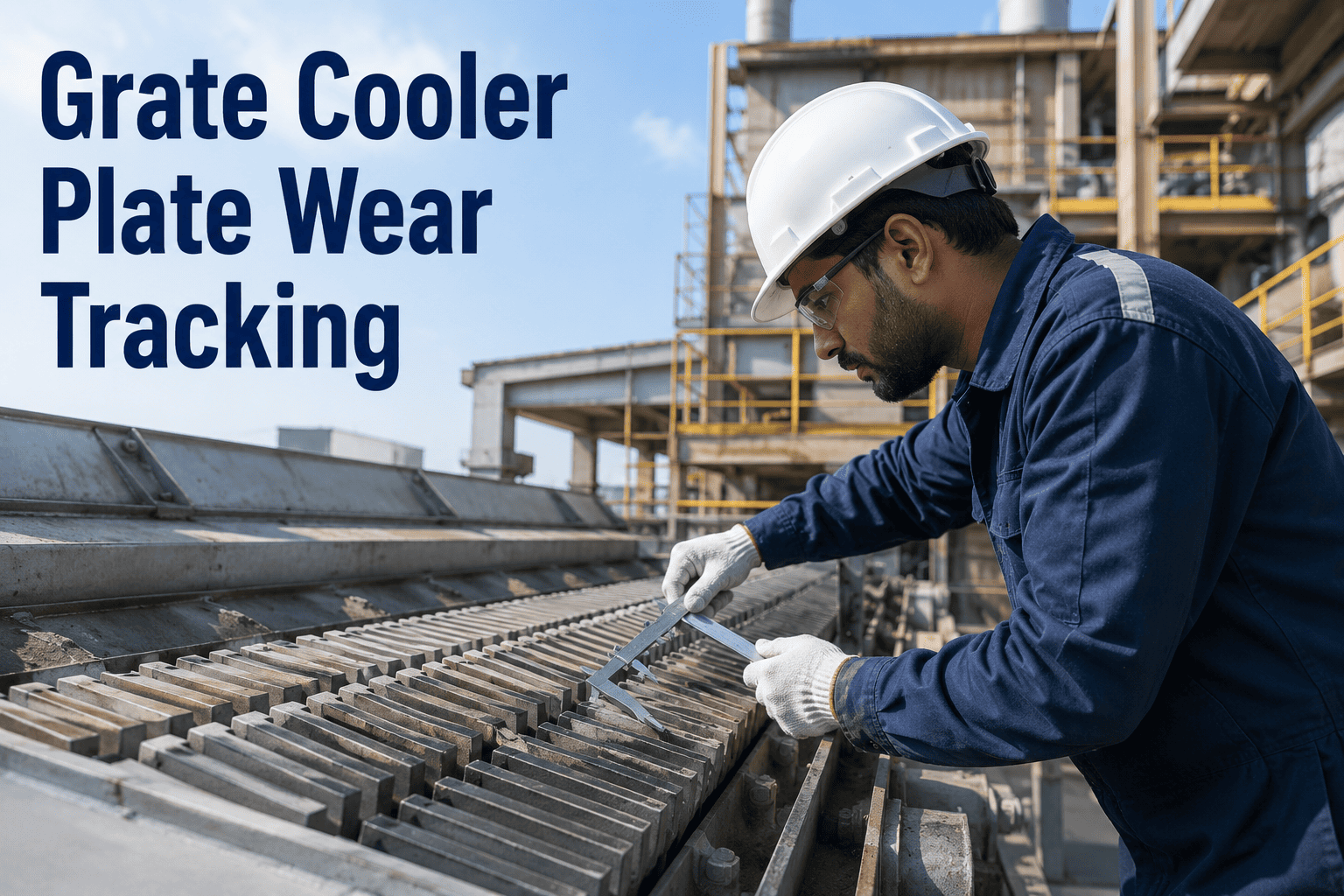
Grate cooler plate wear is one of the most predictable sources of forced downtime in cement production — yet most plants discover the severity only during an emergency shutdown, when a fractured plate, a clinker fall-through event, or a rising discharge temperature forces an unplanned stop. Tracking plate wear systematically, with inspection history, spare availability, and corrective action records in one place, turns an emergency response pattern into a managed replacement program. Sign Up Free on Oxmaint to build a structured grate plate wear tracking program that keeps your cooler running to specification and your spare parts available when the job needs to happen.
How Grate Plate Wear Develops and What It Costs
Grate cooler plates operate under continuous abrasion from hot clinker, elevated temperatures, and the mechanical cycling of reciprocating or static grate movement. Wear is inevitable — but its rate and location are trackable, and managing replacement timing prevents the compounding damage that occurs when worn plates are allowed to fail in service.
Perforated or fractured grate plates allow hot clinker to fall into the under-grate air chambers, damaging cooling air ducts, blocking compartments, and creating fire risk in the lower structure. Each fall-through event extends the outage duration significantly beyond what a planned plate replacement would require.
As plates wear and gap geometry changes, cooling air distribution becomes uneven across the grate. Localized hot zones develop, raising clinker discharge temperature, reducing secondary air supply quality to the kiln, and increasing grinding energy downstream.
Worn or mismatched plates create irregular grate surface profiles that increase mechanical resistance on the drive system. Current draw rises, peak torque events become more frequent, and drive component life is consumed ahead of schedule.
Grate Plate Wear Tracking: What Oxmaint Records and Why It Matters
Effective wear tracking captures more than just a measurement at shutdown. It builds a history that makes wear rate prediction, replacement scheduling, and spare procurement decisions accurate rather than estimated.
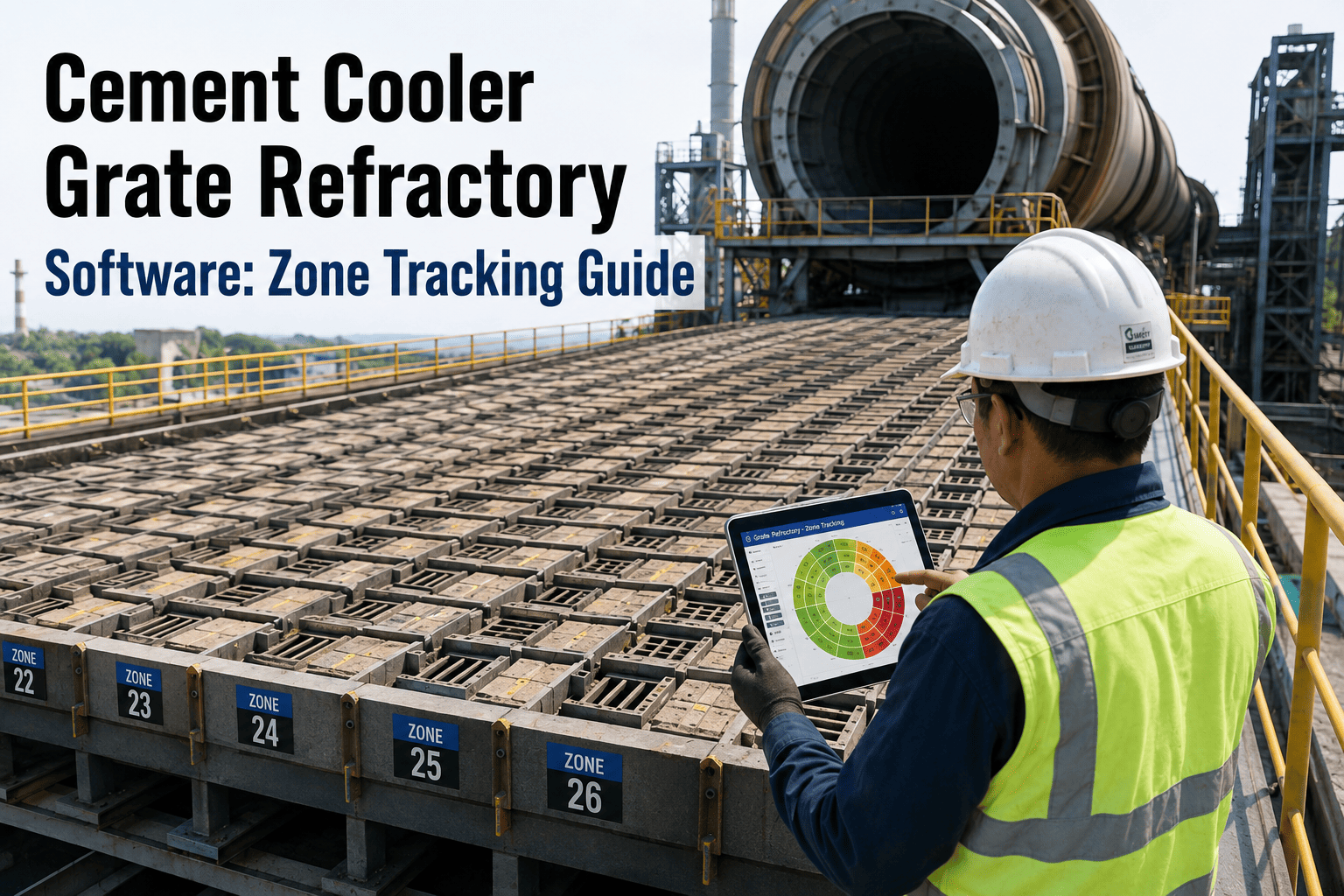
Every plate is registered as an individual asset under its grate zone and row — with manufacturer spec, installation date, cumulative operating hours, and material grade recorded. This enables like-for-like replacement tracking and comparison of wear rates across plate material options.
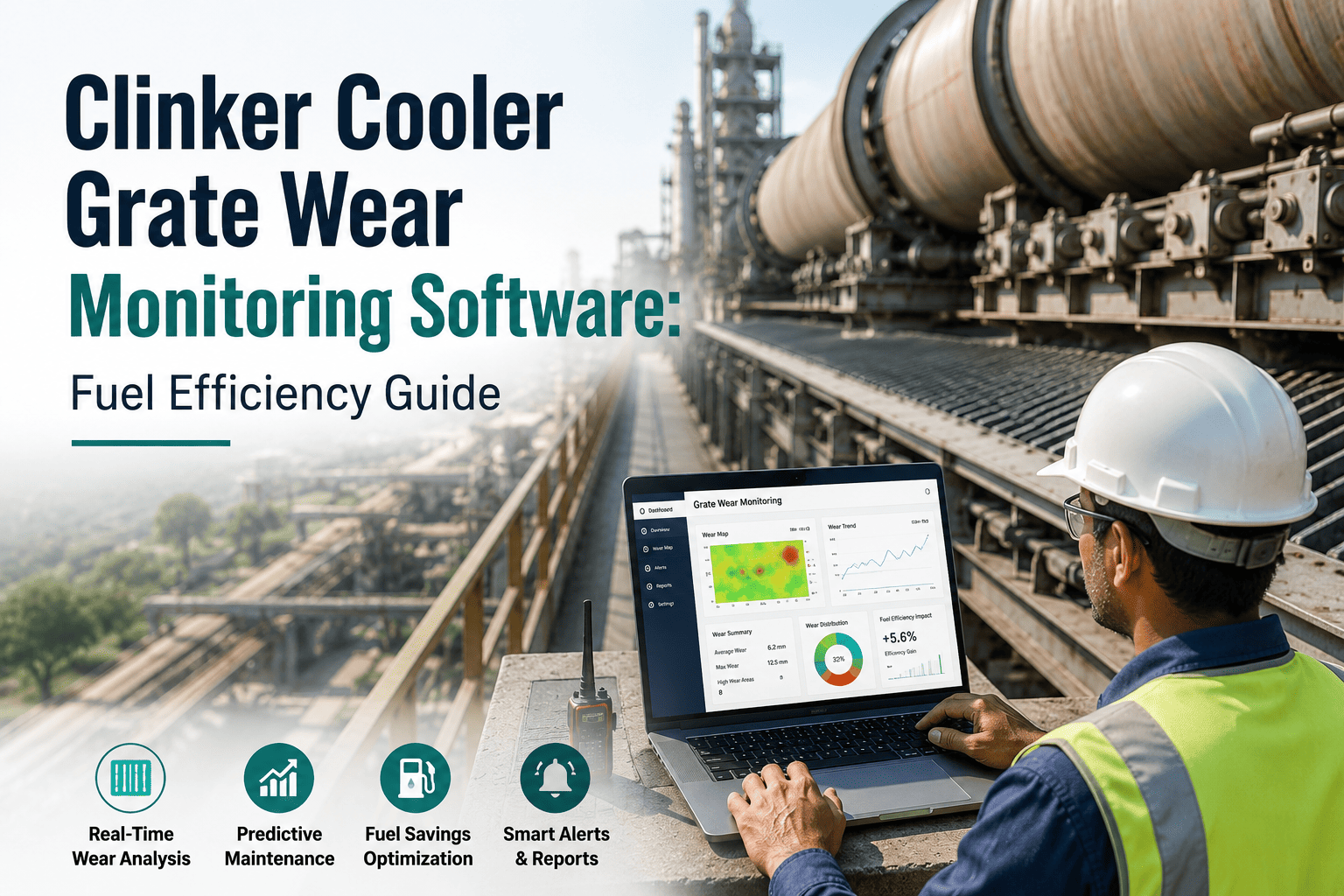
Plate thickness readings taken at shutdown inspections are logged against each plate record. Oxmaint calculates the wear rate (mm per operating hour) and projects the remaining service life based on minimum acceptable plate thickness for that grate zone.
Wear rate data is compared against kiln feed tonnage, clinker temperature, and grate speed setpoints for the corresponding period. Identifying which operating conditions accelerate wear informs both replacement scheduling and process optimization decisions.
Each plate asset links to its spare parts inventory record in Oxmaint. When projected replacement timing approaches and stock falls below minimum quantity, a procurement alert generates automatically — ensuring spares are available before the planned outage, not ordered on the day of the shutdown.
Grate Zone Wear Risk Profile: Where to Concentrate Inspection Effort
Not all grate zones wear at the same rate. The thermal and mechanical loads vary significantly from the inlet zone under the kiln discharge to the exit compartments, and wear tracking strategy should reflect this.
| Grate Zone | Primary Wear Driver | Typical Wear Rate | Inspection Interval | Critical Failure Mode |
|---|---|---|---|---|
| Zone 1 — Inlet | Direct kiln discharge impact and thermal shock | Highest — 1.5–2.5x mid-grate | Every shutdown | Fracture from thermal cycling, fall-through |
| Zone 2 — Mid-grate | Continuous abrasion from clinker movement | Moderate baseline | Every 2nd shutdown | Gradual thinning reducing air flow control |
| Zone 3 — Exit | Lower-temperature abrasion, mechanical wear | Lower than inlet | Every 3rd shutdown | Deformation affecting grate geometry |
| Side Plates | Lateral thermal expansion and scrubbing | Variable by design | Every shutdown | Gap formation allowing clinker bypass |
Spare Parts and Inventory Management for Grate Plate Programs
Running out of grate plates during a planned shutdown is more common than it should be — and the cost is always measured in extended downtime, expedited freight, and kiln feed held in storage. Oxmaint prevents this by connecting plate wear projections directly to spare inventory levels and procurement lead times.