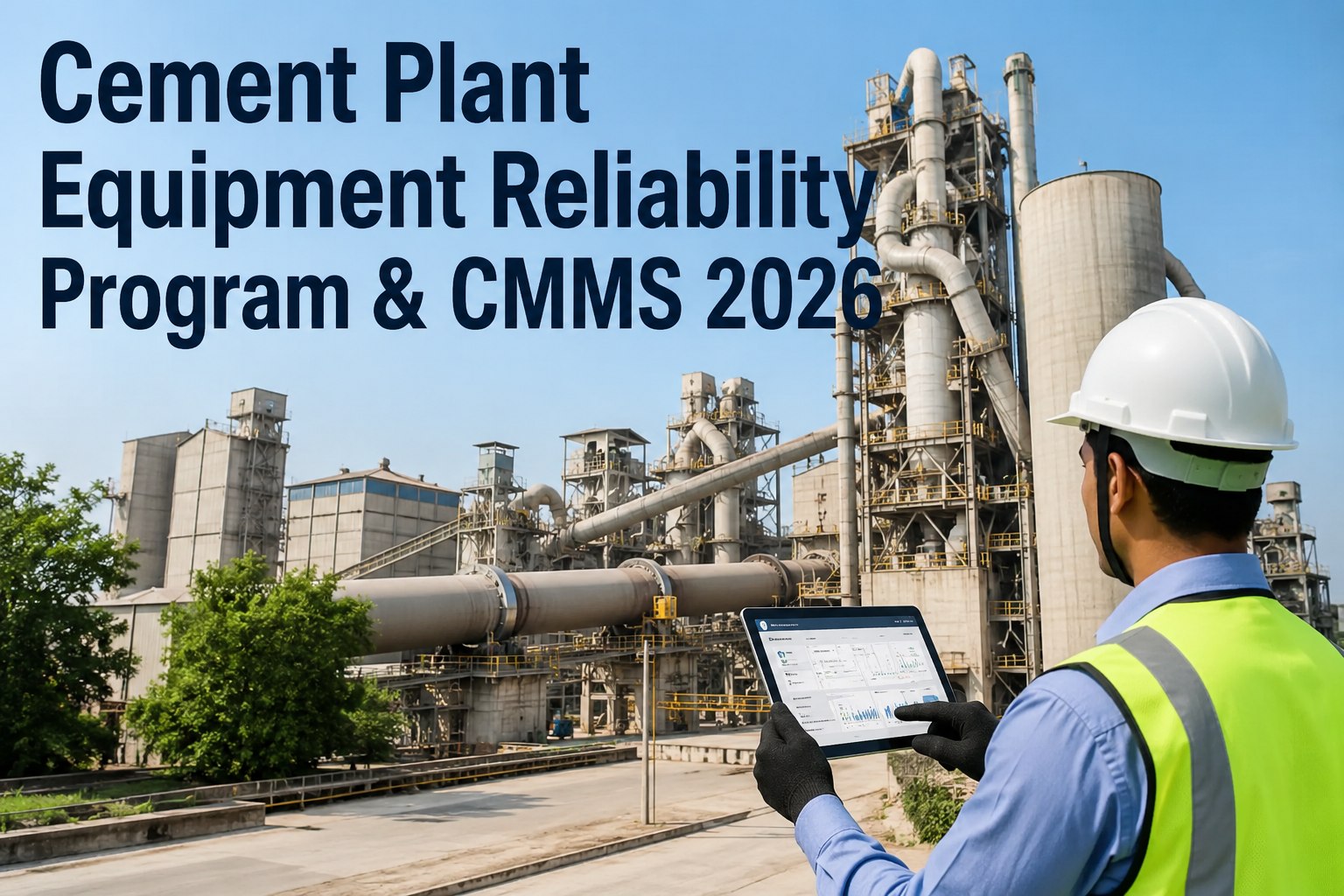
Choosing reliability analytics software for a cement plant is harder than it looks, because the category covers very different tools: maintenance management systems, historian-based analytics, OEM monitoring packages and machine learning platforms. Each solves part of the problem, and none works well without clean asset data and a way to act on findings. This guide compares the main software approaches for 2026 and gives a practical scorecard for your shortlist, including where Oxmaint AI-powered CMMS fits.
Software Comparison for Cement Reliability Teams
Best Cement Plant Reliability Analytics Software for 2026
Compare software categories, integrations and workflows, then score vendors against the failure modes, data sources and approval routes of your own plant.
DetectSignals, trends, anomalies
DiagnoseFailure modes, root causes
ActWork orders, parts, scheduling
ProveKPIs, history, compliance
What Reliability Analytics Must Do in a Cement Plant
Software earns its place only if it changes maintenance decisions. In cement, that means covering the equipment that stops clinker production and the processes that drive wear.
Critical rotating equipmentKiln drives, ID and preheater fans, mill gearboxes and motors, cooler fans and large conveyors.
Wear and process effectsAbrasion in liners and grinding parts, refractory degradation, build-up in cyclones and ducts.
Mixed data sourcesDCS and historian tags, portable vibration routes, oil analysis, thermography, inspections and shift logs.
Planned shutdown cultureAnnual kiln stops make scope planning and evidence from inspections as important as live alarms.
Software Approaches Compared
Most plants end up combining two or more of these. The comparison below describes typical strengths and limits of each category, not specific vendors.
| Approach | Typical strengths | Typical limits | Best fit |
|---|---|---|---|
| CMMS and EAM with analytics | Asset history, work orders, inspections, parts, scheduling, KPIs, audit trail | Live signal analysis depends on integration with monitoring tools | Plants needing a system of record and action workflow |
| Historian and process analytics | Deep time-series analysis, trending, process correlation | Weak on work execution, parts and maintenance history | Process and automation teams exploring trends |
| OEM or vendor condition monitoring | Equipment-specific models, tuned alarm limits, expert support | Often limited to one equipment brand, siloed data | Critical assets from a single manufacturer |
| Vibration and condition monitoring platforms | Spectral analysis, route management, bearing and gear diagnostics | Findings need a separate path into work management | Dedicated condition monitoring teams |
| General machine learning platforms | Flexible modelling, custom anomaly detection | Requires data science skills, labelled failures and maintenance | Large organisations with data teams |
| Spreadsheets and BI dashboards | Low cost, familiar, flexible reporting | Manual updates, weak traceability, poor scalability | Early-stage programmes and ad hoc analysis |
Ten Criteria for Your 2026 Shortlist
Use the same questions with every vendor so responses can be compared fairly.
- Asset model fitDoes it support a plant hierarchy from area to component, with criticality and failure codes?
- Data integrationCan it connect to your DCS, historian, ERP and inspection tools using standard methods such as OPC UA, APIs and file imports?
- Condition-based triggersCan a threshold, trend or inspection result create a work order automatically?
- Failure analysisDoes it support failure coding, repeat-failure reports and root-cause records?
- Explainable resultsCan engineers see why an alert fired, not just a score?
- Mobile and offline useCan technicians complete inspections and jobs in poor-coverage areas?
- Shutdown planningCan it manage large work scopes, parts and findings during kiln stops?
- ReportingDoes it deliver MTBF, downtime, backlog, planned work ratio and cost views?
- Security and accessDoes it offer role-based access, audit logs and sound data handling for plant networks?
- Time to valueWhat is realistic for a pilot, and what does the vendor need from your team?
A Weighted Scorecard You Can Adapt
These starting weights suit a plant that wants to move from reactive to condition-based maintenance. Adjust them to match your priorities before scoring.
Data integration and asset model25%
Action workflow and work orders20%
Analytics and failure insight20%
Field usability and mobile15%
Reporting and compliance records10%
Implementation and support10%
Score each vendor from one to five on every line, multiply by the weight, and compare totals. Treat any score below three on integration as a serious risk, since poor data flow limits everything else.
See How a CMMS-Led Analytics Workflow Looks in Your Plant
Walk through asset hierarchy, inspections, condition-based triggers and reliability reporting in Oxmaint with a cement-focused demo.
Integration Checklist Before You Sign
Data in
- Historian or DCS tag access through supported protocols
- Import of vibration route results and oil analysis reports
- ERP links for purchasing, stores and cost centres
- Bulk loading of asset lists, bills of materials and history
- Mobile capture of inspection readings and photos
Results out
- Work orders created with asset, priority and evidence attached
- Alerts routed to named roles and shifts
- Dashboards for plant managers, planners and reliability engineers
- Exports for audits, management reviews and corporate reporting
- APIs for connecting future tools
Demo Script: Make Vendors Prove It
Ask every vendor to demonstrate the same scenarios using your data or realistic samples.
1Show a rising fan bearing temperature becoming a work order with attached trend evidence.
2Show how a repeat gearbox seal leak is identified across several years of history.
3Show how an inspector's finding on a kiln support roller is added to shutdown scope.
4Show how a faulty sensor is flagged differently from a real equipment fault.
5Show a reliability report ranking assets by downtime and cost with drill-down to events.
Red Flags During Evaluation
Black-box predictionsNo explanation of inputs, limits or confidence, so engineers cannot challenge results.
No path to actionBeautiful alerts that stop at a dashboard with no work order, owner or closure record.
Generic modelsClaims that one model works for every plant with no tuning to your equipment and process.
Heavy data demandsNeed for years of perfect failure labels you do not have and no help to build them.
Unclear total costPricing that excludes integration, sensors, training or ongoing model tuning.
2026 Trends Shaping the Choice
- Alternative fuels and raw materials change wear, build-up and combustion behaviour, which makes plant-specific analytics more valuable than generic rules
- Carbon and energy reporting, including requirements such as the EU carbon border mechanism for exporters, raises the value of reliable energy and production records
- Generative AI assistants are increasingly used to summarise work orders and search maintenance history, but they depend on well-structured records
- Mobile-first inspection and lower-cost wireless sensors extend monitoring to equipment that was previously walked only occasionally
- Reliability teams are expected to show results in downtime, cost and energy, not only in alarm counts
Where Oxmaint Fits
Oxmaint is maintenance management software. It works as the system of record and action layer for a reliability programme, and it can be combined with historian or condition monitoring tools you already use.
Asset managementHierarchy, criticality, documents and history for kilns, mills, fans, conveyors and utilities.
Preventive maintenanceTime and meter-based tasks, adjusted using inspection findings and failure history.
Work ordersCorrective, planned and shutdown jobs with labour, parts, failure codes and closing notes.
Mobile inspectionsChecklists, readings and photos captured in the field, including QR-based asset identification.
InventorySpare parts linked to assets, supporting planning for long-lead components.
ReportingDashboards for downtime, backlog, planned work ratio and recurring failures.
Pilot Plan: Prove Value in 90 Days
A short, focused pilot reveals whether the software fits your plant before you commit to a full rollout.
Days 1 to 30Choose one process area, such as raw milling or the kiln fans. Clean the asset list, define failure codes and load recent history.
Days 31 to 60Start inspections and work orders in the pilot area, connect available condition data and set a small number of triggers.
Days 61 to 90Review repeat failures, planned work ratio and response times. Decide what to extend, adjust or stop.
Success measures for the pilot
- Share of corrective jobs with failure codes and downtime recorded
- Time from first symptom report to planned repair
- Reduction in repeat failures on pilot assets
- Adoption by technicians, measured by completed inspections
- Planner and manager confidence in the reports
Total Cost Questions to Ask
| Cost area | Question |
|---|---|
| Licences | How is pricing set: users, assets, sensors or modules? |
| Implementation | Who loads data, configures workflows and trains staff? |
| Integration | What does connecting historian, ERP and monitoring tools cost, and who maintains it? |
| Hardware | Are new sensors, gateways or mobile devices needed? |
| Ongoing tuning | Who reviews alerts and updates rules as the plant changes? |
| Exit | Can you export your asset and work order history in usable formats? |
Cement Failure Modes Your Software Should Help You Manage
Ask vendors how their tool handles real cement failure patterns, not generic examples from other industries.
| Equipment | Failure pattern | Evidence the software should combine |
|---|---|---|
| ID and preheater fans | Imbalance from dust build-up, bearing wear, erosion of blades | Vibration trend, motor current, damper position, cleaning history |
| Kiln support rollers and tyres | Bearing overheating, lubrication problems, ovality changes | Temperature, oil condition, alignment records, inspection notes |
| Vertical roller mills | Grinding element wear, hydraulic faults, vibration | Mill vibration, differential pressure, hydraulic pressure, wear measurements |
| Gearboxes | Gear tooth wear, seal leaks, oil degradation | Oil analysis, temperature, vibration spectra, load history |
| Bag filters | Bag blinding, pulse valve faults, leaks | Differential pressure, cleaning cycles, emissions data, inspections |
| Refractory and shell | Brick wear, coating loss, hot spots | Shell scanner data, relining history, process upsets |
From Insight to Action: What the Workflow Should Do
The test of any analytics tool is what happens after the alert. Look for a clear chain from signal to verified repair.
1Signal or inspection finding indicates abnormal condition on a specific asset.
2Engineer reviews evidence, confirms the issue and sets a priority and deadline.
3Work order is created with the failure mode, needed parts and required skills.
4Planner schedules the job for the next window or adds it to shutdown scope.
5Technician completes the repair and records cause, findings and time.
6Post-repair readings confirm recovery and update the asset history for future analysis.
Reliability KPIs the Software Should Report
| KPI | Why cement teams track it |
|---|---|
| Mean time between failures | Shows whether critical equipment is becoming more or less reliable |
| Unplanned downtime hours | Links maintenance performance to lost clinker or cement production |
| Planned work ratio | Indicates the shift from reactive to planned maintenance |
| Backlog age and size | Reveals whether findings are being acted upon |
| Repeat failure rate | Points to weak repairs or unresolved root causes |
| Preventive compliance | Confirms routine tasks are completed on schedule |
| Maintenance cost per tonne | Connects maintenance spend to production output |
Readiness Self-Check Before You Buy
Honest answers to these questions will tell you whether to focus first on data foundations or on advanced analytics.
- Do critical assets have one agreed name and ID across control, maintenance and stores systems?
- Are failures coded consistently on work orders, with start and end times?
- Are key sensor tags mapped to the assets they measure?
- Do inspection findings get recorded in a system, not only in notebooks?
- Is there an owner who will review alerts weekly and decide what to do?
- Is there agreement between operations and maintenance about when equipment can be stopped?
Security and deployment
Cement plants often restrict direct access between plant networks and external systems. Ask vendors about role-based access, audit logs, data hosting options, one-way data transfer patterns and how updates are managed, and involve your IT and operational technology teams early.
Frequently Asked Questions
Is there one best software for every cement plant?
No. The best choice depends on your data, equipment, team skills and goals. Use a weighted scorecard and a pilot.
Do we need both a CMMS and analytics software?
Often yes. Analytics find signals; a CMMS turns them into planned work and keeps the history.
How much failure history is needed?
More helps, but start with coded failures on critical assets and build from there while using rules and inspections.
Can we keep our existing monitoring tools?
Usually, if integration is available. A demo can show how findings flow into work orders.
What is the biggest cause of failed projects?
Poor asset data and no clear owner for acting on alerts, rather than the analytics technology itself.
Choose Software That Turns Reliability Insight into Planned Work
Start with the asset, inspection and work order foundation your cement plant needs, then build condition-based maintenance on top with Oxmaint.