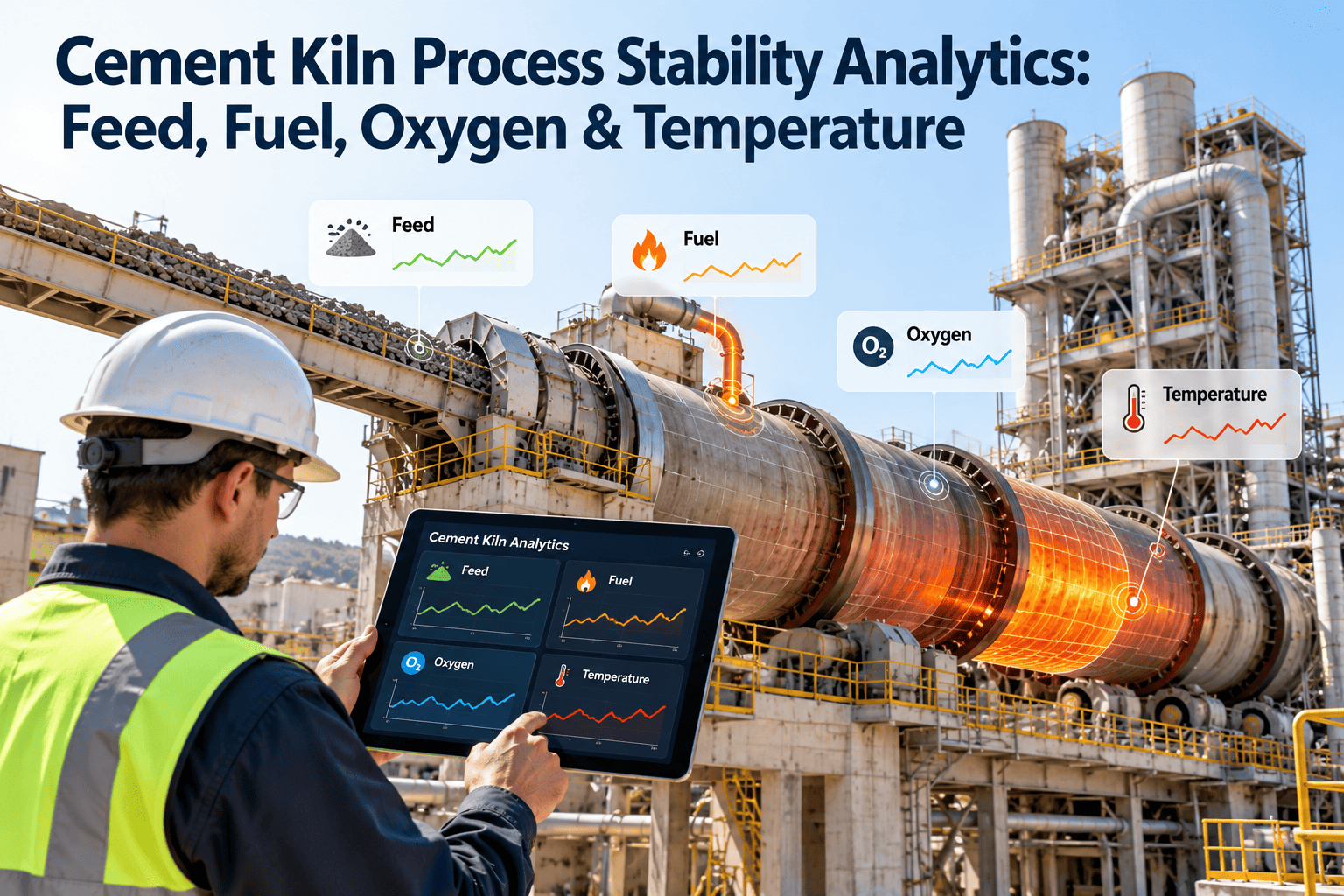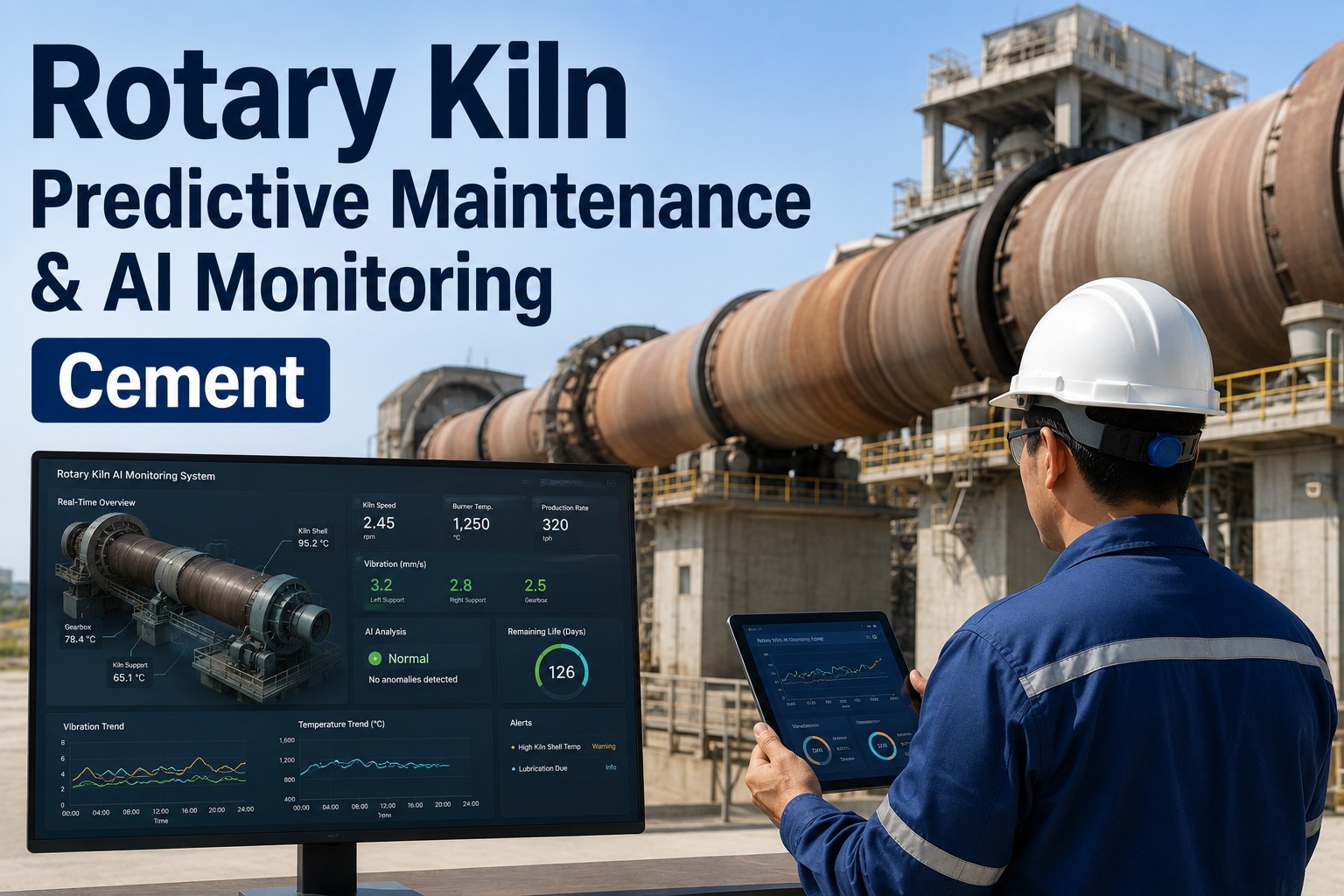
Shifting a cement kiln toward alternative fuels sounds like a procurement decision, but it is decided on the plant floor. Biomass, refuse-derived fuel, tyre-derived material and other secondary fuels behave differently from coal or petcoke in storage, feeding, burning and cleaning. Equipment that cannot hold a stable fuel mix limits how much carbon intensity a plant can actually remove. This guide explains the maintenance side of fuel mix optimization, and how Oxmaint maintenance management software keeps fuel handling assets reliable and well documented.
Cement Kiln Fuel Mix Optimization for Lower Carbon Intensity
Raise alternative fuel use without trading away kiln stability, safety or clinker quality by keeping fuel handling equipment in control.
What limits fuel mix change in real kilns
Plants rarely lack fuel options. They lack the equipment stability to use those fuels continuously, and that is where maintenance enters.
Fuel type trade-offs from an equipment point of view
Fuel properties shape the maintenance workload. Use this view to plan inspections before increasing any substitution rate.
| Fuel group | Carbon intensity benefit | Typical handling challenges | Maintenance focus |
|---|---|---|---|
| Coal and petcoke | Baseline fossil reference | Dust, mill fires, abrasive wear in mills and pipes | Mill reliability, fire protection, burner condition |
| Biomass such as husk, sawdust or agricultural residue | Can reduce fossil carbon where sourced sustainably | Low bulk density, bridging, moisture swings, dust | Feeders, silos, aeration, dust control |
| Refuse-derived fuel | Can displace fossil fuel, with benefit depending on composition | Variable size, chlorine content, foreign objects, blockages | Shredders, screens, metal removal, feeding lines |
| Tyre-derived fuel | Displaces fossil fuel in suitable positions | Heavy pieces, steel content, specialized feeding | Feeding mechanisms, kiln inlet or calciner access |
| Liquid and pasty secondary fuels | Depends on origin and composition | Pumping, viscosity, pipe fouling, safety controls | Pumps, heating, filters, burner lances |
The fuel handling loop that decides stability
Alternative fuel systems work as a chain. A weakness at any point shows up later as an unstable flame or a stopped feeder.
Keep every fuel handling asset ready for higher substitution
Plan inspections, spares and repairs for feeders, shredders, silos and burners in one maintenance system.
Volatile cycles and build-up: the hidden cost of secondary fuels
Chlorine, alkalis and sulfur can circulate between kiln and preheater, forming deposits that restrict gas flow. Equipment condition decides how well a plant copes.
| Early indicator | What it may mean | Maintenance response |
|---|---|---|
| Rising pressure drop across the lower cyclones | Deposit growth restricting flow | Plan cleaning, review air cannon and poke hole access |
| More frequent cyclone blockages | Cycle intensification or feed instability | Record each event, review fuel and raw meal changes |
| Kiln inlet ring formation | Volatile condensation or unstable burning | Inspect inlet area, burner position and cooling |
| Bypass system load changes | Higher volatile removal demand | Check bypass fan, cooling and dust handling reliability |
| Frequent manual cleaning interventions | Chronic build-up and safety exposure | Review cleaning tools, permits and root cause actions |
Burner and calciner equipment that must keep pace
Higher substitution puts more demand on the burner and the calciner feed points, where flame shape and fuel residence time matter most.
- Multichannel burner: inspect tip wear, refractory condition and channel settings, and record flame observations beside fuel changes.
- Calciner feed points: check chutes, flap gates and airlocks for wear, sticking and build-up.
- Transport air fans: monitor vibration, current and filters because unstable air flow upsets feeding.
- Cooling and protection: keep burner cooling air and protection systems tested and documented.
- Instrumentation: maintain temperature, oxygen and carbon monoxide measurements used to guide fuel decisions.
Inspection routes for feeding and preparation lines
Short, repeatable routes catch wear early and give planners the data to forecast parts.
- Shredder blade and counter-knife wear
- Screen mesh damage and blinding
- Magnet and metal separator effectiveness
- Conveyor belt tracking and idler condition
- Dust extraction filter differential pressure
- Weigh feeder calibration and load cell health
- Rotary airlock tip clearance and wear
- Dosing screw and drive condition
- Pipe wear at bends and transitions
- Blockage and pressure alarms since last round
Spares strategy for alternative fuel systems
Wear parts on these lines move faster than on conventional fuel systems, so stocking decisions should follow real usage.
| Component group | Typical wear driver | Stocking approach |
|---|---|---|
| Shredder blades and screens | Abrasive and mixed material | Track hours run per set and keep a full replacement set |
| Airlock rotors and seals | Fine dust and foreign objects | Hold spare rotors for critical feed lines |
| Feeder drives and load cells | Vibration, dust and shock | Keep critical electronic spares and calibration tools |
| Wear-resistant pipe sections | Erosion at bends | Replace by measured thickness, not failure |
| Detection and protection devices | Contamination and aging | Maintain test spares and replacement units |
Quality and clinker consistency considerations
Fuel ash enters the kiln feed chemistry, and unstable burning can affect clinker quality. Maintenance records help explain quality variation.
- Record feeder stoppages and fuel switches alongside quality results to separate equipment causes from raw material causes.
- Keep sampling equipment, such as fuel samplers and clinker samplers, on a calibration and cleaning schedule.
- Review cooler and kiln condition when free lime or clinker temperature drifts appear.
- Share maintenance findings with quality teams in the regular production review.
Mistakes that slow progress on fuel mix change
Most delays come from treating alternative fuels as a one-time project instead of an ongoing operating discipline.
- Raising substitution before equipment is ready: repeated blockages push operators back to fossil fuel.
- Ignoring wear data: without hours and condition records, parts are bought late or too early.
- Weak storage discipline: long stockpile times and poor housekeeping raise fire and odor risk.
- No link between fuel and failure: if work orders do not record fuel type, patterns stay hidden.
- Underestimating cleaning exposure: manual build-up removal needs planned, safe procedures and records.
Risk matrix for alternative fuel equipment
Rank each handling failure by likelihood and consequence, then set inspection effort accordingly.
Before and after a controlled fuel mix program
The biggest difference is how problems are found and recorded.
- Feeders stop and operators reduce substitution
- Blockages cleared with no cause recorded
- Fuel quality complaints without equipment data
- Spares for shredders ordered after a failure
- Emissions analyzers checked only before audits
- Feeder health monitored and serviced by condition
- Every blockage logged with fuel type and location
- Fuel quality and equipment findings linked
- Wear parts forecast from usage and history
- Calibration planned and evidenced on schedule
Fire and explosion controls for fuel storage and handling
Alternative fuels and finely ground coal both carry thermal and dust hazards. Safety systems must be maintained as carefully as production equipment.
- Detection and suppression: test temperature sensors, gas detectors, sprinklers or other protection systems on a documented schedule.
- Ignition sources: inspect electrical equipment, bearings and conveyor idlers that could overheat in dusty areas.
- Housekeeping: remove dust accumulation and control stockpile age to limit self-heating.
- Hot work and permits: control repairs near fuel areas through permits and isolation records.
- Emergency readiness: keep response equipment, access routes and drills current.
Compliance and reporting touchpoints
Requirements differ by country and permit, so confirm what applies to your plant and fuels.
- Co-processing permits often specify accepted fuels, feed points and operating conditions.
- Continuous emissions monitoring needs calibrated analyzers, maintenance logs and documented checks.
- Carbon reporting relies on accurate fuel quantities, calorific values and biomass fractions.
- Safety management systems expect inspection and test records for protection equipment.
Work order fields that reveal fuel-related patterns
Add a few structured fields so repeated issues can be linked to fuel type and operating conditions.
| Field | Example | Use |
|---|---|---|
| Fuel in use at failure | Biomass, refuse-derived fuel or fossil only | Compare failure rates by fuel |
| Failure location | Feeder, airlock, pipe bend, calciner inlet | Identify weak points in the line |
| Failure mechanism | Wear, blockage, bridging, overheating | Choose the right preventive task |
| Substitution rate at the time | Recorded from the control system | Link equipment limits to targets |
| Corrective action and result | Blade changed, aeration added, feeder recalibrated | Confirm that repairs worked |
Who does what in a fuel mix reliability program
Clear ownership keeps equipment issues from stalling substitution targets.
Shift handover checklist for alternative fuel lines
A brief, consistent handover prevents repeated blockages and missed warnings between shifts.
- Which fuels were fed, at what rates, and which feeders were reduced or stopped?
- Were there blockages, alarms or manual cleaning actions, and where?
- Any storage temperature alerts, odor concerns or detector faults?
- Which analyzers were out of range, under calibration or flagged for service?
- What open work orders affect feeding, burner or preheater operation?
- Were any protection systems bypassed, and has that been recorded with approval and a planned restoration time?
- Which spare parts were used during the shift, and do stock levels still cover the next few weeks of operation?
Supporting carbon and sustainability reporting
Credible carbon data starts with well-maintained measurement and well-kept records.
- Weigh feeders and flow meters need calibration evidence so fuel quantities can be defended in audits.
- Downtime records show when the plant fell back to fossil fuel and why.
- Inspection and test logs demonstrate that safety and monitoring systems were maintained.
- Asset history supports investment cases for new feeding or preparation equipment.
How Oxmaint supports fuel mix reliability
Oxmaint organizes the equipment, tasks and records behind higher substitution so teams can show what was done and when.
KPIs for a fuel mix and reliability program
Track equipment measures beside carbon and substitution measures so the two stay connected.
| KPI | Why it matters | Desired trend |
|---|---|---|
| Thermal substitution rate | Share of kiln heat from alternative fuels | Rising within stable operation |
| Alternative fuel feed availability | Time the feeding systems run as planned | Rising |
| Feeder and line blockage events | Equipment and fuel quality friction | Falling |
| Kiln stops linked to fuel handling | Impact on clinker output | Falling |
| Protection system test compliance | Safety discipline | Complete and on time |
| Analyzer calibration compliance | Reliability of emissions data | Complete and on time |
A staged path to a higher substitution rate
Increase the share of alternative fuels in steps, and confirm equipment health at each stage.
Audit
Review feeder, storage and analyzer condition against current substitution.
Stabilize
Fix the repeat blockages and wear issues that interrupt feeding today.
Step up
Raise the mix in controlled steps and watch flame, cycles and build-up.
Lock in
Update PM plans and spares based on what the new mix reveals.
Fuel mix optimization FAQs
Does more alternative fuel always lower carbon intensity?
Not automatically. The benefit depends on fuel origin and composition, and on keeping the kiln stable.
Which equipment fails most often with secondary fuels?
Feeders, shredders, screens and airlocks often see the most wear and blockage. Sign up to track them.
How does maintenance affect substitution rate?
Reliable feeding keeps flame and calciner conditions stable, which allows higher continuous substitution.
What records help with carbon reporting?
Calibration logs, feeder availability and fuel handling events support credible reporting and audits.
Can we see a fuel handling workflow first?
Yes, book a demo for a walkthrough of feeder and burner maintenance.
Cut carbon intensity with equipment you can rely on
Support higher alternative fuel use with preventive maintenance, inspections and records built for cement plants.