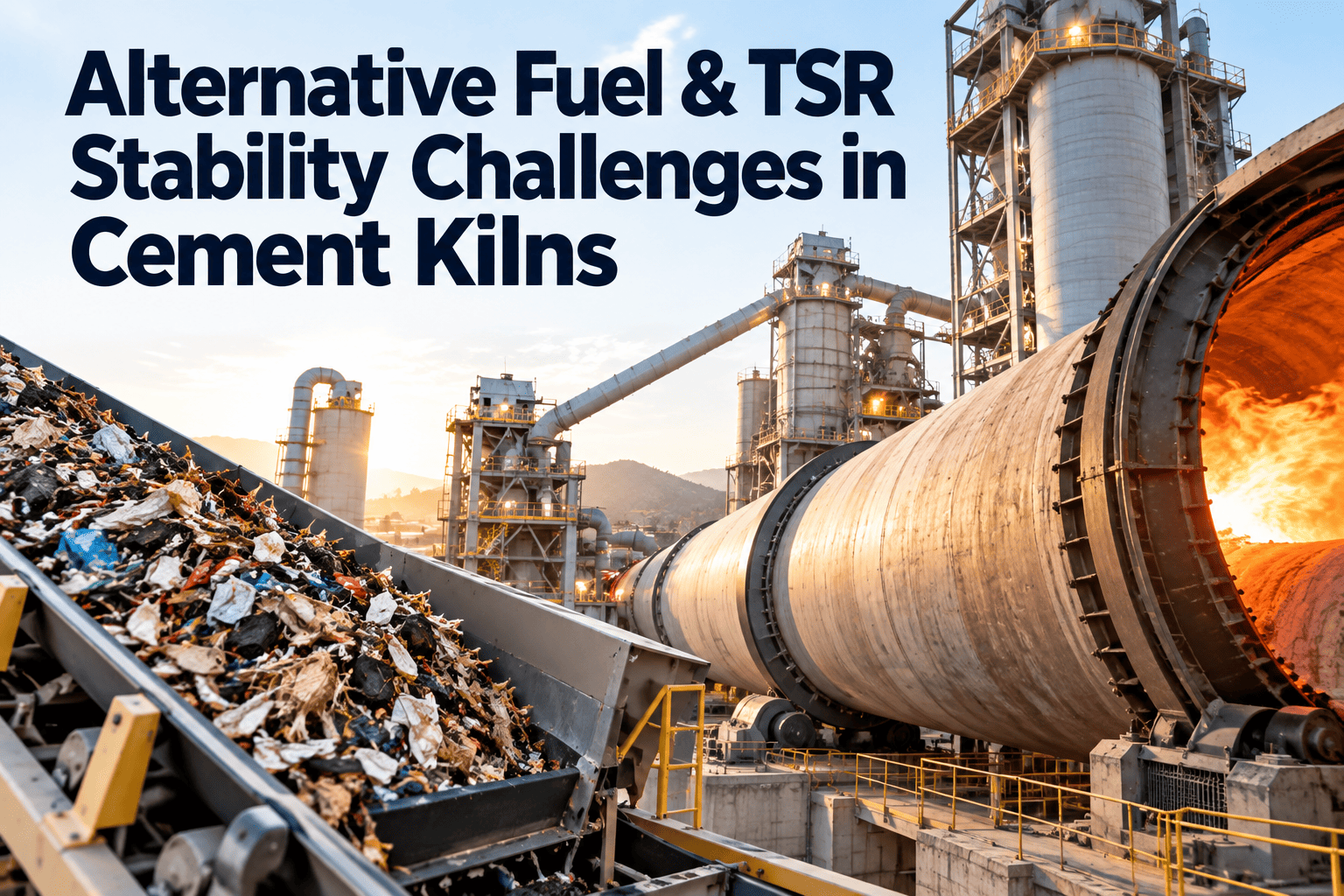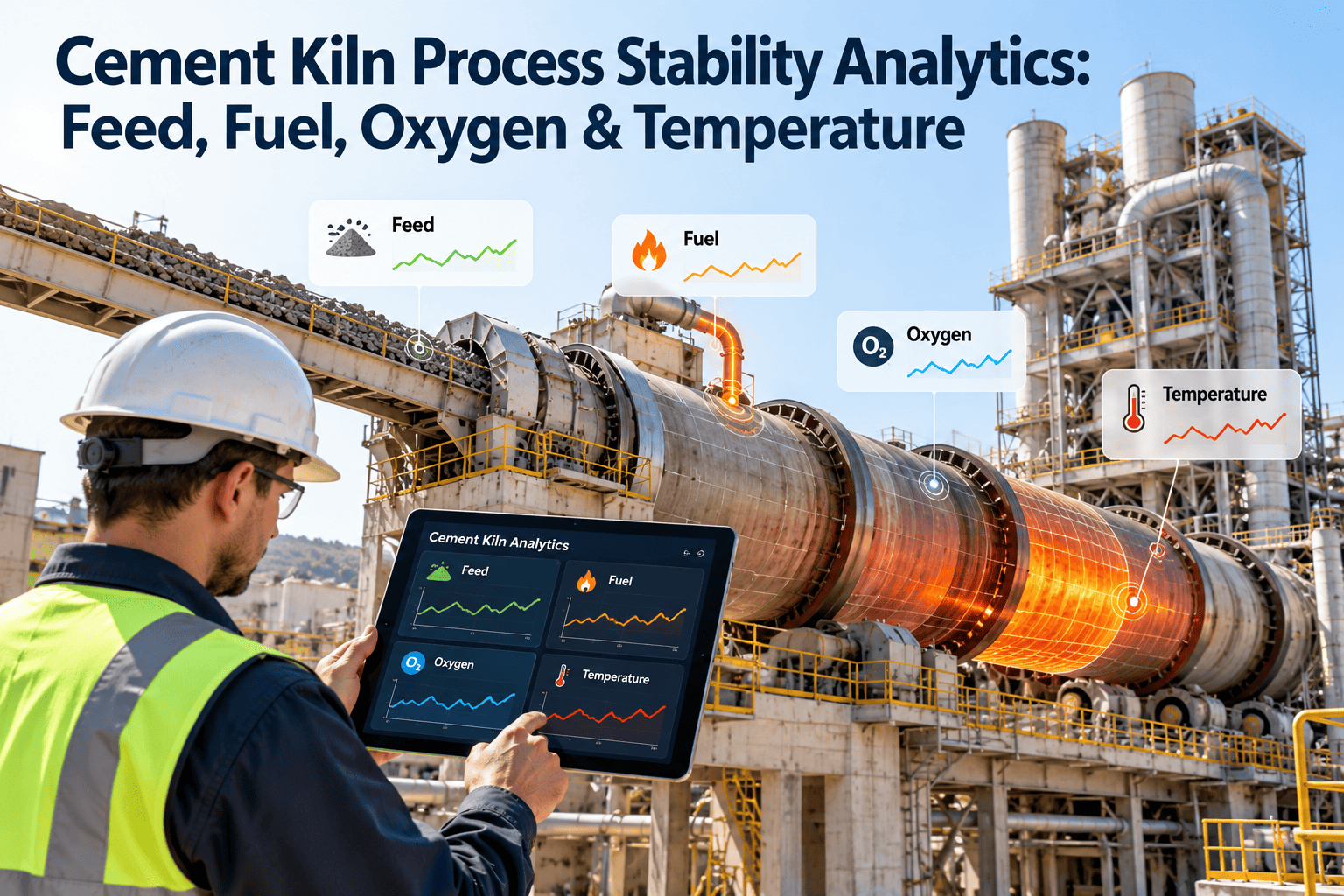
Cement kiln instability rarely begins with one dramatic event. It builds through small, uncorrected drifts in raw meal feed, fuel rate, excess oxygen and burning-zone temperature, each one nudging the others off balance. Operators respond with manual adjustments, shift after shift, and the kiln settles into reactive control that wastes fuel and stresses refractory. This guide shows how stability analytics links those four variables, and how a connected maintenance management platform keeps the feeders, burners, analyzers and sensors behind the data trustworthy.
Cement Kiln Process Stability Analytics: Feed, Fuel, Oxygen & Temperature
Why Manual Kiln Adjustments Keep the Process Unstable
A kiln operator watches dozens of trends at once. When oxygen climbs, the reflex is to trim the fan or raise fuel. When the burning zone cools, the reflex reverses. Each move is reasonable alone, yet together they create oscillation the process never recovers from.
Reactive manual control
- Set-points change after the deviation has already reached the burning zone
- Different shifts use different tactics for the same symptom
- Interventions are rarely logged with a reason
- Instrument faults surface only when a trend looks strange
- Feed and fuel are corrected together, hiding cause and effect
Analytics-supported control
- Early drift signals from feed, fuel, gas and temperature trends
- Shared operating windows and response guidelines across shifts
- Every intervention recorded against the trend that triggered it
- Analyzer and sensor health tracked as maintained assets
- One variable changed at a time, so effects are readable
How Feed, Fuel, Oxygen and Temperature Pull on Each Other
Stability analytics treats the four variables as a coupled system. Reading any one of them in isolation is how a correction in one place becomes a disturbance in another.
Signal-to-cause reference
| Variable | Drift to watch | Process symptom | Maintenance-side cause to check |
|---|---|---|---|
| Feed | Rate variation, chemistry shift | Burning zone swings, variable free lime | Weigh feeder calibration drift, rotary valve wear, silo extraction and aeration faults |
| Fuel | Calorific value, fineness, dosing accuracy | Flame shape change, CO spikes | Worn dosing feeders, mill classifier wear, partly blocked burner nozzles, alternative fuel feeding blockages |
| Oxygen | Excess oxygen and CO at kiln inlet | High heat consumption, unstable draft | Fouled analyzer probes, sample line leaks, false air at seals, ID fan condition |
| Temperature | Burning zone proxy, preheater exit, secondary air | Clinker quality variation, coating changes, build-up risk | Pyrometer lens contamination, thermocouple failure, cooler grate problems |
What to Trend and What to Maintain for Each Variable
Kiln feed
- Feed rate against set-point, with short-term variability
- Kiln feed chemistry trend from the lab or online analyzer
- Weigh feeder calibration status and last verified date
Fuel
- Main burner and calciner fuel rates, split and ratio
- Fuel fineness and mill outlet temperature
- Feeder wear, blockages and rotary valve condition
Oxygen
- Kiln inlet oxygen, CO and NOx together, never alone
- Analyzer response time and probe cleaning frequency
- False air entry points and ID fan speed behaviour
Temperature
- Burning zone proxy trend alongside kiln drive current
- Preheater exit and secondary air temperatures
- Pyrometer lens condition and thermocouple continuity
What an Unstable Kiln Costs the Plant
Instability is rarely a single line item. It spreads across fuel, quality, equipment life and emissions, which makes it easy to underestimate. Quantify it with your own plant data rather than industry averages.
Where Unreliable Signals Do the Most Damage
Analytics is only as good as the measurement behind it. This matrix ranks common instrument and feeder problems by how likely they are to go unnoticed and how much process impact they carry.
Reading the Burning Zone Without a Direct Measurement
No single sensor tells the operator the true burning-zone temperature. Plants combine several proxies, and analytics works best when each proxy's weaknesses are understood and maintained.
Kiln drive load
- Check drive current transducer calibration
- Compare with kiln speed and feed changes
NOx trend
- Verify analyzer response time
- Inspect sample conditioning regularly
Secondary air temperature
- Inspect cooler grate and fan condition
- Check thermocouple placement and wear
Shell scanner and pyrometer
- Clean optics on a fixed schedule
- Review scanner alignment after kiln shutdowns
A Five-Step Stability Analytics Cycle
Define operating windows
Validate the signals
Detect drift early
Route the right action
Close the loop
The Equipment Behind the Data Needs a Plan Too
Most stability losses that look like process problems start as ordinary equipment faults. A planned routine for the assets below removes a large share of unexplained swings.
Feed and fuel metering
- Scheduled weigh feeder calibration and belt or screw inspection
- Rotary valve and airlock wear checks
- Coal and petcoke mill classifier and fineness verification
- Alternative fuel feeding line blockage and bridging inspection
- Burner tip, pipe and swirl condition during planned stops
Gas and temperature measurement
- Oxygen and CO probe cleaning and calibration gas checks
- Sample line, filter and cooler inspection
- Pyrometer lens cleaning and alignment
- Thermocouple continuity and insulation tests
- Seal and expansion joint checks to limit false air
Give Every Kiln Deviation a Traceable Maintenance Answer
Connecting Stability Needs to Maintenance Workflows
Oxmaint does not replace the kiln control system or the process historian. It manages the maintenance side, so the equipment feeding those systems stays calibrated, inspected and documented.
| Stability need | Oxmaint capability | Practical result |
|---|---|---|
| Recurring analyzer and feeder calibration | Preventive maintenance scheduling with recurring work orders | Calibration is planned, assigned and evidenced rather than remembered |
| History of each instrument | Asset management with failure and repair records | Repeat probe or feeder faults become visible |
| Operator observations on rounds | Mobile inspections that raise work orders on site | Plugged sample lines and worn feeders are reported with photos |
| Spare probes, lenses, nozzles | Inventory and reorder tracking | Critical measurement spares are on the shelf when needed |
| Condition triggers from monitored data | Condition-based maintenance workflows | A drift alert becomes an inspection task automatically |
| Management visibility | Dashboards and reporting | Calibration compliance and overdue instrument work are easy to review |
KPIs for Kiln Stability and Instrument Reliability
From Trend Screens to Advisory and Closed-Loop Control
Kiln optimisation tools are moving from displays toward advice and, in some plants, automated set-point adjustment. Each step raises the importance of reliable inputs.
Alternative fuels raise the stakes
- Variable moisture and calorific value demand faster combustion feedback
- Feeding systems for shredded or fibrous fuels block more easily than coal feeders
- Co-processing records support environmental permit and reporting requirements
Shift Handover and Changeover Practices That Preserve Stability
Analytics cannot compensate for inconsistent habits. Clear handover content and controlled changeovers keep each shift working from the same understanding of the kiln.
Outgoing shift records
- Set-points changed and the trend that justified each change
- Instruments that looked unreliable or were bypassed
- Fuel type, bin and feeder in use, plus any alternative fuel notes
- Open maintenance requests and their expected completion
Incoming shift confirms
- Analyzer and feeder status before accepting current trends
- Operating window still matches current raw mix and fuel
- Which overrides remain active and who owns them
- Planned stops, cleaning jobs and calibration visits
Managing fuel and feed changeovers
- Change one major input at a time and hold long enough to see the response
- Check feeder calibration after switching fuel type or storage bin
- Brief operators on expected calorific value and moisture before alternative fuel batches arrive
- Log the changeover time so later trend reviews can explain the response
Common Mistakes in Kiln Stability Programmes
Many analytics projects stall because the basics are skipped. These patterns appear repeatedly and are easy to correct early.
- Setting alarm limits from design values instead of the plant's actual stable running history
- Trusting a trend without checking when its sensor was last calibrated or cleaned
- Treating alternative fuel variability as a purely operator problem, when feeding equipment is often the cause
- Reviewing stability only after a major event, rather than weekly against agreed KPIs
- Keeping process notes and maintenance records in separate places, so patterns across both stay hidden
- Adding advanced models before basic measurement reliability is proven
A simple weekly review rhythm
- Process and maintenance leads review time inside window and manual override counts together
- Overdue calibration and inspection tasks are listed by area and assigned
- Any recurring deviation is converted into a corrective work order with an owner