Mean Time to Repair is the single number that tells you how efficiently your maintenance team responds to equipment failures — and for most cement plants running manual work order systems, it is silently much higher than it should be. When a kiln drive fails or a cement mill trips, the time lost tracking down parts, locating the right technician, and coordinating repair steps on phone calls and paper adds hours to every incident. For one mid-sized cement plant, that number was 11.2 hours. Eight months after deploying OxMaint's mobile parts kitting system and spare parts criticality framework, the same plant had cut that figure to 6.4 hours — a 43% reduction without a single capital investment in new equipment. Sign in to OxMaint to explore how the platform is built to compress repair times, or book a demo to walk through the MTTR reduction methodology with our team.
Case Study · Cement Plant · MTTR Reduction
43% Drop in Mean Time to Repair. 8 Months. No New Equipment.
One cement plant reduced MTTR from 11.2 hours to 6.4 hours using OxMaint mobile parts kitting and spare parts criticality classification — eliminating the hidden time losses that paper-based maintenance systems cannot see.
Before OxMaint
11.2h
Average MTTR
After OxMaint
6.4h
Average MTTR
4.8h
Time Saved Per Incident
Where the 4.8 Hours Were Being Lost
Parts Search Time
~1.8 hours per incident
Technicians physically searching the warehouse for the right spare part — no digital catalogue, no bin location system, no criticality flag to indicate what should be stocked.
Waiting for Authorization
~1.3 hours per incident
Work orders raised on paper, passed to supervisor by hand. No mobile notification, no escalation timer. Supervisor approval often delayed by shift changes or site walkabout.
Technician Coordination
~1.0 hours per incident
Finding the right skilled technician via phone calls and verbal messages. No visibility into who was available, what jobs they were on, or what skills were needed for the repair.
Documentation After Repair
~0.7 hours per incident
Post-repair paperwork completed at end of shift, sometimes hours after job closure. Work history not updated in real time, leaving asset records incomplete for future reference.
Two Features That Drove the Reduction
Feature 1 · Mobile Parts Kitting
Parts Ready Before the Technician Arrives
OxMaint's mobile parts kitting allows maintenance planners to pre-select all required spare parts for a work order from the digital catalogue, generating a pick list that warehouse staff can kit before the technician reaches the asset. When the repair starts, parts are already staged — eliminating the 1.8-hour search cycle that previously consumed nearly a third of every MTTR.
62%
reduction in parts search time
94%
of kitted orders had all parts available on first pick
Feature 2 · Spare Parts Criticality
Stock the Right Parts Before Failures Happen
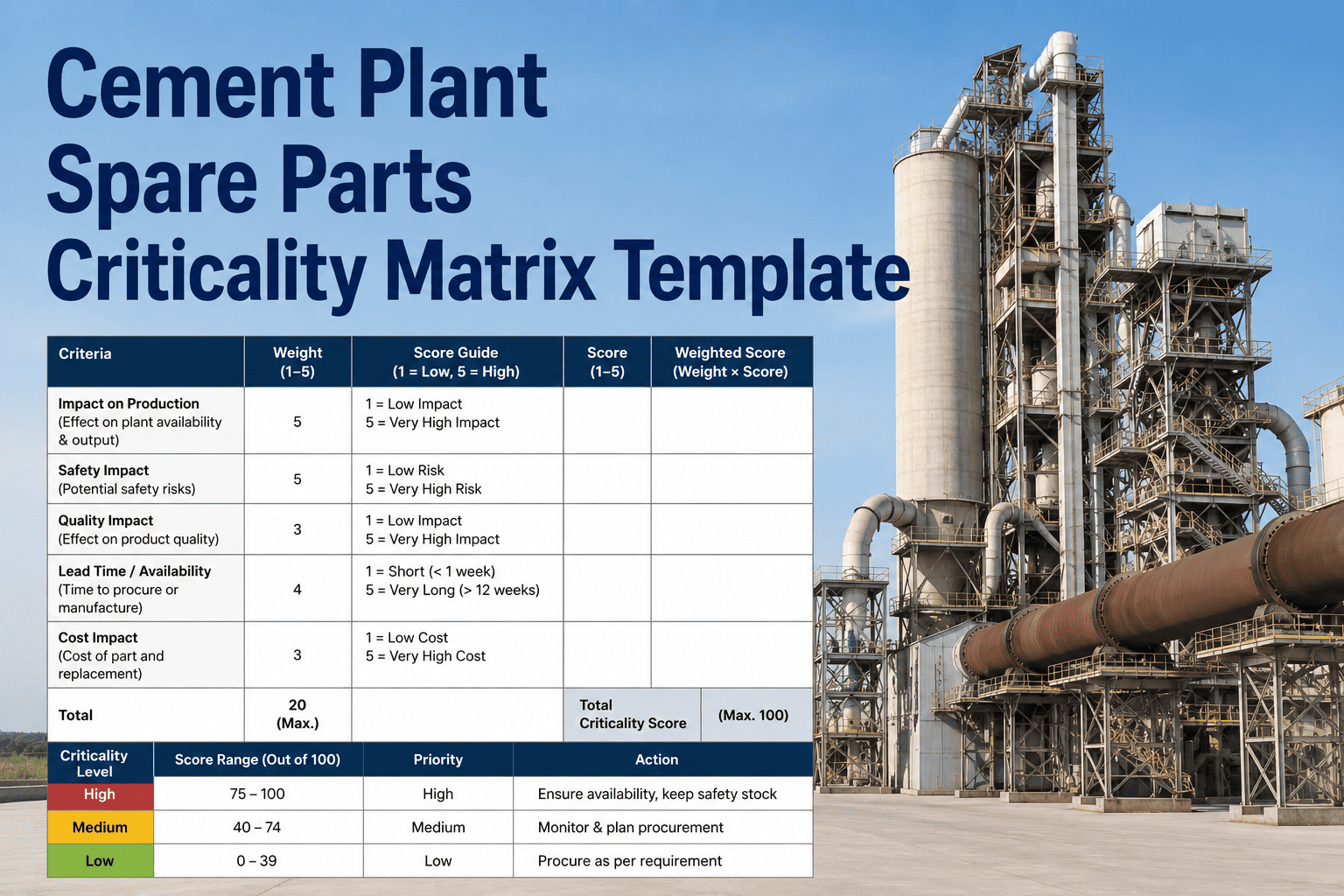
OxMaint's spare parts criticality framework classifies every part by equipment criticality, failure frequency, and lead time — identifying which parts must be held in buffer stock versus which can be ordered on demand. This plant had previously run out of kiln drive coupling spares three times in 18 months. After criticality classification, minimum stock levels were set for all A-class parts. Zero stockout incidents occurred in the eight months following implementation.
0
stockout incidents post-implementation
31%
reduction in emergency procurement spend
Every hour above your target MTTR is an hour of unplanned downtime cost. OxMaint is built to close that gap.
See how the parts kitting and criticality tools work for your plant's equipment and failure profile.
Month-by-Month MTTR Progress
| Month |
Avg MTTR (hrs) |
Key Milestone |
OxMaint Feature Active |
| Month 1 |
11.2 |
Baseline measurement established |
Asset hierarchy & work order setup |
| Month 2 |
10.6 |
Digital work orders live — approval time reduced |
Mobile work order & supervisor notifications |
| Month 3 |
9.8 |
Spare parts catalogue digitized — search time down |
Digital spare parts catalogue with bin locations |
| Month 4 |
9.1 |
Criticality classification completed for A & B parts |
Parts criticality framework — min stock levels set |
| Month 5 |
8.4 |
Mobile kitting active — first pre-kitted repairs logged |
Mobile parts kitting on all planned work orders |
| Month 6 |
7.6 |
Kitting extended to reactive work orders |
Technician skill matching & availability visibility |
| Month 7 |
7.0 |
Zero stockouts — first month with full A-class buffer stock |
Auto-reorder triggers on critical parts |
| Month 8 |
6.4 |
43% reduction confirmed — new MTTR target set at 5.5h |
Full platform — all features active |
What Changes in Your Maintenance Operation
Before: 1.8h parts search per incident
→
After: Parts pre-kitted and staged before technician arrives
Before: Supervisor approval via paper hand-off
→
After: Mobile notification — approval in under 8 minutes average
Before: Emergency procurement when critical parts run out
→
After: Auto-reorder triggers maintain buffer stock on A-class parts
Before: Post-repair paperwork completed hours later
→
After: Technician closes work order from mobile at job completion
Before: No visibility into repeat failures or failure patterns
→
After: Failure history by asset enables pattern detection and PM updates
Before: MTTR tracked monthly in spreadsheets — always 30 days late
→
After: Real-time MTTR dashboard updated with every work order closure
Frequently Asked Questions
What is mobile parts kitting and how does it reduce repair time?
Mobile parts kitting allows planners to assign required spare parts to a work order digitally. Warehouse staff receive a pick list and stage all parts before the technician begins work — eliminating the time spent searching for parts during a live failure event.
Sign in to OxMaint to see the parts kitting workflow.
How does OxMaint classify spare parts by criticality?
OxMaint's criticality framework evaluates each spare part based on the criticality of the equipment it supports, historical failure frequency, and supplier lead time. A, B, and C class parts are assigned minimum stock levels accordingly — ensuring high-risk parts are always available when failures occur.
How long does it take to see MTTR improvements after deploying OxMaint?
Most cement plants see measurable MTTR reductions within the first 60–90 days as digital work orders eliminate approval delays. Parts kitting and criticality benefits compound over 4–6 months as the spare parts catalogue is built and buffer stocks are established.
Book a demo to discuss timelines for your plant.
Does OxMaint work for both planned and reactive maintenance at cement plants?
Yes. OxMaint manages the full work order spectrum — planned PM schedules, condition-based maintenance triggers, and reactive breakdown work orders. Parts kitting is available for both planned jobs and emergency reactive jobs raised from the mobile app.
Can I track MTTR by equipment type or plant area in OxMaint?
OxMaint's analytics dashboard shows MTTR filtered by asset category, plant area, technician, failure type, and date range. Kiln MTTR, mill MTTR, and utilities MTTR are trackable independently — giving engineering managers the data to prioritize improvement efforts by impact.
OxMaint CMMS · Cement Plant MTTR Reduction
Your MTTR Has a Ceiling. The Right CMMS Breaks It.
Stop losing hours to parts searches, approval delays, and coordination gaps. OxMaint gives your maintenance team the tools to respond faster, repair smarter, and track every minute of improvement.