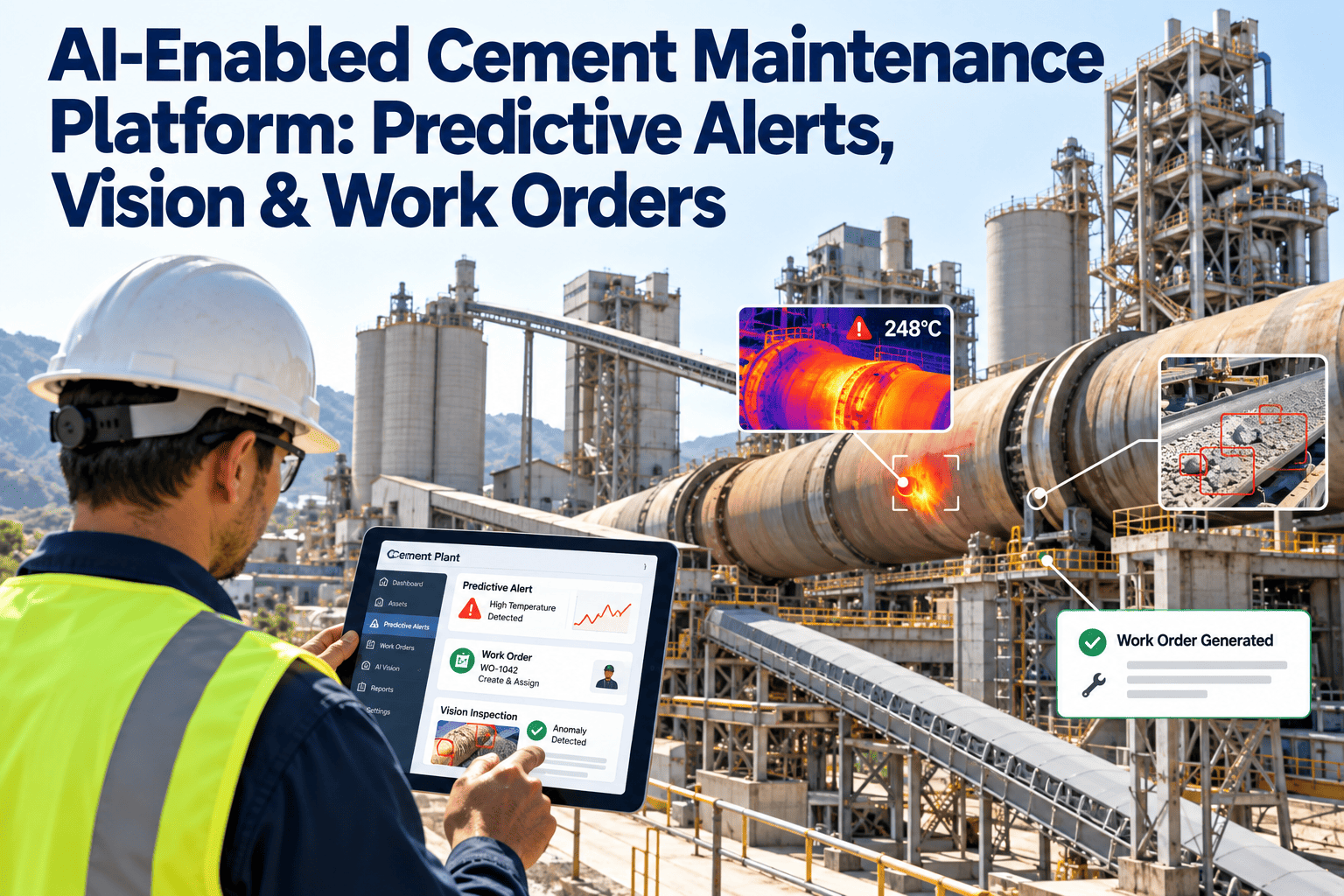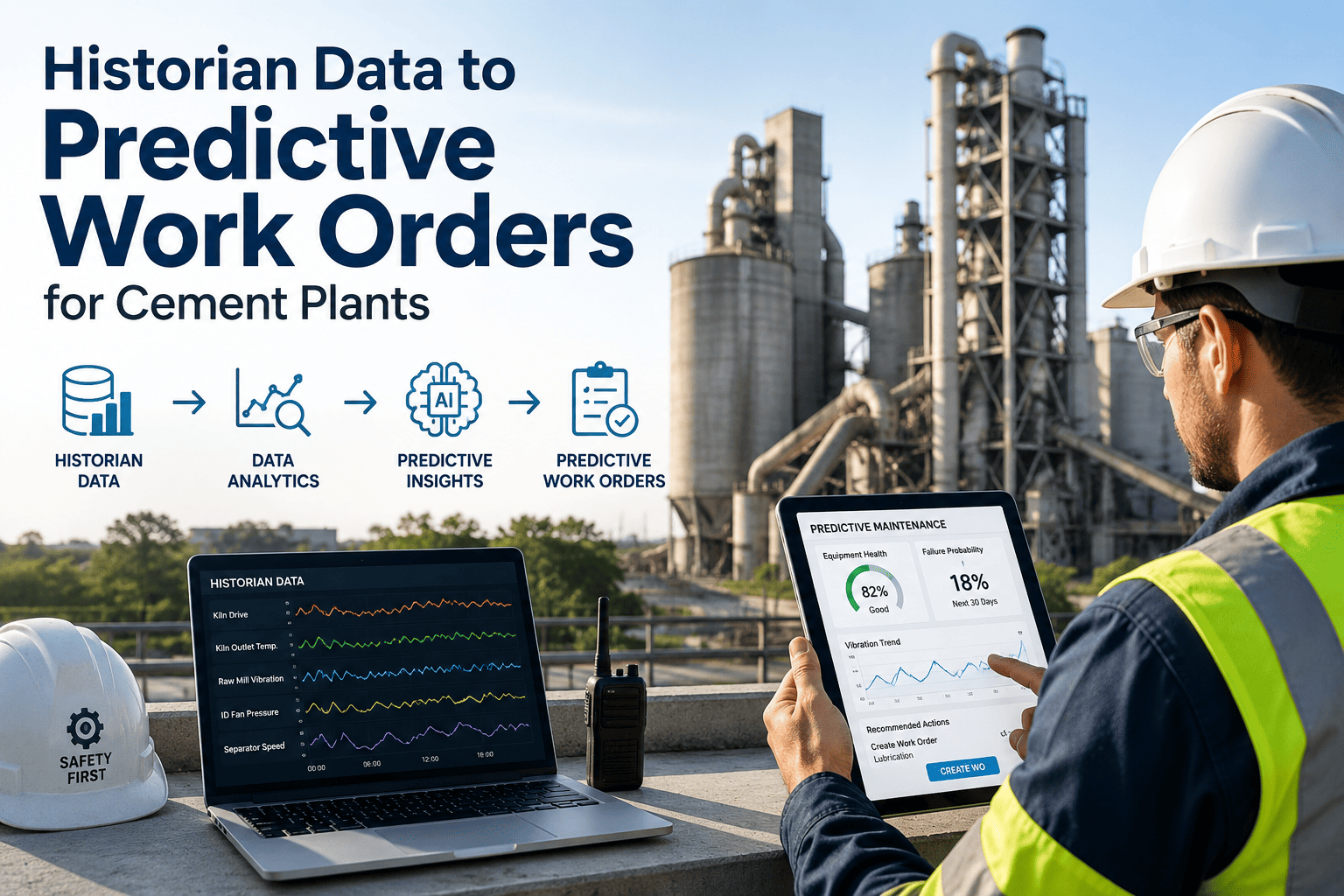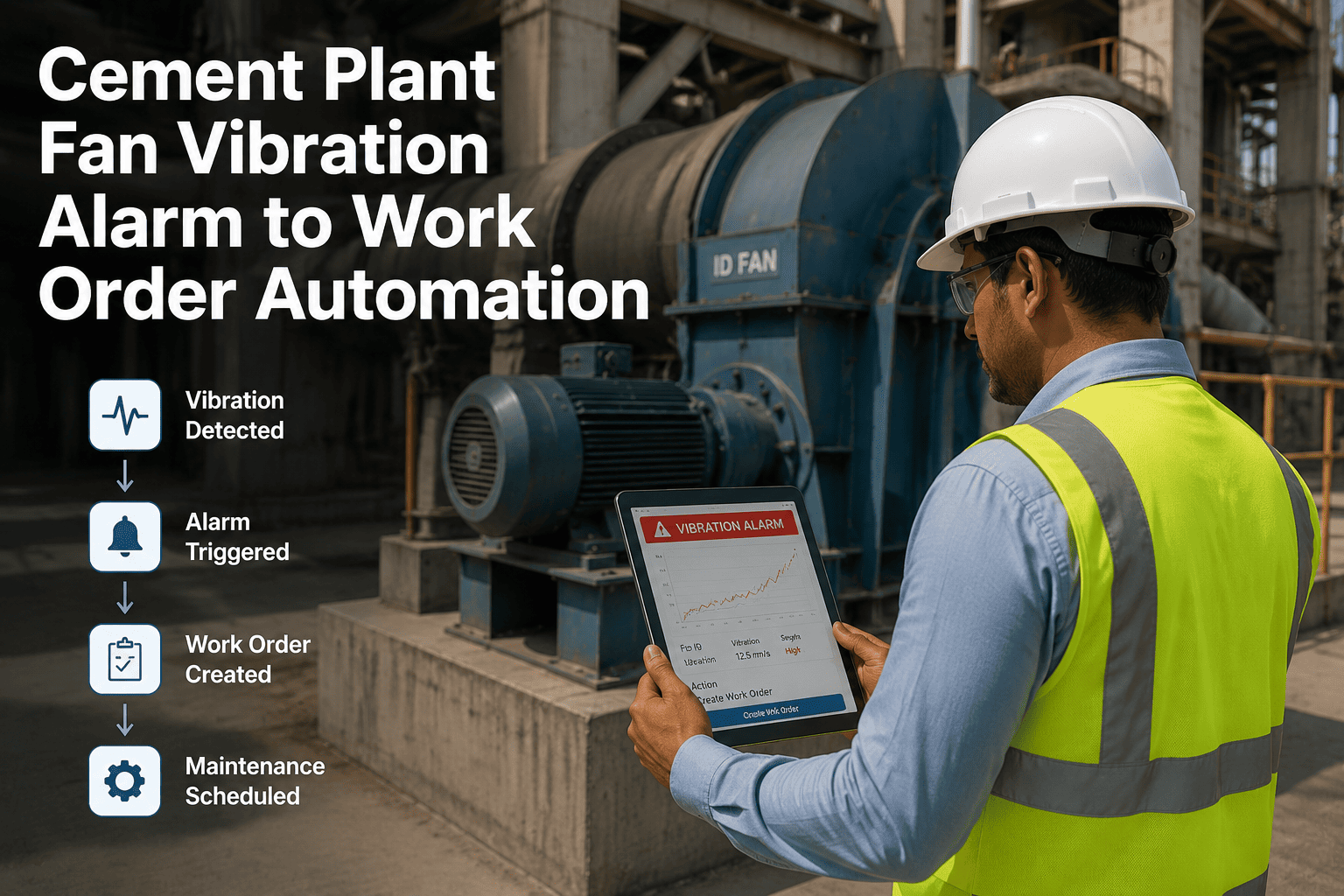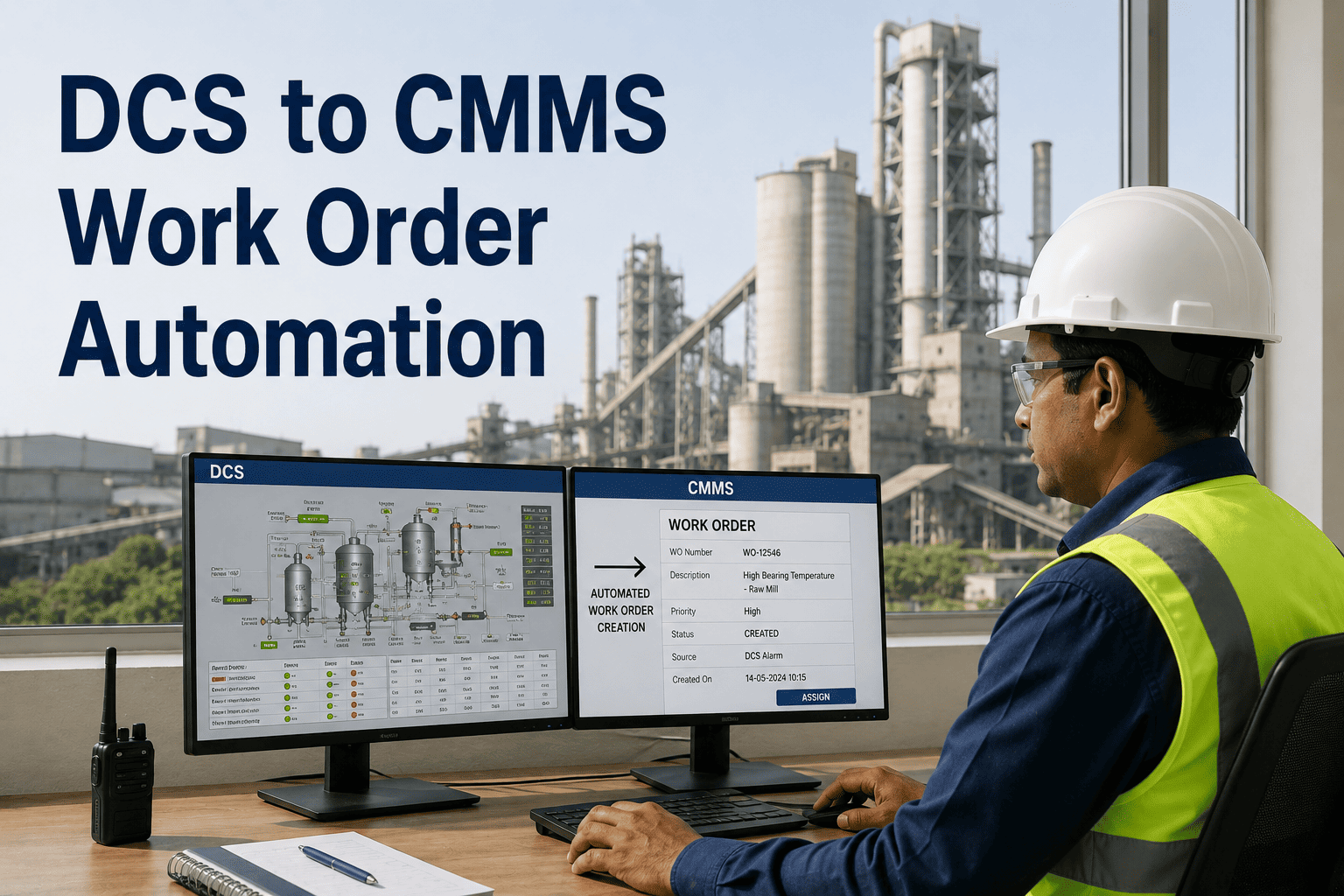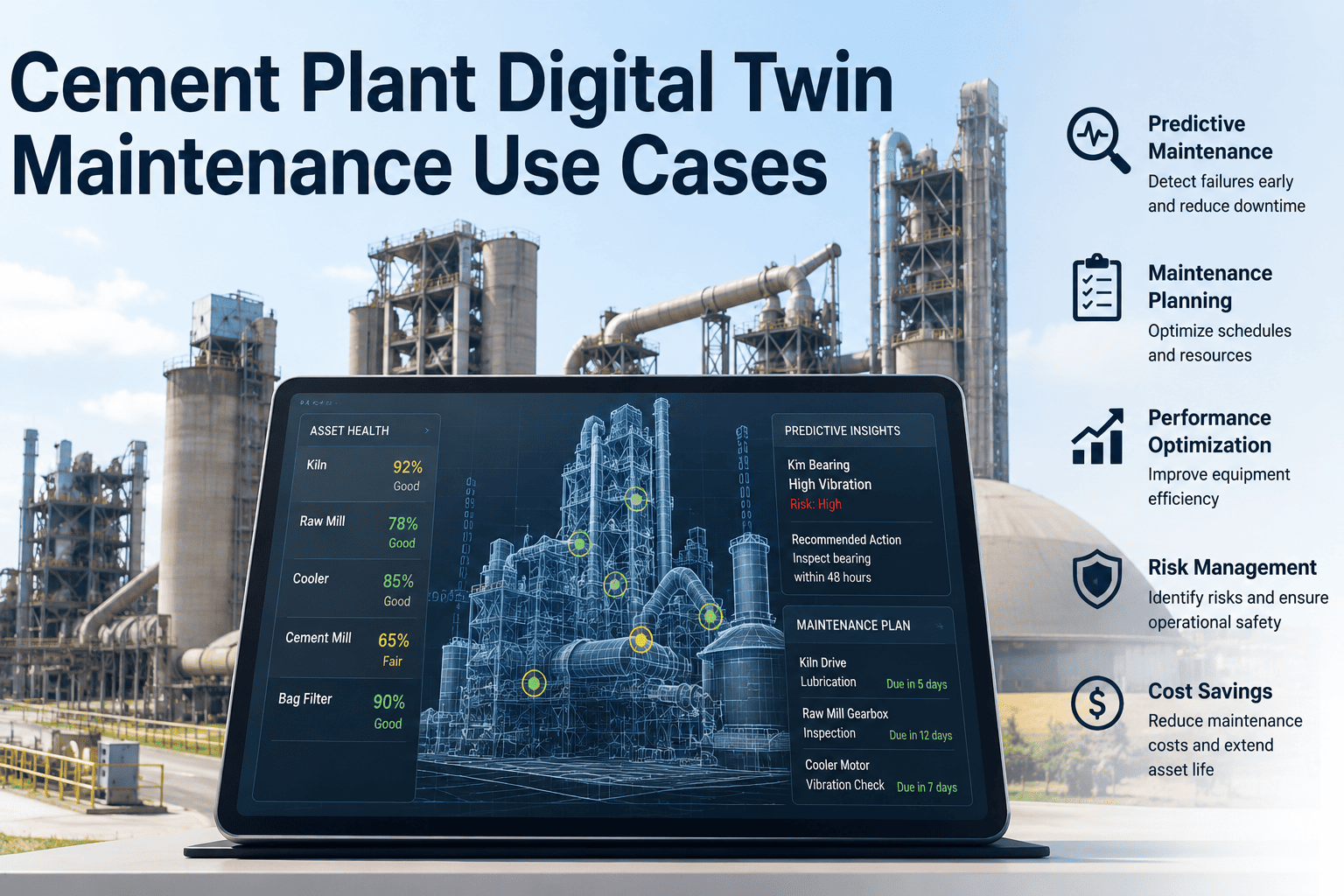
A digital twin sounds like something only aerospace or automotive plants can afford — until you realize most cement plants already collect the sensor data needed to build one, it just sits scattered across SCADA, vibration monitors, and spreadsheets instead of one connected model. The real value isn't a 3D visual; it's the ability to simulate a failure before it happens and test a maintenance decision before committing a crew to it. OxMaint's AI analytics layer turns existing plant data into a living maintenance twin without a multi-year IT project, and you can explore it with a free trial against your own asset data.
Your Plant Already Has the Data for a Digital Twin. It Just Isn't Connected Yet.
A maintenance digital twin doesn't require new sensors on day one — it requires connecting what you already measure into a single model that predicts failure, simulates outcomes, and prioritizes repairs before breakdowns happen.
Three Layers Stacked on Data You Already Have
Vibration readings, temperature trends, run hours, and past work order history are pulled into one unified asset profile — replacing scattered spreadsheets and disconnected SCADA exports.
OxMaint's AI builds a behavioral model of each critical asset — kiln drives, ID fans, raw mills — learning what normal operation looks like so it can flag deviation long before alarms trigger.
Before scheduling a repair, planners can simulate the cost of waiting versus acting now — comparing downtime risk, spare part lead time, and production impact side by side.
See What Your Plant's Digital Twin Would Actually Predict
Connect your existing sensor and work order data to OxMaint and see live failure-risk modeling on your most critical cement plant assets within days, not quarters.
Where Cement Plants Are Already Using Digital Twin Maintenance
Modeling torque and temperature trends against historical failure signatures to forecast bearing or gear wear weeks ahead of a forced shutdown.
Continuous comparison of live vibration signatures against the fan's own historical baseline, catching imbalance or misalignment before it escalates.
Linking throughput changes to liner and roller wear rates, helping planners time replacements around production schedules instead of guesswork.
Testing different shutdown work scopes against the twin model to identify which combination of repairs delivers the best reliability gain per downtime hour.
Digital Twin Maintenance — What Plant Teams Ask
Do we need new sensors before starting a digital twin project?
How accurate is failure prediction when the model is new?
Can the twin simulate the cost of delaying a repair?
Which cement plant assets benefit most from a digital twin first?
How long does it take to see a working digital twin model?
Turn Scattered Sensor Data Into a Predictive Maintenance Twin
OxMaint connects your existing plant data into one model that forecasts failure, simulates repair timing, and helps your team act before the next breakdown call.