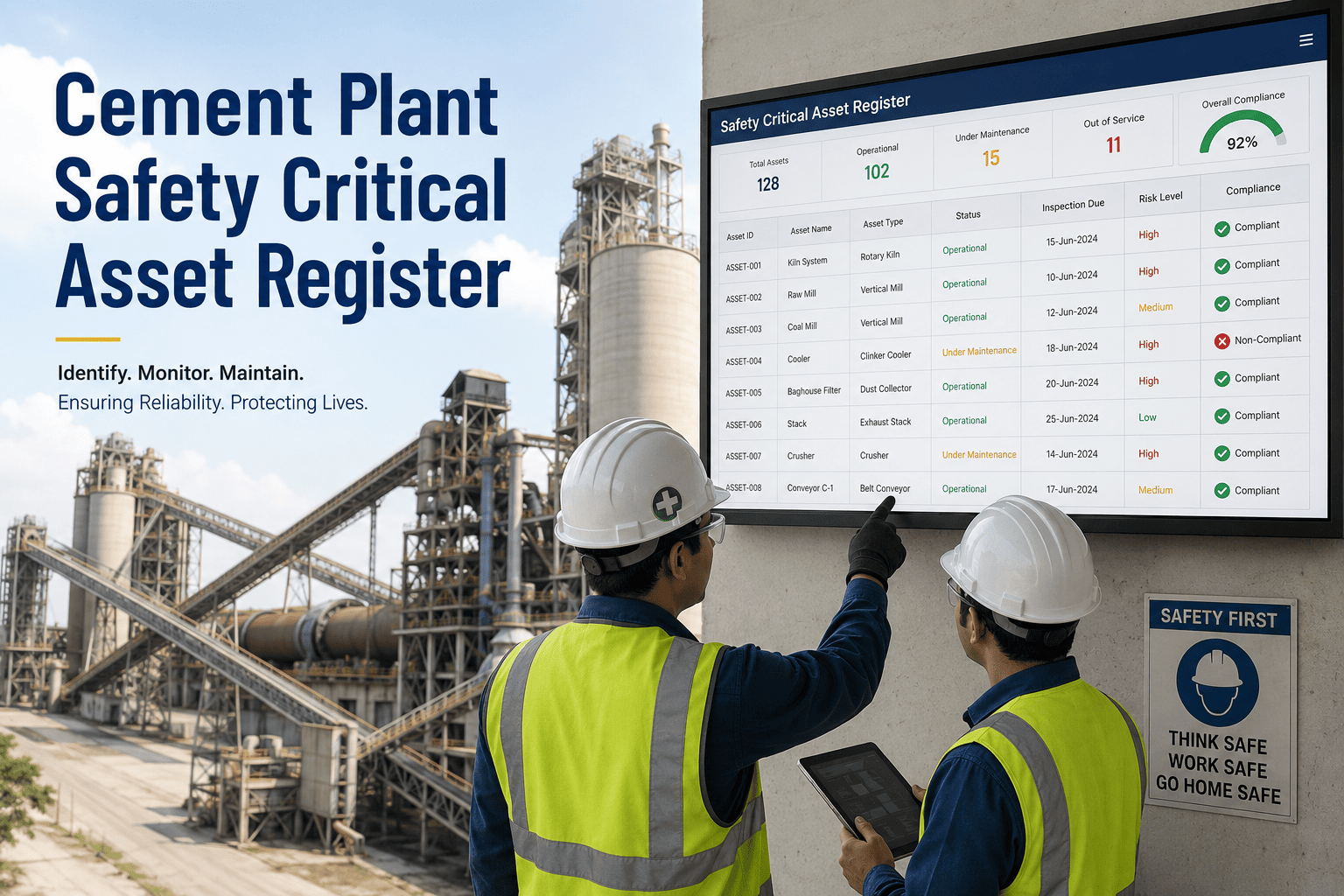
A cement plant doesn't have one safety-critical asset list — it has pressure vessels, cranes and slings, fire systems, confined space entry points, machine guards, and electrical isolation gear, each governed by a different inspection clock and a different regulation. When that register lives across spreadsheets, paper certificates, and whoever happens to remember an expiry date, the gap doesn't show up until an inspector asks for a record nobody can produce, or worse, until equipment that should have been tagged out of service stays in use past its certification window. A single digital register ties every safety-critical asset to its inspection schedule, its current certification status, and its full audit trail in one place. See how that register is structured inside OxMaint, or book a demo to map it against your own asset list.
Know the Status of Every Safety-Critical Asset, Always
One register for pressure vessels, lifting equipment, fire systems, and confined space points — with certification status and inspection history available the moment an inspector asks.
What Actually Belongs in a Safety-Critical Register
Not every asset carries the same risk if an inspection slips. These are the categories that consistently appear in citation records when documentation falls behind.
Air receivers, hydraulic accumulators, and boilers — each needing certification tracking with expiry alerts, not a filed certificate nobody checks.
Cranes, hoists, and slings need load test records and an out-of-service tagging workflow the moment a deficiency is found.
Extinguishers checked monthly, suppression systems tested quarterly, hydrant flow tests annually — three different clocks on one category.
Silos, preheater towers, and mill compartments each need a unique entry permit with atmospheric testing — blanket permits don't satisfy the requirement.
Conveyor nip points, mill guards, and fan housings audited with photographic evidence — a repeat deficiency reads as a wilful violation.
Kiln drives, mill motors, and high-voltage switchgear each require their own written lockout-tagout procedure, not a generic plant-wide policy.
Six Categories, Six Different Inspection Clocks
The reason paper registers fall behind isn't carelessness — it's that no single calendar can hold six different cadences without something getting missed.
| Asset Category | Inspection Frequency | Key Record Required |
|---|---|---|
| Pressure vessels | Annual third-party | Certification with expiry date |
| Lifting equipment | Quarterly | Load test record, deficiency log |
| Fire extinguishers | Monthly | Inspection tag with date and inspector ID |
| Fire suppression systems | Quarterly | Test record and certification number |
| Confined space entries | Per entry event | Atmospheric reading, attendant log, rescue plan |
| Machine guarding | Quarterly | Photographic audit evidence |
The Window Between "Valid" and "Expired" Is Where Citations Happen
A certification doesn't fail gradually — it's valid one day and expired the next, and the only thing that catches that exact moment is an alert tied to the actual record, not a person's memory of when it's due.
That last step is the one paper-based tracking almost never enforces — a register can flag an asset as expired, but only a system tied to work order creation can actually stop it from being used.
Map Your Safety-Critical Assets Into One Register
Bring your pressure vessel, lifting equipment, and confined space list — we'll show you exactly how certification tracking and expiry alerts work against your own assets.
What Changes When the Register Goes Digital
The difference isn't more paperwork — it's the same records, finally in a place where a status check takes seconds instead of an afternoon of searching.
"Every plant I've audited has a safety-critical asset list somewhere — the problem is never that it doesn't exist, it's that it exists in four different places and nobody can say with confidence which version is current. The moment a register is tied to actual work order enforcement, the conversation changes completely. You stop asking staff to remember when the crane inspection is due, and the system simply won't let that crane get assigned to a lift until the record is current. That single structural change closes more gaps than any amount of additional training ever does."
Frequently asked questions
Put Every Safety-Critical Asset on One Always-Current Register
Pressure vessels, lifting equipment, fire systems, and confined space points — one register, automatic expiry alerts, and an audit trail that's ready before the inspector asks.