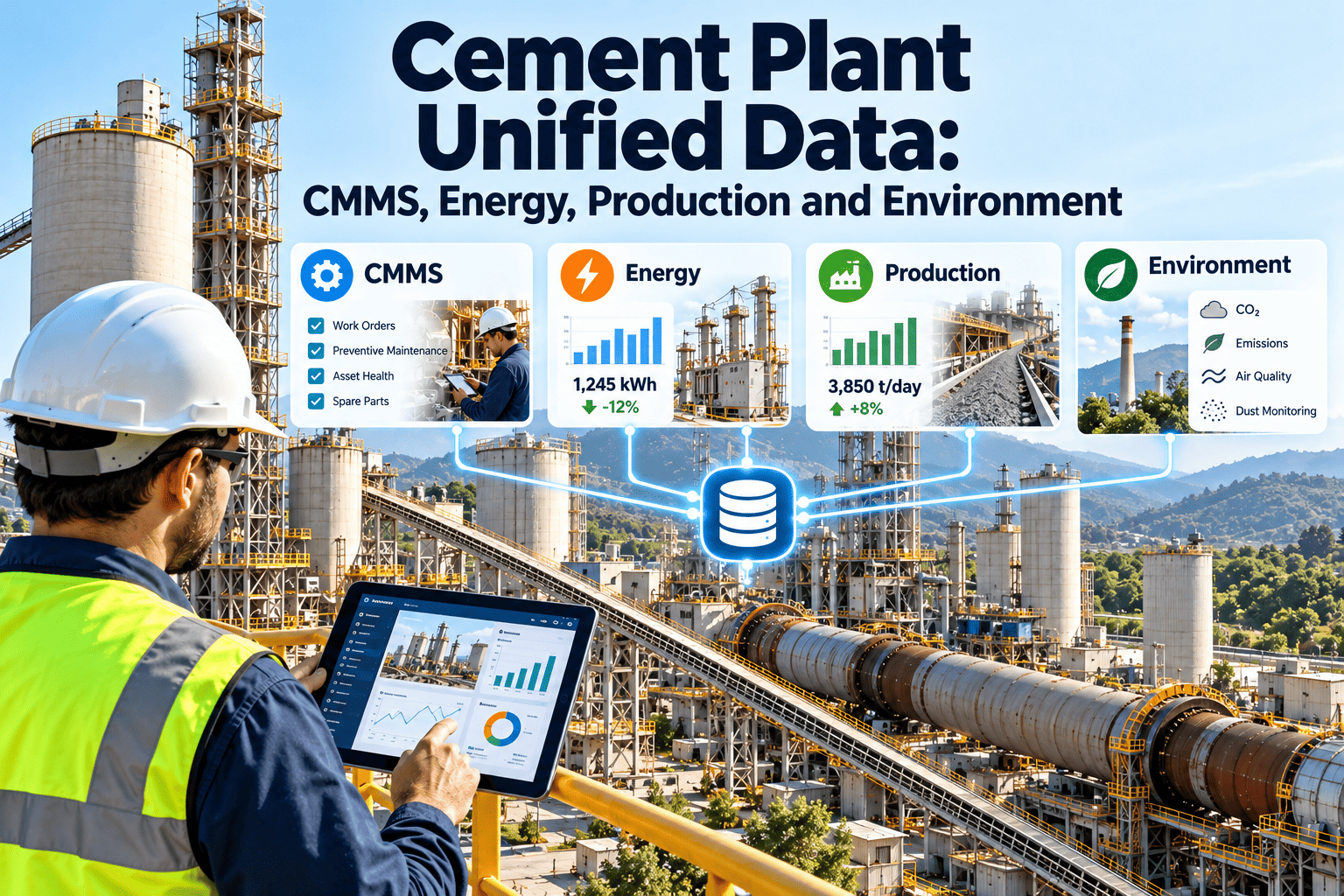
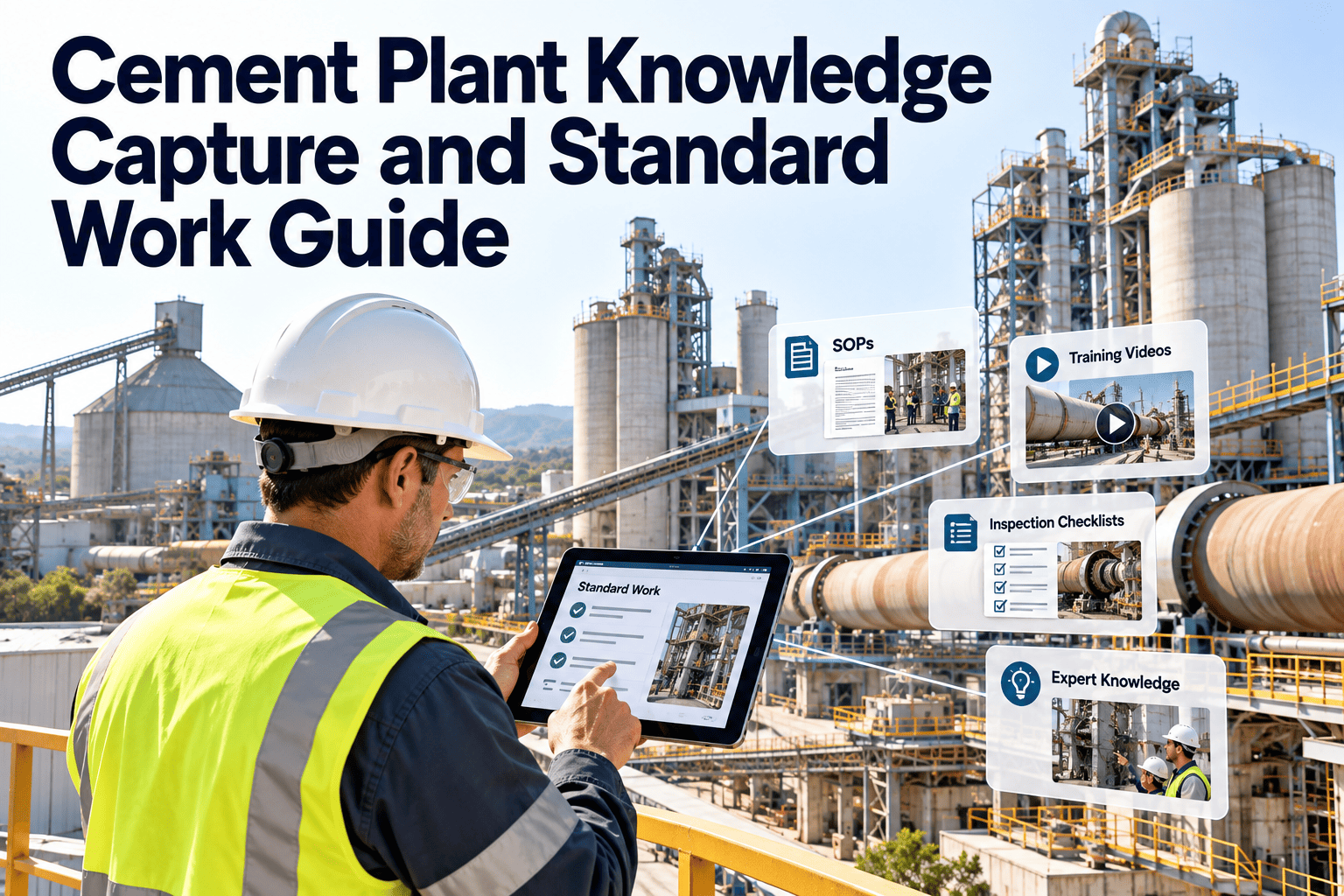
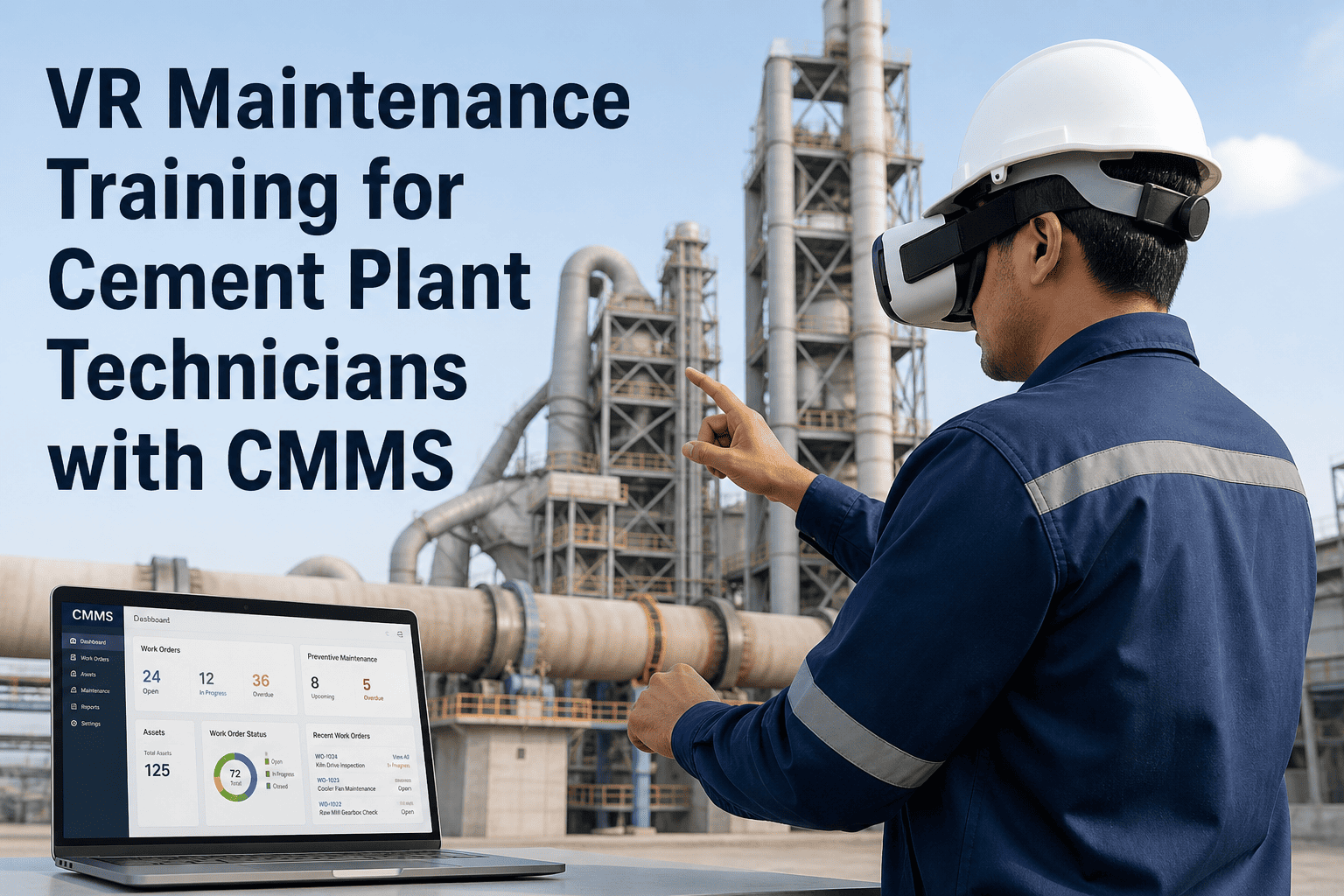
When Sarah retires from your cement plant after 28 years as a kiln technician, she does not leave behind a gap on the headcount sheet. She leaves behind 28 years of accumulated equipment intuition — the listening check she does when passing the main drive, the vibration feel she detects on the girth gear before any sensor fires, the undocumented workarounds she developed for the support roller lubrication anomaly that only happens in high summer. None of that is in your CMMS. None of it is in any manual. And the day she walks out, it is permanently gone. This guide covers the workforce crisis reshaping cement plant maintenance in 2026, what apprenticeship programmes actually need to work, and precisely how AI-assisted procedures and CMMS-based knowledge capture turn veteran expertise into institutional assets that survive retirement. Start capturing your plant's maintenance knowledge in Oxmaint free and begin building the institutional memory your next generation of technicians will rely on.
Cement Industry
Workforce
Knowledge Management
Cement Plant Workforce Shortage: Apprenticeships and Tribal Knowledge Capture
How cement plants are replacing reactive hiring with structured apprenticeship programmes, AI-assisted procedures, and CMMS-driven knowledge capture — before the retirement wave takes the last of their institutional expertise.
The 2026 Workforce Reality
68%
of maintenance technicians are over age 45 — the highest concentration in industrial history
20:1
Skilled trade job openings for every one new worker entering the trades through 2032
$47M
Annual cost per company of poor knowledge transfer — rework, errors, and duplicated problem-solving
55%
of mission-critical cement plant processes documented only in the heads of employees aged 55+
The Scale of the Problem
Three Converging Forces Driving the Cement Plant Workforce Crisis
The shortage is not a hiring problem that more recruitment will solve. It is three structural forces converging simultaneously — and cement plants that treat it as a vacancy issue rather than a knowledge infrastructure problem will not recover within a standard planning horizon.
01
The Retirement Wave
25% of the manufacturing workforce is currently over 55. In cement — a higher-average-age industry than most — the proportion is steeper. These are not junior employees. They are the technicians who have worked the same kiln for 15 to 30 years, whose entire accumulated expertise exists in their bodies and minds, not in any system. When they retire, they retire permanently. The knowledge does not come back.
3.8M manufacturing jobs need filling by 2033 — 2.8M are direct retirement replacements
02
The Pipeline Gap
New entrants to the skilled trades are not replacing retirees at the same rate they are leaving. McKinsey estimates 20 open skilled trade positions for every one new worker through 2032. Specialized cement plant roles — refractory technicians, kiln alignment specialists, girth gear mechanics — take up to 60 days to hire and 12 to 24 months to reach independent operation without a structured programme to close the gap faster.
60 days average hire time for specialized maintenance roles in 2026 — then 12–24 months to full productivity
03
The Knowledge Infrastructure Gap
Most cement plants have no systematic process for capturing what their veterans know. Repair logs are incomplete. SOP documents are written for generic equipment, not plant-specific configurations modified over 20 years. When a veteran diagnoses a kiln trunnion fault by vibration feel and corrects it in 40 minutes, that diagnostic pathway exists nowhere in writing. The next technician starts from zero — and takes eight hours and three failed attempts to find the same answer.
Plants without knowledge capture operate 48% below achievable maintenance performance after the first retirement wave
What Is At Risk
The Four Types of Tribal Knowledge a Retiring Cement Plant Technician Carries
Not all expertise is equally hard to replace. Understanding what categories of knowledge are leaving with your senior workforce is the first step to knowing where to focus your capture programme — before the retirement date arrives.
D
Diagnostic Intuition
The ability to detect an early bearing fault by sound, vibration feel, or smell before any sensor fires — built across thousands of repetitions on the same equipment over years of operation. Cannot be transferred through job shadowing alone; requires structured observation and documentation protocols.
Highest loss risk — impossible to rebuild once retired
W
Plant-Specific Workarounds
Every cement plant has equipment that has been modified, adapted, or coaxed into behaviour that deviates from OEM specifications. Senior technicians know exactly how their kiln behaves differently from the manual — and what to do when it does. New hires follow the manual and trigger failures the veteran would have avoided instinctively.
High loss risk — unique to your plant's equipment history
S
Seasonal and Process Context
Experienced technicians know that the kiln support roller lubrication system runs differently in monsoon season, that the ID fan bearings show false high-temperature readings when ambient humidity exceeds 85%, and that the girth gear backlash measurement requires a specific compensation for summer shell expansion. None of this is in any procedure document.
High loss risk — only discovered through repeated failure after retirement
N
Supplier and Contractor Networks
Senior technicians carry relationships with specialist contractors, OEM contacts, and parts suppliers developed over decades — including who actually answers the phone at 2 AM during an emergency, which vendor delivers ahead of schedule, and which specifications to reject from which supplier based on past quality failures. This network walks out with them.
Medium loss risk — partially recoverable through CMMS vendor records and contact capture
Start capturing your veteran technicians' knowledge today — before the next retirement date arrives
Oxmaint converts every maintenance event, diagnostic finding, and repair decision into a permanent, searchable knowledge asset — accessible to any technician on any device at the equipment location.
Apprenticeship Framework
What a Structured Cement Plant Apprenticeship Programme Actually Requires
Most cement plants confuse apprenticeship with job shadowing. Following a senior technician for three months transfers habits, not knowledge. A structured apprenticeship programme is built around deliberate knowledge extraction, documented skill milestones, and a CMMS that captures what was learned — not just what was done.
Months 1–3
Foundation and Equipment Orientation
Structured asset register walkthrough — every critical asset physically visited and documented in CMMS with apprentice present
Veteran technician narrates diagnostic thinking during all planned maintenance executions — apprentice documents observations in work order notes
First-line maintenance tasks executed with documented sign-off criteria in CMMS — not verbal pass/fail
Plant-specific equipment deviation log started — every instance where plant behaviour differs from OEM manual is recorded
→
Months 4–9
Diagnostic Skill Development
Vibration analysis interpretation training — apprentice reviews all AI sensor alerts and matches AI classification to veteran's hands-on assessment
Oil sample interpretation programme — apprentice reviews all lab results with veteran commentary attached to each sample in CMMS record
Independent execution of Class B maintenance tasks — supervised by veteran, documented in full via mobile CMMS at point of work
Equipment failure case study review — 10 most significant past failures reviewed using CMMS work order history as structured learning material
→
Months 10–18
Independent Operation and Knowledge Contribution
Lead technician on Class A and B maintenance events — veteran available for escalation consultation only
Apprentice begins contributing to procedure documentation — writing AI-assisted SOPs for tasks they have executed independently
Shutdown planning participation — apprentice contributes to parts kitting, scope definition, and scheduling using CMMS tools directly
Knowledge certification: sign-off on 20 critical equipment competencies, each verified in CMMS with work order evidence
CMMS as Knowledge Platform
Six Ways Oxmaint Converts Maintenance Events Into Permanent Institutional Knowledge
A CMMS is not just a work order system — it is the most powerful knowledge capture tool available to a cement plant, because it captures expertise at the exact moment it is applied, in context, linked to a specific asset and failure event. Here is how Oxmaint structures that capture so knowledge survives the technician who created it. Book a demo to see the knowledge capture workflow configured for your plant's equipment hierarchy.
Structured Work Order Completion
Every completed work order requires documented root cause, repair method, parts consumed, and technician observations — not just a closure code. These notes become searchable asset history that the next technician reads before attempting the same repair.
Asset-Linked SOP Library
Procedures are written at the asset level — not generic equipment class. The kiln support roller bearing procedure at Station 3 includes the station-specific shimming tolerances discovered after the 2019 misalignment event. New hires access this at the equipment on their phone.
AI-Assisted Procedure Generation
Veterans narrate their diagnostic and repair process while executing maintenance. AI converts the spoken or typed narration into a structured SOP draft — reducing documentation time from hours to minutes, making knowledge capture feel like workflow rather than admin burden.
Single-Point Dependency Mapping
Oxmaint identifies assets where only one or two technicians have executed maintenance in the last 24 months — flagging them as knowledge concentration risks before retirement creates an irreversible gap. These assets become the priority targets for accelerated knowledge extraction sessions.
Mobile Access at the Equipment
Asset history, veteran repair notes, sensor readings, and AI-assisted procedures are accessible on a smartphone at the equipment location — eliminating the desktop review delay that causes technicians to skip documentation and proceed from memory instead.
Certification and Competency Tracking
Each skill milestone in the apprenticeship programme is recorded in the CMMS with the work order evidence that verifies it — creating an auditable competency record that supervisors, insurers, and regulators can review without relying on verbal assurances or paper certificates.
Productivity Levers
How AI-Assisted Procedures and CMMS Productivity Tools Close the Headcount Gap
Cement plants cannot hire their way out of this shortage — the talent pool is structurally too small. The plants achieving the highest maintenance performance in 2026 are doing more with fewer people by deploying tools that multiply the output of each technician, not by trying to fill every vacancy.
| Productivity Lever |
What It Does |
Impact on a Team of 8 Technicians |
CMMS Enabler |
| AI-generated work instructions |
Converts experienced repair narrations into step-by-step SOPs — eliminating the need to consult a senior technician for every non-routine task |
New hires reach independent execution 6–9 months vs 18–24 months without structured knowledge base |
Oxmaint SOP library linked to each asset |
| Predictive alert routing |
AI classifies and routes sensor alerts to the most appropriate technician based on skill set — junior technicians receive routine tasks, seniors receive complex diagnostics |
3x more assets monitored per technician versus manual inspection rounds |
Oxmaint alert classification and routing |
| Pre-kitted work packages |
All parts, tools, and procedures assembled before the technician leaves the storeroom — eliminating storeroom search time and return trips for missing items |
44% MTTR reduction within 6 months of structured kitting implementation |
Oxmaint shutdown kitting module |
| Mobile work order completion |
Technicians complete, document, and close work orders at the equipment — eliminating end-of-shift desktop backlogs that result in incomplete or inaccurate records |
Documentation completeness increases from under 40% to 85%+ within 90 days |
Oxmaint mobile app — offline capable |
| Operator autonomous maintenance |
Production operators trained to execute first-line daily inspections via digital checklists — extending the effective reach of the maintenance team without adding headcount |
94%+ kiln availability achieved in leading cement plants with TPM-based operator maintenance programmes |
Oxmaint digital inspection checklists |
Before vs After
What Changes When a Cement Plant Builds a Knowledge Infrastructure
The comparison below reflects the measurable difference between cement plants operating on informal tribal knowledge transfer versus plants with structured knowledge capture, apprenticeship programmes, and CMMS-integrated documentation — based on reported outcomes from plants 12–18 months into a structured programme.
Without Knowledge Infrastructure
New technician takes 18–24 months to reach independent execution on critical assets
Each veteran departure creates a permanent diagnostic gap that triggers repeat failures for 12–36 months
Plant operates 48% below achievable maintenance performance after first major retirement wave
MTTR on recurring failures increases by 60–80% as veteran memory that diagnosed them retires
55% of critical processes documented only in the head of one employee who is 55+
Knowledge reconstruction programme costs $400K–$1.2M and takes 18–36 months
With Oxmaint Knowledge Infrastructure
New technicians reach independent execution in 6–9 months using structured asset history and AI-assisted procedures
Every repair, diagnostic finding, and workaround is captured in the CMMS at point of work — permanently accessible to any future technician
Single-point dependency assets flagged and prioritised for knowledge extraction before retirement date
44% MTTR reduction within 6 months from structured work order documentation and mobile access
Competency certifications tracked in CMMS with work order evidence — auditable and transferable
Knowledge survives every retirement — because it was captured during every maintenance event, not after
FAQ
Frequently Asked Questions on Cement Plant Workforce Shortage and Knowledge Capture
How do we capture tribal knowledge from technicians who resist documentation?
Resistance to documentation almost always means the documentation process itself is the problem — not the technician. When completing a repair report means typing a paragraph into a desktop computer after a 10-hour shift, it does not happen. When it means speaking or typing a few sentences into a mobile app at the equipment before walking away, completion rates exceed 85% within 90 days.
Oxmaint's mobile-first work order completion is designed around this exact behaviour — documentation as a natural extension of the repair, not a separate admin task.
How long before a new apprentice is productive on critical cement plant equipment?
With a structured programme backed by a populated CMMS knowledge base, plants report new technicians reaching independent execution on critical assets within 6–9 months — versus 18–24 months with informal mentoring. The CMMS asset history replaces the years of personal experience needed to understand how a specific piece of equipment behaves, compressing the learning curve significantly without compromising execution quality.
Book a demo to see how Oxmaint structures apprenticeship milestones and competency tracking.
What is the biggest mistake cement plants make when a senior technician announces retirement?
The biggest mistake is scheduling a knowledge handover session in the last month of employment. At that point, the most valuable knowledge — the contextual, diagnostic, experiential layer — cannot be transferred in structured meetings. It is captured over months of documented maintenance events, not extracted in exit interviews. The correct response to a retirement announcement is to immediately activate a six to twelve month accelerated documentation programme for every critical asset that technician has owned.
Can AI-assisted procedures replace the need for experienced technicians entirely?
No — and any platform claiming otherwise is overpromising. AI-assisted procedures compress the gap between a new hire and a veteran's documented knowledge, but cement plant equipment requires judgment calls that no procedure fully anticipates. The goal is to raise the floor: a new technician with full access to AI-assisted procedures and structured asset history performs at a level that previously required three to five years of experience. That is the realistic and highly valuable outcome.
How does Oxmaint identify which assets represent the highest knowledge concentration risk?
Oxmaint monitors the work order history on each asset and flags any equipment where fewer than two or three technicians have performed maintenance in the last 24 months. These single-point dependency assets are the highest-risk items in a retirement scenario — they are where one person's departure creates an immediate operational gap. The dependency map is available in the platform dashboard and updates automatically as work order history accumulates.
Start free to begin building your plant's dependency map from day one.
Do not wait for the retirement letter — start building the knowledge infrastructure your next generation of technicians needs today
Oxmaint captures every repair, diagnostic finding, and equipment workaround into a permanent, searchable knowledge base — accessible to any technician on any device, at any equipment location, at any stage of their career.