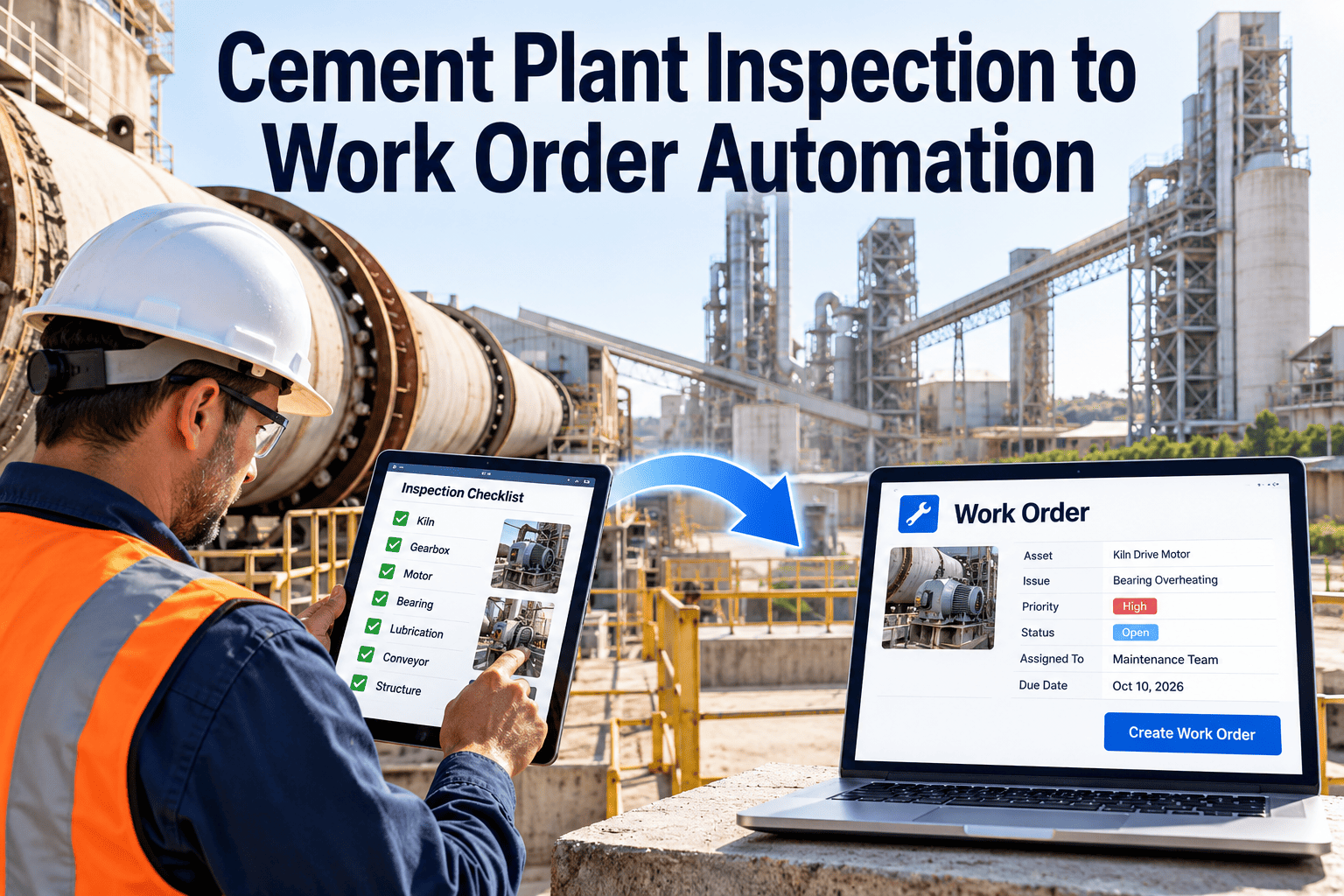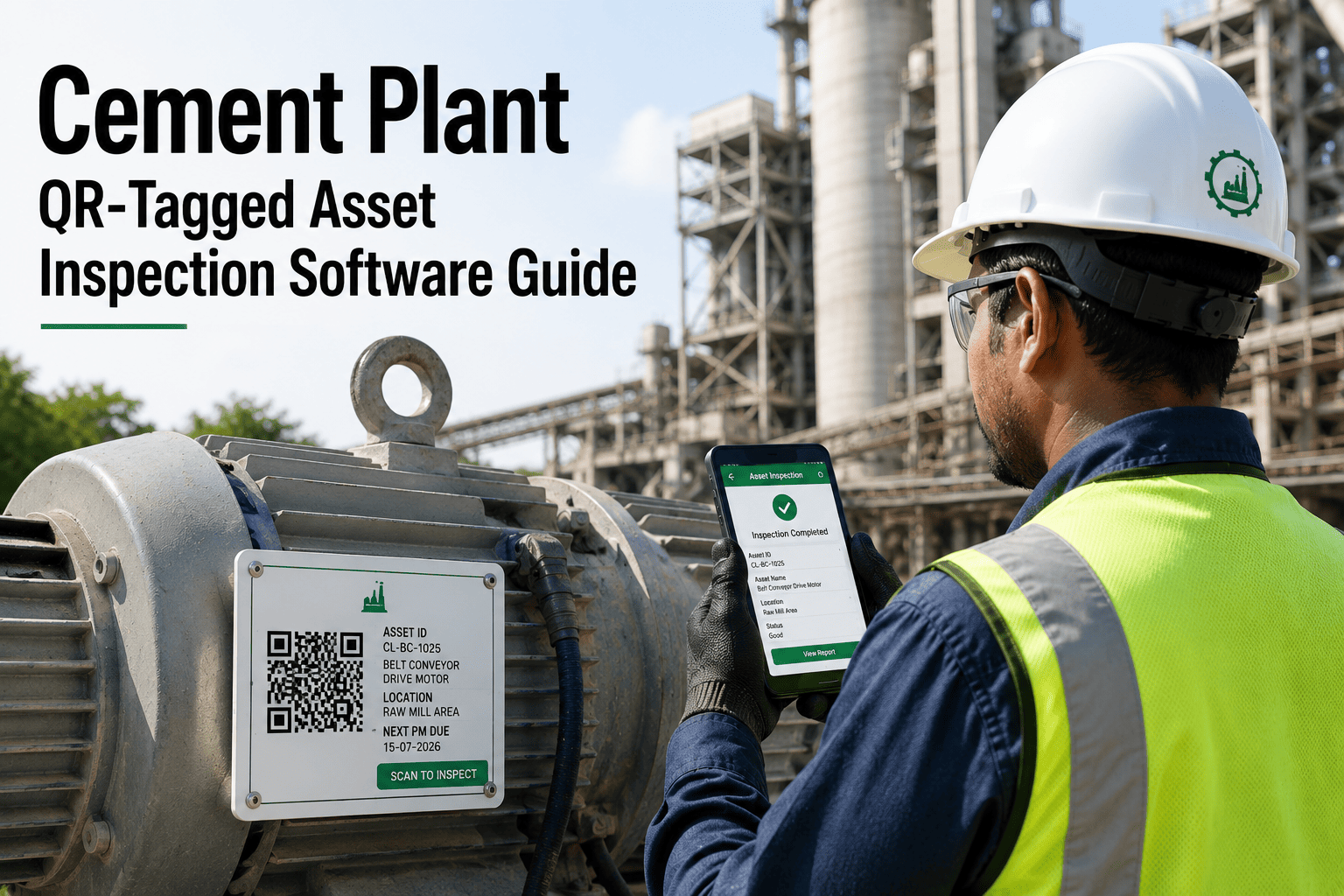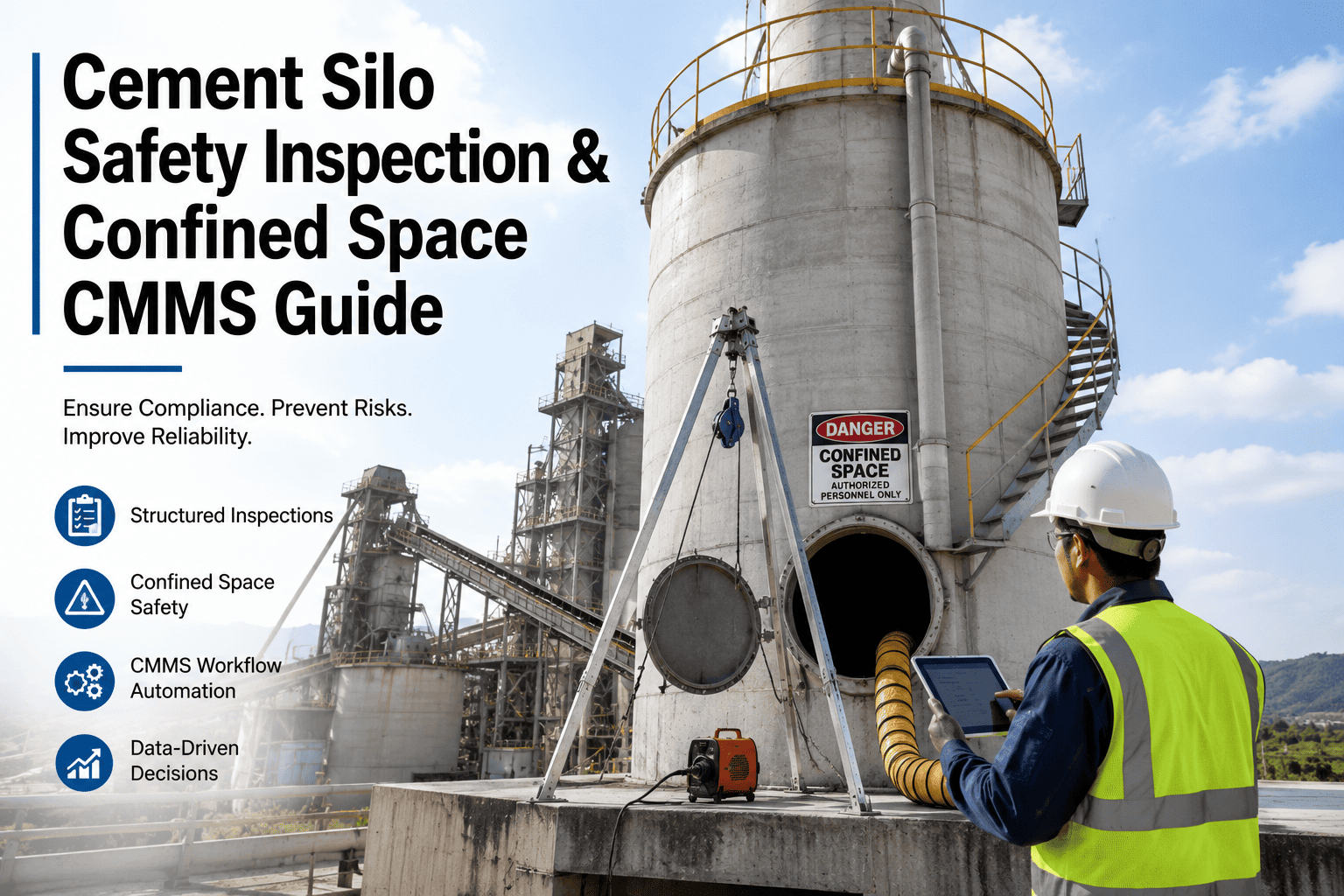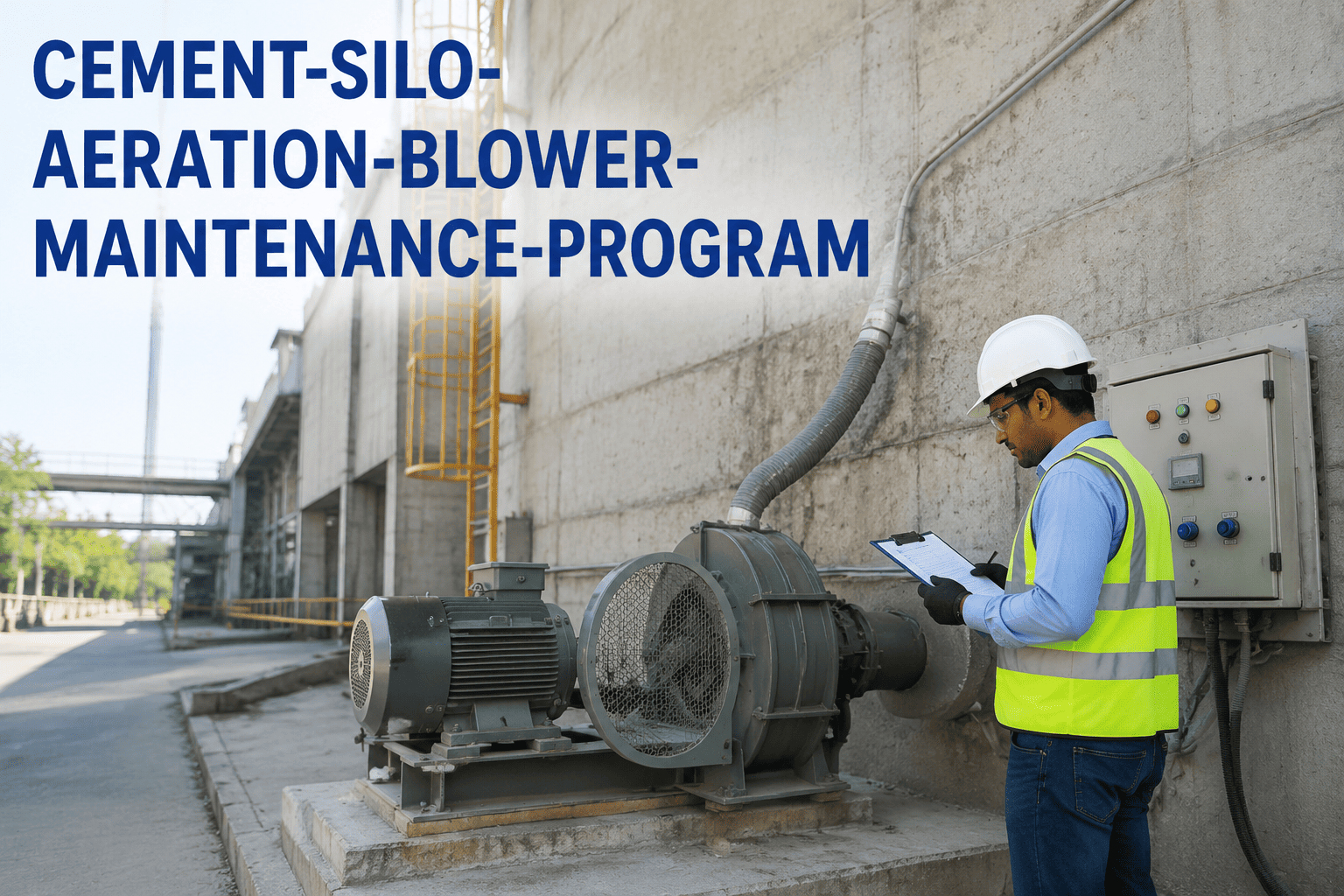
A cement silo aeration blower is one of the lowest-cost assets in the dispatch chain — a Roots blower or side-channel unit drawing 3–15 kW — but when it fails silently, the consequences reach directly into dispatch throughput, loading bay waiting times, and bulk customer complaints. Bridging and rat-holing in a non-aerated silo cone are not visible until the loading spout runs dry mid-batch or a truck sits at the bay for 40 minutes while the shift supervisor figures out why material will not flow. Most plants treat aeration blowers as run-to-fail equipment because the maintenance cost seems low. The operational cost of getting this wrong — lost dispatch capacity, truck demurrage, and repeat customer complaints — runs significantly higher. OxMaint Preventive Maintenance builds a structured blower PM program that costs less to run than a single bridging event, and eliminates the dispatch disruptions that follow from unplanned aeration failure.
How Aeration Blower Degradation Reaches the Loading Bay
The failure path from a degrading blower to a dispatch complaint is rarely a single dramatic failure — it is a slow degradation that accumulates over weeks and reaches the surface as a loading problem that the dispatch team, not the maintenance team, has to manage. Understanding this failure chain is what makes structured PM economically compelling.
Cement Silo Aeration Blower PM Checklist
This program is designed for OxMaint mobile execution. Each frequency tier generates a separate scheduled work order in OxMaint — weekly tasks do not get buried inside monthly work orders, and each closure creates a timestamped maintenance record that builds the blower's service history automatically.
Run This PM Program in OxMaint — No Manual Scheduling Required
OxMaint auto-generates weekly, monthly, quarterly, and annual blower work orders on schedule — pushed to technician mobile with checklists, asset history, and parts list pre-loaded. Every closure builds the service record that proves your PM program is working.
PM vs. Reactive Repair: The Numbers for a Single Silo
Blower Fault Guide and Response
| Symptom Observed | Most Likely Cause | Detection Method | Recommended Action | Cost if Unaddressed |
|---|---|---|---|---|
| Reduced discharge pressure | Belt slip, worn impeller, or blocked inlet filter | Weekly pressure gauge check | Inspect belt, clean filter, check impeller clearance | $1,800–$4,500 repair + bridging event |
| Abnormal blower noise — grinding | Bearing wear or impeller contact | Weekly audio check | Immediate bearing inspection — do not delay | $3,500–$8,000 full blower replacement |
| Motor running hot — above baseline 15°C | Overload from blocked pad or winding fault | Weekly IR thermometer check | Check pad pressures, verify motor current | $2,000–$6,000 motor replacement |
| High motor current draw | Mechanical friction or winding degradation | Monthly clamp meter check | Check impeller clearances, investigate winding condition | $2,000–$6,000 motor replacement |
| Intermittent bridging — one zone only | Aeration pad blocked or pad zone valve fault | Quarterly pad inspection | Inspect and replace affected pad segment | $2,200/event × recurring bridging |
Start Your Silo Blower PM Program This Week
OxMaint works for both single-silo and multi-silo dispatch operations — standardizing blower inspection across every asset, every frequency tier, and every shift team from a single platform.
Frequently Asked Questions
How often should cement silo aeration blowers be serviced?
The minimum effective service program for a cement silo aeration blower in a normal dispatch environment is: weekly visual and pressure check (15 minutes), monthly mechanical service and lubrication (45 minutes), quarterly pad and system inspection (2–3 hours), and annual overhaul including belt and bearing replacement. Plants operating at high dispatch intensity — more than 1,500 tonnes per day per silo — or in high-humidity environments where cement packs more aggressively should increase the monthly service to three-weekly. OxMaint PM scheduling automates every tier of this program — work orders generate on schedule, get assigned to the right technician, and close with a service record that builds the blower's maintenance history without any manual intervention from the maintenance planner.
What is the most common cause of silo bridging at cement plants with aeration systems installed?
The most common cause of bridging in silos with aeration systems is partial pad coverage failure — typically caused by one or more aeration pads that have become blocked with compacted cement or whose supply pressure has dropped below the minimum required for fluidization, usually due to blower degradation or distribution pipework leaks. The presence of an aeration system does not guarantee adequate aeration performance, and many bridging events at equipped silos trace back to a blower that has gradually lost delivery capacity without triggering an alarm, or to individual pad zones that have lost supply pressure without the overall system showing a fault. Regular pad zone pressure checks — included in the OxMaint quarterly checklist — are the most reliable way to detect this category of failure before a bridging event occurs.
Can OxMaint manage blower PM across multiple silos at the same plant?
Yes. OxMaint manages any number of silo blower assets from a single plant dashboard. Each blower is registered as a separate asset with its own PM schedule, service history, and checklist template. For plants with four to eight dispatch silos, OxMaint's asset list view shows the PM status of every blower — overdue, on schedule, or recently serviced — at a glance. The maintenance planner can see which silos have blowers approaching their next service interval, which have open corrective work orders, and which have had recent fault findings, without opening each asset individually. Multi-silo plants also benefit from OxMaint's parts management module, which tracks inventory of high-consumption items like belts, bearings, and filter elements across all silos and generates reorder alerts before stockouts occur.
How do we track aeration pad condition without draining and entering the silo regularly?
Aeration pad condition can be tracked effectively without full silo entry using three methods that can all be executed from the silo exterior or cone access hatches. First, individual pad zone pressure checks — measuring delivery pressure at each zone's supply line with the silo at operating fill level — identify zones performing below minimum fluidization pressure without any entry. Second, where inlet temperature sensors or point level indicators are installed at the cone, abnormal readings during blower operation correlate strongly with blocked pad zones. Third, during planned quarterly maintenance when the silo is brought to minimum fill, cone access hatches allow visual and photographic inspection of the upper pad surface without confined space entry. OxMaint stores all photo documentation, zone pressure readings, and access inspection records per pad zone in the asset history, creating a cumulative condition picture that supports replacement planning well before a full silo inspection is required.
What spare parts should we keep on hand for silo aeration blowers?
The minimum recommended on-site spares inventory for a cement plant operating four or more dispatch silos includes: one complete V-belt set per blower model (or two sets for high-dispatch plants), one set of shaft bearings per blower model, one inlet filter element per blower, one set of shaft oil seals per blower model, and one aeration pad segment per pad type installed. These items account for more than 90% of emergency repair requirements and can be sourced with standard procurement lead times of 2–5 days if not stocked — meaning a plant without on-site inventory faces 2–5 days of degraded dispatch capability for a repair that takes 2 hours. OxMaint's parts management module tracks minimum stock levels, current inventory, and reorder triggers for all spare parts linked to each blower asset, so stockouts are flagged before they become emergency procurement events.