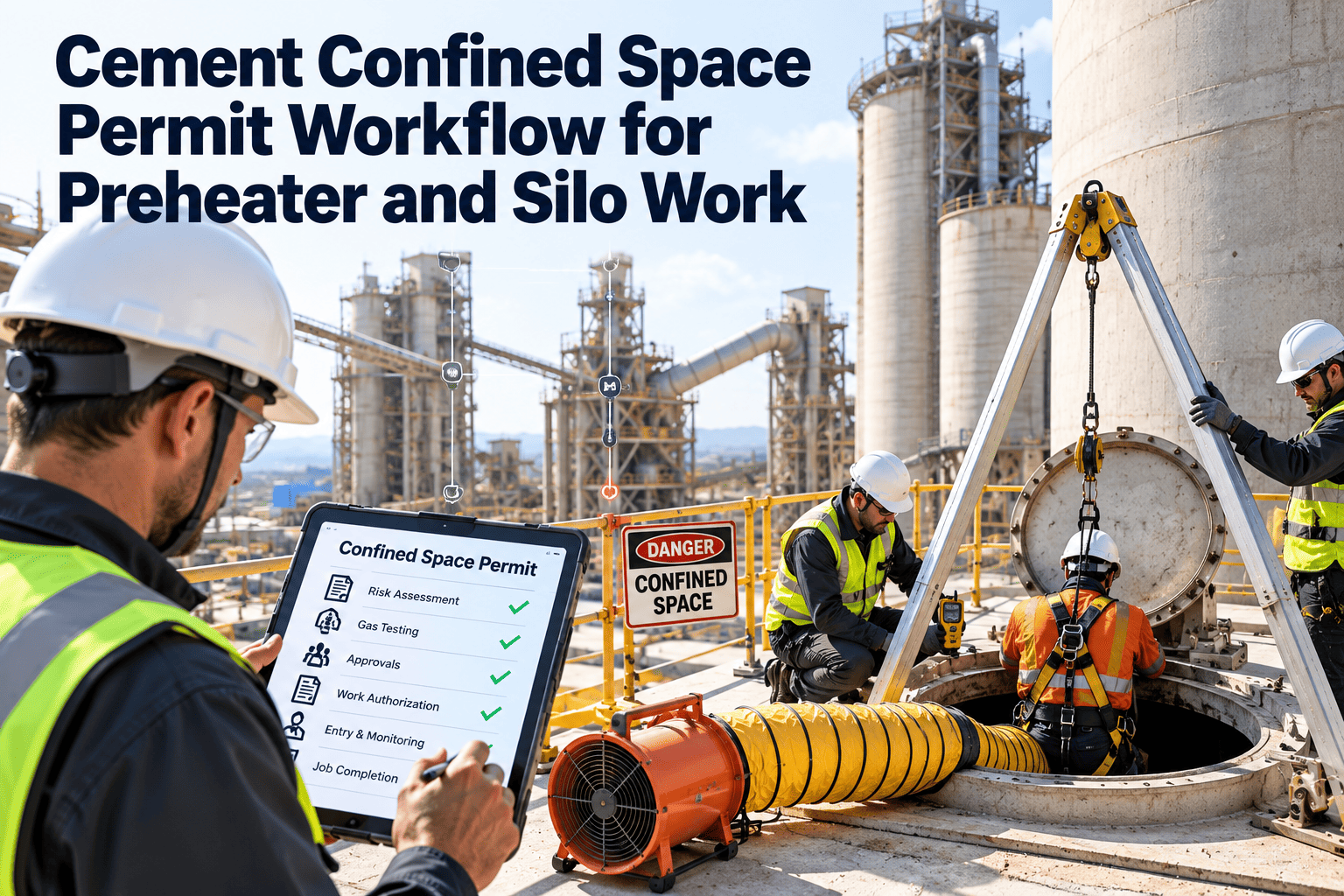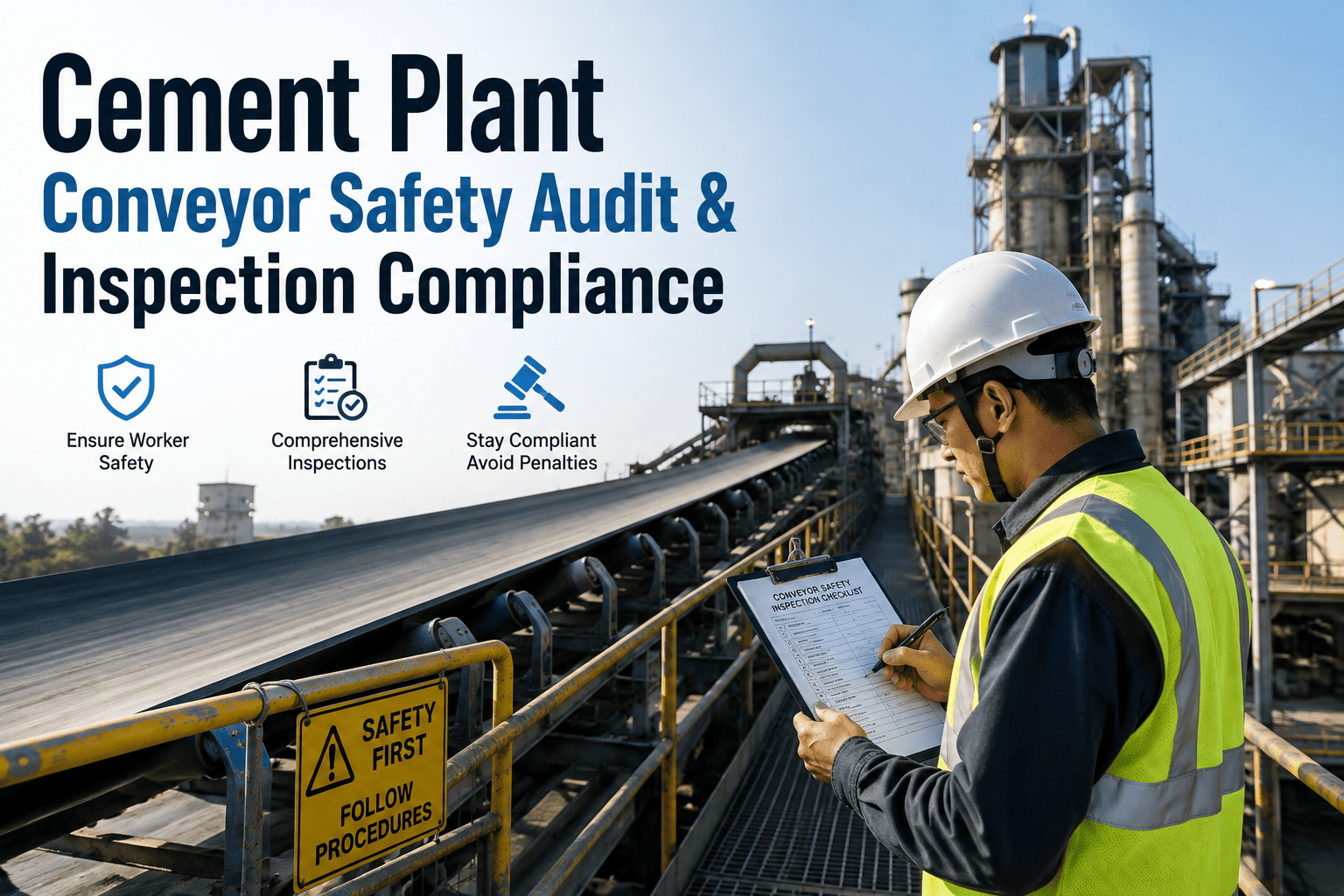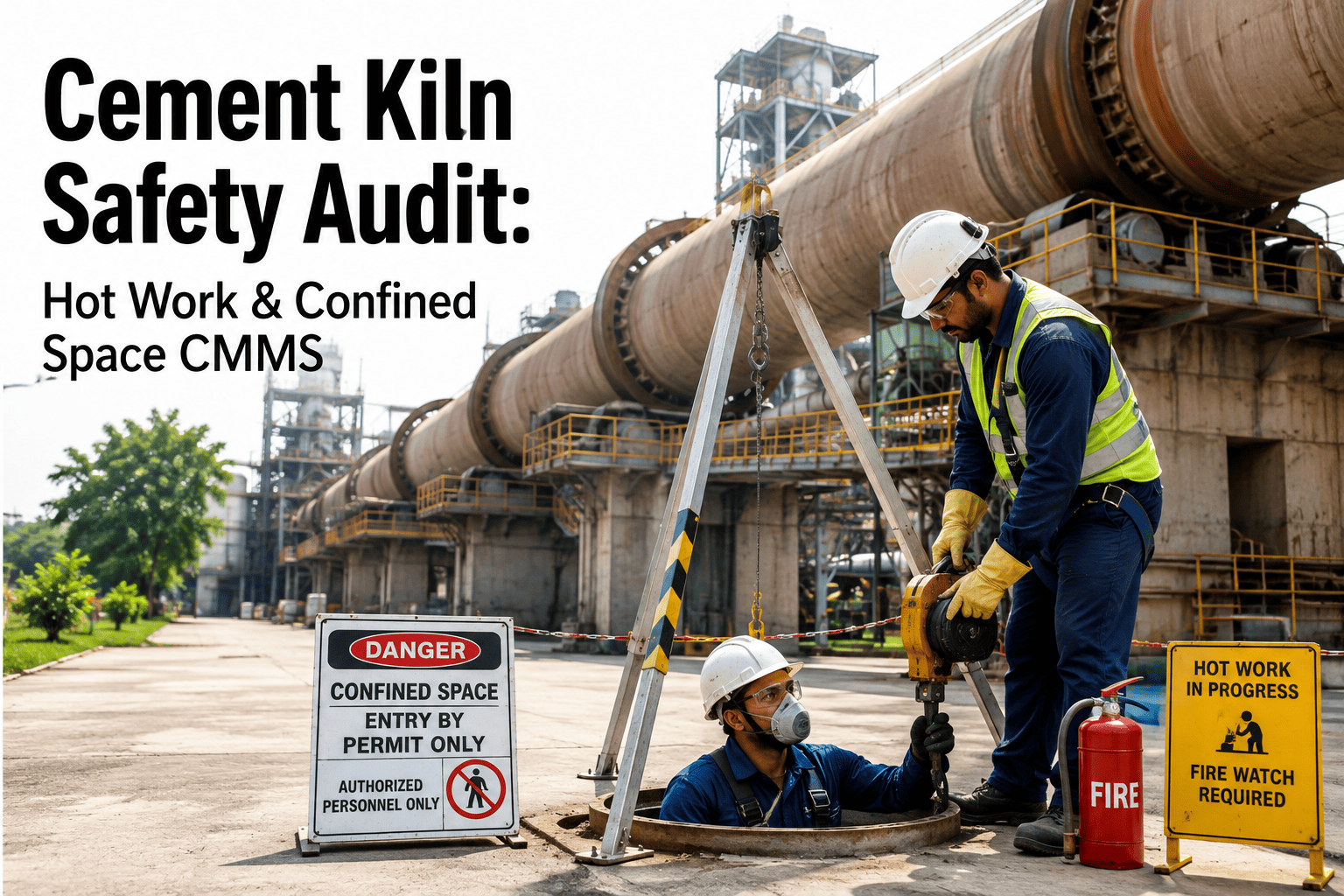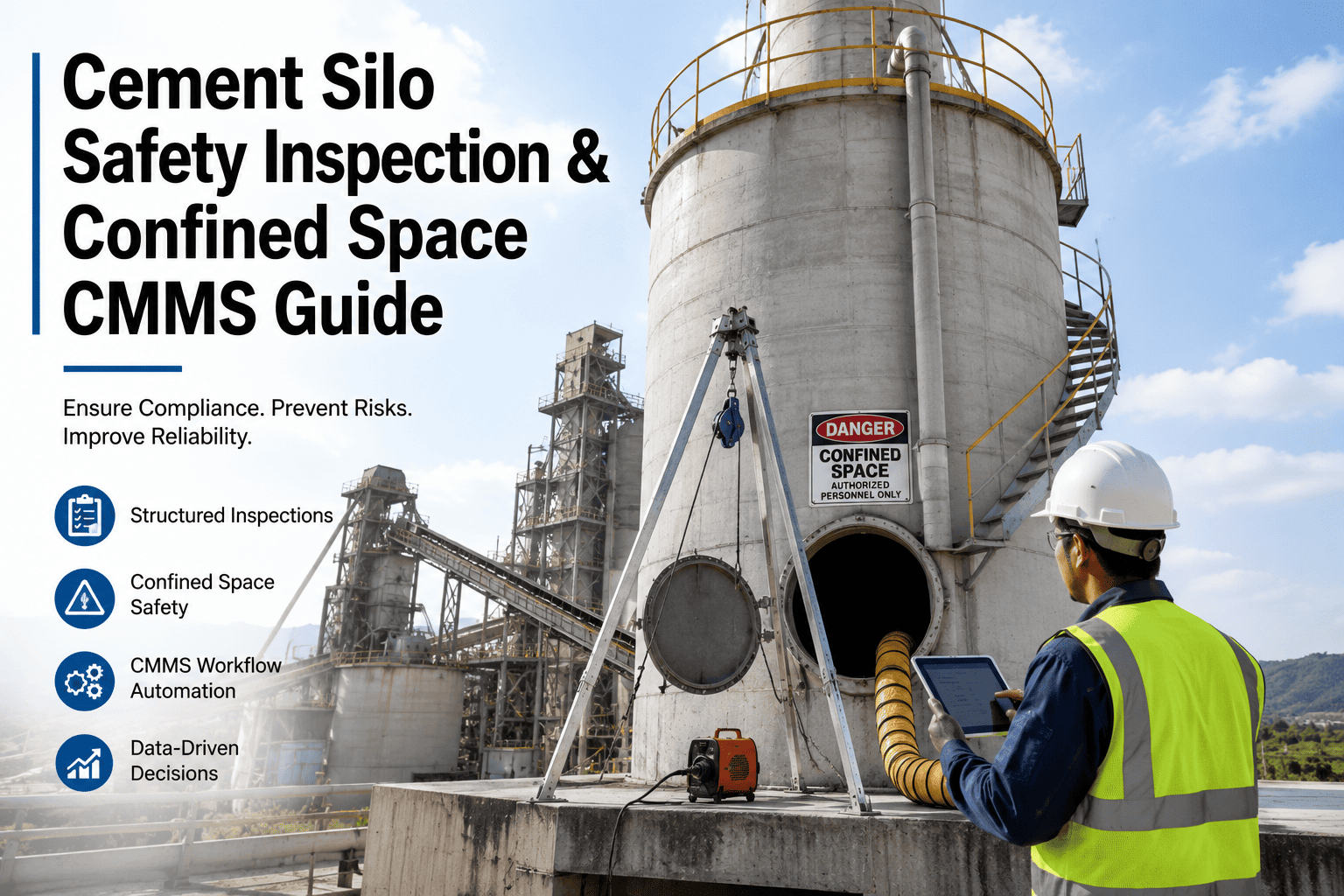
Cement silos sit at the intersection of two of the most dangerous failure modes in heavy industry: structural collapse and confined-space entry. Every year, dozens of cement plant incidents trace back to inadequate silo inspection — from atmospheric asphyxiation inside the cone to wall rupture from hydrated-cement buildup. This guide walks through a CMMS-driven silo safety program that codifies every atmospheric test, structural checkpoint, and permit-to-work step so crews stop relying on tribal memory and start relying on a documented, auditable workflow. If your team is ready to operationalize this today, you can Start Free Trial and deploy a pre-configured silo safety template in under an hour.
Are you confident your next silo entry is fully permitted, atmospherically tested, and structurally sound?
Over 60% of confined-space fatalities in bulk-material handling involve inadequate atmospheric verification or uncontrolled material flow. A CMMS-driven silo safety program turns every entry into a documented, multi-signature workflow — with inspection cadences, gas-test records, and structural checks stored against the asset itself.
The cost of an undocumented silo entry
A single confined-space fatality in the U.S. cement industry averages $1.3M in direct cost, 45 days of lost production, and a 12-month regulatory review window — before civil settlements.
A mid-size plant running four 500-tonne cement silos typically schedules 6–10 confined-space entries per year — for level-sensor replacement, aeration pad service, and blockage clearing. Each entry carries engulfment, atmospheric, and structural risk. Without a CMMS to enforce the permit hierarchy, those entries are supervised by memory, signed off on paper, and never trended. The result: inspections get skipped, gas tests get verbal sign-off, and the first warning of wall thinning arrives as a rupture.
The four-layer cement silo safety inspection
A defensible silo safety program isn't one checklist — it's four nested layers, each with its own cadence, owner, and sign-off authority.
- Verify dust collector ΔP within 0.8–1.2 kPa operating band
- Confirm silo top hatch interlock status and padlock log
- Inspect aeration pad pressure gauges — flag below 0.4 bar
- Check level-indicator redundancy (radar + capacitance)
- Log any abnormal vibration on the silo discharge valve
- Photograph silo shell at four cardinal points — compare to baseline
- Ultrasonic thickness survey at 3 predefined wall stations
- Inspect roof manhole gasket and clamp torque (28–32 Nm)
- Check foundation for new cracking > 0.3mm width
- Verify emergency pull-wire on the discharge conveyor is functional
- Lock-out/tag-out all feed and discharge conveyors — dual sign-off
- Purge silo with forced ventilation for ≥ 4 complete air changes
- Test O₂ (19.5–23.5%), LEL (<10%), CO (<25 ppm), CO₂ (<5000 ppm)
- Standby attendant with retrieval line and comms — logged per shift
- Continuous atmospheric monitoring during the full entry window
- Full UT thickness mapping — minimum 40 points per silo
- Sweep robotic or rope-access internal wall inspection
- Finite-element review of roof load and wind-loading case
- Pressure-test aeration system for channel degradation
- Update CMMS asset register with thickness-trend data
The 7-step permit-to-enter sequence
Each step must be checked, photographed, and signed inside the CMMS before the next step unlocks. Skipping a step blocks the permit — no exceptions, no override keys.
What gets stored in the asset record — and why
The CMMS isn't just a permit repository. It's the trended memory of the silo — turning each inspection into a data point that predicts the next failure.
| Inspection Type | Cadence | Critical Threshold | CMMS Action |
|---|---|---|---|
| Shell UT thickness | Every 12 months | < 6.0 mm nominal wall | Auto-create corrective WO |
| Dust collector ΔP | Continuous / daily | > 1.5 kPa or < 0.5 kPa | Alert maintenance supervisor |
| Aeration pad pressure | Weekly | < 0.4 bar at the header | Schedule aeration service |
| Foundation crack survey | Quarterly | Any crack > 0.3 mm width | Escalate to structural engineer |
| Roof manhole gasket | Every 6 months | Visible compression set > 20% | Generate replacement task |
| Confined-space permit | Per entry | Any field left unsigned | Block entry — hard stop |
| Internal wall sweep | Every 24 months | Buildup > 50 mm or pitting | Trigger cleaning & re-coat WO |
A 4-silo plant: from paper permits to CMMS enforcement
A regional cement producer running four 500-tonne finishing silos was spending $42K/yr on silo-related incidents — mostly from rerouted trucks during unplanned blockages and one near-miss entry where ventilation was skipped.
The deployment took 11 days. The hardest behavioral shift was getting supervisors to stop signing verbal gas-test reports. Once the CMMS made the gas-test field a mandatory upload with a calibrated-monitor serial number, compliance moved from ~60% to 100% within three entry cycles. The plant also caught two silos with dust-collector ΔP drift that would have escalated to bin-vent failure within 60 days.
Operationalize your silo safety program this quarter
Deploy a pre-built cement silo inspection template, digital permits, and asset-level trending — live in under a day.
Cement silo safety inspection — common questions
Make your next silo entry the safest one on record
Digital permits, atmospheric-test uploads, structural trending, and audit-ready records — all on one platform.