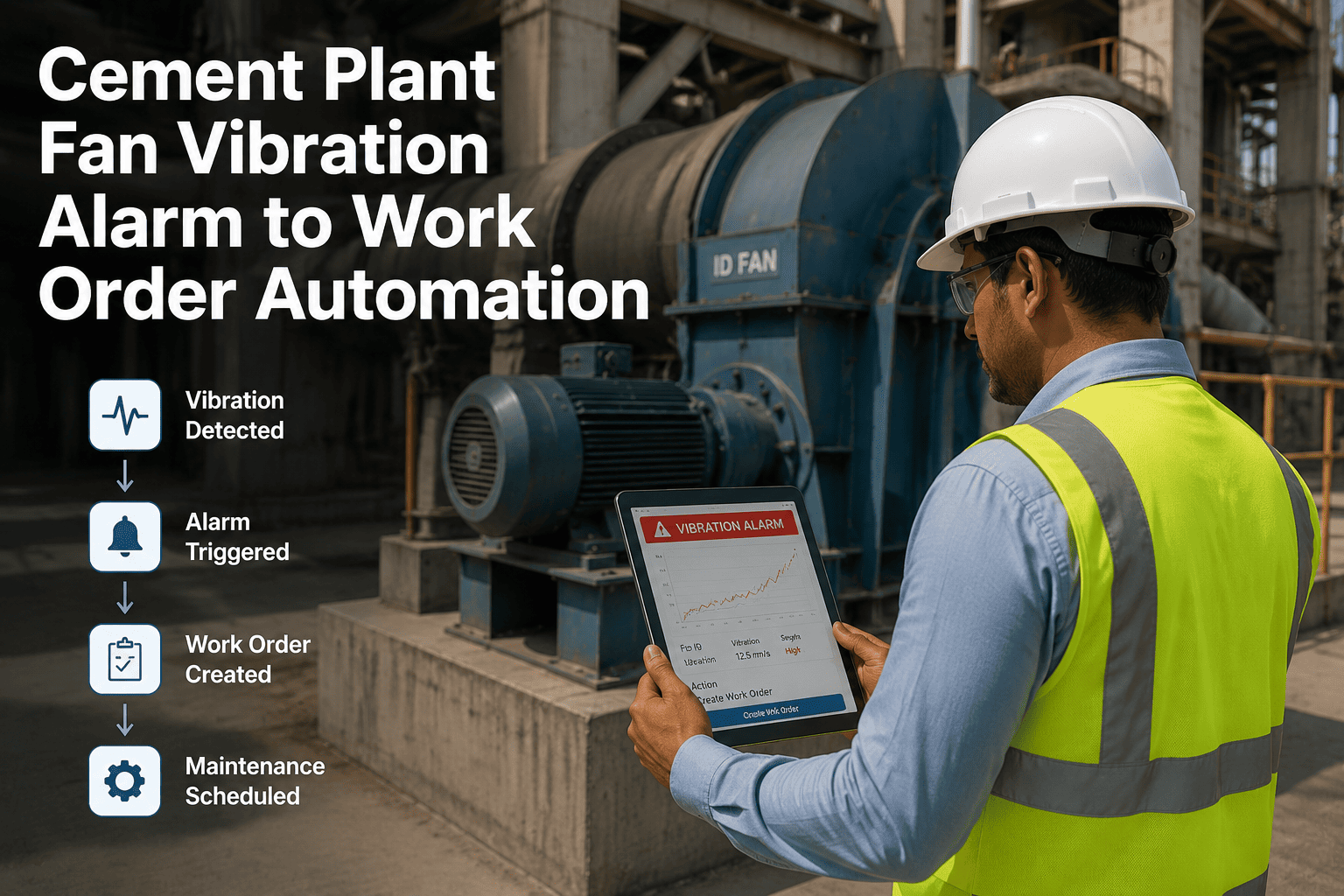
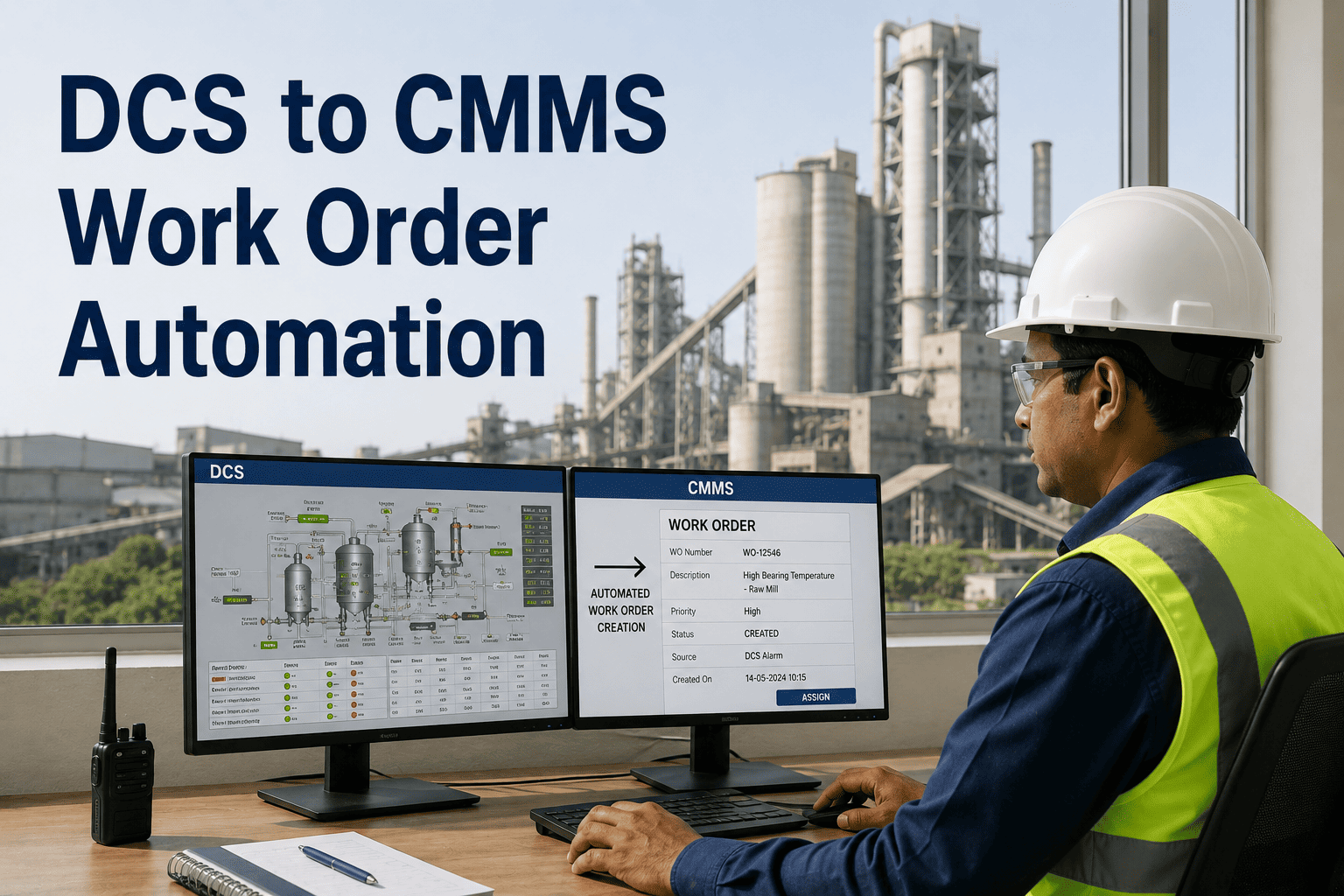
A technician walking the packing line spots a worn catwalk grating, taps a hazard report on a mobile screen, and keeps moving — no clipboard, no walk back to the control room, no form waiting on a supervisor's desk. That single tap is where most cement plants lose the thread today, because the observation either stays a private note in someone's head or becomes a paper slip that never reaches the person who can fix it. Mobile safety observations only matter if they turn into tracked, assigned, closed-out maintenance work, and that link is exactly what separates plants that talk about safety culture from plants that actually run on one. See how OxMaint links every mobile observation to a CMMS work order before the next shift starts.
Mobile CMMS · Safety & Compliance
Every Hazard a Worker Reports Should End as a Closed Work Order, Not a Lost Note
OxMaint connects mobile safety observations directly to the CMMS, so a worn guard, a leaking seal, or a blocked walkway becomes a routed, owned, and tracked work order in seconds — not a memory someone hopes they'll act on later.
Step 1
Worker spots the hazard
A technician notices a worn belt guard, a leaking gland, or a blocked exit and opens the app right where they're standing.
Step 2
Photo, asset, location auto-captured
A QR scan or geotag pulls in the exact asset and zone — no typing the equipment ID from memory, no guessing the location later.
Step 3
CMMS scores and routes it
Severity is classified automatically and the report routes to the area supervisor and maintenance planner at the same time.
Step 4
Work order opens, owner assigned
The observation becomes a real CMMS work order with a named owner, priority, and due window — not a line in a logbook.
Step 5
Reporter sees the close-out
The worker who filed it gets visibility into what happened — the single biggest driver of whether they report the next one.
The Real Pattern
Plants With Fewer Incidents Report More, Not Less
10x
higher near-miss reporting rate at cement plants with the lowest lost-time incident rates, compared to average performers
85%
of safety incidents trace back to a maintenance-related root cause that someone had already noticed
3–5x
typical increase in reporting volume within 60 days once workers can see their reports actually get closed
The counterintuitive finding from decades of industrial safety research: plants are not safer because fewer things go wrong. They are safer because workers report every hazard and the system acts on each one, every time, without exception.
Stop Losing Hazard Reports Between the Floor and the Work Order Queue
If a worker has to leave the floor, find a form, or track down a supervisor to report a hazard, most reports simply never happen. OxMaint puts reporting and work order creation in the same motion.
Why Paper Breaks This
What Happens to a Hazard Report Without a Mobile Link to the CMMS
Paper or Verbal Reporting
Report written on paper or mentioned verbally to a supervisor
No automatic link to the asset, location, or maintenance history
Severity judged informally — easy to underrate a real hazard
No record of who is acting on it or by when
Worker never finds out if anything happened — reporting drops off
Mobile-to-CMMS Reporting
Reported from the floor in under 30 seconds with photo and location
Auto-linked to the exact asset and its full maintenance history
Severity scored consistently using the same rules every time
Work order created with a named owner, priority, and due date
Reporter can see the work order status through to close-out
Built For Trust
Reports Only Flow When Workers Trust the System
Observation data stays separate from performance reviews
A hazard report is about the equipment, not a mark against the worker who happened to be standing nearby when they noticed it.
Every report becomes visible, not silent
The worker who filed it can track the work order through assignment, action, and close-out instead of wondering if it mattered.
Patterns surface automatically across shifts
Ten near-misses on the same conveyor over four months is not bad luck — it's a failure pattern the CMMS flags for review.
One workflow for hazards and maintenance
Safety and maintenance teams work from the same record instead of two disconnected systems that never reconcile.
FAQ
Frequently Asked Questions
Does this replace our existing EHS reporting software?
Not necessarily. OxMaint can integrate with existing EHS platforms or operate as a standalone mobile reporting tool. The core value is connecting safety observations directly to maintenance execution so a reported hazard becomes a tracked work order instead of a record sitting in a separate system nobody checks daily.
How fast can a worker actually file a report from the floor?
Most observations take under 30 seconds. A QR scan or geotag captures the asset and location automatically, a photo documents the hazard, and the worker types one short line of context before submitting — no forms, no walking back to a control room or office to log it.
Who actually sees a mobile safety observation after it's submitted?
The report routes automatically to the area supervisor and the maintenance planner at the same time, based on the severity score and the asset's location. There is no manual hand-off step where a report can sit unassigned or get forgotten between shifts.
Will reporting more hazards make our incident numbers look worse?
No — a higher near-miss reporting rate is a leading indicator of a stronger safety culture, not a weaker one. Plants with the lowest lost-time incident rates report near-misses roughly ten times more often than average performers, because their workforce is actively surfacing problems before they become injuries.
How do we get our technicians to actually use a mobile reporting tool?
Adoption depends almost entirely on follow-through being visible. Once workers can see their report turn into an assigned work order and eventually a close-out, reporting volume typically rises 3–5x within 60 days.
Book a demo to see the reporter-visibility flow in action.
Connect Every Mobile Observation to a Work Order That Actually Closes
OxMaint turns a hazard noticed on the floor into a tracked, owned, closed-out CMMS work order — building the reporting culture that prevents the incident before it happens.