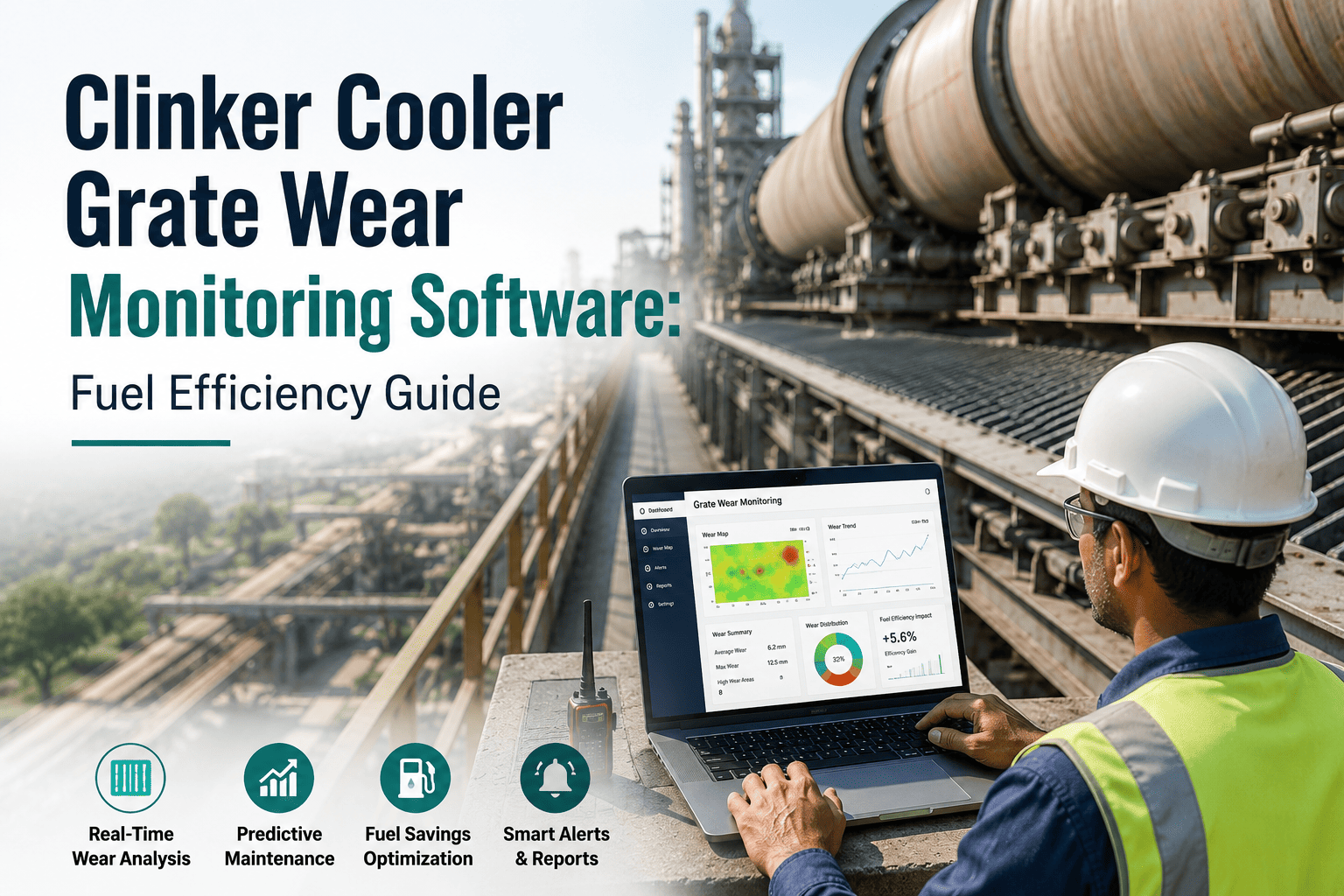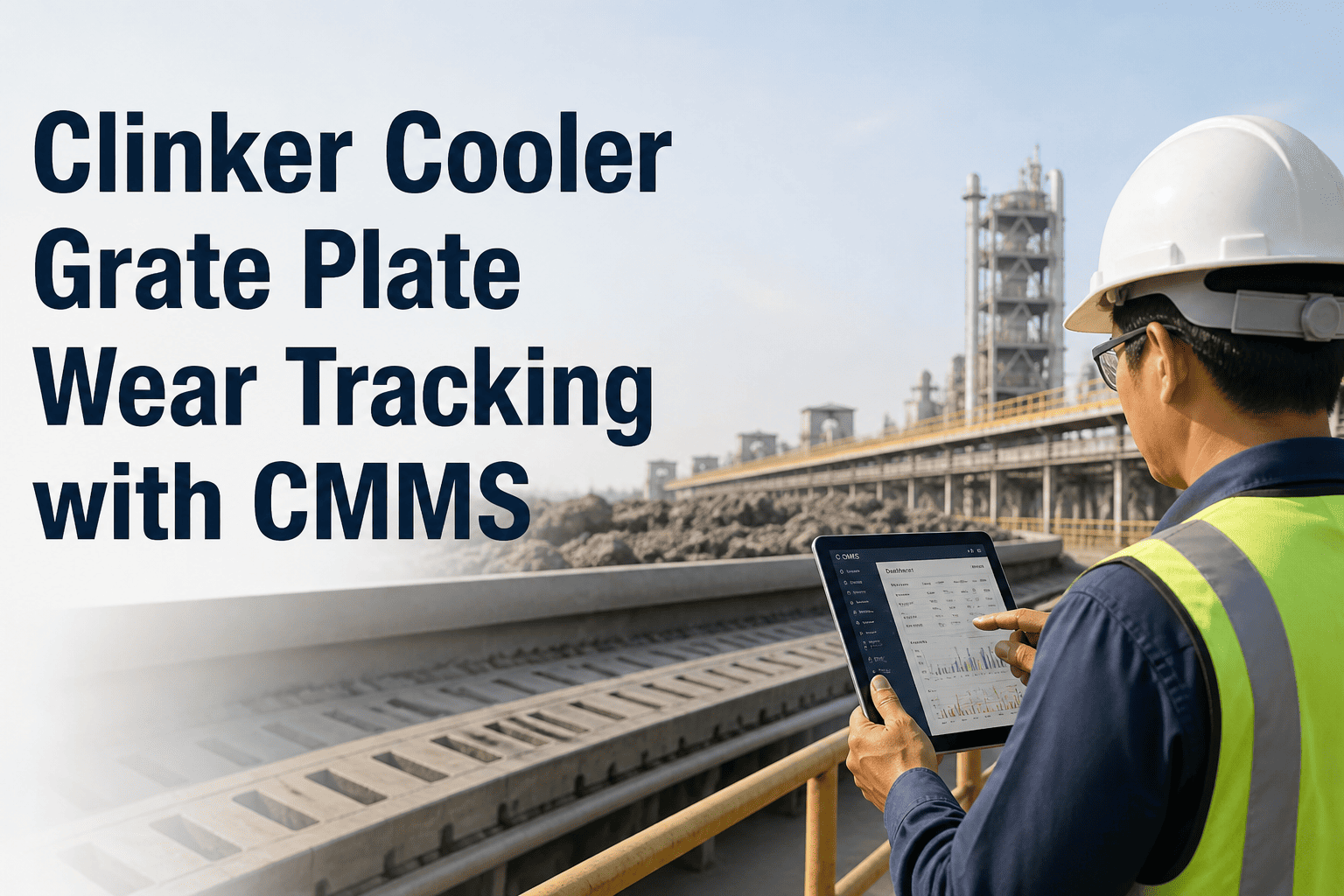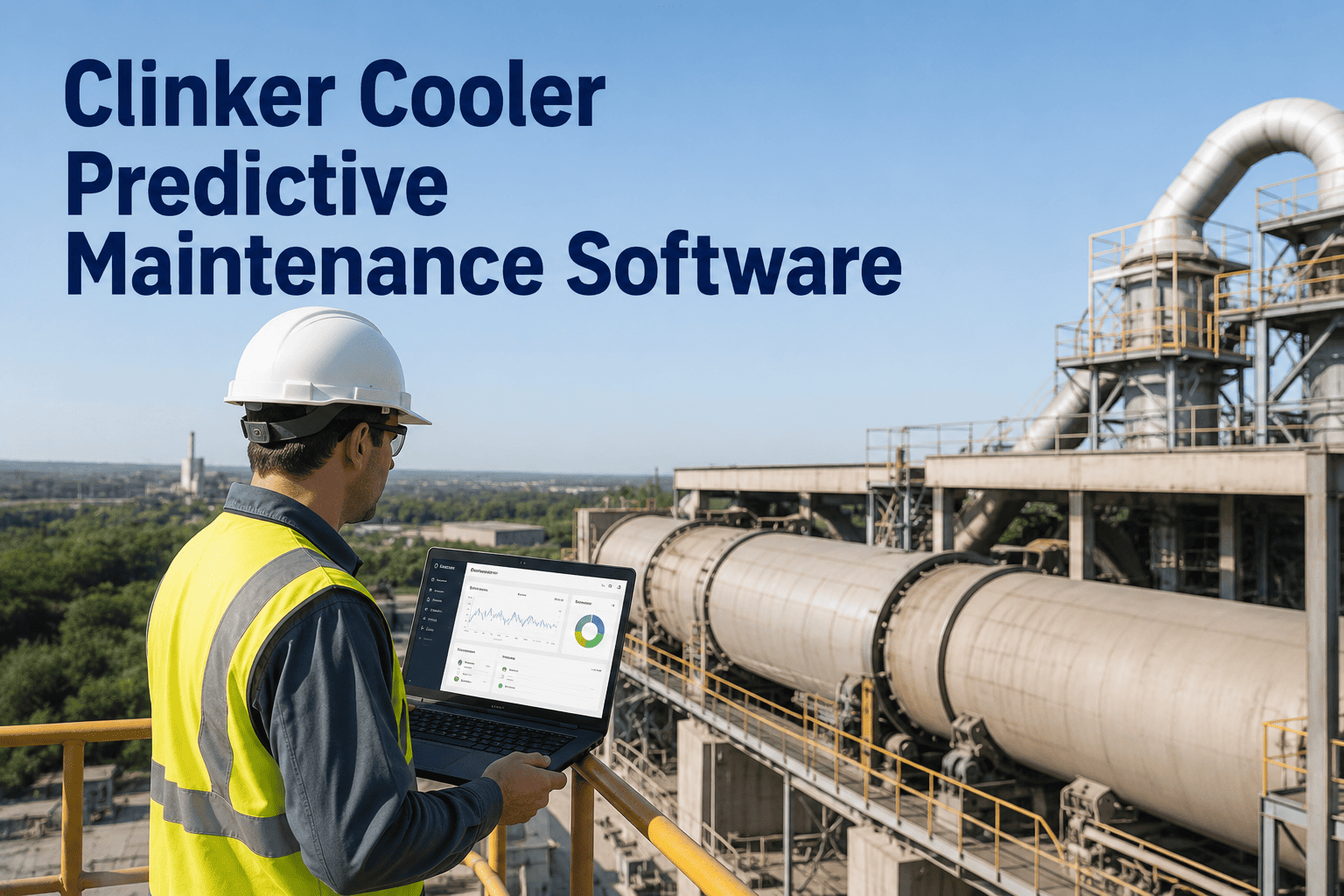
Clinker cooler failures rarely announce themselves—they build through incremental grate plate wear, fan imbalance, and temperature excursions that go unaddressed until a forced outage forces the kiln to stop. Predictive maintenance changes this equation entirely: instead of waiting for a fault to surface, AI-driven monitoring identifies the early signatures of cooler degradation and routes corrective action before output, clinker quality, or equipment life is compromised. Sign Up Free on Oxmaint to deploy predictive monitoring across your clinker cooler fans, grate drives, and temperature zones—and stop reacting to failures you could have seen coming.
What Clinker Cooler Predictive Maintenance Monitors
Effective cooler predictive maintenance covers four primary failure domains. Each carries distinct early warning signatures that are detectable weeks before failure if the right data is being collected and analyzed continuously.
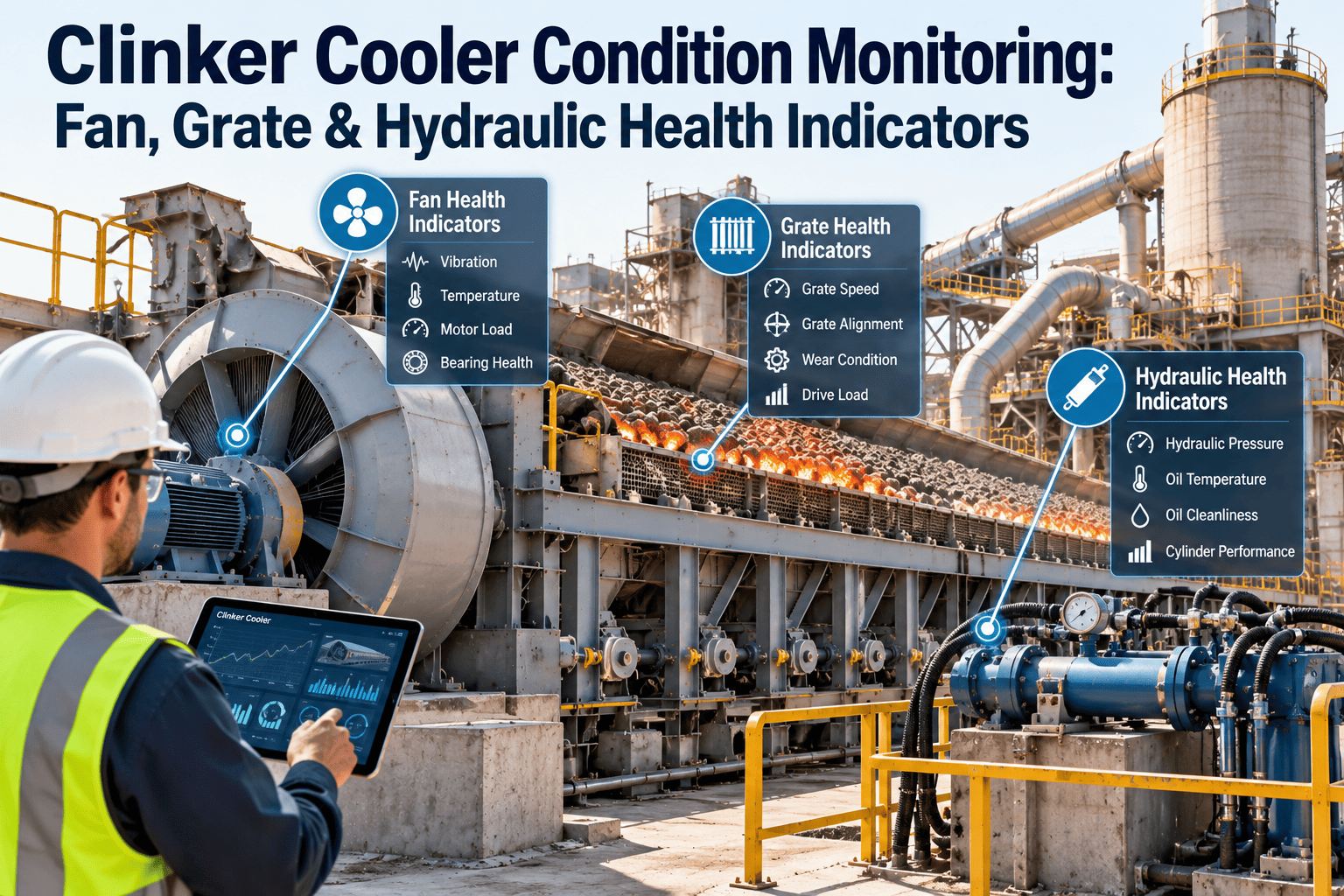
Vibration amplitude, bearing temperature trend, and current draw patterns identify imbalance, misalignment, and bearing wear in cooler fans before catastrophic failure. Fan degradation directly impacts cooler air distribution and clinker temperature at discharge.
Grate drive current spikes, speed deviations, and torque anomalies signal plate wear accumulation, clinker avalanche events, and mechanical binding in the drive train. Tracking these patterns enables planned grate intervention during scheduled stops.
Under-grate pressure and temperature distribution across cooler compartments reveals uneven air flow, red river formation risk, and grate plate bypassing. Maintaining thermal balance is critical for clinker quality and downstream heat recovery efficiency.
Correlating clinker throughput, operating hours, and discharge temperature trends gives a predictive wear rate for grate plates that allows spare part procurement and replacement planning without being driven by emergency discoveries during shutdowns.
Early Warning Signatures: What Oxmaint AI Detects in Clinker Coolers
Oxmaint's predictive algorithms are trained on cement plant operating patterns to distinguish normal process variation from genuine degradation signatures in cooler equipment.
| Equipment | Early Warning Signal | What It Indicates | Oxmaint Detection Method | Lead Time Before Failure |
|---|---|---|---|---|
| Cooler Fan Bearings | High-frequency vibration increase | Bearing raceway defect developing | FFT vibration spectrum trending | 2–6 weeks |
| Grate Drive Motor | Current draw rising above baseline | Grate resistance increase from plate wear or clinker buildup | Current envelope monitoring | 1–3 weeks |
| Cooler Grate | Under-grate pressure variance increasing | Grate plate bypassing or uneven clinker bed depth | Pressure distribution analysis | Days to 2 weeks |
| Fan Impeller | Vibration asymmetry at rotation speed | Clinker dust buildup or blade erosion causing imbalance | Amplitude at 1x running frequency | 1–4 weeks |
| Discharge Temperature | Discharge temp rising on consistent feed | Reduced cooling air or grate bypassing at exit compartment | Thermal deviation from feed-adjusted baseline | Days |
How Oxmaint Connects Predictive Alerts to Maintenance Action
Detecting an anomaly is only half the value — the other half is making sure the right person acts on it fast. Oxmaint closes the loop from sensor alert to resolved work order in a workflow cement maintenance teams can actually operate during production runs.
Oxmaint AI flags a deviation in cooler fan vibration, grate current, or temperature trending beyond the adaptive baseline for that equipment and operating condition.
Alert is sent to the reliability engineer or maintenance planner with the trend data, historical context, and severity classification attached — no manual log review needed.
A condition-based work order generates automatically with equipment details, failure mode context, and recommended inspection scope, then routes to the assigned technician.
Technician logs corrective findings in Oxmaint, updates asset health records, and closes the work order — feeding the data back into the predictive model to refine future detection.
Clinker Quality Impact: Why Cooler Maintenance Is a Quality Issue, Not Just an Uptime Issue
Clinker cooler degradation directly affects cement quality. Poor cooling produces clinker with elevated free lime, inconsistent crystal structure, and higher grinding energy requirements — problems that show up downstream in the quality lab, not at the cooler itself. Predictive cooler maintenance is also clinker quality assurance.