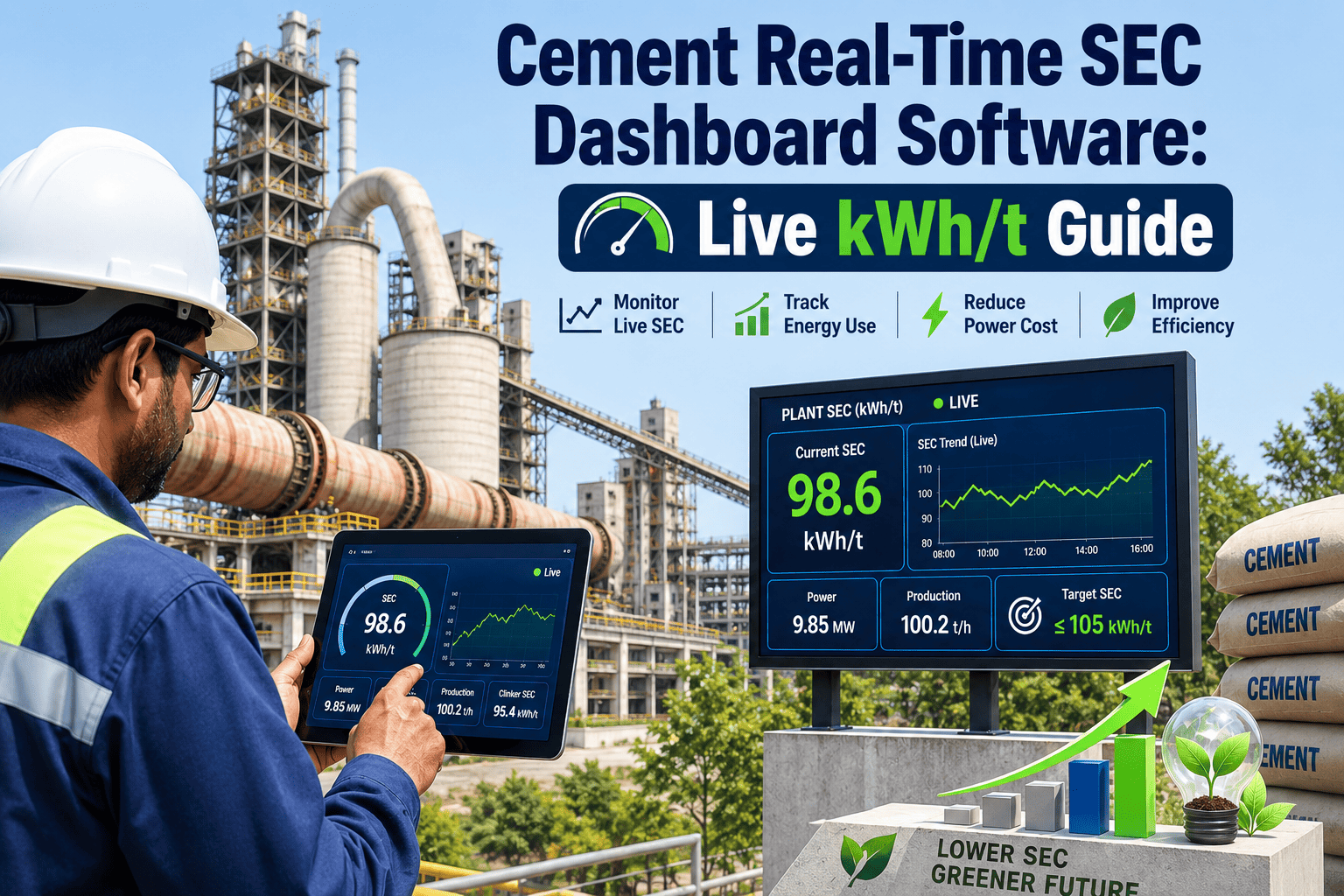
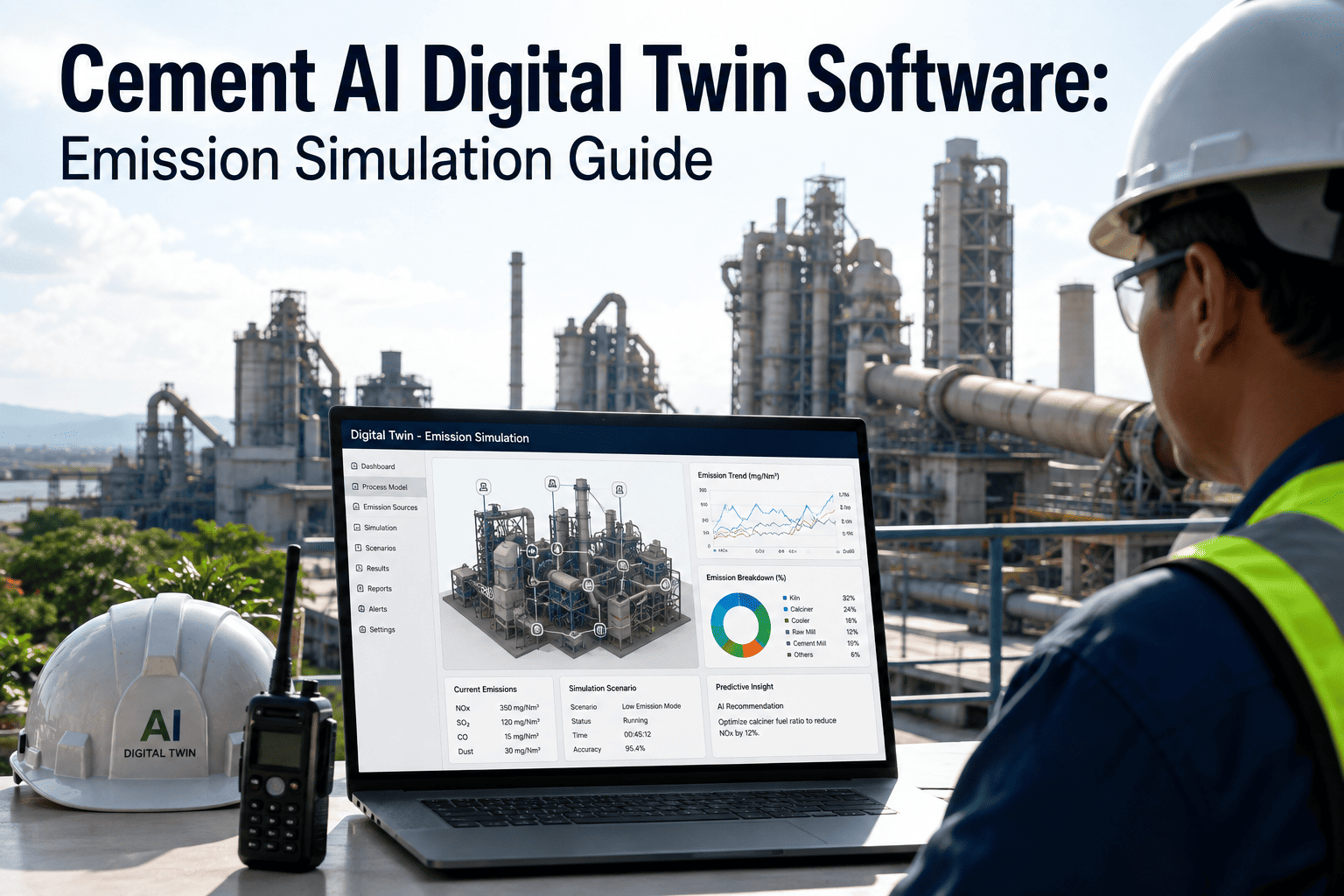
A digital twin is more than a 3D model or dashboard—it's a living, breathing virtual replica of your cement plant that mirrors physical operations in real-time. Every sensor reading, every process change, every equipment state is reflected instantly in the digital world. This virtual plant becomes a laboratory where you can test scenarios, predict outcomes, and optimize operations without risking the real thing.
For cement manufacturers, digital twins unlock capabilities that were impossible just years ago: predicting kiln behavior hours ahead, simulating the impact of raw material changes before they reach the preheater, training operators on rare upset conditions safely. Modern digital twin platforms bring these capabilities within reach of cement producers at every scale.
Types of Digital Twins in Cement Manufacturing
Not all digital twins are created equal. The term covers a spectrum from simple visualizations to sophisticated simulation engines.
Descriptive Twin
Real-time visualization of plant status. Shows current values, equipment states, alarms. What's happening now.
Diagnostic Twin
Adds historical context and analytics. Explains why things happened. Root cause analysis capabilities.
Predictive Twin
Uses ML models to forecast future states. Predicts quality, maintenance needs, process outcomes.
Prescriptive Twin
Recommends optimal actions. Simulates scenarios to find best operating points. Approaches autonomous control.
Digital Twin Applications Across the Cement Process
Pyroprocess Twin
Mill Twin
Blending Twin
Asset Twin
Build Your Digital Twin
Oxmaint provides the platform to create digital twins that connect real-time data with predictive models—turning plant data into actionable intelligence.
Building a Digital Twin: Technical Architecture
A functional digital twin requires multiple components working together. Talk to our engineers about designing your twin architecture.
Data Integration Layer
Connects to DCS, historians, lab systems, ERPs. Normalizes and cleanses data streams. Handles protocol translation and time synchronization.
Physics Models
First-principles models of heat transfer, chemical reactions, material flow. Encode domain knowledge about cement processes.
Machine Learning Models
Data-driven models trained on historical patterns. Handle complex relationships physics can't easily capture. Continuously learning.
Simulation Engine
Runs what-if scenarios at faster than real-time. Tests control strategies safely. Powers training simulators for operators.
Visualization Layer
3D plant models, process flow diagrams, dashboards. Makes complex data accessible. Supports AR/VR for immersive experiences.
Action & Alert System
Translates insights into notifications and recommendations. Integrates with work order systems. Closes loop to control systems when enabled.
Implementation Journey
Foundation
2-3 monthsEstablish data connectivity and basic visualization. Create the "descriptive twin" that shows real-time plant status.
- Connect key data sources (DCS, historian)
- Deploy dashboards for main process areas
- Validate data quality and fill gaps
- Train core users on platform
Analytics
3-4 monthsAdd diagnostic capabilities and initial predictive models. Move from "what's happening" to "why" and "what's next."
- Develop process models for priority areas
- Train ML models on historical data
- Implement anomaly detection
- Create predictive alerts
Optimization
4-6 monthsEnable what-if simulation and optimization recommendations. Build the prescriptive layer.
- Deploy simulation capabilities
- Implement optimization algorithms
- Create operator advisory system
- Validate recommendations vs outcomes
Autonomy
OngoingWhere appropriate, close the loop for automated optimization. Expand coverage across plant.
- Pilot closed-loop control
- Extend to additional equipment
- Continuous model improvement
- Enterprise-wide integration
Success Stories: Digital Twins in Action
AI-powered twin predicts free lime 4 hours ahead, enabling proactive kiln adjustments that reduced fuel while maintaining quality.
Strength prediction model enabled tighter control of cement fineness, reducing 28-day strength standard deviation significantly.
Equipment health models predicted gearbox failure 3 weeks early, enabling planned repair instead of emergency shutdown.
Integrated optimization of kiln and mills based on electricity prices and production demands minimized total energy cost.
Common Pitfalls to Avoid
Starting Too Big
Attempting plant-wide digital twin from day one. Better to prove value on one critical system, then expand. Kiln or cement mill are common starting points.
Ignoring Data Quality
Models are only as good as their inputs. Invest in sensor maintenance, calibration, and data validation before expecting accurate predictions.
Pure Technology Focus
Digital twins fail without user adoption. Involve operators early, design for their workflows, demonstrate clear value to their daily work.
Static Models
Plant conditions change—equipment wears, raw materials shift, seasons change. Models need continuous retraining to maintain accuracy.
Digital Twin ROI
Create Your Plant's Digital Twin
Oxmaint delivers digital twin technology built for cement manufacturing—from data integration to predictive models to optimization engines.