A cement plant in Madhya Pradesh installed 52 vibration sensors on critical equipment—and lost 38 of them within the first four months. The sensors had IP65 ratings, adequate for indoor industrial use, but cement dust penetrated the enclosures through breathing vents designed for pressure equalization. What the plant learned the hard way: deploying IoT sensors in dusty cement environments requires specific protection strategies that go beyond standard industrial specifications. After switching to IP67-rated sensors with sealed enclosures and implementing proper mounting and maintenance protocols, sensor survival rate improved to 96% over 18 months. Sign up for Oxmaint to integrate your protected sensors with automated maintenance workflows.
How to Deploy IoT Sensors in Dusty Cement Plant Environments
Complete guide to selecting, installing, and maintaining industrial sensors in cement manufacturing's harshest conditions. Learn IP ratings, enclosure options, mounting techniques, and maintenance schedules that ensure long sensor life and reliable data.
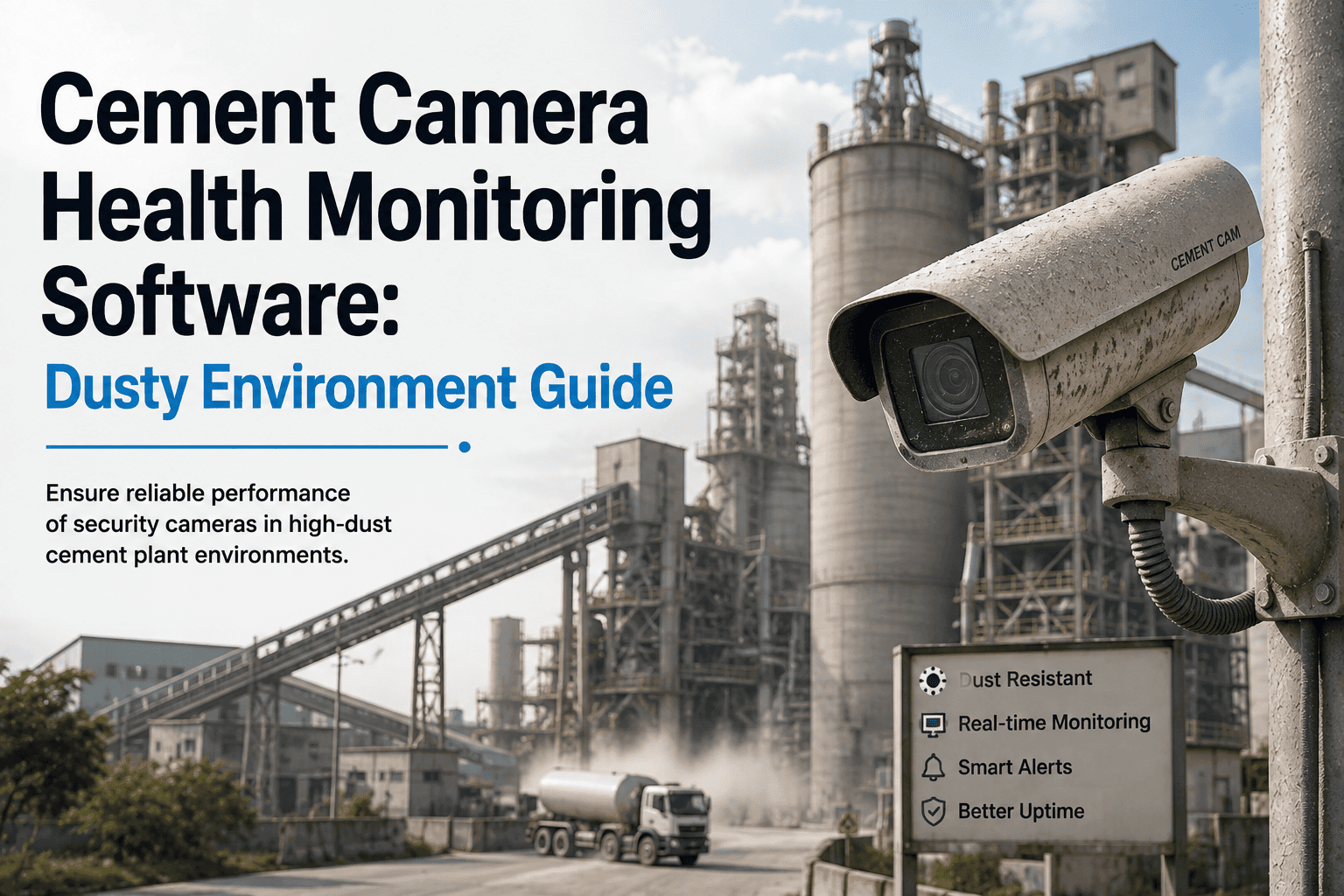
Cement dust presents unique challenges that differentiate it from other industrial particulates. The particles are extremely fine (often below 10 microns), hygroscite (moisture-absorbing), and chemite (calcium compounds that set when wet). Standard industrial sensors rated for "dusty environments" fail because cement dust behaves differently—it infiltrates through microscopic gaps, absorbs moisture from air and condensation, then hardens into cement inside the sensor, destroying electronics and blocking mechanical components.
IP (Ingress Protection) ratings define a sensor's resistance to solid particles and water. The first digit indicates dust protection (0-6), and the second indicates water protection (0-9). For cement plant sensors, the dust rating is critical—but standard IP65 "dust protected" ratings are insufficient. You need IP67 ("dust tight") minimum, and IP68 is recommended for high-dust areas near mills and packing stations.
| IP Rating | Dust Protection | Water Protection | Cement Plant Suitability | Recommendation |
|---|---|---|---|---|
| IP65 | Dust protected (limited ingress) | Low pressure water jets | NOT suitable—dust will infiltrate within weeks | Avoid |
| IP66 | Dust protected (limited ingress) | High pressure water jets | Marginal—may work in low-dust office/control areas only | Minimum |
| IP67 | Dust tight (no ingress) | Temporary immersion (1m/30min) | Suitable for most cement plant areas with monthly maintenance | Recommended |
| IP68 | Dust tight (no ingress) | Continuous immersion (>1m) | Ideal for high-dust areas near mills, packing, and material handling | Ideal |
Successful industrial sensor mounting in cement plants requires attention at every stage—from pre-deployment planning through ongoing maintenance. Follow these steps to maximize sensor survival and data reliability. Book a consultation to discuss your specific deployment needs.
Site Assessment and Dust Mapping
Duration: 1-2 days | Critical pre-deployment stepWalk the entire plant to categorize areas by dust exposure level. Cement plants have dramatically different conditions within the same facility—control rooms may be relatively clean while areas near mills, elevators, and packing lines experience continuous heavy dust loading. Your dust map determines which protection level each sensor location requires.
Select Appropriate Sensors and Enclosures
Duration: 1-2 weeks | Equipment specificationMatch sensor protection levels to your dust map. Don't over-specify for low-dust areas (wastes budget) or under-specify for high-dust areas (leads to failures). For borderline locations, always select the higher protection level—the cost difference is minimal compared to replacement and data loss costs.
Heavy-duty protection for high-dust areas. Excellent heat dissipation and mechanical protection. Industry standard for harsh environments.
Maximum protection for extreme conditions. Required for areas with high-pressure wash-down or chemical exposure. Higher cost but longest life.
Lightweight option for moderate-dust areas. Non-conductive and corrosion-proof. Good for areas where weight or conductivity is a concern.
Prepare Mounting Locations
Duration: 1-3 days | Site preparationMounting location preparation significantly impacts sensor survival. Avoid locations directly exposed to dust streams from conveyors, mill vents, or material transfer points. Position sensors in "shadow zones" where structural elements provide some protection while maintaining measurement access to target equipment.
Install Sensors and Seal All Entry Points
Duration: 1-2 weeks | Field installationDuring installation, treat every cable entry, mounting bolt, and enclosure seam as a potential dust infiltration point. Use proper glands, sealants, and installation techniques. A single unsealed entry point can allow enough dust to destroy a sensor within weeks. Sign up for Oxmaint to track sensor installation and commissioning in your CMMS.
Commission and Baseline Testing
Duration: 3-5 days | Verification and calibrationAfter installation, verify every sensor is communicating correctly and producing reasonable readings. Establish baseline values during normal operation for later comparison. Document all commissioning results for future reference and troubleshooting.
Establish Maintenance Schedule
Duration: Ongoing | Preventive maintenanceEven properly protected sensors require regular maintenance in cement environments. Sensor maintenance dust accumulation must be addressed before it compromises readings or damages equipment. Create scheduled PMs in your CMMS to ensure consistent sensor care.
Different areas of a cement plant require different sensor protection levels. Use this zone map as a starting point, but always verify conditions at your specific facility—local factors like ventilation, enclosure, and dust control systems affect actual exposure levels.
Frequently Asked Questions
QCan we retrofit existing sensors with protective enclosures?
Yes, but with limitations. Third-party protective housings can extend the life of sensors not designed for harsh environments, but they add bulk, may affect measurement accuracy (especially for vibration sensors), and create additional maintenance points. For new deployments, it's more cost-effective to specify properly rated sensors from the start. Retrofit enclosures work best for protecting gateway devices and signal conditioners rather than sensing elements themselves.
QHow do we clean sensors without damaging them?
Use low-pressure compressed air (below 30 psi) to blow loose dust from enclosures and cables. For stubborn accumulation, wipe with a damp cloth—never use water jets directly on sensors unless they're specifically rated for wash-down (IP69K). Avoid solvents that might damage plastic components or gaskets. For sensors with exposed elements (like some temperature probes), use soft brushes only. Sign up for Oxmaint to create cleaning procedures as PM templates.
QWhat's the typical lifespan of properly protected sensors in cement plants?
With IP67+ protection and proper maintenance, most industrial sensors achieve 5-7 years in cement environments. Vibration sensors with stainless steel housings often exceed 10 years. The limiting factor is usually cable degradation rather than sensor failure—using armored cables and conduit protection extends overall system life. Budget for 10-15% annual replacement for unexpected failures.
QShould we use wired or wireless sensors in dusty environments?
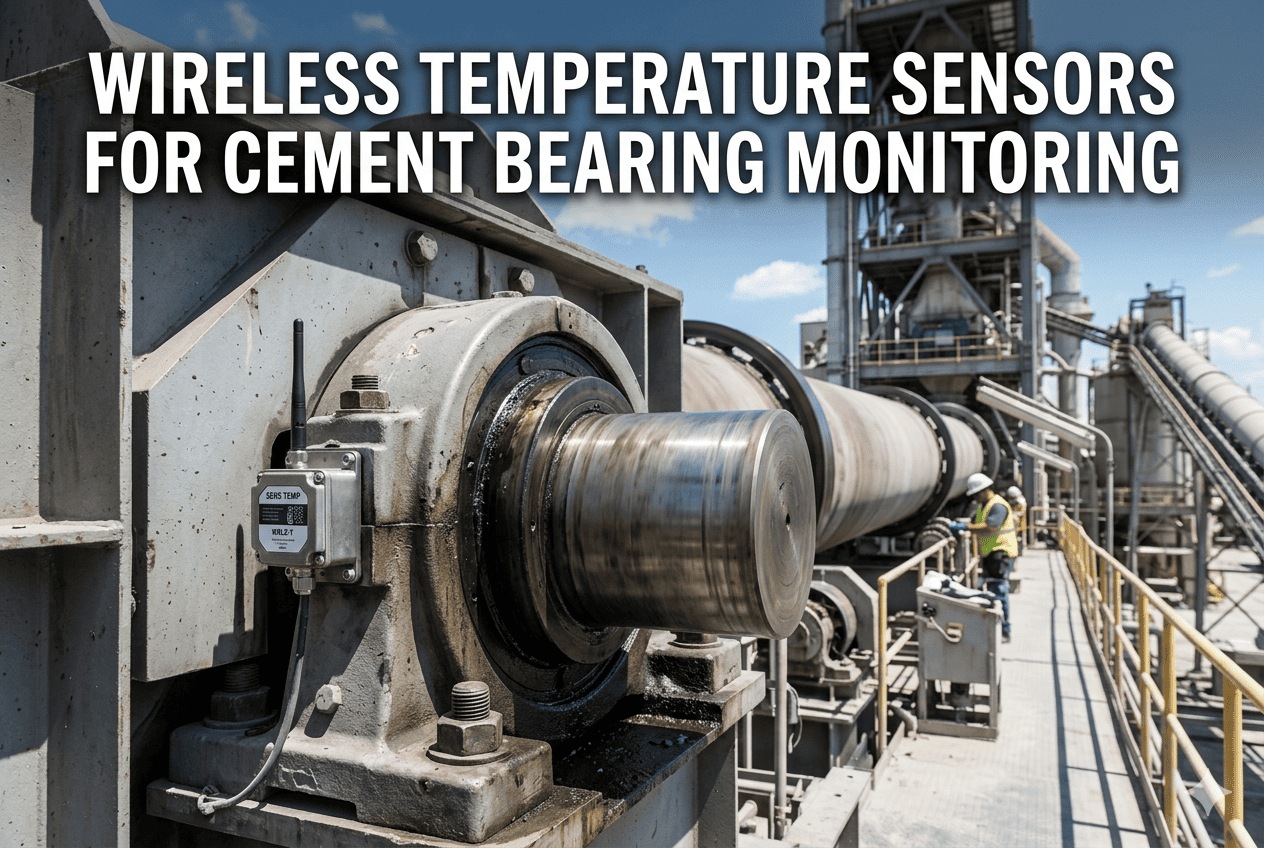
Both can work with proper protection. Wireless sensors eliminate cable-related failure points and are easier to relocate, but require battery access (which means opening enclosures periodically) and may have range limitations in metal-dense plant structures. Wired sensors provide continuous power and typically higher sample rates but require protected cable routing. Many plants use a hybrid approach—wireless for hard-to-reach locations and wired for critical continuous monitoring. Book a consultation to discuss the best approach for your facility.
QHow do we know when a sensor is failing due to dust contamination?
Watch for these warning signs: readings that drift consistently in one direction over time, intermittent dropouts or communication failures, readings that don't correlate with process conditions (e.g., vibration steady while mill is clearly out of balance), or sudden signal noise increases. Establish baseline readings during commissioning and use trend analysis in your CMMS to catch degradation early—before complete failure occurs.
Ready to Deploy Sensors That Survive?
Oxmaint integrates with any industrial sensor to deliver real-time monitoring, automated alerts, and work order generation—ensuring you capture the full value of your IoT investment even in the harshest cement plant conditions.