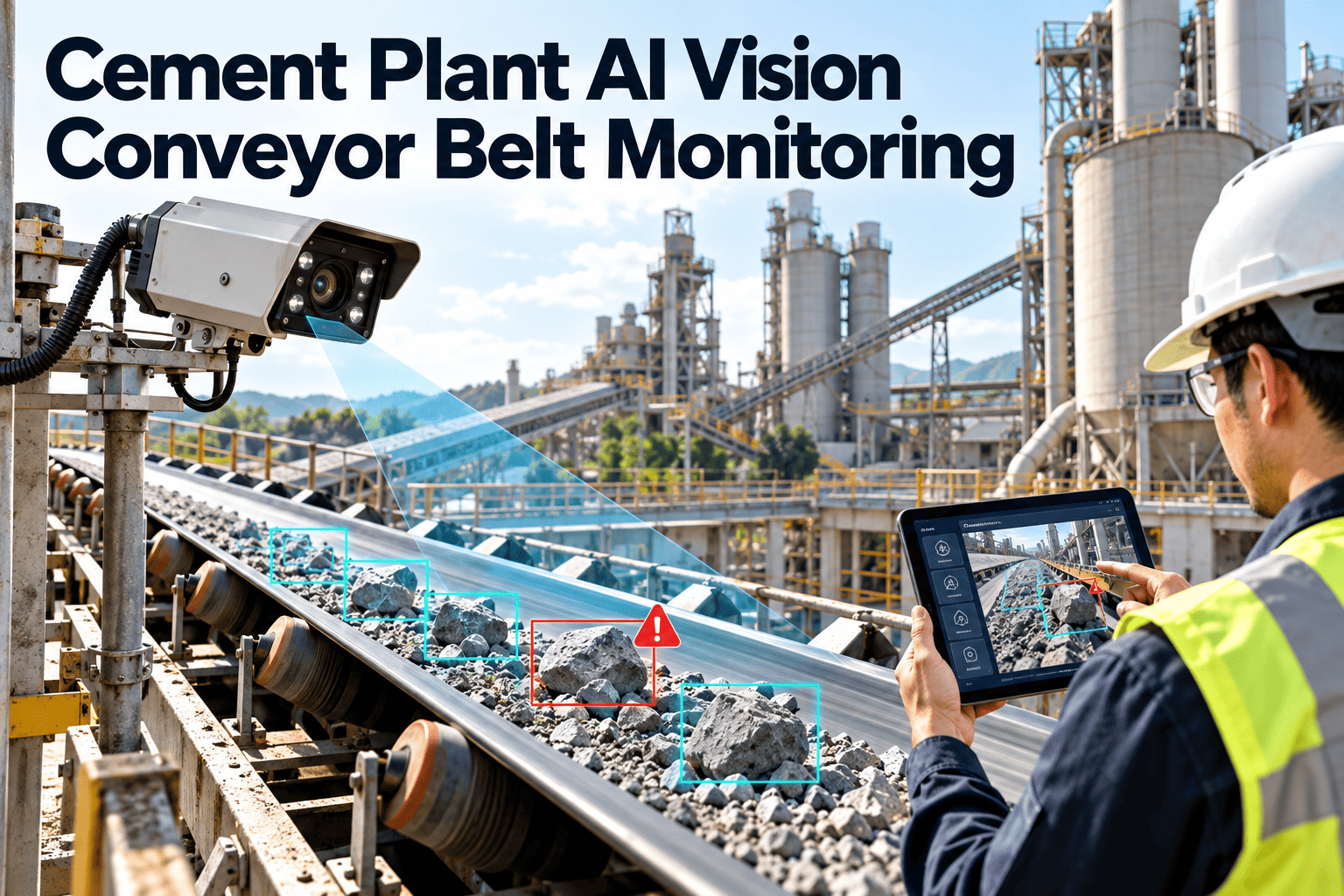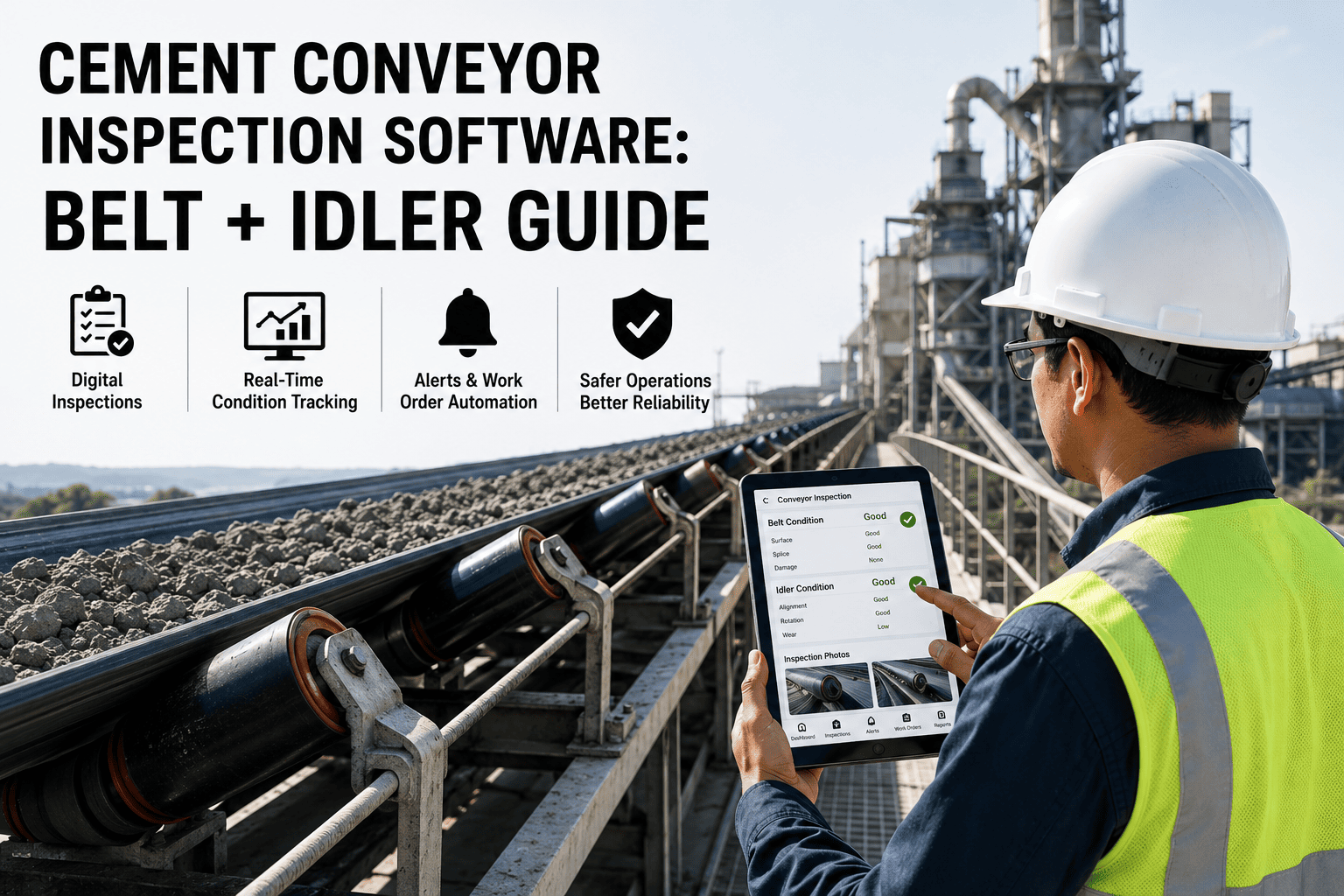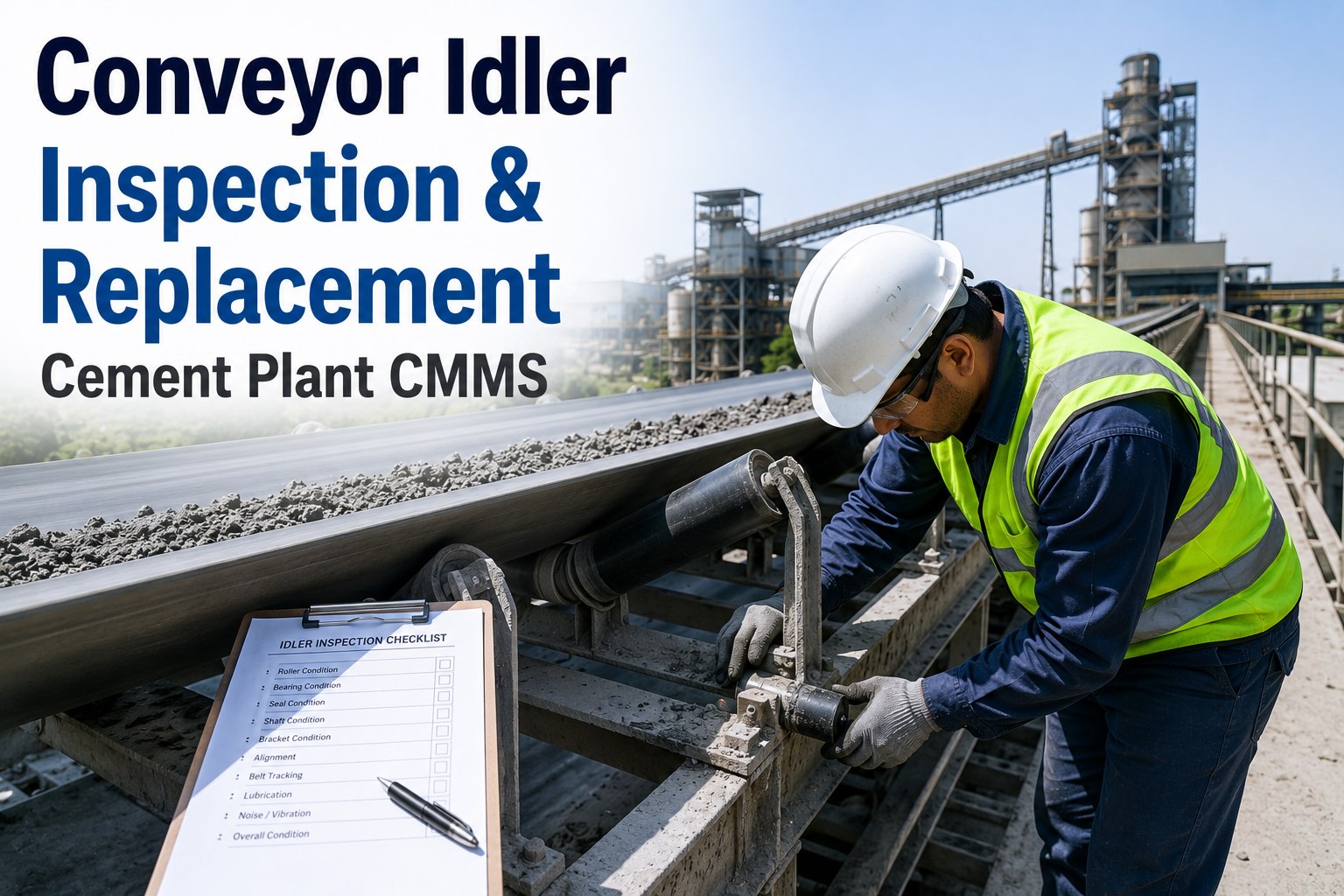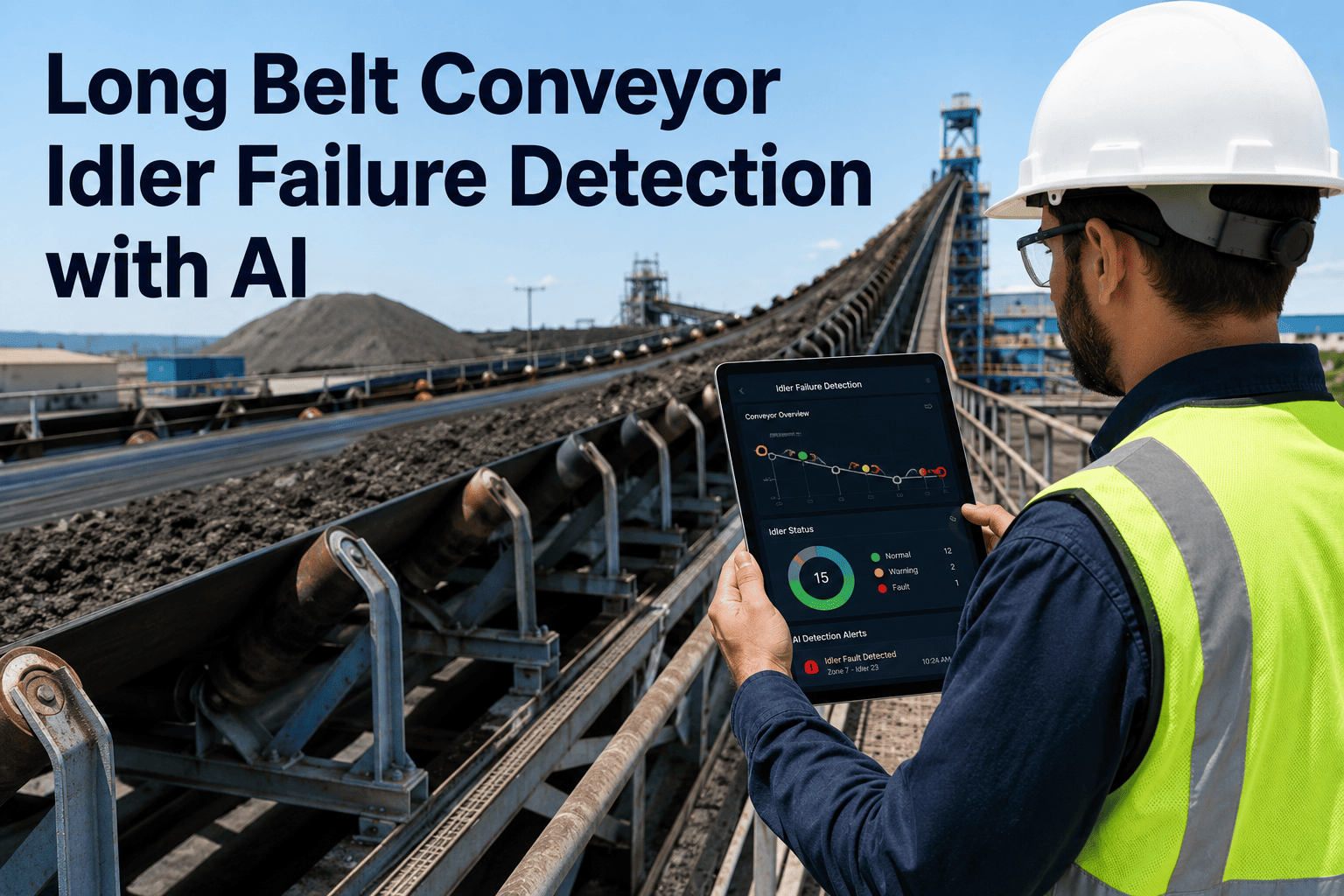
A single long belt conveyor in a cement plant can carry thousands of idlers along its route, and every one of them is a potential ignition point. A bearing seizes, the roller stops turning, and the belt keeps dragging across it — generating friction heat that can ignite dust or the belt cover itself within minutes. Monthly walkdowns and hand-held thermal guns were never built to catch a problem that can develop and become dangerous in the days between two scheduled rounds. OxMaint AI Vision watches every idler continuously and turns a developing hot spot into a work order long before it becomes a belt fire. Sign in to OxMaint to bring AI vision detection to your conveyor circuits.
Why Manual Rounds Fall Short
The Scale Problem Behind Idler Failures
Thousands Of Idlers, One Walkdown A Month
A long conveyor circuit can have thousands of individual rollers. A monthly inspection route physically cannot check each one closely enough to catch early-stage heat or vibration.
Failure Windows Shorter Than Inspection Cycles
A seized bearing can go from first detectable heat to fire risk in days, not weeks — well inside the gap between two scheduled manual rounds.
Dust And Access Limit Manual Inspection
Elevated galleries, moving belts, and constant dust make close visual and thermal inspection slow, uncomfortable, and easy to rush or skip.
A Single Missed Idler Can Stop The Line
One seized roller left unnoticed can tear the belt or start a fire, halting raw material or clinker feed for hours or days.
The Failure Chain
How An Idler Bearing Progresses Toward Seizure
Lubrication Loss
Grease degrades or contamination enters the bearing housing, raising internal friction with no visible external sign yet.
Heat Buildup
Surface temperature climbs from ambient toward 60°C, detectable with continuous thermal monitoring well before it is visible or smellable.
Vibration Signature
Bearing race defects and roller imbalance produce a distinct vibration pattern, typically 48 to 120 hours ahead of seizure.
Seizure And Fire Risk
The roller stops turning entirely, and continuous friction against the moving belt can ignite dust or the belt cover within minutes.
Catch The Hot Idler Before It Becomes A Belt Fire
OxMaint AI Vision monitors every idler on your conveyor circuit continuously, correlating heat and vibration signals to flag developing failures days before manual inspection ever could.
How Detection Works
Four Layers Of AI Detection Working Together
Layer 1
Thermal Imaging
Fixed thermal cameras along the gallery scan every idler continuously, flagging surface temperature that climbs above baseline for that specific roller position.
Layer 2
Acoustic And Vibration Sensing
Acoustic emission sensors pick up bearing race defects weeks before they would show up as heat, giving the earliest possible warning stage.
Layer 3
Visual AI Inspection
Camera-based deep learning models track belt edge position and idler frame condition, catching misalignment and physical damage that thermal sensors miss.
Layer 4
Correlation Engine
OxMaint combines all three signals against each idler's own baseline, filtering out single-signal noise and confirming true developing failures before a work order is raised.
Detection Method Comparison
Manual Inspection vs AI-Based Idler Monitoring
| Factor | Manual Inspection Round | AI Vision And Sensor Monitoring |
|---|---|---|
| Coverage Frequency | Weekly or monthly | Continuous, every idler, all shifts |
| Advance Warning | Often none, or only once heat is visible | Days to weeks depending on signal type |
| Consistency | Depends on inspector fatigue and route completion | Same standard applied to every idler, every time |
| Data Trail | Handwritten or informal notes, rarely trended | Full temperature and vibration trend per idler, searchable |
| Follow-Up Action | Manual write-up and separate work order entry | Work order generated and routed automatically |
Reliability Team Experience
What Changed After AI Vision Went Live On The Conveyor Circuit
Our biggest fear was always a belt fire from a seized idler that nobody caught in time, because we simply cannot walk every metre of gallery every day. Since the thermal and vibration monitoring went live, we have caught four developing idler failures before they reached the point of visible heat, and every single one turned into a planned roller swap instead of an emergency shutdown.
Conveyor Maintenance Lead
Cement Plant, Long-Distance Raw Material Conveyor Circuit
What's At Stake
The Consequences Of A Missed Idler Failure
Belt Fire Risk
Continuous friction against a seized roller can ignite dust or the belt cover itself, creating a hazard that spreads far faster than a mechanical failure alone.
Extended Feed Line Downtime
A belt tear caused by a seized idler can shut down raw material or clinker feed for twelve hours or more while repairs and replacement belt are sourced.
Emergency Repair Costs
Unplanned belt replacement carries expedited freight, overtime labour, and lost production costs far above a scheduled roller swap.
Safety Investigation Time
Any fire event, even a contained one, typically triggers a formal safety investigation that pulls maintenance and safety staff away from planned work for days.
After Detection
The Response Workflow Once An Idler Is Flagged
Step 1
Alert Confirmed By Correlation Engine
Thermal, acoustic, and visual signals are cross-checked against the idler's own baseline before a work order is raised, filtering out single-signal noise.
Step 2
Work Order Generated With Exact Location
The work order names the belt section, idler position, and detected signal type, so the technician does not need to search the gallery to find it.
Step 3
Priority Set By Failure Stage
An early acoustic-only signal is scheduled within the coming week, while a confirmed heat signature is escalated for action within the current shift.
Step 4
Baseline Resets After Replacement
Once the idler is replaced, OxMaint resets the sensor baseline for that position automatically, ready to detect the next developing issue from a clean starting point.
Priority Classification
How Idler Alerts Are Ranked For Response
| Signal Detected | Failure Stage | Priority | Response Window |
|---|---|---|---|
| Acoustic anomaly only | Early bearing wear | Standard | Within 1 to 2 weeks |
| Vibration plus rising temperature | Active degradation | Elevated | 48 to 120 hours |
| Confirmed heat above threshold | Advanced, fire risk building | Urgent | Within current shift |
| Idler stopped turning | Seizure | Emergency | Immediate |
Common Questions
What Cement Plant Teams Ask About AI Idler Detection
Does AI vision work reliably in a dusty conveyor gallery environment?
Yes. The detection models are trained specifically on cement plant operating conditions, including airborne dust, variable lighting, and material carry-back, so false positives caused by dust clouds or shadows are filtered out before an alert is raised. Book a demo to see detection accuracy in a dusty environment.
How many cameras and sensors are needed to cover a long conveyor circuit?
Coverage depends on belt length, idler spacing, and existing failure history, but most plants start with fixed cameras and acoustic sensors at the highest-risk zones such as loading points and convex curves, then expand coverage along the rest of the gallery over time. Sign in to plan sensor placement for your conveyor.
What happens after AI detects a developing idler failure?
OxMaint generates a work order automatically with the exact idler location, the detected signal type, and the trend data attached, and routes it to the maintenance team so the roller can be scheduled for replacement during the next available stop. Sign in to see the work order workflow for idler alerts.
Can this system also detect belt misalignment, not just idler bearing failure?
Yes. The same visual AI layer that inspects idler frames also tracks belt edge position against the centre line, so misalignment and idler bearing issues are both surfaced from the same camera and sensor infrastructure. Book a demo to see combined idler and misalignment detection.
Does deploying AI vision require stopping the conveyor for installation?
No. Cameras, thermal sensors, and acoustic sensors are mounted on the gallery structure alongside the running belt, and installation is typically scheduled around routine access windows rather than requiring a dedicated conveyor shutdown. Sign in to review installation planning for your circuit.
Give Every Idler On Your Conveyor A Continuous Watch
A seized idler gives you days of warning if the right signals are being watched. OxMaint AI Vision watches, correlates, and raises the work order automatically, so your team replaces the roller on schedule, not after a fire.