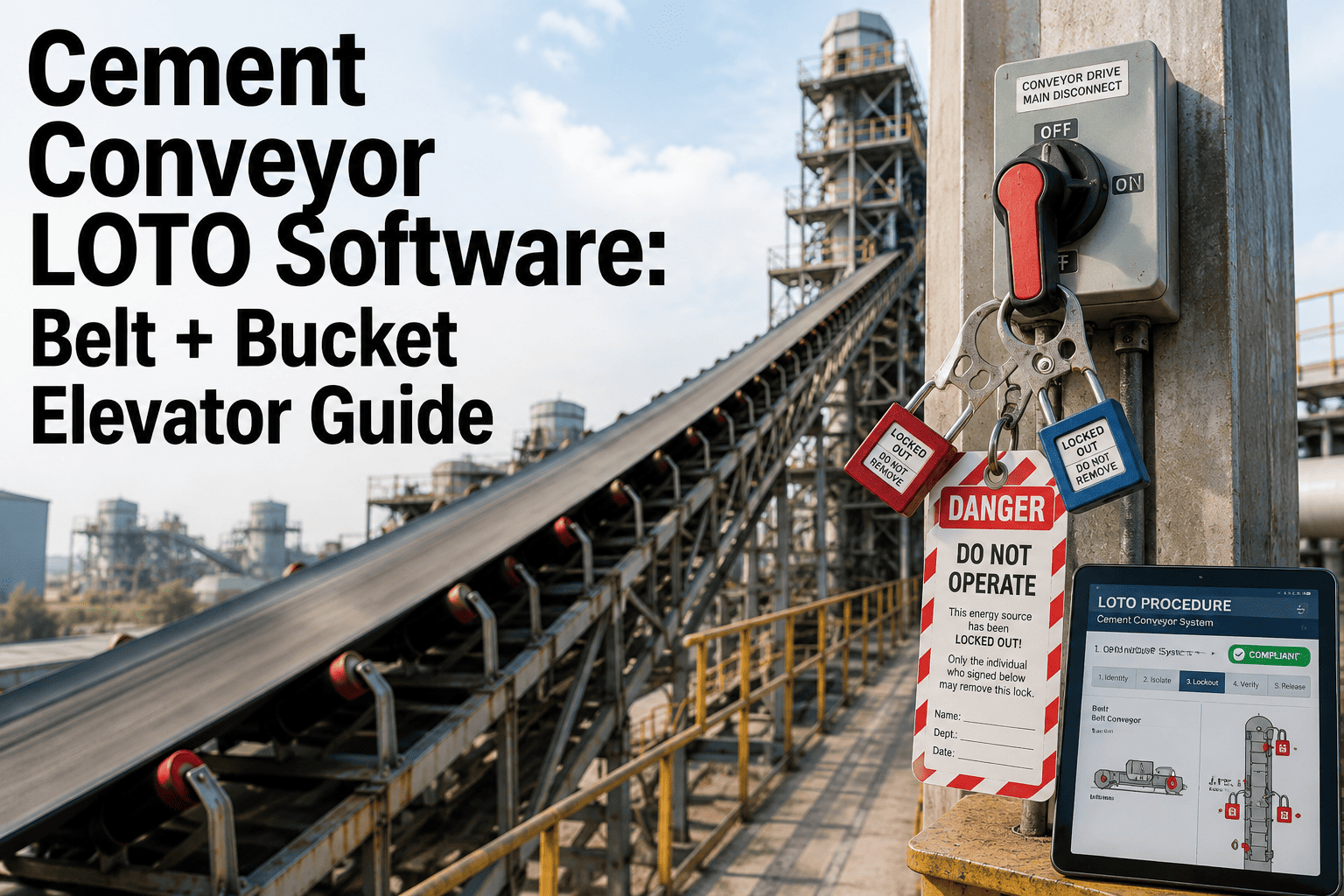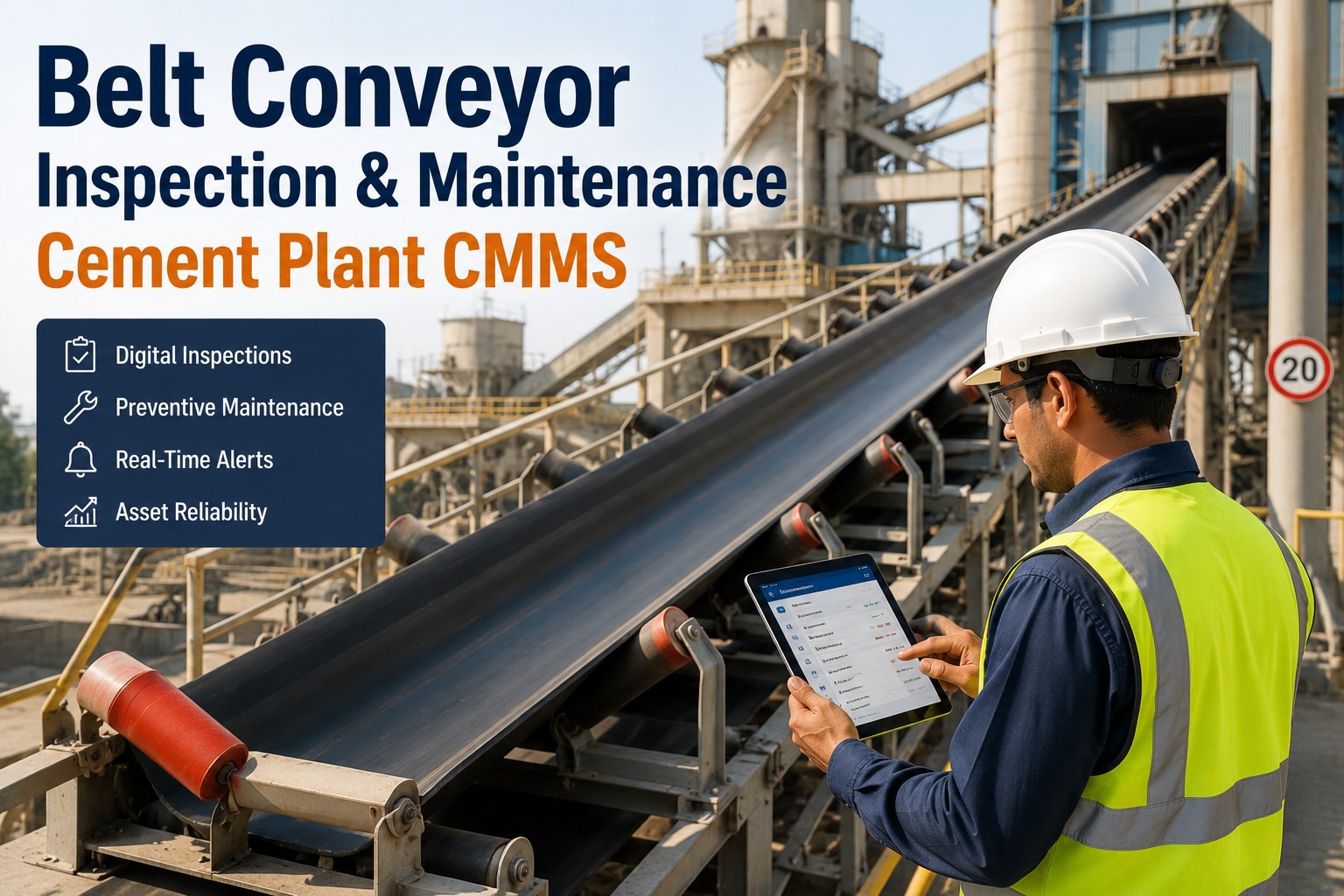
A conveyor rarely fails because the belt snaps out of nowhere. It fails because a frozen idler ran hot for three weeks, a splice kept fraying a little more each shift, or a drive drum wore unevenly until tracking finally gave out — and none of it was written down anywhere a supervisor could see the trend. Conveyor inspection is one of the most repetitive jobs on a cement plant, which is exactly why it degrades fastest on paper. This guide breaks the inspection into four defect categories that actually predict failure, plus the severity thresholds that should trigger a work order automatically — start a free trial to build the checklist on your own conveyor list.
CMMS Reliability Guide · Cement Plants
Which idler on your longest belt is running hot right now?
Idler and belt-tracking issues are the leading cause of unplanned conveyor stoppages in cement plants, and nearly all of them show early warning signs — heat, noise, or drift — for weeks before the belt actually fails.
The Four Defect Zones
Belt, idler, splice, drum — inspect all four, every route
A conveyor inspection checklist that skips any of these four zones will miss the failure mode most likely to shut the line down.
Zone 1
Belt tracking
Check edge alignment at every transfer point and troughing section. Drift beyond the edge guide for more than a few minutes wears the belt edge and spills material along the entire run.
Zone 2
Idler condition
Listen and feel for bearing noise or heat at carry and return idlers. A single frozen idler generates localized friction that can score or burn the belt within a single shift.
Zone 3
Splice integrity
Inspect vulcanized and mechanical splices for fraying, separation, or exposed fabric. A splice failure at speed is one of the few conveyor defects that can cause immediate, uncontrolled downtime.
Zone 4
Drive drum wear
Check lagging wear and drum diameter consistency. Uneven lagging reduces friction drive and is a common root cause of chronic mistracking that gets blamed on the belt instead.
Severity Thresholds
What should trigger an automatic work order
Set these thresholds in your CMMS so a flagged reading opens a work order without waiting for someone to review the round afterward.
| Defect Type | Watch Level | Action Level | CMMS Trigger |
|---|---|---|---|
| Idler bearing temperature | 50–65°C | >65°C | Auto work order, replace within 48 hrs |
| Belt edge drift | Within guide, intermittent | Touching guide >10 min | Alert shift supervisor immediately |
| Splice fraying | Surface fabric visible | Core exposed or separating | Schedule splice repair, reduce belt speed |
| Drum lagging wear | <3 mm remaining | Bare drum surface visible | Schedule drum re-lagging, monitor slip |
| Idler audible noise | Faint grinding | Loud grinding or seizure | Replace idler same shift |
Catch the idler before it takes the belt with it
oxmaint turns conveyor rounds into structured digital checklists across belt, idler, splice, and drum — with severity thresholds that raise the work order automatically.
FAQ
Conveyor inspection software, answered
How often should idlers be inspected on a cement conveyor?
Carry idlers on plant-critical belts should be checked every shift for heat and noise, with a full rolling-resistance and bearing check monthly across the entire route.
What is the most common cause of belt mistracking?
Uneven drum lagging wear and misaligned idlers cause most chronic tracking issues, more often than the belt itself, which is why the drum and idler checks matter as much as the belt scan.
Can a CMMS predict a splice failure before it happens?
Yes, when fraying is logged with a photo at each inspection, the CMMS can trend the wear rate and flag a splice for scheduled repair before it fails at speed. See how oxmaint tracks it.
How many conveyors can one inspection route realistically cover?
Most digital routes cover 15–20 conveyors per shift when the checklist is structured with QR scans, versus far fewer on paper due to time spent writing notes.
Should idler temperature checks use infrared or contact readings?
Infrared scans are faster and safer for routine shift checks; use a contact reading only to confirm a flagged infrared reading before opening a work order. Book a demo to see both logged in one entry.
Inspect every zone, every route, every shift
Build a conveyor inspection program covering belt tracking, idler condition, splice integrity, and drum wear — with automatic escalation before a defect becomes a shutdown.
Free 14-day trial · No credit card